













You got a piercing because you wanted the look, not because you wanted to spend your week squinting at a weird bump in the mirror. Then one day the area around the piercing looks raised, angry, and confusing, and suddenly you're deep in the internet trying to figure out if it's normal, fixable, or a total disaster.
Good news. A lot of piercing bumps are manageable, and not all of them mean infection or failure. Regarding what causes hypertrophic scars, the short version is that your body can sometimes get a little too enthusiastic about healing, especially when a piercing keeps getting irritated.
That Scary Bump What Is a Hypertrophic Scar Anyway
A hypertrophic scar is a raised scar caused by your body making too much collagen while it repairs skin. In piercing world, that can show up as a firm bump around the piercing channel after the area has been irritated for a while.
Think of healing like a construction crew fixing a sidewalk crack. Normally, the crew patches the exact spot and heads home. With a hypertrophic scar, the crew keeps pouring material into the same area until the patch gets thick and raised. The repair stays in the original spot, but it's overbuilt.

What your body is doing
Your skin uses inflammation to kick off healing. That part is normal. The problem starts when the area stays irritated, because ongoing inflammation keeps signaling repair cells to lay down more collagen than the piercing needs.
Your body is trying to help. It's just healing with a heavy hand.
One of the clearest drivers is chronic inflammation. A review on hypertrophic scarring explains that wounds healing in 21 days or more have a 70% or greater risk of hypertrophic scar formation, compared with 4% for wounds healing within 10 days, because prolonged inflammation pushes fibroblasts to overproduce collagen (review on hypertrophic scar formation).
Why piercings get caught in this cycle
Piercings are tiny wounds with jewelry sitting inside them. That means they can get stuck in an irritation loop more easily than a simple cut. A few common examples:
- Snagging on hair or clothes can re-irritate the channel.
- Sleeping on it can keep pressure on the tissue.
- Touching or twisting the jewelry can stir things up again.
- Low-quality or poorly fitted jewelry can create ongoing friction.
For a lot of people, the bump itself is what causes panic. But a hypertrophic scar isn't the same thing as pus, infection, or your body rejecting the piercing. It's a scar response. That matters, because scar problems need a different kind of patience than infection problems.
The simplest way to think about it
If you remember one thing, remember this:
- A hypertrophic scar is raised
- It forms from overactive healing
- It stays within the original piercing wound
That last part becomes really important when you're trying to tell it apart from a keloid or a basic irritation bump.
Hypertrophic Scar vs Keloid vs Irritation Bump
These names are often used like they're interchangeable. They're not. If you mix them up, you can end up spiraling over the wrong problem.

The fast comparison
| Bump type | What it usually looks like | Where it stays | What usually triggers it | How it tends to behave |
|---|---|---|---|---|
| Irritation bump | Tender, swollen, sometimes pimple-like | Right by the piercing | Pressure, snagging, movement, aftercare mistakes | Can calm down if the irritation stops |
| Hypertrophic scar | Raised, firmer bump made of excess collagen | Within the original wound boundary | Ongoing inflammation and repeated irritation | May stick around and look more scar-like |
| Keloid | Larger raised growth, often more aggressive-looking | Extends beyond the original injury | Abnormal scar response, often with a genetic component | Usually doesn't act like a simple piercing bump |
A helpful fact to keep in your back pocket: hypertrophic scars stay within the original wound boundary, while keloids grow beyond it. Hypertrophic scarring also typically appears about eight weeks after injury, and people ages 10 to 30 are the most susceptible (guide to hypertrophic scars and keloids).
What an irritation bump feels like in real life
An irritation bump is the drama queen of the bunch. It often pops up after something obvious happened. Maybe your towel caught your helix. Maybe your nostril screw shifted all day. Maybe you slept face-down on a fresh flat piercing and woke up regretting every choice.
These bumps are often softer, redder, and more reactive. They may shrink when you stop annoying the piercing.
What makes a hypertrophic scar different
A hypertrophic scar feels more like your body laid down extra structure. It's not just mad. It's built up. Around a piercing, it often looks contained to the hole itself or the immediate channel.
Quick check: If the bump looks raised but stays inside the original piercing area, hypertrophic scarring is more likely than a keloid.
And keloids?
Keloids are in their own lane. They don't just sit in the original wound area. They expand beyond it. If you've heard the word and instantly assumed every bump is a keloid, that's a super common mistake. If you want a deeper breakdown, BodyCandy has a helpful explainer on keloids, what they are, and why they happen.
If you're unsure, don't self-diagnose based on fear. Look at the shape, the boundaries, and the timing. Those clues tell you a lot.
What Makes You More Likely to Get Them
Some people do everything right and still get a scar bump. Other people treat a piercing like a toy and somehow skate by. Bodies are rude like that.
The useful way to think about risk is this: some factors are yours from the start, and some come from what the piercing goes through while healing.
Things you can't control
Age can play a role, and younger people are more prone to hypertrophic scarring than older adults. Your own skin may also lean toward stronger scar responses.
Genetics matter too. If your body tends to scar thickly, your piercing may need a smoother, lower-drama healing process than someone else's.
Some skin heals quietly. Some skin throws a whole production.
Things you can control
The impact of piercing habits is considerable. Hypertrophic scars love repeated stress. The skin keeps trying to repair itself, and the cycle keeps going.
A few common triggers around piercings:
-
Movement and friction
Jewelry that shifts constantly can rub the channel and keep it inflamed. This is a big deal in nose piercings, navels, and other spots where jewelry gets bumped around. -
Pressure
Sleeping on a fresh ear piercing, wearing tight clothing over a navel piercing, or pressing headphones against a healing cartilage piercing can all keep the area irritated. -
Snagging
Hairbrushes, shirts, towels, hats, phone calls, face masks. Piercing enemies are everywhere. -
Questionable jewelry fit
Jewelry that's too tight can squeeze tissue. Jewelry that's too loose can move too much. Both can annoy a healing piercing. -
Aftercare mistakes
Over-cleaning, using harsh products, twisting the jewelry, and touching it with unwashed hands can all keep the site worked up.
Piercings that can be extra moody
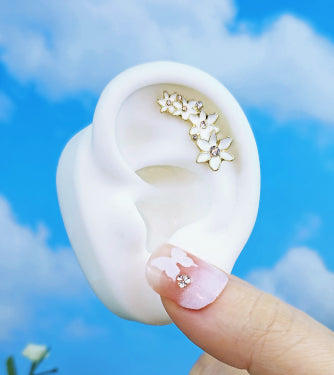
Cartilage piercings like the helix and industrial can be fussy because cartilage doesn't love trauma. High-movement placements like navels can also struggle because bending, waistbands, workouts, and daily movement all add tension.
That doesn't mean those piercings are doomed. It just means they need more protection from all the little hits that drag healing out.
Your Ultimate Guide to Preventing Piercing Scars
Prevention is the power move. Once a piercing gets trapped in a cycle of irritation, scar tissue gets harder to ignore. The smoother you make healing, the less likely your body is to go full overachiever with collagen.

A key point from a review in Burns & Trauma is that the time it takes for a wound to heal is the most important predictor of hypertrophic scars, which is why fast, uninterrupted healing matters so much (Burns & Trauma review on healing time and hypertrophic scars).
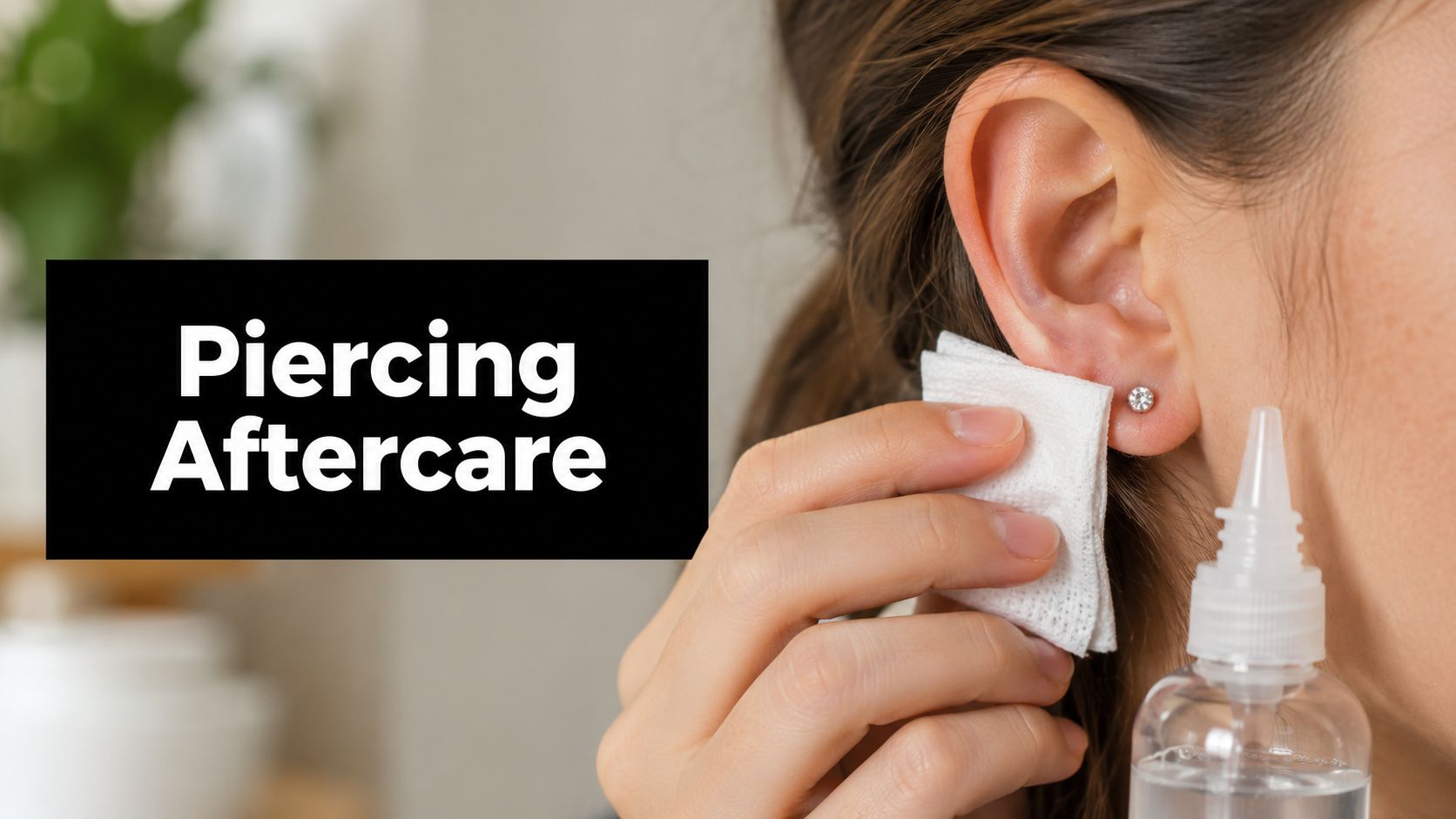
Keep your aftercare boring
Boring aftercare wins. The goal is a clean, stable environment, not a science experiment in your bathroom.
- Use sterile saline for gentle cleaning.
- Keep your hands off unless you're cleaning it.
- Leave the jewelry alone. No twisting, rotating, or “checking” it.
- Rinse away product buildup from shampoo, conditioner, makeup, or soap.
What to skip:
- Harsh chemicals like alcohol or peroxide
- Random DIY pastes and oils
- Over-cleaning just because the bump stressed you out
Practical rule: If your aftercare makes the piercing feel drier, angrier, or more disturbed, it's probably too much.
Protect it from daily chaos
Most piercing problems aren't dramatic. They're repetitive. Tiny hits add up.
Try this:
- Sleep around it, not on it. Travel pillows can help with ear piercings.
- Watch your clothes. Waistbands and fitted tops can bully navel piercings.
- Secure long hair. Cartilage piercings and loose hair are a messy combo.
- Pause jewelry changes. Fresh piercings need stability more than they need a style refresh.
Choose jewelry that gives your skin a break
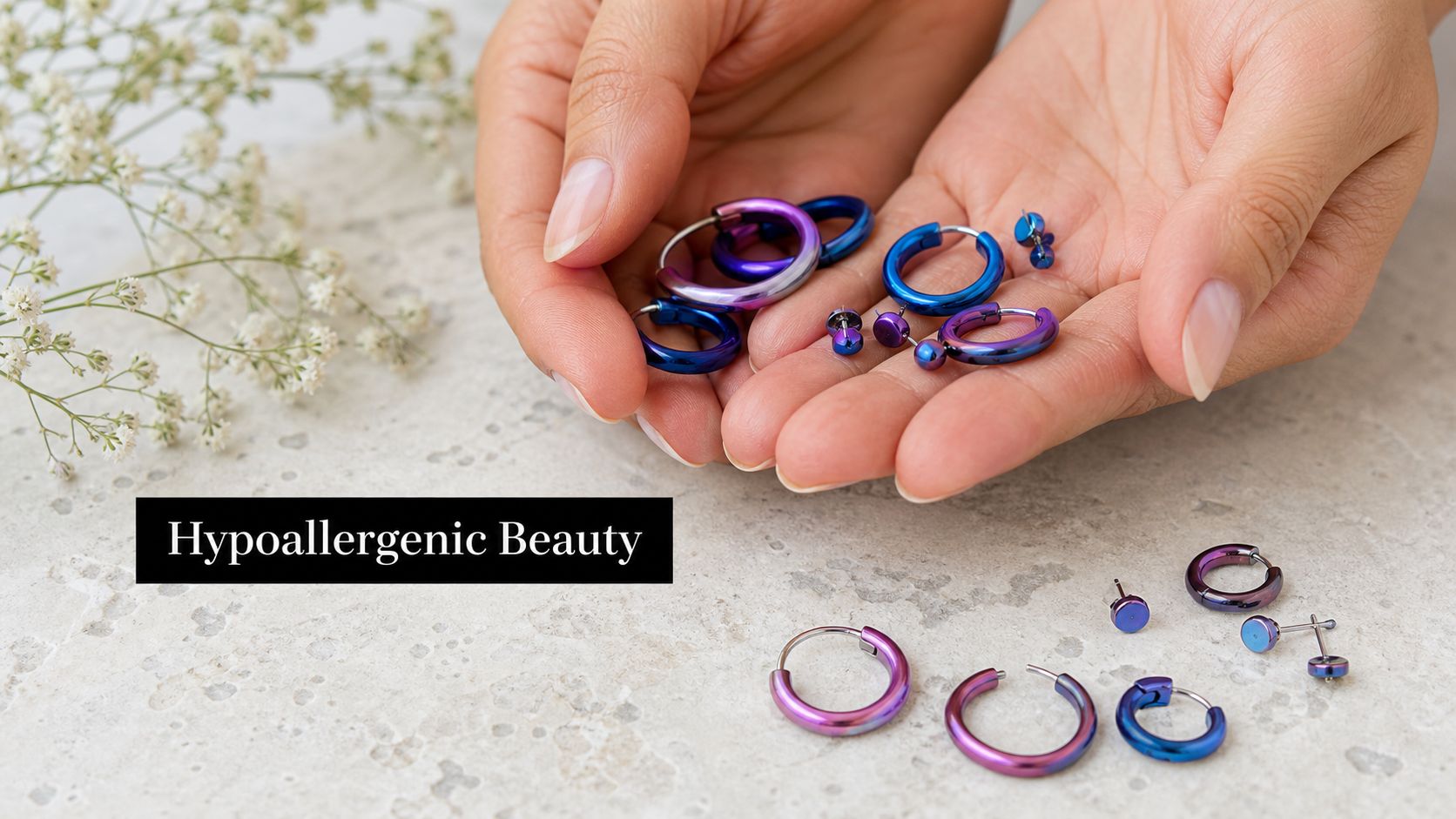
Material and fit matter. If your skin is sensitive, healing jewelry should be as low-irritation as possible. Many people do better with implant-grade titanium or 14k gold, because they're commonly chosen for sensitive, healing piercings.
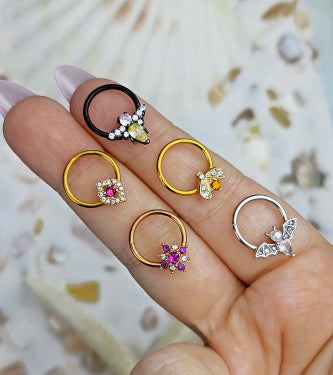
A well-fitted piece also matters just as much as the metal. Jewelry needs enough room for normal swelling without constantly shifting around. That's one reason many people look for stable, simple healing styles before moving on to decorative pieces. If you want more on reducing scar risk from the start, this BodyCandy article on how to minimize a piercing scar is worth a read.
If you're shopping for a fresh-piercing-friendly option, BodyCandy carries jewelry in materials often chosen by people with sensitive skin, including titanium and gold styles.
So You Have a Scar What Now
First, exhale. A bump doesn't mean you ruined your piercing forever.
If the area looks more scar-like than pimple-like, the smartest move is to stop aggravating it. That means no picking, no squeezing, and no panic swapping jewelry in your bathroom mirror.

Start with the gentle stuff
For a suspected hypertrophic scar, people often begin with low-drama options and a reality check from a professional piercer.
That can include:
-
Removing sources of irritation
If the jewelry fit is off, a reputable piercer can assess whether sizing or style is part of the problem. -
Silicone gel sheets or silicone scar discs
These are commonly used as a non-invasive scar management option. -
Simplifying aftercare
If your routine got too aggressive, scaling back can help the area settle.
Know when to level up
If the bump keeps growing, stays firm for a long time, or seems to extend beyond what looks like the original piercing channel, it's time to stop guessing. A piercer can help you figure out whether you're dealing with irritation, a hypertrophic scar, or something that needs medical attention.
A doctor or dermatologist may suggest treatments such as:
| Option | What it is in plain language |
|---|---|
| Corticosteroid injections | Medicine injected into scar tissue to help flatten it |
| Laser therapy | Targeted light treatment used in scar care |
| Surgical removal | Physically removing scar tissue in select cases |
If a bump is persistent, changing shape, or acting unlike a typical irritation bump, get professional eyes on it.
And if you're already thinking ahead to future jewelry plans, BodyCandy also has a useful post on whether you can re-pierce through scar tissue.
Love Your Lumps But Keep Your Piercings Happy
Hypertrophic scars can look intense, but they're usually your body trying too hard to heal, not proof that you failed at having a piercing. The big clues are where the bump stays, how it behaves, and whether your piercing has been stuck in an irritation cycle.
If you want the shortest possible answer to what causes hypertrophic scars, it's this: prolonged irritation plus overactive collagen repair. Your best defense is calm aftercare, stable jewelry, and resisting the urge to mess with a healing piercing every five minutes.
Treat your piercing like a tiny diva. Keep it clean, keep it undisturbed, and give it jewelry that won't start drama.
Ready to baby your piercing the smart way? Browse BodyCandy for body jewelry in sensitive-skin-friendly materials, and pick pieces that help your healing stay smooth, stable, and stylish.