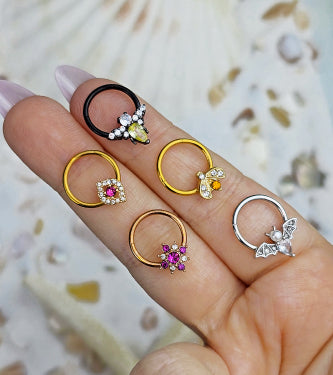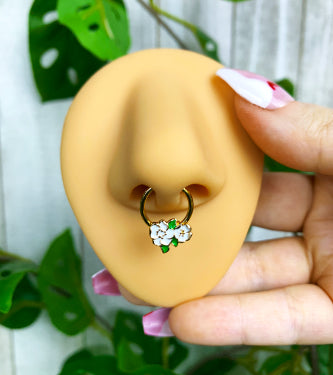
16 Gauge Septum Rings

16G is the septum standard, and this is every 16 gauge septum ring on one page. Hinged clickers, horseshoes, seamless and segment rings, captive beads and retainers, in surgical steel, titanium and gold. If your septum was pierced by a professional and nobody said otherwise, you're 16G.


16G Septum Ring Fit Guide

Gauge is settled, so the decision here is diameter. 5/16" (8mm) sits snug and forward, where the septum's sweet spot is, and hides best when you flip a horseshoe up. 3/8" (10mm) hangs a touch lower and shows more ring. Read the numbers off the ring you wear now and match them. Both are on every product page.

Pierced or stretched thicker? The 14G pieces are on the size finder below. Thinner? 18G slides into a 16G piercing with a little room to spare.

More septum:

FAQ

Almost certainly. 16G (1.2mm) is the standard septum gauge and what professional piercers use unless you asked for something else. If your current ring has no gauge on it, assume 16G.

5/16" (8mm) sits snug and forward in the sweet spot and hides best when flipped up. 3/8" (10mm) hangs a touch lower and shows more ring. Match the ring you wear now if it fits well. When in doubt, go snug.

A clicker. It hinges open and clicks shut with one hand and nothing comes off. A horseshoe unscrews a ball and flips up to hide. A seamless or segment ring gives the cleanest circle. All three are here in 16G.

Yes. A thinner ring slides in with a little room to spare and plenty of people wear 18G for the daintier look. Never force a thicker gauge in. For 14G, see the size finder.

Once your piercer clears you, yes. Septums heal in 4 to 8 weeks, sometimes longer. Keep the starter in until then. After that a clicker is the easiest first swap you'll ever do.

Mostly 316L surgical steel, with titanium for sensitive noses, gold-tone and black PVD finishes, and solid 14k gold. Every product page names the metal.