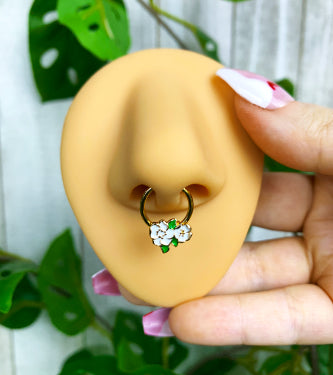
Floating Belly Button Rings

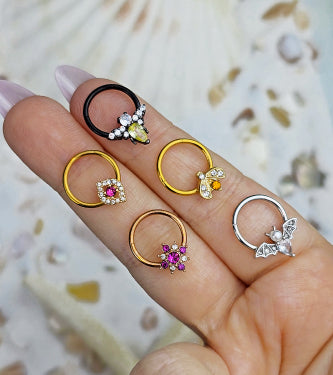
Some navels fold shut the second you sit down. A floating belly ring is built for that. The gem or charm sits on top of the piercing and a small flat disc tucks underneath, so nothing presses against the inside of your navel when it closes. The top piece looks like it floats on the skin, which is where the name comes from. Everything here is threadless titanium in the standard 14 gauge: bezel-set CZ, synthetic opal, a tiny bow, butterflies and chain dangles. Push the top in, done.


Floating Belly Ring Fit Guide

A floating navel piercing is the version piercers use when the top lip of the navel disappears while you sit or bend. A standard curved barbell with a ball on the bottom gets pushed around every time that happens, which is a slow route to irritation and rejection. The floating design swaps the bottom ball for a flat disc that lies flush inside the navel, so the jewelry stays put.

Sizing is the usual belly spec: 14 gauge, with post lengths of 5/16 inch (8mm) or 3/8 inch (10mm). All of these are threadless. The top pushes straight into the post and holds by tension. To take it out, pull it straight; don't twist. Each product page lists the exact gauge, length and titanium grade.

Fresh piercing? Wear whatever your piercer put in until it's healed, which for a navel is usually 6 to 9 months. Swap into one of these once you get the all-clear. If you already have a healed standard belly piercing and your navel folds when seated, a floating ring can be more comfortable than a bottom-gem barbell. Ask your piercer whether your anatomy suits it.

More ways in:

FAQ

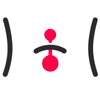
It's belly jewelry made for a floating navel piercing. The decorative end sits on top of the piercing and the bottom end is a small flat disc instead of a ball or a second gem. The disc lies flat inside the navel, so the top piece appears to float on the skin above it.

People whose navel folds or collapses when they sit down. A standard belly piercing wants a navel lip that stays put. If yours doesn't, a bottom ball gets pressed and pushed with every movement, and that kind of pressure is what leads to migration and rejection. The flat-disc design avoids it. A piercer can tell you in about ten seconds whether you're a candidate.

Standard belly gauge, 14G. Post lengths here are 5/16 inch (8mm) and 3/8 inch (10mm). If you already wear a 14G belly ring, these fit the same piercing. Your piercer will know which length your navel needs; when in doubt, match the post you wear now.

The post has a hollow end. The top has a slightly bent pin that slides into it and holds by tension, so there's no thread to cross or strip. Push the top straight in until it seats. To remove it, pull it straight out. Don't twist, and don't straighten the pin.

Once the piercing is fully healed, yes. Flip a standard belly ring so the charm sits on top and the plain ball sits below. It works best with gem or abstract tops. Anything with points or texture on the bottom can be uncomfortable inside the navel, which is exactly what the flat disc on a purpose-built floating ring is for.

Titanium, with threadless push-in tops. Several pieces are implant-grade (ASTM F-136) titanium and say so in the product title; the product page lists the grade for each one. Gems are CZ or synthetic opal, in clear, aqua, pink and an aurora finish.