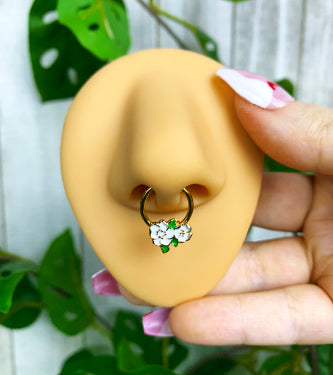
Septum Captive Bead Rings

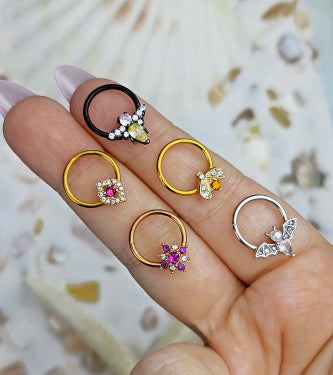
The original septum hoop: a captive bead ring (BCR) is a full circle whose ends grip one removable bead by tension, so the bead is the clasp and the show at once. Plain steel balls, gem and charm beads, Halloween and holiday sets of four, and solid 14k gold tension captives, nearly all in the septum-standard 16G 3/8 inch. Since 1999.


Captive Bead Ring Fit & Swap Guide

Fit: the septum standard is 16G with a 3/8 inch (10mm) inside diameter, the sweet spot that lets the bead hang centered under the nose; 5/16 inch (8mm) sits snugger and higher. Stretched septums take 14G. Stay at or under 1/2 inch so the ring hangs instead of swinging. Match the numbers on the ring you wear now; every product page lists both.

The swap: hold the ring either side of the bead and ease the ends apart just enough for the bead to pop free. Thread the ring through, seat one dimple on the bead, press the other end over it until it clicks. A 16G ring opens by hand; thicker gauges want ring-opening pliers or a ball grabber. Check the seat after every change and keep a spare from Replacement Balls.

Materials run 316L surgical steel, titanium (the nickel-free pick) and solid 14k gold; gold-tone and black finishes are IP/PVD bonded to the metal.

Captive or something else? The bead shows, and that is the point. If you want no bead at all, go segment; if you need to hide it at work, go horseshoe; if you want a decorative front, go clicker:

- No bead, clicks shut → Seamless & Segment Septum Rings

- Flip-up-to-hide → Horseshoe Septum Rings

- Decorative front → Septum Clickers

- Every septum style, by size → Septum Rings & Clickers

- Captives for every piercing → Captive Bead Rings

FAQ

A hoop whose two ends have tiny dimples that grip a removable bead by tension. Also called a CBR, BCR or ball closure ring. The bead is the decoration and the clasp at once: plain steel, gem, charm or solid gold, it sits at the bottom of your septum and holds the ring closed.

Hold the ring on each side of the bead and ease the ends apart just enough for the bead to pop out; a 16G ring usually opens with fingers alone. Thread the ring through, then set one dimple on the bead and press the other end over it until it clicks home. Thicker gauges are stiffer, so ring-opening pliers or a ball grabber tool make it painless.

16G with a 3/8 inch (10mm) inside diameter is the septum sweet spot and most of this page; 5/16 inch (8mm) sits snugger and higher. Stretched septums take 14G. Keep the diameter at or under 1/2 inch so the bead hangs where it belongs instead of swinging. Match the numbers on the ring you wear now.

Not when it is seated in both dimples; tension is what makes a captive ring secure. The bead only pops out if the ring gets bent open or the bead was never fully clicked in. Check the seat after every change, and keep a spare bead from our replacement balls so a lost one is a shrug, not a crisis.

Not cleanly. A captive ring is a full circle with the bead at the bottom, so flipping it leaves the bead in your nostril and the ring still showing. If you need to hide your septum for work or school, that is the horseshoe or a retainer; wear the captive on the days you want to be seen.

Many piercers start septums with a captive ring or a circular barbell, because the septum heals in 4 to 8 weeks and a small CBR is one of the few styles that can be swapped during early healing. Even so, keep the jewelry your piercer placed until they clear you, then come shopping; pick titanium if your skin reacts to steel.