Titanium Body Jewelry Fit & Material Guide
What implant-grade means: ASTM F-136 is the surgical-implant standard for titanium, the same alloy that goes into bone screws and joint replacements, and the strictest bar a piece of body jewelry can clear. Our F-136 pieces say so in the product title. The rest of this page is still solid titanium, nickel-free by nature; the implant mark is the extra assurance a fresh piercing deserves.
Titanium vs. steel, honestly: 316L surgical steel is a fine metal for most people, and it holds a trace of nickel locked in the alloy. Titanium holds none, weighs about half as much, and takes color by anodizing instead of coating. If every steel piece eventually makes a piercing red and cranky, the metal is the suspect and this page is the fix. Fit follows the piercing, not the metal: 20G and 18G nose hoops, 16G cartilage and septum, 14G belly and nipple. Match the gauge you wear now; it is on every product page.
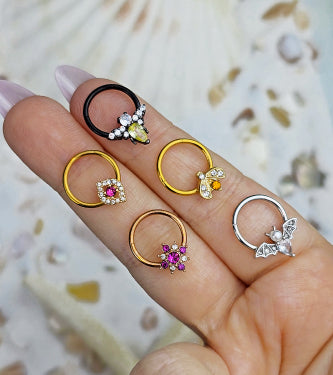
Color without compromise: the blues, purples and rainbows are anodized, an oxide layer grown from the titanium itself with nothing added; the gold and black tones are PVD bonded onto solid titanium. The product title names the finish, and the metal against your skin is nickel-free in every color. Shower, swim and sleep in it; a rinse after chlorine is the whole care routine.
Titanium by piercing: