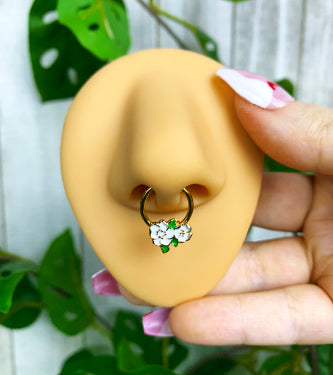


















Right out of the gate, here’s the short version: The biggest difference between titanium and stainless steel comes down to how happy your skin is and how heavy the jewelry feels.
Think of it like this: titanium is the super lightweight, pure, nickel-free VIP that’s the absolute best choice for fresh piercings and anyone with sensitive skin. On the other hand, stainless steel is the tough, heavier, classic option that contains nickel, making it a solid pick for fully healed piercings on people who know they aren't sensitive to metals.
The Great Metal Debate for Your Piercings
You’ve been there—staring at a massive wall of shiny body jewelry, trying to figure out the real deal between titanium and stainless steel. It feels like such a small choice, but you’re not just picking a new look. You're choosing the material that's going to live inside your body for a long, long time.
Making the right call means a happy, healthy piercing that looks amazing. The wrong one? It can lead to irritation, angry bumps, and healing drama nobody wants. So, let's break down this metal face-off so you know exactly what you’re putting in your body.
| Feature | Implant-Grade Titanium | Surgical Stainless Steel |
|---|---|---|
| Best For | New Piercings & Sensitive Skin | Healed Piercings & Your Wallet |
| Weight | Super Lightweight | Noticeably Heavier |
| Nickel Content | Basically Nickel-Free | Contains Nickel |
| Cost | Higher | More Affordable |
We'll get into the nitty-gritty of what really matters: biocompatibility (how well your skin gets along with it), weight, durability, and of course, cost. By the end, you'll be a total pro at picking the perfect match for your piercing, so you can shop with confidence.
Meet the Contenders: Titanium and Stainless Steel
Let's properly introduce the two main players in the body jewelry world so you know what you're choosing from. They each have their own vibe and purpose, kind of like the different characters in your favorite show.
First up is surgical stainless steel, specifically grades like 316L and 316LVM. Think of it as the reliable, old-school rockstar of the piercing world. It’s known for its classic polished shine, satisfying heft, and serious durability. For ages, it's been the go-to, affordable staple for fully healed piercings.
The Modern Challenger
Then you have implant-grade titanium, like the superstar ASTM F-136. This is the modern, high-tech choice that professional piercers rave about, especially for fresh piercings.
It's famous for two things: being ridiculously lightweight and almost completely nickel-free. This combo makes it the undisputed bestie for anyone with sensitive skin or a brand-new piercing that needs the gentlest start. To dig deeper, check out everything you need to know about titanium body jewelry.
The global market reflects their different roles. Stainless steel's market is massive at around USD 163.7 billion due to its widespread use, while titanium's is smaller but growing fast as people prioritize its high-performance qualities.
A Head-to-Head Metal Showdown
Alright, let's put these two metals under the microscope. We need to see how they really stack up in the ways that actually matter for your body jewelry. This isn't just about a list of specs; it’s about understanding how each one feels and performs in the real world, inside your piercing.
We're going to look at everything from comfort to color options. How does each one feel after a long day? Which one holds up better to daily life? Time to dive in.
This visual gives you a quick snapshot of the core difference between titanium (light as a feather) and stainless steel (strong as a dumbbell).
This simple comparison highlights that your choice often comes down to prioritizing either lightweight comfort or sturdy durability. Now, let's get into the details.
Biocompatibility and Your Skin
This is the big one. Biocompatibility is just a fancy word for how well a material gets along with your body. Implant-grade titanium is the undisputed champion here because it's virtually nickel-free. This makes it the absolute safest choice for fresh piercings and anyone with sensitive skin.
Surgical stainless steel, while generally safe for most people, does contain small amounts of nickel. For some, this can trigger irritation, redness, or those dreaded piercing bumps, especially during that delicate healing phase.
Weight and Everyday Comfort
Ever had a piercing that just felt... heavy? That's the difference between titanium and stainless steel in action. Titanium is about 45% lighter than steel, a difference you can actually feel the moment you put it in.
For something like a large-gauge septum ring or a new navel piercing, that lack of weight means less pressure and pulling, which is a huge help for healing. Steel has a satisfying heft that’s perfectly fine for well-healed piercings, but titanium offers a level of comfort that's almost forget-it's-there.
Durability and Long-Term Wear
Both of these metals are tough, but they show it in different ways. Stainless steel is a total workhorse—it's dense and seriously resistant to scratches and dings. If you have a belly ring that snags a lot or if you work a physical job, steel’s ruggedness is a massive plus.
Titanium, on the other hand, boasts an incredible strength-to-weight ratio. It's shockingly strong for how little it weighs and is more resistant to corrosion from things like sweat or saltwater.
The bottom line is this: Steel wins on scratch resistance, making it great for high-traffic piercings. Titanium wins on being incredibly strong yet lightweight, perfect for comfort and long-term biocompatibility.
To make things even clearer, here’s a quick visual breakdown of the key differences between these two popular metals.
Titanium vs Stainless Steel Quick Comparison
| Feature | Implant-Grade Titanium | Surgical Stainless Steel |
|---|---|---|
| Allergy Risk | Extremely low (nickel-free) | Low (contains some nickel) |
| Comfort | Feather-light, ideal for all-day wear | Noticeably heavier |
| Healing | Recommended for new piercings | Best for fully healed piercings |
| Color Options | Wide range via anodization | Mostly silver, some coatings |
| Price | Premium | Budget-friendly |
Ultimately, this table sums it up nicely: titanium is your go-to for sensitive skin, new piercings, and lightweight comfort, while steel is a durable, cost-effective option for piercings that are already healed.
Biocompatibility: Why Titanium Is King for Sensitive Skin
When it comes to your body, especially a fresh piercing, one word is more important than any other: biocompatibility.
It’s just a fancy way of saying how well a material gets along with your body's tissues. Get this right, and you're well on your way to a happy, healthy piercing. Get it wrong, and you could be dealing with a world of irritation.
This is where the difference between titanium and stainless steel becomes impossible to ignore. For one simple reason, implant-grade titanium is the undisputed champion of biocompatibility: it is almost entirely nickel-free.
The Nickel Problem in Stainless Steel
Even high-quality "surgical steel" is an alloy, which means it's a mix of different metals. One of those metals is nickel—a super common trigger for skin sensitivities, allergic reactions, and those frustrating piercing bumps that just won't seem to go away.
If you’ve ever gotten a mystery rash from a cheap pair of earrings, you've already experienced the nickel problem firsthand.
A new piercing is basically an open wound, so even tiny amounts of nickel can leach out and make your immune system go haywire. Titanium sidesteps this entire mess. You can get more details on picking the right metal in our quick take on hypoallergenic jewelry for sensitive skin.
Pro Tip: Your piercer isn’t just being fancy when they recommend titanium for new piercings. They're telling you to use it because its superior biocompatibility dramatically reduces the risk of complications and makes the healing process so much smoother and faster.
Titanium’s Secret Weapon: The Oxide Layer
Titanium’s amazing ability to coexist peacefully with your body isn't just about being nickel-free. It has a secret weapon: a highly stable and non-reactive layer of titanium dioxide that forms on its surface the moment it hits the air.
This "oxide layer" acts like a microscopic shield, stopping the metal from corroding or reacting with your body's fluids. It's so effective that the medical world has been choosing titanium over stainless steel for things like dental implants and joint replacements since the 1980s.
Decoding Weight and Durability in Daily Wear
Does the weight of your jewelry really matter? When it comes to daily wear, absolutely. How a piece feels is just as important as how it looks, and this is where you'll notice a massive difference between titanium and stainless steel right away.
Titanium’s claim to fame is its incredibly low density, making it feel almost weightless. This is a game-changer for larger jewelry or piercings in sensitive spots like the nipple or tongue. A lighter barbell means less stress and movement at the piercing site, which can help healing go smoother and faster.
On the other side of the scale, we have durability. Both metals are absolute champs here, but they flex their strength in totally different ways.
The Strength-to-Weight Showdown
Stainless steel is a true workhorse. It’s dense, tough, and stands up incredibly well to the scratches and dings that come with an active lifestyle. If your belly ring tends to get snagged or you work a physical job, the sheer toughness of steel is a huge plus. Our guide to annealed 316L surgical steel dives into just how versatile this material is.
Titanium brings a more high-performance resilience to the table. It has a superior strength-to-weight ratio, which means it’s ridiculously strong for how light it feels. With a density about 40-45% lower than stainless steel, it offers serious strength without the heft. This unique property gives you fantastic durability without any of the bulk—something you can read more about here.
Ultimately, your lifestyle is the deciding factor. Go for stainless steel if you need maximum scratch resistance for a piercing that sees a lot of action. But if you want high-performance strength in a lightweight package you can comfortably wear and forget, titanium is your best bet.
Making the Right Choice for Your Piercing
So, after all that, how do you actually decide? It really comes down to what's going on with your piercing right now. This isn’t about one metal being flat-out “better” than the other, but about what’s best for you and your piercing at this exact moment.
To cut through the noise, let's just walk through a few common situations. Think of this as your personal guide to picking the perfect jewelry every single time, no guesswork needed.
Your Piercing Situation Guide
The right choice usually hinges on two things: how old your piercing is and how sensitive your skin is. Here’s how to figure it out.
-
For a Brand-New Piercing: The answer is simple: implant-grade titanium. No exceptions. While your body is in healing mode, you want to give it every advantage. Titanium is completely nickel-free and so lightweight you'll barely feel it, which is exactly what a fresh piercing needs to heal smoothly with minimal irritation.
-
For a Healed Piercing on a Budget: Once your piercing is fully healed and you know for sure that nickel doesn't bother your skin, 316L surgical steel is a solid, reliable choice. It's tough, gives you that classic polished look, and it's definitely easier on your wallet.
-
For Vibrant, Lasting Color: If you're all about bold, eye-catching colors that won't flake off, anodized titanium is the clear winner. The color isn't a coating—it's created by an electrical process that changes the surface layer of the metal itself. This means it's incredibly durable and totally body-safe.
Your Metal Questions Answered
Still have a few questions? You're not alone. The world of piercing metals can get a little confusing, so let's tackle some of the most common ones right now.
Can I Be Allergic to Titanium?
A true allergy to implant-grade titanium is extremely rare. Since it’s a pure element and virtually nickel-free, it's widely considered the most biocompatible metal you can put in your body. If you think you're reacting to titanium, the culprit is almost always a cheap, low-quality alloy—not the implant-grade (ASTM F-136) standard that professionals use.
Why Is Stainless Steel So Much Cheaper Than Titanium?
It really just comes down to supply and manufacturing. Stainless steel is one of the most common metals on the planet, making the raw materials cheap and the production process straightforward. Titanium, on the other hand, is rarer and requires a much more complex and expensive process to refine and shape it into jewelry.
Can I Use Stainless Steel in a New Piercing?
Most professional piercers will give you a hard no on this one. A fresh piercing is essentially an open wound. Even high-quality 316L surgical steel contains trace amounts of nickel that can trigger irritation, allergic reactions, and seriously complicate your healing. Always stick with implant-grade titanium until you are 100% healed.
Remember: The key difference between titanium and stainless steel isn't just a matter of preference—it's about giving your piercing the absolute best environment to heal safely and beautifully.
Now that you're a metal expert, you're ready to make the best choice for your body! Explore our huge collection of both premium implant-grade titanium and high-quality surgical steel jewelry at Bodycandy and find the perfect piece to express yourself. Shop the entire collection today!