


















Seen an eyebrow piercing that just looks right and wondered how to get that same vibe? You've come to the right place. Eyebrow piercings are having a major moment, shaking off their ‘90s punk reputation and becoming a go-to for anyone wanting to add a little something extra to their look.
Whether you're after a subtle accent or a bold statement piece, there's a style that will perfectly frame your face. Let's walk through all the options so you can step into the piercing studio feeling totally prepared and ready to rock your new look.
Your Ultimate Guide to Eyebrow Piercing Styles
First things first, let's get you familiar with the core types of eyebrow piercings. Each one creates a completely different aesthetic, making it easy to find a placement that complements your facial features and personal style.
We'll be looking at three main players in the eyebrow piercing game:
- Vertical Eyebrow Piercing: The one you probably picture first. This is the classic style, typically placed just beyond the arch of your brow for a look that's both timeless and edgy.
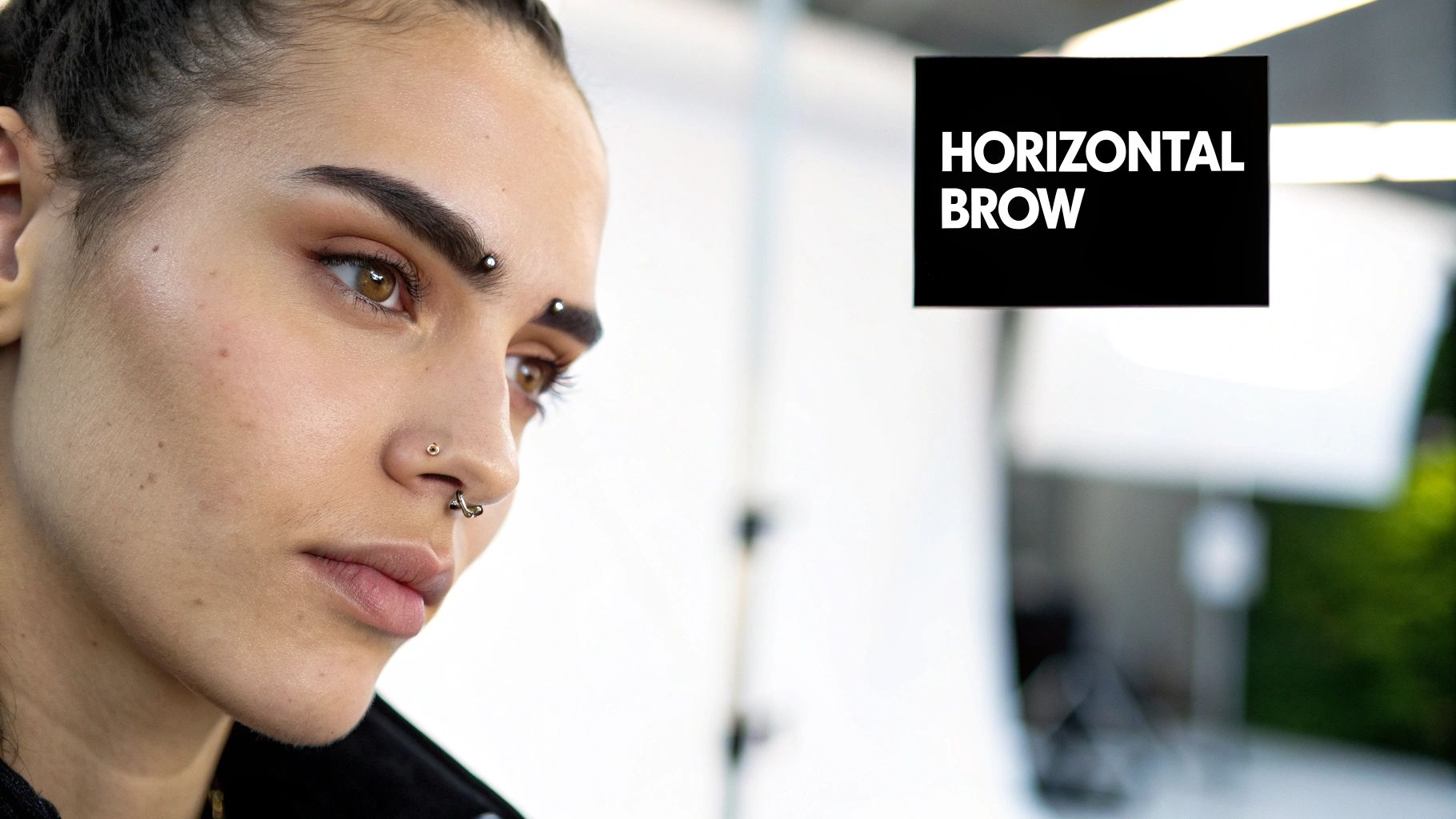
- Horizontal Eyebrow Piercing: A more modern take that runs parallel to your eyebrow. This creates a clean and striking surface piercing effect.
- Anti-Eyebrow Piercing: A dramatic surface piercing that sits on the upper cheekbone, mirroring the eyebrow from below. It's sometimes called a "teardrop piercing."
This handy visual breaks down these three main types and the kind of jewelry they're best suited for.
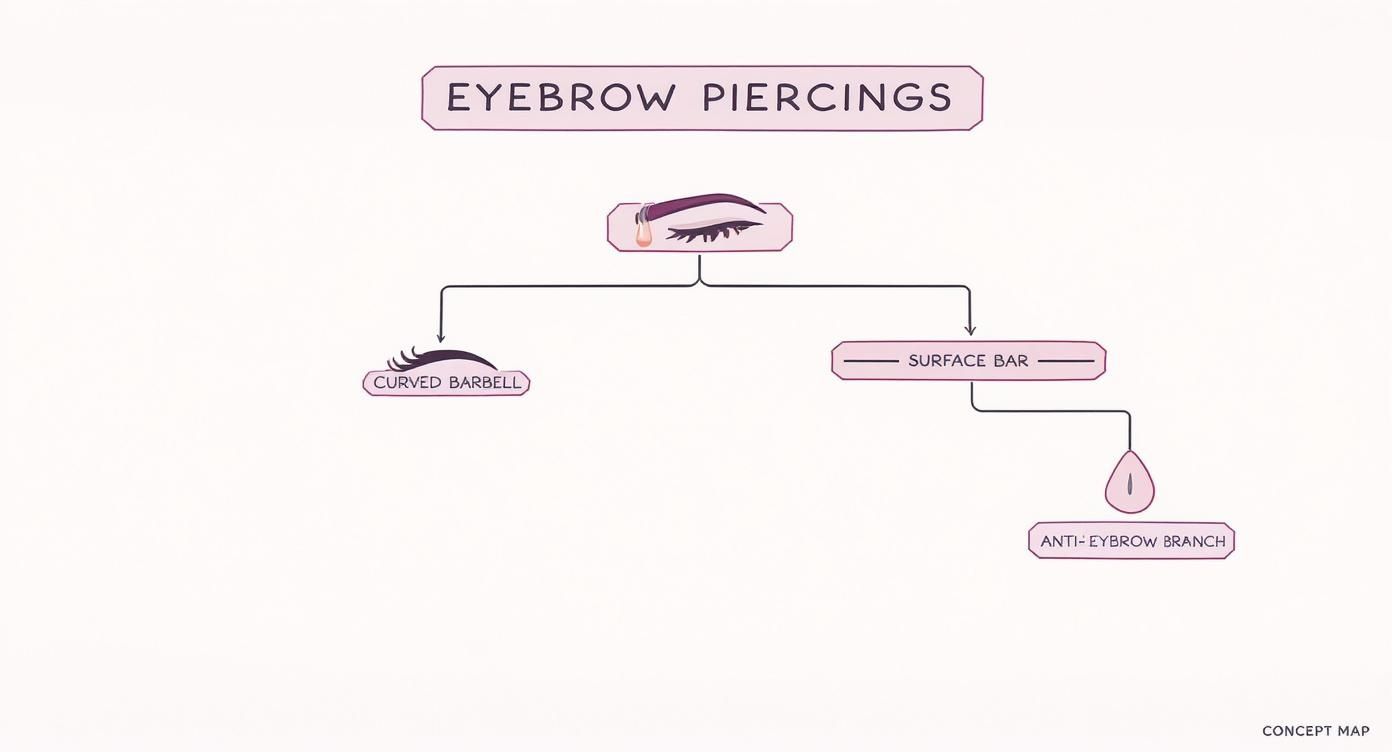
As you can see, placement is everything. The angle and location of the piercing dictate the jewelry choice, with classic vertical styles using curved barbells and surface piercings like the horizontal and anti-eyebrow needing specialized surface bars to heal properly.
To give you a quick overview before we dive deep, here’s a simple table summarizing the basics.
Quick Guide to Eyebrow Piercing Types
| Piercing Type | Typical Placement | Best Starter Jewelry |
|---|---|---|
| Vertical Eyebrow | Through the brow, just past the arch | Curved Barbell |
| Horizontal Eyebrow | Along the brow line, above or below | Surface Bar |
| Anti-Eyebrow | On the upper cheekbone below the eye | Surface Bar |
This table is just a starting point. Your piercer will help you choose the perfect placement and jewelry for your unique anatomy.
This piercing renaissance is all part of the bigger Y2K fashion comeback. Just like low-rise jeans and chunky platforms, eyebrow piercings are being embraced by a whole new generation looking for cool ways to express themselves. You can see more on how classic and contemporary styles are merging on SkinfinityTattooCompany.com.
Mastering the Classic Vertical Eyebrow Piercing
When you think of an eyebrow piercing, this is probably the one that pops into your head. The classic vertical piercing is iconic for a good reason—it’s got this timeless cool factor, works on pretty much everyone, and is super versatile.
Most of the time, a vertical eyebrow piercing is placed just past the arch of the brow, following its natural curve. This spot is perfect for accentuating your eye and adding a little bit of edge without being too in-your-face. It's the go-to for a reason and a solid choice if you're just dipping your toes into eyebrow piercings.
What to Expect During the Piercing Process
Getting this piercing done is actually a pretty quick and straightforward deal. Your piercer will kick things off by chatting with you about the exact placement, using a surgical marker to dot the entry and exit points so you can make sure you're totally happy with how it'll look.
Once you give the green light, they’ll clean the area and use a pair of forceps to gently hold the skin in place. Then, the needle goes through from bottom to top in one swift, smooth motion. Honestly, it's over before you even have a chance to get nervous! Right after, they’ll slide in your starter jewelry.
Pro Tip: Your first piece of jewelry will be a curved barbell. The shape is super important here. It follows the natural curve of the tissue, which helps minimize pressure and lowers the risk of rejection while you're healing. A straight barbell is a huge no-no for this spot.
Styling and Jewelry Choices
The classic look for a fresh vertical eyebrow piercing is a simple curved barbell with ball ends, usually made from implant-grade titanium or surgical steel. These materials are body-safe and just what you need for the 2-3 month healing journey.
After you're all healed up, that's when the fun really starts! You can swap out those standard balls for something with a bit more personality:
- Gemmed Ends: Why not add a little sparkle with some tiny gems or crystals?
- Spikes: Perfect for a more punk rock, edgier vibe.
- Shaped Ends: You can find everything from little stars and hearts to other fun designs to really show off your style.
The popularity of eyebrow piercings has had a huge impact on the body jewelry market. This industry is just one part of the global body piercing jewelry scene, which was valued at around $8.6 billion in 2025. It’s expected to jump to about $13.1 billion by 2032, thanks to the growing love for piercings like this one. You can read more about this growing market on Fortune Business Insights. All this growth just means more awesome jewelry options for you to rock once your piercing is healed!
Exploring the Bold Horizontal Eyebrow Piercing
If the classic vertical piercing feels a bit too mainstream for you, it might be time to meet its edgy cousin: the horizontal eyebrow piercing. This style completely flips the script, running sideways along your brow line instead of cutting through it.
It's a surface piercing, which is a fancy way of saying it sits just under the skin. The result is a super clean, almost architectural look that highlights your brows in a totally fresh way. You can place it to float just above the hairs of your eyebrow or tuck it neatly below—both placements create a striking effect.
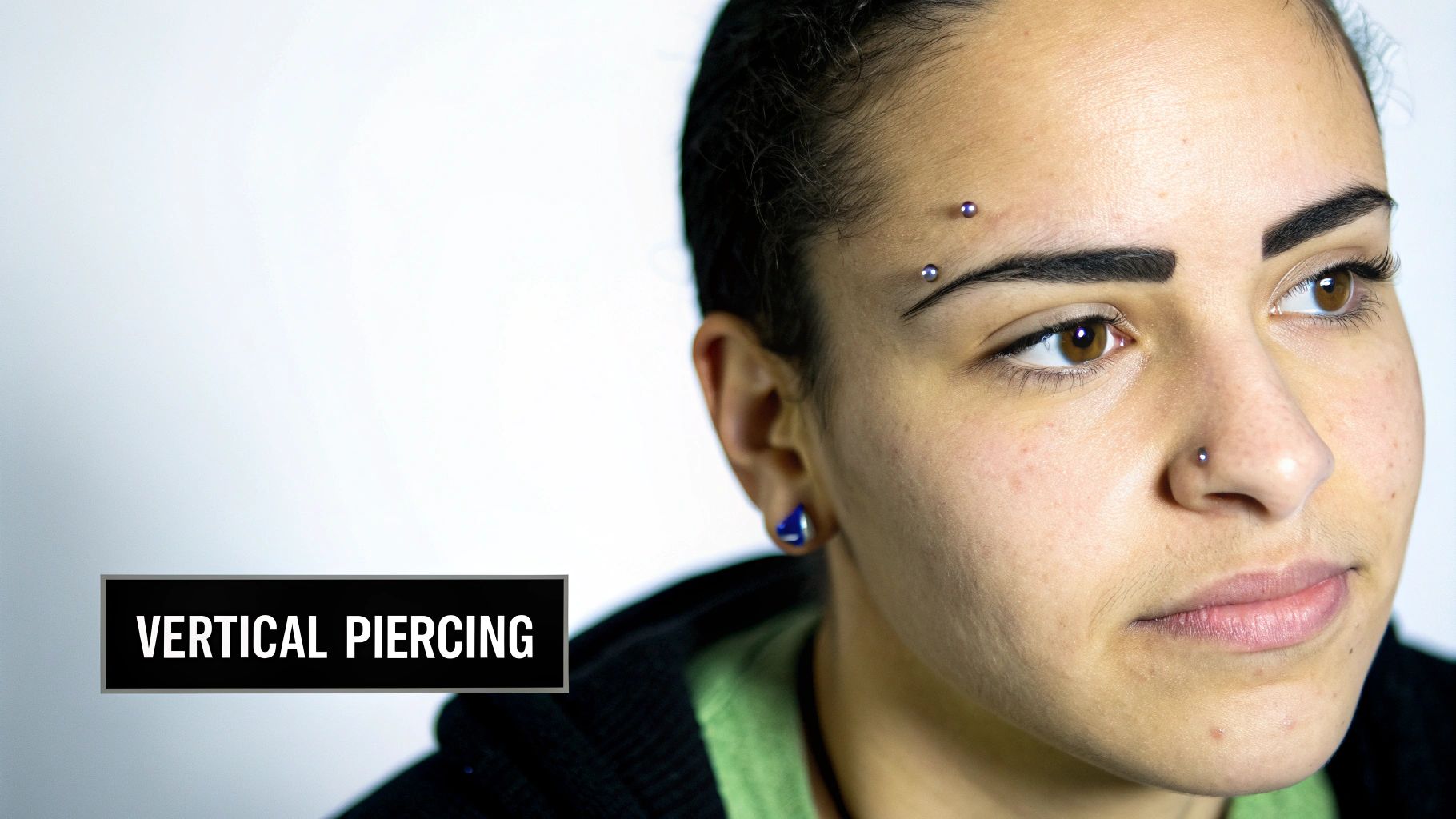
Unlike its vertical counterpart, this piercing isn't deep enough for a curved barbell. Instead, it demands a very specific piece of hardware: a surface bar.
Why Surface Bars Are Non-Negotiable
Think of a surface bar as a tiny staple that sits flat underneath your skin. It has a straight bar in the middle with two 90-degree posts that your jewelry ends screw onto. This design isn't just a suggestion; it's absolutely crucial for a few key reasons:
- It Reduces Pressure: The flat shape distributes pressure evenly across the piercing. A curved barbell would create constant tension on the entry and exit points, essentially trying to push itself out of your skin from day one.
- It Minimizes Rejection: Let's be honest, surface piercings have a higher chance of migrating (your body slowly pushing the jewelry out). The unique shape of a surface bar helps anchor it in place, giving it the best possible shot at healing properly and sticking around for the long haul.
- It Sits Flush with the Skin: This design is what allows the decorative ends to sit snugly against your skin, creating that sleek, floating-on-the-surface look that makes this piercing so cool.
When it comes to surface piercings, the right jewelry isn’t just about style—it’s about safety and longevity. A skilled piercer will always use a high-quality titanium surface bar for a fresh horizontal piercing.
Healing and Aftercare for a Surface Piercing
Surface piercings can be a bit more temperamental when it comes to healing. Because they don’t pass all the way through a piece of tissue (like a lobe piercing), they're more prone to getting snagged or irritated.
Healing typically takes around 3-5 months, but you'll need to be extra vigilant during that time. Your aftercare routine is pretty standard: gently clean the area with a sterile saline solution twice a day. The real challenge is avoiding snags. You’ll need to be super mindful when washing your face, brushing your hair, or pulling clothes over your head. Catching it just once can set back your healing and seriously increase the risk of migration.
For a deeper dive into this unique style, check out our guide on the rising stars of modern piercing, including the horizontal eyebrow. It’s packed with even more info to help you decide if this bold look is the one for you.
Thinking Outside the Box: Anti-Eyebrow and Bridge Piercings
Ready to push the boundaries of facial piercings a bit? Let's dive into some styles that, while not technically on the eyebrow, are definitely part of the same aesthetic family. If you're looking for something that really stands out from the crowd, these are for you.
First up is the striking anti-eyebrow piercing. You might also hear it called a "teardrop" or "butterfly" piercing because of its delicate placement. This is a surface piercing that sits right on the upper cheekbone, creating a dramatic and often symmetrical look just below the outer corner of your eye.
This isn't a deep piercing; it just skims right under the surface of the skin. Because of that, it has a much higher risk of rejection than other piercings if not done perfectly. The right placement and the right jewelry are everything for a happy, long-lasting anti-eyebrow.
Jewelry and Placement for Anti-Eyebrows
For an anti-eyebrow piercing to even have a chance at healing properly, a surface bar is non-negotiable. Just like with the horizontal eyebrow piercing, this staple-shaped bar sits flat under your skin and helps minimize pressure. Using a curved barbell in this spot is a seriously outdated practice that almost always leads to migration and ugly scarring.
Your piercer will need to carefully check out your anatomy, looking at your cheekbones and how your skin moves when you smile or talk. The goal is to find a nice flat spot with enough tissue to securely anchor the jewelry without putting it under constant stress.
Heads Up: Anti-eyebrow piercings are often considered "long-term temporary." This means that even with perfect placement and aftercare, your body might eventually just push the jewelry out. Getting a good 1-5 years out of it is common, though some lucky people can keep them for much longer!
What About a Bridge Piercing?
While it's not an eyebrow piercing, the bridge piercing is a close neighbor that creates a bold, symmetrical statement. It's placed horizontally across the bridge of your nose, sitting right between your eyes. It’s an awesome way to draw attention to your eyes and complements other facial piercings beautifully.
This piercing is super dependent on your anatomy, though. Your piercer has to be able to gently pinch enough loose skin on the bridge of your nose to safely pass a needle through. If your skin is too tight in that spot, the piercing will almost certainly reject.
For jewelry, a straight barbell is the only safe bet for a fresh bridge piercing. This ensures there's no unnecessary pressure on the tissue, giving it the best possible chance to heal up nicely. A curved bar would just create tension and lead to all sorts of problems. Once it's fully healed, you can have fun exploring different end styles for your straight barbell to really customize your look.
Styling Your Piercing with the Right Jewelry
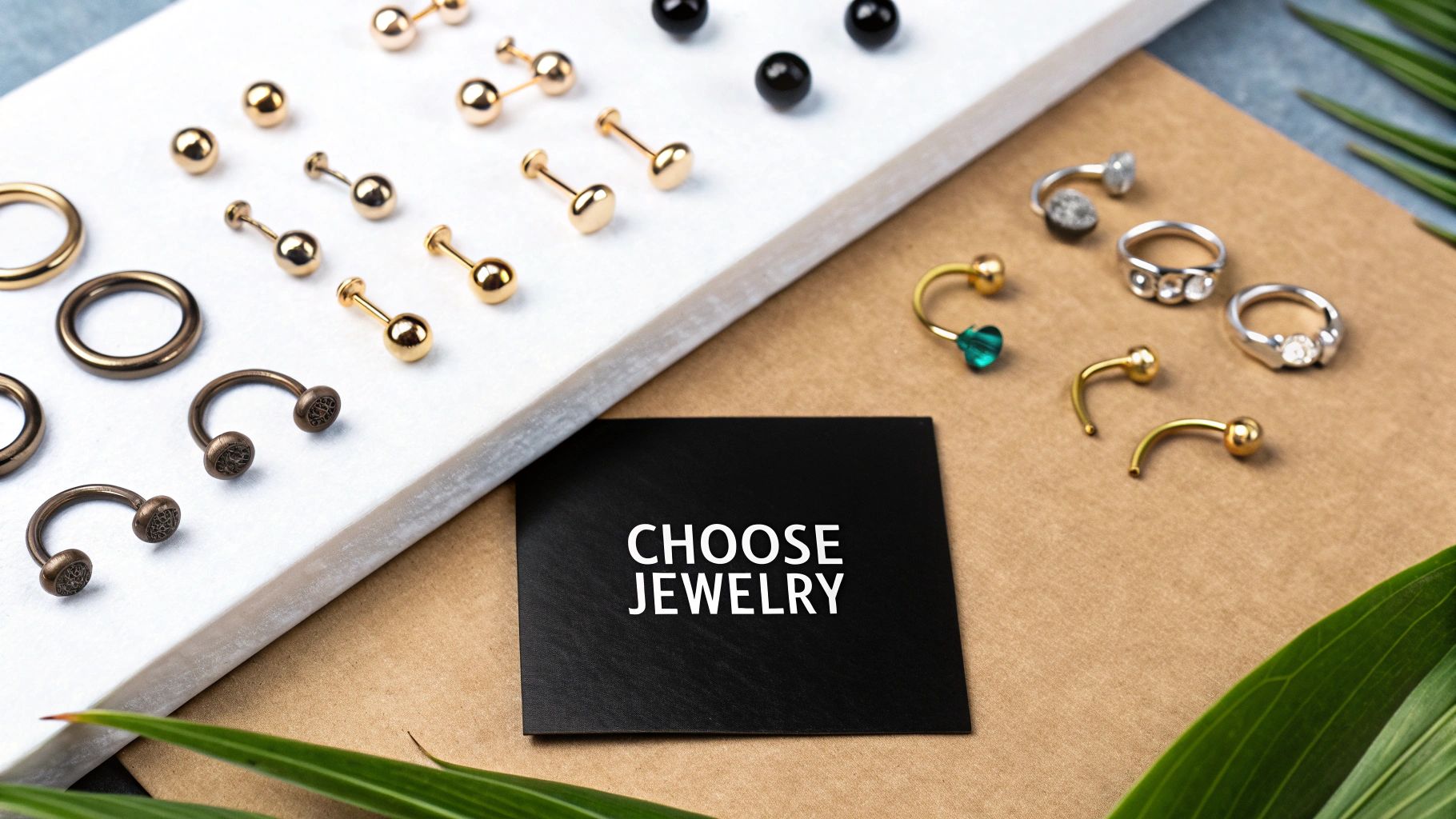
Okay, the healing journey is done—now for the best part! Choosing your jewelry is where you really get to play and show off your personal style. Swapping out that initial, plain starter jewelry for something that screams you is one of the most exciting piercing milestones.
Let's break down what works best for different eyebrow piercings.
Jewelry for Vertical Eyebrow Piercings
For the classic vertical piercing, your world is full of awesome options. You’ll mostly be looking at curved barbells and captive bead rings (CBRs). These shapes are designed to hug the curve of your brow, making them super comfortable and secure.
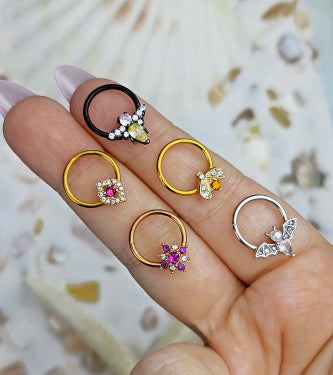
Once healed, you can go wild with decorative ends—think sparkly gems, edgy spikes, or even tiny shaped charms. You can explore a bunch of awesome eyebrow ring styles in our guide for more inspiration.
Jewelry for Horizontal and Anti-Eyebrow Piercings
For horizontal and anti-eyebrow piercings, the rules are a bit stricter. These are surface piercings, so they require surface bars to stay happy.
This staple-shaped jewelry sits flat under the skin, preventing the pressure that leads to rejection. While you can't change the bar itself, you can easily swap out the screw-on ends with all sorts of cool tops, from flat discs to dazzling gems.
Materials and Sizing Matter
Looks aren't everything—what your jewelry is made of is super important for keeping your piercing healthy. Here are the top materials to look for:
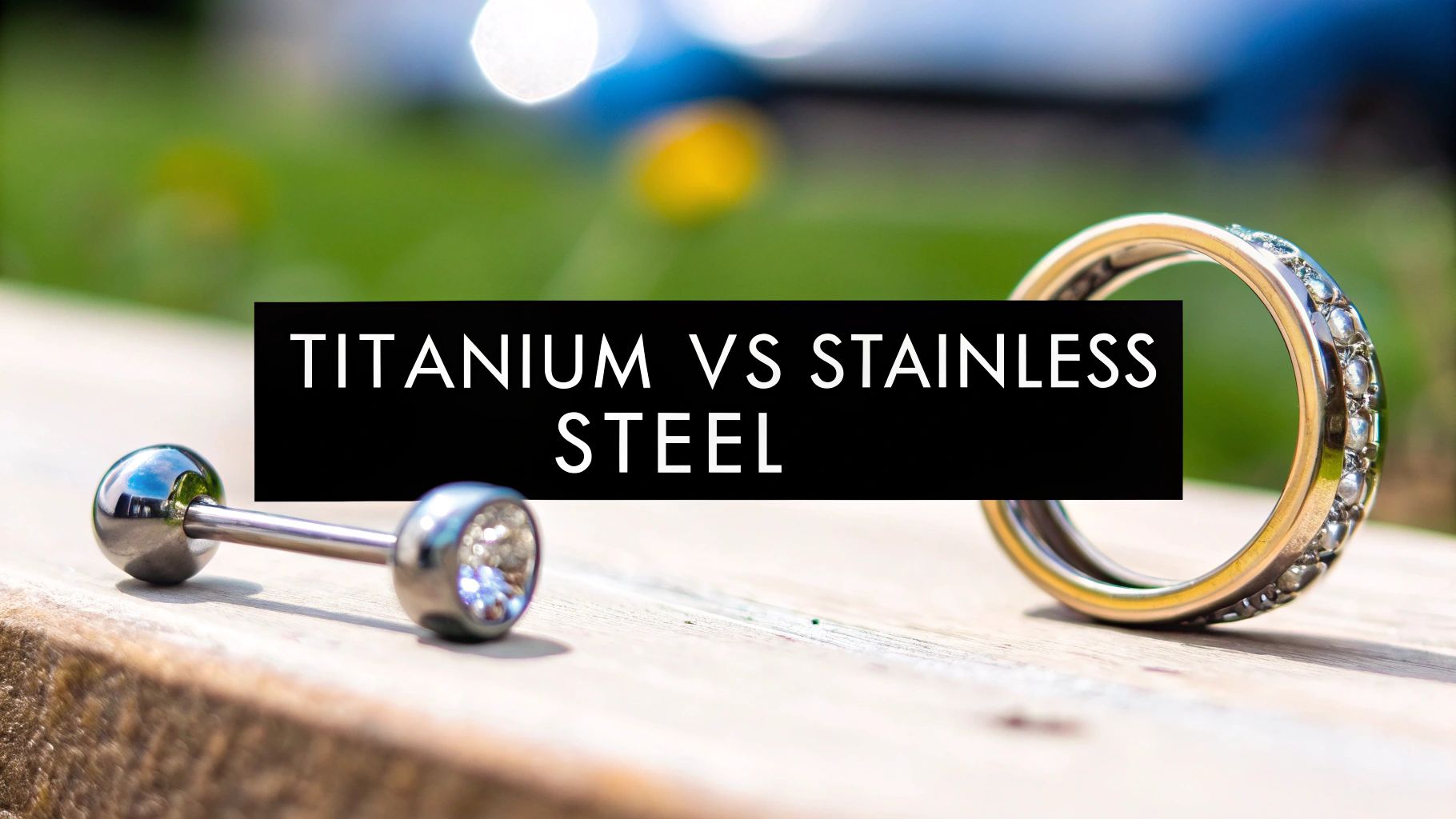
- Implant-Grade Titanium: This is the gold standard. It's hypoallergenic, lightweight, and won't tarnish, making it perfect for sensitive skin.
- Surgical Steel: A budget-friendly and durable option. Just make sure it's a high-quality grade like 316LVM to avoid potential nickel irritation.
- 14k Gold: If you want a touch of luxury, solid 14k or 18k gold (never plated!) is a beautiful, body-safe choice.
Sizing is also key. Most eyebrow piercings are done at a 16 gauge (1.2mm) thickness. The length of your barbell will depend on your anatomy, but common sizes range from 5/16" (8mm) to 3/8" (10mm). A snug, perfect fit prevents snags and irritation.
Jewelry Showdown: Vertical vs Horizontal Piercings
To make it even clearer, here's a quick rundown of what works best for the two main eyebrow piercing styles.
| Feature | Vertical Piercing | Horizontal Piercing |
|---|---|---|
| Best Jewelry Type | Curved Barbells, Captive Bead Rings (CBRs) | Surface Bars |
| Why It Works | Follows the natural curve of the brow ridge. | Sits flat under the skin to reduce pressure. |
| Customization | Swap entire piece or just the threaded ends. | Swap only the threaded ends (tops). |
| Common Gauge | 16g (1.2mm) | 16g (1.2mm) |
| Common Length | 5/16" (8mm) - 3/8" (10mm) | Varies greatly based on placement and anatomy. |
| Top Materials | Titanium, Surgical Steel, 14k Gold | Titanium, Surgical Steel, 14k Gold |
Getting the right jewelry isn't just about looks—it's about keeping your piercing happy and healthy for the long haul. Choosing the correct style and material from the start makes all the difference.
It's also worth noting how much piercing demographics have shifted. Recent insights show male facial piercings have seen a 60% increase, signaling a major change in societal norms. This means more guys are rocking different eyebrow piercings than ever before, expanding the styles and trends we see everywhere. You can discover more about these piercing statistics and how the landscape is changing.
Essential Healing and Aftercare Tips
A beautiful piercing starts with great aftercare. Getting your new eyebrow piercing is the exciting part, but how you treat it for the next few months is what really counts. Think of this as your simple, drama-free guide to a smooth healing journey.
Your new piercing is essentially a small wound that needs to be kept clean to heal perfectly. The good news? The process is super easy. Your main tool will be a sterile saline solution—you absolutely do not need harsh soaps, alcohol, or peroxide! Those will just dry out your skin and cause a world of irritation.
Your Daily Cleaning Routine
Keeping things clean is your number one priority for the next few months. Stick to this simple routine twice a day to keep your piercing happy and healthy. Any more than that can actually irritate it.
- Wash Your Hands: First things first, always scrub your hands thoroughly with soap and water before you even think about touching your piercing.
- Soak Gently: You can spray the sterile saline solution directly onto the piercing or saturate a clean, non-woven gauze pad with it.
- Clean Away Crusties: Gently hold the soaked gauze on the piercing for a few minutes. This softens up any of those little "crusties" (which is just dried lymph fluid—totally normal!). Carefully wipe them away. Never pick at them with your fingers!
- Pat Dry: Use a fresh paper towel to gently pat the area completely dry. A damp piercing can be a breeding ground for bacteria, so don't skip this step.
Your eyebrow piercing will typically take around 2-3 months to fully heal. It might look healed on the outside way sooner, but the tissue on the inside needs that full time to get strong. Be patient with your body!
It's perfectly normal to see some mild swelling and redness for the first week or two. For a more detailed breakdown of what to expect, you can learn more by reading about the healing times for popular piercings in our comprehensive guide.
The biggest challenge with an eyebrow piercing is avoiding snags. You'll need to be extra careful when pulling shirts over your head, washing your face, and drying off with a towel. At night, try sleeping on the opposite side of your new piercing or use a travel pillow to create a little pocket for your ear and keep the pressure off. A little bit of mindfulness goes a long, long way.
Your Eyebrow Piercing Questions Answered
Got questions swirling around in your head? You're not alone! Deciding to get any new piercing always comes with a bunch of "what ifs." We’ve gathered the most common questions about eyebrow piercings to give you the clear, straightforward answers you need.
How Much Does an Eyebrow Piercing Hurt?
Pain is always personal, but the good news is that most people find eyebrow piercings to be one of the less painful options out there. You'll feel a quick, sharp pinch that lasts for just a second.
It’s often compared to a strong tweezing sensation or a standard vaccination shot. It’s over before you know it!
Do Eyebrow Piercings Reject Easily?
Eyebrow piercings are a type of surface piercing, which means they do have a slightly higher risk of rejection or migration compared to something like an earlobe piercing. But don't let that scare you!
This risk is significantly lowered with proper placement by an experienced piercer and diligent aftercare. Follow these tips to give your piercing the best chance to thrive:
- Choose a Pro Piercer: An expert will assess your anatomy and place the piercing at the correct depth and angle. This is the single most important step.
- Wear Proper Jewelry: Stick with high-quality, implant-grade titanium jewelry. For a standard vertical piercing, that means a curved barbell; for a horizontal one, you'll need a surface bar.
- Avoid Snags: Be mindful when pulling clothes over your head, drying your face with a towel, and sleeping. Avoiding pressure or trauma is key to a happy piercing.
Will It Make My Eyebrow Hair Fall Out?
This is a total myth! The piercing sits in the skin below the hair follicles, so it won’t cause your brow hair to fall out or stop growing. Your brows are safe!
If anything, you might notice a tiny spot right at the piercing hole where a hair doesn't grow, but it's usually completely unnoticeable.
The Bottom Line: A well-done eyebrow piercing shouldn't cause hair loss. The needle passes through the skin, not the hair follicles themselves.
How Much Do They Usually Cost?
The cost can vary quite a bit depending on your location, the studio's reputation, and the jewelry you pick out. Generally, you can expect to pay anywhere from $40 to $80 for the piercing service itself.
Remember, your initial jewelry will be an additional cost on top of the service fee.
Can I Hide It with a Retainer?
Absolutely! Once your piercing is fully healed (that's after about 2-3 months), you can swap your metal jewelry for a clear or skin-toned retainer.
These are perfect for work, school, or any situation where you need to keep your piercing discreet. Just make sure to use high-quality retainers made from safe materials like glass or Bioplast.
Feeling confident and ready to explore your new look? BodyCandy has an incredible collection of high-quality, stylish jewelry perfect for all the different eyebrow piercings you can imagine. Shop our full collection of eyebrow rings today!