How Threadless Jewelry Works, and How to Size It
The post is hollow, the top carries a short pin with a slight bend, and pressing the pin into the post wedges it in place by tension. To change a top, hold the post and pull straight out, never twist; to tighten a loose top, add a touch more bend to the pin; to loosen a stiff one, straighten it a hair. Because nothing is tapped or threaded, threadless jewelry comes in finer gauges than screw-on pieces and is the usual choice on the face, the ear and oral piercings, where threads would collect buildup and an externally threaded post would drag through a settling channel.
Match the gauge you wear now, 20G or 18G for the nostril and lobe, 16G for lip and cartilage, 14G for nipple and belly. Post length is the bar between the disc and the top: 1/4 inch for a snug nostril or tragus, 5/16 inch for most cartilage and lip piercings, 3/8 inch for a healing or thicker spot. Tops and posts from different brands fit each other often but not always, so pair ours with ours or test the pin before you wear it; spare implant-grade titanium posts in every gauge are on the replacement page.
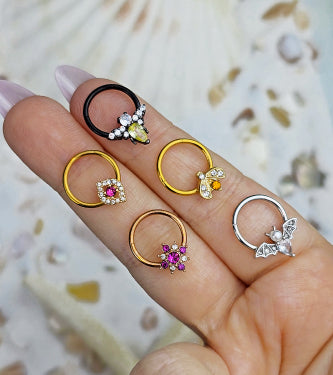
Most of this page is implant-grade titanium (ASTM F-136), the nickel-free metal for sensitive and fresh piercings, in natural grey and in gold, rose and black PVD finishes named in the title. 316L surgical steel pieces hold a trace of nickel locked in the alloy; solid 14k gold tops and posts are made to order and priced as gold. Buy-one-get-two offers apply here as everywhere, except to 14k gold.
Threadless by piercing: