
















Which labret style is right for you, the one that looks best in a photo, or the one that works comfortably with your anatomy every day? The names can sound interchangeable, but a few millimeters of placement can change the jewelry you need, the styling options you have, the amount of contact with your teeth and gums, and the way healing feels.
This guide compares seven types of labret piercings by location, jewelry, healing expectations, styling potential, and practical trade-offs. You'll also find a visual placement guide through the descriptions, plus clear reminders about when a professional piercer should make the final call. A qualified piercer needs to assess your lip tissue, oral anatomy, swelling, and initial jewelry size before you buy or install a piece.
BodyCandy is a useful place to browse the range, from understated flat-back studs to bold lip-jewelry looks. Treat shopping as the fun part, but let an experienced piercer handle placement and first-fit sizing.
1. BodyCandy
BodyCandy is a strong starting point if you want to compare labret-friendly jewelry without locking yourself into one aesthetic. The retailer carries body jewelry across categories such as nose, belly, nipple, ear, tongue, and septum, so you can build a coordinated setup instead of shopping for one isolated piece.
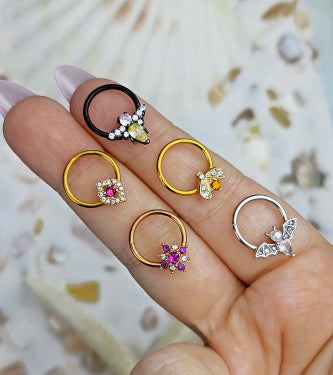
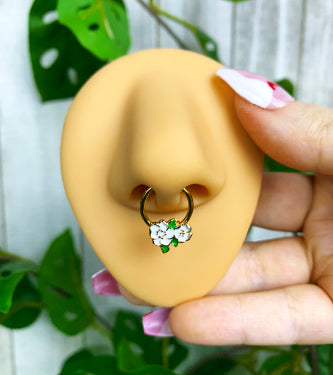
The selection ranges from playful costume-style accents to implant-grade titanium and 14K gold options. You'll also find flat-back designs, customizable mounts, handcrafted looks, themed collections, holiday pieces, and glow-in-the-dark styles. That variety matters with labrets because the same placement can look delicate with a tiny gemstone, graphic with a decorative disc, or more dramatic after healing with a hoop.
Best for variety and value
BodyCandy's product filters, size guides, care resources, and visible star ratings make it easier to narrow down the right category. Rewards features, a Monthly Club, promotions, and VIP processing can add value for shoppers who change their look often. International shoppers can also use the site's regional and currency options, although shipping and returns can vary by destination.
A useful material split is simple:
- For trend testing: Lower-priced pieces can help you experiment with color and shape, but quality and finish vary by price tier.
- For sensitive skin: Look for clearly identified hypoallergenic or implant-grade titanium options rather than relying on vague metal descriptions.
- For a premium upgrade: Solid 14K gold offers a higher-end look, provided the piece is appropriate for your healed piercing and anatomy.
- For inner-lip comfort: A low-profile flat back can reduce bulk, but fit and placement still matter more than appearance alone.
Shopping rule: Buy the style you love, but confirm gauge, wearable length, threading system, and material with your piercer before using it in a fresh piercing.
BodyCandy's labret guide explains how standard, side, vertical, snake-bite, and dolphin-bite placements differ, which makes it a helpful companion to product browsing. You can also explore the brand's labret piercing styles and standards guide before choosing an end or post.
Strengths and limitations
The biggest strength is choice. The main limitation is that inexpensive jewelry isn't automatically comparable to implant-grade titanium or solid gold. Read the listing carefully, check the size information, and treat customer ratings as one input rather than a substitute for professional fitting.

2. Urban Body Jewelry
The classic labret is a horizontal piercing centered below the bottom lip. It doesn't pass through the lip itself. Instead, the decorative end sits outside, while the flat back rests against the inside of the lip. That small anatomical distinction separates a true standard labret from the Ashley, which passes through the lower lip.
Urban Body Jewelry's lip and labret guide is especially useful when the names start blending together. It defines central and off-center placements, plus related styles such as the Medusa or philtrum above the upper lip and snake bites on opposite sides of the lower lip.
The placement map
Think of the lower lip as a design zone:
- Standard labret: One centered piercing below the lower lip, usually fitted with a flat-back labret stud.
- Side labret: One lower-lip piercing placed to the left or right of center for an asymmetrical look.
- Snake bites: Two side labrets, one on each side of the lower lip.
- Spider bites: Two closely spaced piercings on one side.
- Lowbret: A lower placement closer to the chin, subject to anatomy and tissue depth.
- Ashley: A piercing that enters through the outside center of the lower lip and exits inside the mouth, leaving one visible external end.
A standard or side labret gives you a clean starting point for later styling. Once healed and professionally assessed, some people move from a flat-back stud to a ring or another suitable design. Rings move more, though, so they aren't the choice for initial healing.
Urban Body Jewelry also emphasizes downsizing after swelling settles. That follow-up matters because excess post length can move against teeth and gums, catch during eating, or encourage you to play with the jewelry.

3. Painful Pleasures
Painful Pleasures separates labret styles by direction and position, which is a smart way to make the choice less confusing. A standard or side labret sits horizontally and has an oral component. A vertical labret travels through the lower lip vertically, with the jewelry visible on the outside rather than ending against the inner lip.
That difference changes the risk conversation. A standard labret can expose the teeth and gums to repeated jewelry contact. A vertical labret avoids that inner-mouth backing, although the jewelry still moves with the lip and can be more demanding during healing.
One piercing, several combinations
A side labret can stand alone or become part of a paired look. Two opposite side labrets create snake bites. Two close placements on one side create spider bites. More elaborate groupings include shark, dolphin, and other bite configurations. The names describe the arrangement, not a completely separate jewelry mechanism.
The Painful Pleasures labret guide gives practical context around placement, jewelry sizing, studio factors, and aftercare. Use its distinctions to explain your desired look, then let your piercer translate that idea to your anatomy.
For a vertical placement, a curved barbell is generally the relevant jewelry shape because it follows the lip's tissue path. For a standard or side labret, a flat-back labret is the usual starting format. In both cases, initial jewelry needs room for swelling and shouldn't be selected by appearance alone.
Style choice versus daily habits
Choose a standard labret if you want a classic center point and future pairing options. Choose a side labret if you prefer asymmetry or want to build a bite configuration. Consider a vertical labret if avoiding inner-mouth contact is a priority and you're comfortable with a more visible, lip-focused design.
You can read more about the rising popularity of vertical labret styling, especially if you want a bold look without an inner-lip disc.

4. Infinite Body Piercing
Infinite Body Piercing takes a safety-first approach by defining what a labret is before discussing styling. That matters because people often use “labret” as an umbrella term for several lower-lip and upper-lip placements.
A standard labret sits below the lower lip. A Monroe or Madonna is positioned above the upper lip toward one side. A Medusa, also called a philtrum, sits above the upper lip in the center. These aren't interchangeable placements, even though they may all use flat-back jewelry.
The oral-contact question
The standard labret and Ashley have an inner-mouth component, so the back of the jewelry can contact gums or teeth. The Ashley, also called an inverse vertical labret, enters through the outside center of the lower lip and exits into the mouth, with only one end visible externally. A vertical labret has external entry and exit points, so it avoids an inner-mouth back.
That mechanical difference should guide your decision more than the trend name. A clinical study published through PubMed found gingival recession on teeth opposing a labret in 68.13% of pierced subjects, compared with 22.2% of unpierced controls. The same study reported that recession was 7.5 times more likely among labret wearers. This is why tooth-contact placement deserves a serious consultation.
Jewelry should sit comfortably, not constantly click, scrape, or press against your teeth. If it does, return to your piercer rather than trying to solve the fit with online guesswork.
Infinite Body also stresses downsizing after swelling reduces. A shorter, correctly fitted post can limit movement and mechanical irritation, but it cannot erase every risk associated with oral contact. Ask your piercer about follow-up timing, material, threading, and whether the chosen placement suits your gum line.

5. FreshTrends
FreshTrends frames the labret as a flexible style that can stay minimal or become part of a larger lip arrangement. A centered standard labret creates a strong focal point beneath the mouth. Add a matching side placement on each side and you get snake bites. Pairing placements in different positions can create a more customized composition.
The jewelry choice changes the mood quickly. A tiny flat-back stud reads clean and subtle. A gemstone adds sparkle without changing the placement. A hoop creates movement, but it belongs in a healed piercing and may be less forgiving if the fit is loose or the anatomy isn't suited to it.
Dental comfort belongs in the style brief
A standard labret's inner disc can rub against enamel or gums. The issue is mechanical contact, so placement, post length, jewelry profile, and personal habits all matter. Biting the jewelry or pushing it against your teeth can increase irritation even when the original piercing was placed well.
A retrospective study of 108 patients reported that 96% experienced local post-procedure complications despite following piercer instructions. It recorded bleeding in 90% within 12 hours, edema lasting 3±2 days in 80%, enamel abrasions and fractures in 30% each, and gingival recession in 25%. These findings, reported by Medical Science Monitor, show why oral piercing care shouldn't stop once the swelling looks better.
For material upgrades, FreshTrends highlights hypoallergenic, implant-grade, and fine-metal options. BodyCandy's labret jewelry styles for every aesthetic can help you compare visual directions, but your piercer should confirm whether a piece is suitable for a fresh or healed channel.
Pick the look you'll actually wear
A centered labret suits a symmetrical, classic look. Side labrets feel more relaxed and editorial. Snake bites create deliberate balance. If long-term dental comfort is your top priority, ask whether a vertical labret offers the look you want with less inner-mouth contact.

6. NeilMed Piercing Aftercare
NeilMed's catalog-style guide is handy if you want to see how many named lip configurations grow from a few basic placements. Its list includes the Ashley, vertical labret, lowbret, side labret, snake bites, spider bites, shark bites, dolphin bites, canine bites, angel bites, Medusa, Jestrum, Monroe, Madonna, Dahlia, and cyber bites.
Some of those aren't labrets in the narrow anatomical sense. The value is seeing the relationships clearly. Cyber bites, for example, combine a Medusa with a lower labret. Snake bites use two lower side placements. A vertical labret follows a different path and uses different jewelry from a standard lower-lip labret.
Match jewelry to the route
A flat-back labret is the usual format for a standard, side, lowbret, or other placement with an inner-mouth end. A curved barbell is associated with vertical placements because it follows the tissue's direction. The Ashley is mechanically distinct, with the jewelry passing through the lower lip and showing one external end.
Healing expectations vary by placement, anatomy, lifestyle, and jewelry fit. Don't treat an online timeline as permission to change jewelry early. Fresh piercings swell, and initial jewelry needs extra space. A piercer should decide when a shorter post or different piece is appropriate.
NeilMed's complete guide to lip-piercing types also reinforces the importance of separating external cleaning from oral hygiene. Oral bacteria enter the wound during eating, drinking, kissing, and oral sex, so a lip piercing requires attention on both sides of the tissue.
Aftercare reality: A piercing can look calm outside while the internal channel remains fragile. Keep cleaning gentle, avoid unnecessary movement, and get professional advice when swelling, pain, or jewelry pressure worsens.
7. Vital Piercing
Vital Piercing organizes lip piercings around the decisions first-timers usually care about: center or side, vertical or horizontal, single placement or paired setup, and inside-mouth contact or no inner backing. That makes it easier to compare a classic labret with a vertical labret, Ashley, Jestrum, or bite arrangement.
A standard labret uses a flat-back stud, with the decorative end outside and the disc inside. A side labret shifts that placement off-center. Snake bites add a matching side labret on the opposite side. Vertical labrets use a curved barbell and show both ends externally. The Ashley enters and exits through the lower lip, so only one end is visible outside.
Fit is the practical deal-breaker
Flat-back labrets are commonly sized at 16G or 18G, with 6 mm, 8 mm, and 10 mm post lengths used depending on anatomy and the room needed for swelling, as described in Body Jewelry's flat-back labret sizing guide. Another sizing guide lists labret lip rings at 14G or 16G, with standard lengths of 1/4 inch, 5/16 inch, and 3/8 inch. Measurements refer to the wearable post area, not the decorative end.
That range explains why copying a friend's size can backfire. A post that works for one lip may be too short for another during swelling or too long after healing. Implant-grade titanium is a practical material to discuss with your piercer, especially if you're concerned about metal sensitivity.
Vital Piercing also separates external and oral aftercare. That split is useful because a standard labret needs attention inside the mouth, while a vertical labret's care centers on external openings and lip movement.
Labret Piercing Types: Comparison of 7 Brands
| Source | Implementation complexity 🔄 | Resource requirements ⚡ | Expected outcomes 📊 | Ideal use cases 💡 | Key advantages ⭐ |
|---|---|---|---|---|---|
| BodyCandy | Low 🔄, easy shopping UX, many filters | Low→High ⚡, items from ~$1.99 to premium gold | 📊 Wide selection; ⭐ High value for budget buyers; mid‑range durability | 💡 Shopping broad styles, trends, or upgrading to implant‑grade/gold | ⭐ Massive, organized catalog; frequent promos; hypoallergenic options |
| Urban Body Jewelry | Low→Moderate 🔄, single comprehensive guide | Low ⚡, time to read; links to inventory | 📊 Clear placement breakdown; ⭐ Practical jewelry & aftercare tips | 💡 Learning lip/labret types and sizing before studio visit | ⭐ Very complete single‑page rundown; good visuals and gauge norms |
| Painful Pleasures | Moderate 🔄, supplier‑backed technical guide | Low→Moderate ⚡, reading time; product links | 📊 Technical accuracy; ⭐ Useful sizing and cost drivers (2025) | 💡 Buyers or pros seeking supplier‑level sizing and healing info | ⭐ Thorough, recent, supplier‑backed technical detail |
| Infinite Body Piercing | Low→Moderate 🔄, studio education resource | Low ⚡, educational focus; links to APP guidance | 📊 Safety‑forward outcomes; ⭐ Reduced dental/gum risk with proper care | 💡 Safety‑conscious clients planning downsizing and oral care | ⭐ Professional, evidence‑based dental risk guidance |
| FreshTrends | Low→Moderate 🔄, brand explainer with product links | Moderate→High ⚡, leans to premium jewelry purchases | 📊 Balanced style vs risk; ⭐ Emphasis on hypoallergenic/fine metals | 💡 Choosing premium, nickel‑safe labret options | ⭐ Focus on fine metals and long‑term dental trade‑offs |
| NeilMed Piercing Aftercare | Low 🔄, concise type‑by‑type reference | Low ⚡, quick read; consumer focused | 📊 Fast comparisons and healing windows; ⭐ Clear planning tool | 💡 Quick reference for healing timelines and jewelry choices | ⭐ One of the clearest menus; consumer‑friendly healing bands |
| Vital Piercing | Moderate 🔄, structured guide with sizes/pain scales | Low→Moderate ⚡, product orientation but educational | 📊 Specific size/pain expectations; ⭐ Good for first‑timers | 💡 First‑time piercees comparing comfort, sizes, aftercare | ⭐ Readable size ranges, split aftercare (oral vs external) |
Choose Your Placement, Then Plan Your Jewelry
The best labret isn't just the trendiest one. It's the placement that fits your anatomy, your daily habits, your oral-health priorities, and the look you'll still enjoy after the novelty fades.
Use these decision points when you talk with a qualified piercer:
- Center or side: A centered labret creates symmetry and a clear focal point. A side labret gives you asymmetry and can become part of snake bites, spider bites, shark bites, or another paired arrangement.
- Inside the mouth or outside only: Standard labrets and Ashley piercings have an oral component. Vertical labrets avoid an inner-mouth backing, which can reduce tooth and gum contact, but the jewelry still moves through lip tissue.
- Flat back or curved barbell: Standard and side placements commonly use flat-back labrets. Vertical labrets generally need curved jewelry that follows the route through the lip.
- Material: Ask for clearly identified, body-safe material. Implant-grade titanium is a common professional option, while solid 14K gold may suit a healed piercing and a premium styling goal.
- Fit: Gauge and wearable length must match your anatomy. Common flat-back sizes include 16G and 18G, with 6 mm, 8 mm, and 10 mm lengths used in different situations, but your piercer should choose the actual size.
- Healing plan: Swelling, tenderness, and changing jewelry too soon can create problems. Follow professional aftercare, keep oral hygiene consistent, and schedule a fitting check when swelling has settled.
- Dental comfort: Watch for rubbing, clicking, pressure, gum irritation, enamel wear, or an embedded back. A shorter post may reduce movement, but oral-contact risk remains a central consideration.
- Styling goal: Pick a tiny stud for a discreet accent, a gemstone for sparkle, a paired setup for symmetry, or a vertical design for a more visible pout-focused look.
Medical literature supports taking that dental trade-off seriously. The clinical study linked above found a strong association between labret wear and recession on opposing teeth, while the retrospective oral-piercing study documented bleeding, edema, enamel damage, fractures, and recession among its patients. Those findings don't mean every wearer will experience the same outcome, but they do make professional placement, correct sizing, downsizing, and ongoing dental awareness important.
Before buying initial jewelry, ask your piercer to confirm the placement, material, gauge, post length, end style, threading system, and aftercare routine. If you already have gum recession, enamel concerns, metal sensitivity, persistent swelling, or pain that worsens instead of improving, speak with a qualified piercer and an appropriate medical or dental professional.
Browse BodyCandy's labret-friendly collection when you're ready to explore studs, flat backs, decorative ends, and vertical-labret styles. Compare materials, read the size information, and use the care guidance so your next look is expressive, comfortable, and chosen with intention.
BodyCandy offers a broad range of labret-friendly body jewelry, from playful affordable accents to implant-grade titanium and 14K gold options for a more refined look. Visit BodyCandy to compare styles and materials, then use the available sizing and care guidance before choosing your new labret look.