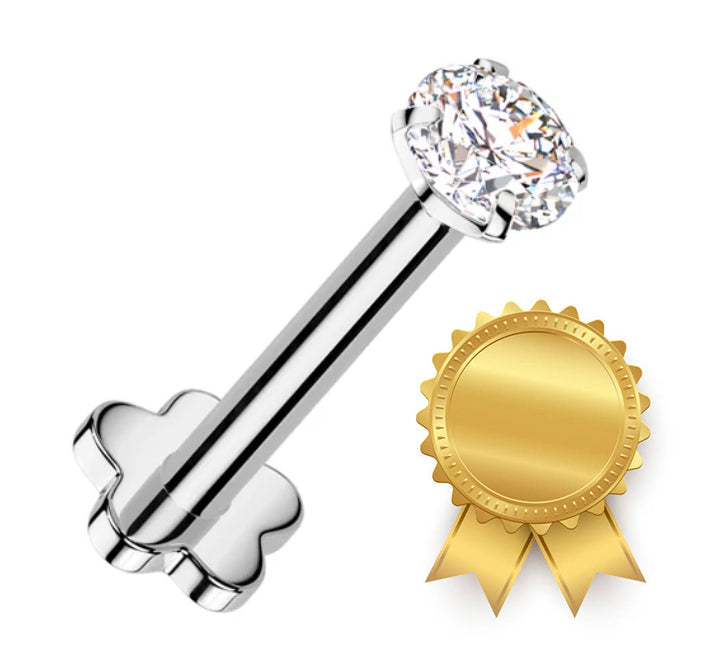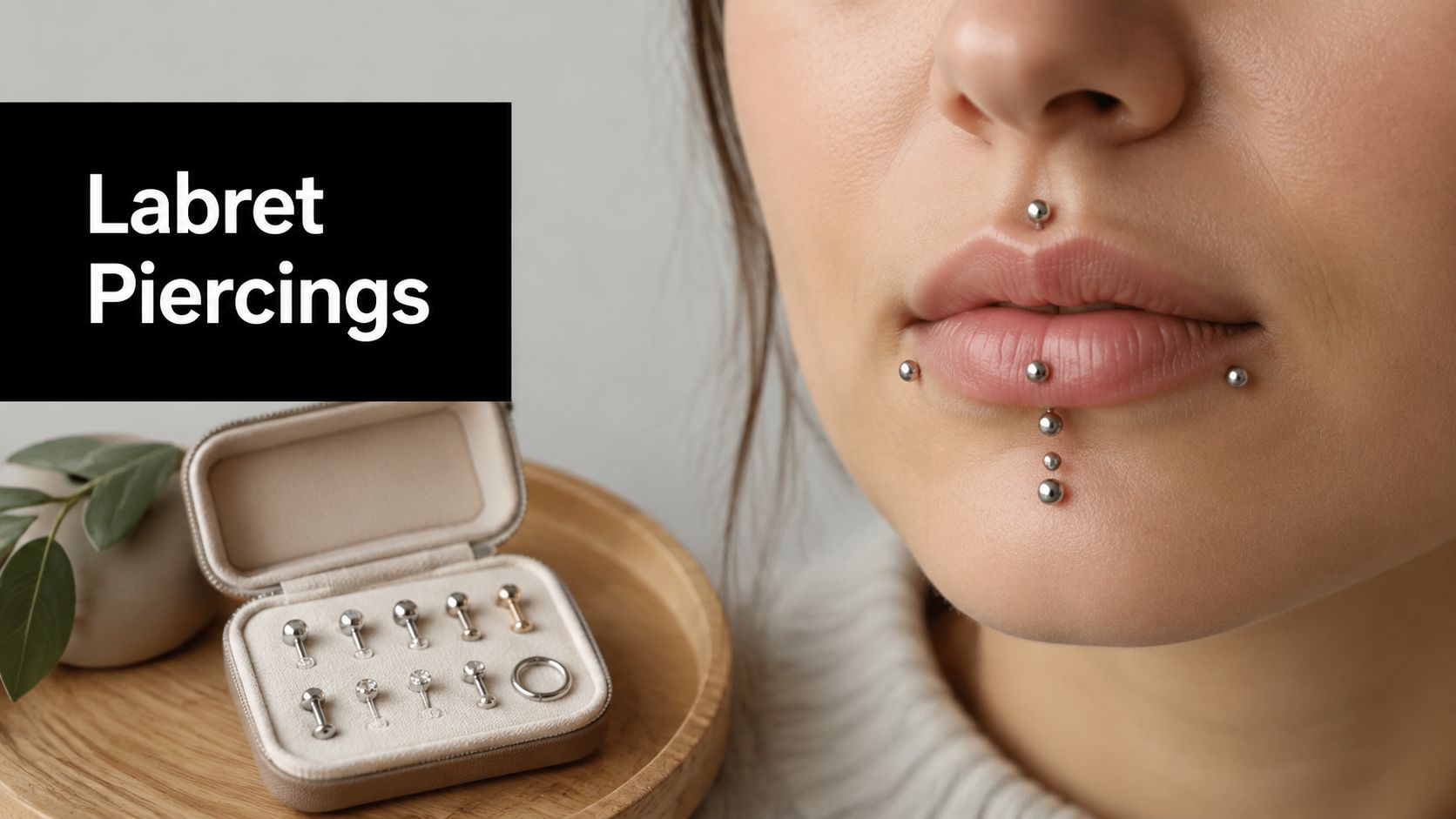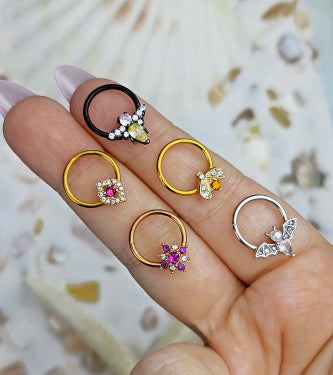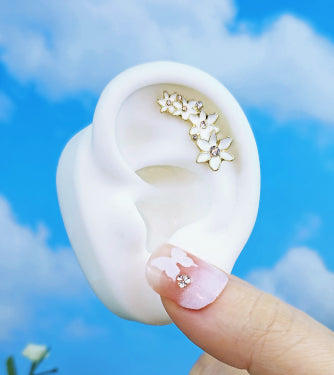

















You're scrolling through belly button rings late at night, comparing glittering dangles, curved barbells, floating styles, and simple metal designs. One listing says “surgical steel,” another says “hypoallergenic,” and a third highlights titanium. The cute option isn't always the comfortable option, especially if your piercing is fresh, your skin reacts easily, or the barbell doesn't fit your anatomy.
Stainless steel belly button jewelry remains popular because it combines durability, polished looks, and accessible styling. The smarter question isn't whether stainless steel is hypoallergenic. It's which grade you're buying, who will wear it, and whether the piercing is healed. Once you understand the material, sizing, and design details, choosing a belly ring becomes much less overwhelming.
Finding the Right Belly Ring for Your Style
A classic curved barbell can disappear into an everyday outfit, while a gem-set piece can turn a crop top or swimsuit into the whole look. Maybe you want a low-key piece for jeans and a fitted tee. Maybe you're after a Y2K-inspired charm that catches the light when you move. Both choices can work, but the jewelry still needs to suit your piercing.
Stainless steel sits between fashion flexibility and practical wearability. It's available in polished silver tones, colorful finishes, crystals, reverse tops, dangles, and minimalist shapes. Compared with softer or more lightweight materials, it generally feels sturdy and holds its form well, which matters when a curved barbell moves with your clothing throughout the day.
Your piercing stage should guide the first decision:
- Fresh piercing: Choose jewelry made to meet the applicable piercing and implant standards, with enough room for swelling and professional guidance on fit.
- Healed piercing: You'll have more freedom to explore dangles, charms, reverse tops, and snugger low-profile styles.
- Sensitive skin: Treat “hypoallergenic” as a starting point, not proof. Find the actual grade and nickel-release information.
- Active lifestyle: Favor a smooth, secure design that won't snag during movement, changing clothes, or sleep.
A floating navel can sit flatter beneath high-waisted clothing, while a traditional curved barbell offers the familiar belly-ring silhouette. The best stainless steel belly button jewelry is the piece that matches your style without asking your skin to tolerate a poor material or awkward fit.
What Makes Stainless Steel Work for Belly Jewelry
Stainless steel isn't one single metal. It's an alloy, meaning manufacturers combine metals to create a material with useful properties. In belly jewelry, the important ingredients include chromium, nickel, and, in relevant grades, molybdenum.
Chromium reacts with oxygen and forms an extremely thin chromium-oxide surface layer. That passive layer helps protect the metal underneath from corrosion. It can renew itself when the surface remains clean and exposed to oxygen, which is why stainless steel generally resists the rusting you'd expect from ordinary iron.

Why the navel puts materials to work
Your navel is a warm, high-moisture area. Clothing rubs against it, your body bends and sits, and lotion or sunscreen can collect around the barbell. A corrosion-resistant alloy handles that environment better than a material that scratches, flakes, or breaks down easily.
The relevant baseline alloy, 316L stainless steel, contains about 16–18% chromium, 10–14% nickel, and 2–3% molybdenum, according to the British Stainless Steel Association's guidance on skin-contact and body-piercing jewelry (316L composition and corrosion guidance). Its low carbon content helps it resist pitting and crevice corrosion in chloride-rich environments, including exposure to sweat, seawater, and pool chemicals.
Nickel contributes to the alloy's strength and structure, but it also creates the main sensitivity question for many wearers. Molybdenum helps resist localized corrosion, while the polished surface gives the barbell a smooth finish that's less likely to develop rough corrosion points.
Practical rule: A shiny surface is useful, but it doesn't tell you everything. The alloy grade, manufacturing quality, surface finish, and nickel release all matter.
Comparing Stainless Steel Grades Worth Knowing
Product pages often use “surgical steel” as if it identifies one precise material. It doesn't. The phrase can describe different stainless steel alloys, so a clear grade or standard gives you more useful information than a broad marketing label.
316L is the everyday workhorse. Its low carbon content and molybdenum content make it a sensible choice for durable jewelry, particularly for healed piercings. 316LVM ASTM F-138 goes further. The “VM” refers to vacuum melting, and ASTM F-138 identifies an implant-grade stainless steel specification commonly associated with higher-quality body-modification jewelry (316LVM ASTM F-138 reference).
304 stainless steel appears in many general-purpose products, but it isn't the grade I'd choose when a product page offers no information about piercing suitability. Generic “surgical steel” can be equally unclear. The label alone doesn't establish the alloy, nickel release, or whether the piece was manufactured for a fresh piercing.
| Grade | Key Feature | Best For | Label to Look For |
|---|---|---|---|
| 316L | Low-carbon stainless steel with strong corrosion resistance | Healed navel jewelry and everyday wear | “316L stainless steel” |
| 316LVM ASTM F-138 | Vacuum-melted, implant-grade stainless steel specification | Fresh or sensitive piercings when professionally appropriate | “316LVM ASTM F-138” |
| 304 | Common general-purpose stainless steel | Fashion use only when the seller provides clear suitability information | A precise grade and material disclosure |
| Surgical steel | Broad, vague marketing term | Only when the seller identifies the actual grade and standard | Avoid grade-free claims |
A useful product-page check is whether the seller states the material in full, gives the bar size, and explains whether the piece is intended for healed or fresh piercings. You can also browse BodyCandy's educational information about annealed 316L surgical steel jewelry to become more comfortable with the terminology.
Hypoallergenic Facts and Sensitive-Skin Reality
“Hypoallergenic” sounds reassuring, but it isn't a precise medical guarantee. Stainless steel can contain nickel, and even 316L can release nickel under some conditions. The useful question is whether the finished jewelry meets an appropriate nickel-release limit and whether the wearer's skin can tolerate the material.
European nickel restrictions set a release limit of 0.5 µg/cm²/week for prolonged skin contact, with a stricter 0.2 µg/cm²/week limit for piercing posts, according to the European Commission's review of nickel sensitisation in piercing posts (European Commission nickel sensitisation review). For metal inserted into a fresh wound during or immediately after piercing, EU guidance discusses a maximum nickel content of 0.05% (EU guidance on piercing-post assemblies).
The distinction between nickel content and nickel release matters. 316LVM can contain 10–14% nickel by weight, yet independent testing under EN 1811 conditions found release of 0.05–0.12 µg/cm²/week, below the cited piercing and prolonged-contact limits. A product's standard and manufacturing quality tell you more than the word “steel.”
| Grade | Typical Nickel Content | EU Nickel Directive Compliance | Best For |
|---|---|---|---|
| 316L | About 10–14% | Can meet release limits when properly manufactured and finished | Healed wearers seeking stainless steel |
| 316LVM ASTM F-138 | 10–14% | Tested release of 0.05–0.12 µg/cm²/week under EN 1811 conditions | Fresh or sensitive piercings when appropriate |
| Generic surgical steel | Unclear | Can't be judged from the label alone | Avoid unless the actual grade is disclosed |
| Titanium ASTM F136 | No stainless-steel nickel question | A strong alternative for highly reactive wearers | People with known metal sensitivity |
Nickel sensitivity is also associated with piercing exposure. One large analysis reported nickel sensitivity of 16% with one piercing and 32% with five or more piercings (nickel sensitivity and piercing analysis). If you notice persistent redness, itching, swelling, or weeping around the fistula, stop treating the problem as a style issue. Remove or replace jewelry only with appropriate professional advice, and ask a reputable piercer or clinician to assess the area.
For more practical context, BodyCandy's guide to hypoallergenic jewelry for sensitive skin is a useful shopping reference.
How to Size Stainless Steel Belly Button Jewelry
Sizing has two separate parts: gauge, which describes the barbell's thickness, and length, which measures the shaft between the ends. For navel jewelry, 14 gauge equals 1.6 mm, and it's the most common industry-standard thickness (belly button ring size chart).
The common healed length is 3/8 inch, or 10 mm, measured between the ends and excluding balls or charms. Some anatomy calls for an 8 mm bar, while initial swelling or a deeper navel may need 11 mm to 12–14 mm options (body jewelry sizing chart).
Read the size like a piercer
- Confirm the gauge. Start with 14G if that's the gauge of your existing navel piercing. Changing thickness without professional guidance can irritate the channel or create fit problems.
- Measure the wearable length. Don't include the decorative balls, gems, or charms. Measure only the bar between the ends.
- Account for healing. Initial jewelry needs room for swelling. A fully healed piercing may eventually need a shorter bar, but downsizing should happen only when the tissue is ready.
- Match the design. A floating navel uses a flatter or disk-shaped top, so the top-to-bottom profile can sit differently from a traditional ball-ended barbell.
At home, hold a paper strip or flexible ruler above and below the piercing to estimate the distance the jewelry needs to span. Add 2 mm of breathing room rather than choosing a bar that presses tightly into the skin.
A snug fit should feel secure, not compressed. Jewelry that's too tight can press into the tissue. Jewelry that's too loose can swing, snag on clothing, and create repeated friction.
A standard curved barbell and a floating navel may use the same general gauge, but they won't always need the same overall shape or wearable length. BodyCandy's navel ring styles, materials, and sizing crash course offers another visual way to compare those choices.

Use this video as a visual companion while checking how bar length and jewelry ends affect the overall fit.
Popular Styles and How to Wear Them
The classic curved barbell is the easiest place to start. Its familiar shape works with casual outfits, swimwear, and more polished looks, and a smooth design is practical for everyday wear. Choose a decorative top or a small gemstone when you want detail without a dangling charm.
A reverse-top barbell moves the visual focus downward. Instead of placing the larger decoration above the navel, it puts the gem or ornament on the lower end. That placement looks especially striking with low-rise jeans, bikini bottoms, or a cropped silhouette, though you'll still want to check that the lower piece doesn't press into clothing when you sit.
Match the jewelry to the movement
Dangles bring the drama. Charms, chains, and hanging gems catch light beautifully at festivals, beach days, or nights out, but they can catch on waistbands and towels. They're better suited to a fully healed piercing, and a lighter design is usually more comfortable than a heavy, swinging piece.
Floating navels have a flatter lower profile or a disk-like top that rests closer to the skin. They suit high-waisted outfits and office clothing because there's less visible bulk beneath fabric. Their low-profile shape can also be helpful for anatomy where a traditional lower ball feels crowded, but the correct length still matters.
The Y2K revival has brought renewed interest in floating navel styles, mixed-metal looks, and gemstone designs, with trend coverage highlighting those directions for 2025 (2025 navel jewelry trend coverage). Trendy doesn't have to mean impractical. A polished stainless steel base can support a playful color or crystal while keeping the structure durable.
For a quick style filter, ask:
- For minimalists: Pick a smooth curved barbell or small gem.
- For sparkle lovers: Try a reverse top or crystal-set design.
- For festival outfits: Choose a charm or dangle only after healing.
- For fitted clothing: Look at floating or low-profile styles.
- For frequent movement: Keep the shape compact and the finish smooth.
The usual starting point remains 14G, while the wearable length should follow your anatomy and healing stage. Style comes last, but it's still the fun part.
Caring for Stainless Steel Belly Button Jewelry
Stainless steel is durable, not indestructible. A simple routine keeps the surface clean and helps you notice problems before a scratch, loose thread, or buildup becomes an irritation source.
After showering, rinse the area with warm saline if that matches your piercer's aftercare advice. Pat the top and bottom ends dry with a clean towel instead of leaving moisture trapped around the jewelry. A soft microfiber cloth can remove lotion or sunscreen film from the exposed bar without scratching the polish.

A low-fuss care routine
- Daily: Rinse away residue, pat the jewelry dry, and wipe the visible bar with a clean, soft cloth.
- Weekly: Check that the ends remain secure and look for residue around the threading.
- Monthly: Inspect the surface and decorations for scratches, pitting, or changes in finish.
For stubborn biofilm on healed jewelry, use warm water with a small amount of fragrance-free castile soap and a soft toothbrush. Clean gently, rinse thoroughly, and dry completely. Don't twist a captive bead or force jewelry against the fistula, especially if the piercing is tender.
Avoid harsh alcohol sprays, abrasive toothpaste, and rough cleaning tools. Chlorinated pools and hot tubs can be especially unkind to jewelry and healing tissue, so follow your piercer's guidance before swimming with a fresh piercing.
Retire a piece if you see visible pitting, greenish discoloration on the skin, damaged threading that won't hold tension, or a finish that has become rough. Jewelry worn through a fresh piercing also needs review once the initial healing period has passed, rather than being left in place indefinitely without checking fit and tissue condition.
Store each piece in an individual cloth pouch away from the humid bathroom. That small habit reduces contact with other jewelry and helps preserve the mirror finish.
Shopping Stainless Steel Belly Jewelry with Confidence
A good product page should answer basic questions before you reach the checkout. Look for the specific stainless steel grade, the gauge, the wearable length, and information about whether the piece suits a fresh or healed piercing. “Surgical steel” without a grade is a weak starting point because it doesn't tell you what alloy you're getting.
For many shoppers, 316L is a practical choice for healed navel jewelry. 316LVM ASTM F-138 provides a more specific implant-grade reference when you're considering jewelry for a fresh piercing or a wearer with sensitivity concerns. A professional piercer should guide fresh-piercing jewelry selection, fit, and timing.
Use this quick checklist before buying:
- Material: Choose a clearly identified grade rather than a mystery alloy.
- Size: Confirm the gauge and wearable length, not just the overall product length.
- Shape: Pick a classic curved barbell for a familiar fit or a floating style for a flatter profile.
- Weight: Keep dangles and charms light enough that they don't pull or snag.
- Hardware: Check that threaded ends fit securely and that the finish is smooth.
- Returns: Avoid sellers that provide no clear return or exchange policy.
A sensitive-skin wearer shouldn't assume every stainless steel piece will feel the same. If you've reacted to nickel before, titanium made to ASTM F136 may be a more suitable alternative. If the piercing is fresh, don't swim, sleep on irritation, or swap jewelry casually. A piercer can help distinguish normal healing from a reaction or fit problem.
Stainless steel belly button jewelry works best when the label, the size, and the aftercare plan agree with one another. That combination matters more than a sparkly product photo or a vague “hypoallergenic” claim.
Explore BodyCandy for stainless steel belly button jewelry in classic curved barbells, decorative designs, and navel-friendly styles. Check each product's material and sizing details, then choose a piece that fits your piercing stage, anatomy, and everyday wardrobe.