
















You've found the look: a soft pearl accent, a little sparkle, and a belly button ring that feels more elegant than edgy. Then the practical questions arrive. Will the pearl catch on your clothes? Is it safe for a healing piercing? How do you know whether the bar is too tight?
A belly button ring pearl style can be beautiful and wearable, but the pearl is only one part of the design. The curved barbell underneath, its material, size, setting, and profile all affect comfort. Here's how to choose a pearl navel ring that looks polished without ignoring what your piercing needs.
What Is a Pearl Belly Button Ring?
You're getting dressed for a night out, and your usual belly ring feels a little too basic. A pearl navel ring offers a softer alternative, pairing the glow of a pearl accent with the familiar shape of curved body jewelry. It can look delicate with a simple top and denim, or feel dressy enough for a special outfit without becoming a full-on dangling statement piece.
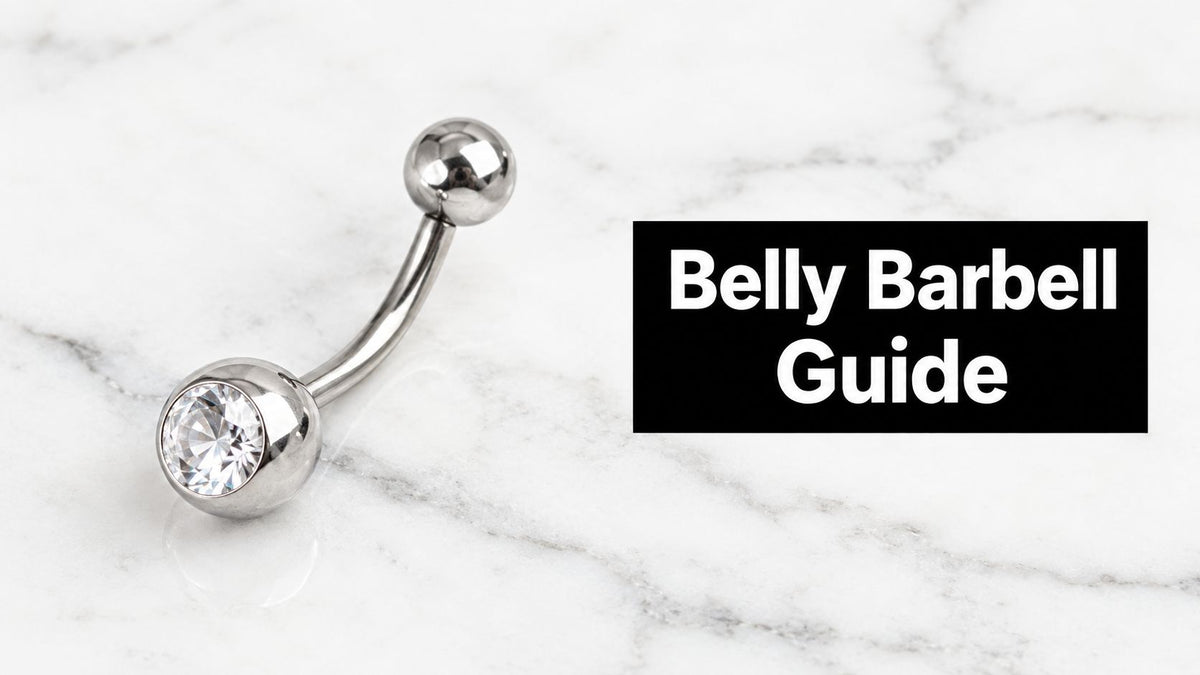
A pearl belly button ring usually isn't a loose pearl suspended from the piercing. It's a curved barbell with a decorative pearl attached to one end, often the lower end that sits inside or just below the navel. The pearl may be combined with crystals or another small decorative element, but it remains fixed to the jewelry rather than floating independently. That distinction matters because a secure, attached accent is easier to control than a separate ornament that swings, twists, or snags.
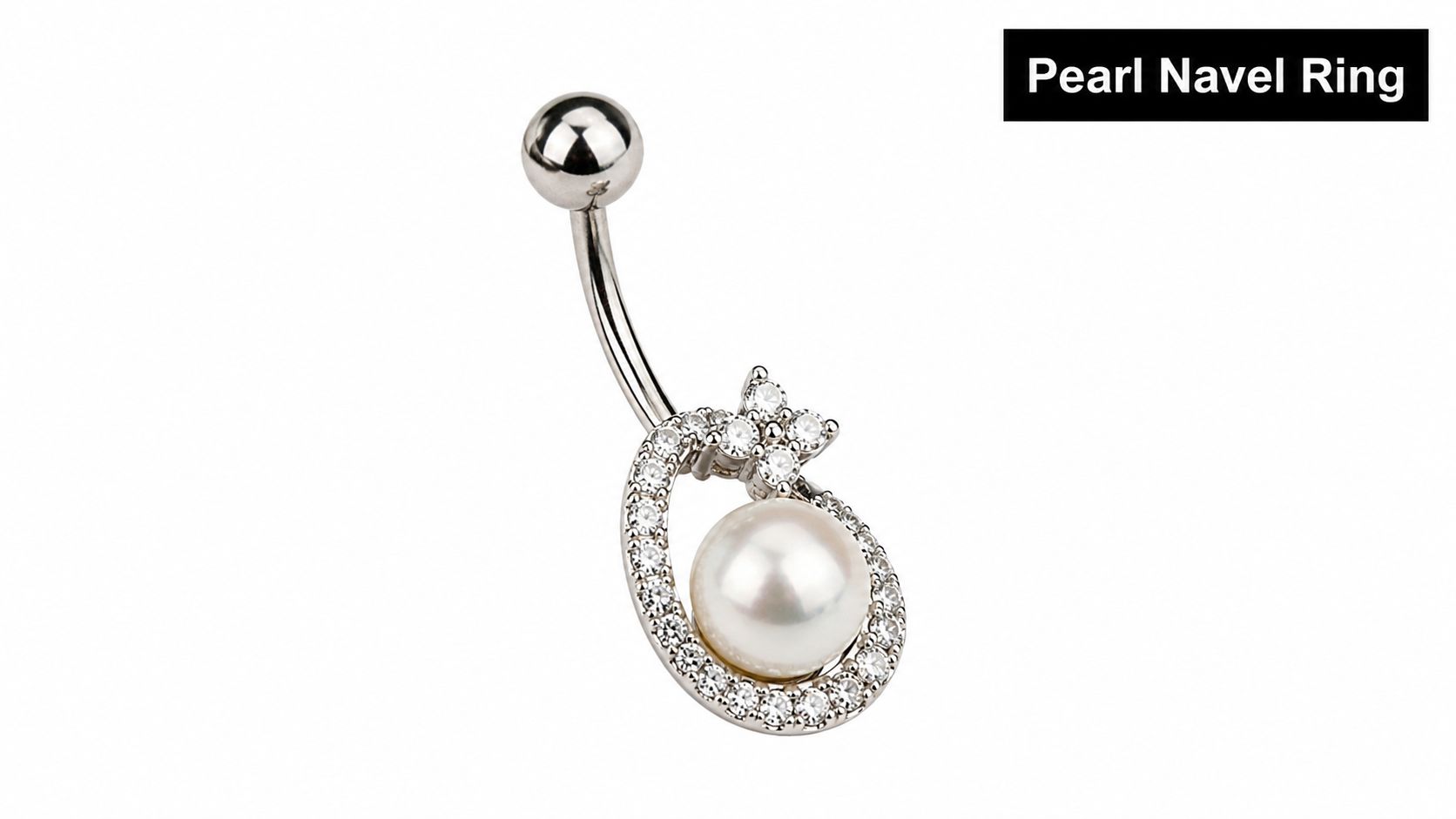
The base follows the standard anatomy of navel jewelry. The modern belly button ring became a mainstream fashion item in the early 1990s, with a widely cited milestone in 1993, when models Christy Turlington and Naomi Campbell showed pierced navels at a London fashion show. Around that period, the common configuration settled on a 14-gauge curved barbell, measuring 1.6 mm thick, with common lengths of 9.5 mm or 11 mm. You can find a helpful visual explanation of the parts in this anatomy guide to belly rings.
The pearl versus the barbell
Think of the barbell as the functional foundation and the pearl as the style feature. The post passes through the piercing channel, while the decorative ends sit outside it. The pearl doesn't replace the bar, and its size doesn't determine the wearable length of the jewelry.
That construction gives pearl styles their appeal. You get a classic, recognizable navel silhouette with a decorative focal point, instead of wearing a loose charm that can move unpredictably. For an established piercing, this can be an easy way to shift from everyday sparkle to a more romantic finish.
Pearl navel jewelry also has a longer style history than its soft appearance might suggest. Navel piercings appeared in underground scenes in the 1970s, moved into mainstream fashion in the early 1990s, and surged again after music-video exposure in the mid-1990s. One New York piercing studio reportedly saw requests rise from 1 per day to 20 per day, and as many as 50 per day on weekends, after a high-profile music video released in 1994, as described in this history of the belly button ring revival.
Understanding Materials and Styles
A pearl navel ring can look delicate in a photo, then feel uncomfortable after a day of bending, sweating, and brushing against a waistband. The metal and the shape of the decoration both affect how the piercing handles real movement. Style works best when it follows the needs of the tissue instead of fighting them.
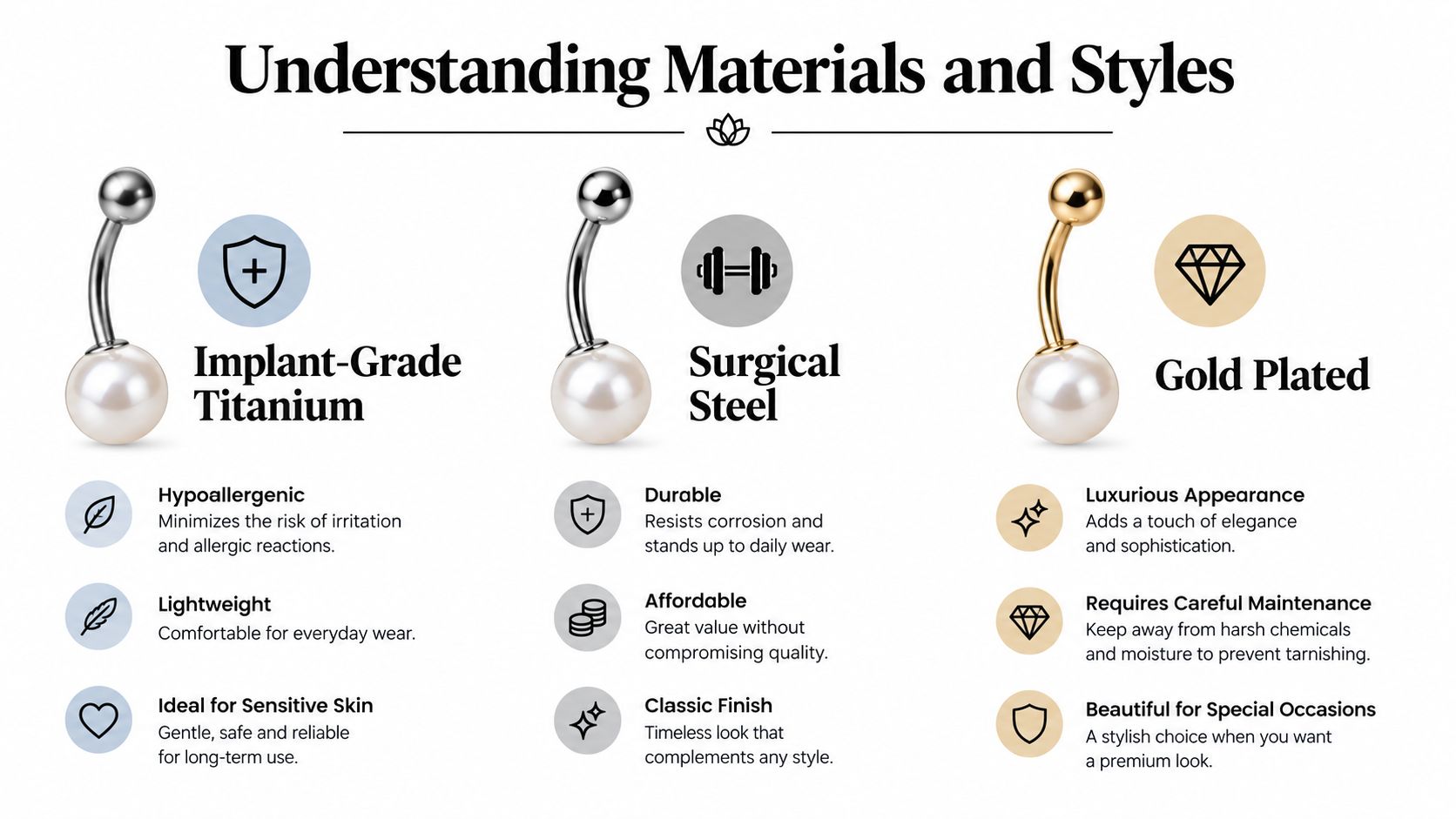
For pearl navel jewelry, commonly recommended choices include implant-grade or biocompatible metals, such as ASTM F136 titanium, ASTM F138 or 316L surgical steel, and 14k solid gold. These materials resist corrosion and can limit exposure to metal ions compared with plated options. That distinction matters for fresh or sensitive piercings, since nickel sensitivity may contribute to irritation or slower healing. The material guidance for pearl navel rings compares these options, while BodyCandy's guide to body jewelry metals explains why the alloy deserves attention before the finish.
How the design is built
A standard pearl style combines three working parts:
- The curved barbell: The portion that passes through the piercing and follows the navel's natural curve.
- The threaded ends: The pieces that secure the jewelry and may hold a plain ball, pearl, crystal, or another accent.
- The pearl accent: A decorative component attached to an end, separate from the bar's wearable portion.
A low-profile pearl stud keeps the decoration close to the skin. That shorter distance gives waistbands, towels, and fingers less surface to catch, and it reduces movement as you walk or sit. A dangling pearl or charm creates more swing and visual interest, but every extra loop or projection can act like a small hook.
Pearls themselves do not automatically make a piercing unhygienic. The practical concern is the setting. Gaps, rough edges, and tightly enclosed areas can hold moisture, soap residue, or skin debris, especially in a navel that already folds over the jewelry. A smooth, cleanable design is easier to care for than one with cramped details that are difficult to rinse.
Match the style to your routine
Fitted clothing, frequent exercise, and hands-on work all increase contact with a navel ring. A compact design usually places less pressure on the piercing during those activities. A decorative pearl drop can suit occasional outfits, provided the jewelry stays secure and does not pull when fabric moves across it.
The navel may heal slowly because bacteria can collect in the area. Caught jewelry can tear tissue, while nickel-related irritation, migration, rejection, and scarring are other possible complications. WebMD's belly button piercing guidance supports checking a pearl component with the same care as any other charm.
Practical rule: As a pearl design projects farther from the body, pay closer attention to snagging, pressure, moisture, and the piercing's healing stage.
Choose a smooth, secure, low-profile accent while the piercing heals. Save elaborate dangling styles for a settled piercing and occasions when you can monitor the jewelry.
Finding Your Perfect Size
A pearl navel ring can look perfect in a product photo and still feel wrong if the bar doesn't match your anatomy. Navel jewelry sizing has two main measurements: gauge, which describes the thickness of the bar, and wearable length, which describes the space between the ends that sits inside the piercing.
A pearl belly button ring is typically built on a 14G curved barbell, which equals 1.6 mm in diameter. Common wearable lengths range from 3/8 inch, or 10 mm, to 7/16 inch, or 11 mm. The pearl and other decorative accents don't count toward that wearable span, as explained in this pearl belly ring sizing guide.
Gauge and length do different jobs
Gauge is about the thickness of the post. Length is about how much room the jewelry has inside the piercing. You can have the correct gauge and still need a different length if your navel fold is deeper, shallower, more swollen, or shaped differently.
| Measurement | What it controls | Why it matters |
|---|---|---|
| 14G, 1.6 mm | Bar thickness | Matches the commonly used navel jewelry gauge |
| 3/8 inch, 10 mm | Wearable length | A common healed-piercing length |
| 7/16 inch, 11 mm | Wearable length | Allows more room when anatomy or swelling calls for it |
| Decorative pearl size | Exterior appearance | Doesn't add to the wearable bar span |
A bar that's too short can press into the tissue and leave no room for natural swelling. A bar that's too long can move excessively, catch on fabric, and pull the piercing channel. The comfortable fit should feel secure without pinching.
Compare the fit before you buy
If you already wear a navel ring, measure the wearable portion of that piece rather than measuring the entire jewelry length from pearl to top ball. If you're unsure, ask a professional piercer to assess your gauge and length. That's especially important if your piercing is still healing, because swelling and changing tissue can make a previously comfortable fit unsuitable.
A pearl accent can also make a poorly fitted ring feel more unstable. A heavier or longer decoration may pull downward, while a tight bar can press the setting against the skin. The correct measurement gives the decorative element a stable base.
Don't choose a length just because it's the most common option. Common sizing is a useful starting point, not a substitute for your anatomy.
Hypoallergenic Options for Sensitive Skin
Sensitive skin needs more than a product label that says “hypoallergenic.” Look for a clearly named metal and, when possible, a recognized material specification. A vague coating or an unspecified alloy makes it difficult to understand what touches your skin.
Use this short checklist when comparing pearl navel rings:
- Read the full material description. Look for implant-grade titanium, ASTM F136 titanium, ASTM F138 or 316L surgical steel, or 14k solid gold.
- Treat plating cautiously. A plated finish may look luxurious, but the surface can wear with friction and cleaning. The underlying metal then becomes part of the skin-contact question.
- Consider your piercing stage. Fresh and healing piercings are less forgiving than fully settled ones, so a documented biocompatible material is the safer starting point.
- Ask about a previous reaction. If jewelry has caused itching, redness, or persistent irritation before, discuss the issue with a professional piercer or healthcare provider rather than guessing.
Implant-grade titanium is often selected when lowering exposure to reactive metal ions is a priority. Surgical steel can be a practical option for people who already tolerate it, while solid gold offers a warmer appearance without relying on a plated surface. The right choice depends on your history, the jewelry specification, and whether the piercing has finished healing.
Niobium may also come up in conversations about body jewelry. Don't choose based on the word “hypoallergenic” alone. Ask what the piece is made from, whether the specification is documented, and whether the design is appropriate for a navel piercing.
Skin-first advice: If you've reacted to jewelry before, simplify the variables. Choose a clearly identified material and a low-profile design before adding a large pearl or moving charm.
Stop wearing a piece that causes persistent irritation and get advice from a qualified piercer or medical professional. Skin discomfort isn't something you need to tolerate for the sake of a cute finish.
Styling Tips for Your Pearl Navel Ring
Pearl jewelry has a naturally polished look, but you don't have to style it formally. A small white pearl can soften denim, balance a simple swimsuit after healing, or add a clean detail beneath a cropped top. If your outfit already has sparkle, choose a restrained setting so the ring complements rather than competes.
For everyday wear, a low-profile pearl is the easiest place to start. It keeps the focus close to the navel and reduces the amount of decoration that can brush against waistbands. A larger accent or dangling design works better when you want the jewelry to be the feature and can avoid activities that involve snagging or repeated friction.
Let the setting guide the outfit
- Casual styling: Pair a simple pearl with denim, a relaxed tee, or a soft knit. The contrast keeps the look playful instead of overly dressed.
- Dressier styling: Choose a pearl surrounded by crystal details when your outfit has a clean, evening finish.
- Minimal styling: Wear a small, fixed accent with neutral clothing when you want the jewelry noticed only up close.
- Statement styling: Use a decorative drop for an established piercing and an occasion where movement won't create a practical problem.
Pearl color can shift the mood, too. White feels classic and bright, while a darker or colored accent can create a more alternative look. The jewelry should still sit comfortably, stay secure, and suit the stage of your piercing. Style never has to fight fit.
Keep clothing from pressing directly against a healing navel ring, and don't choose a dramatic dangling style just because it looks striking in a photograph. The most flattering piece is the one that lets you move naturally and keeps the piercing calm.
Care and Maintenance Guide
A pearl accent doesn't automatically make navel jewelry high-maintenance. The core challenge is caring for the piercing and keeping the setting free from buildup without scrubbing, twisting, or treating the jewelry like ordinary fashion jewelry.
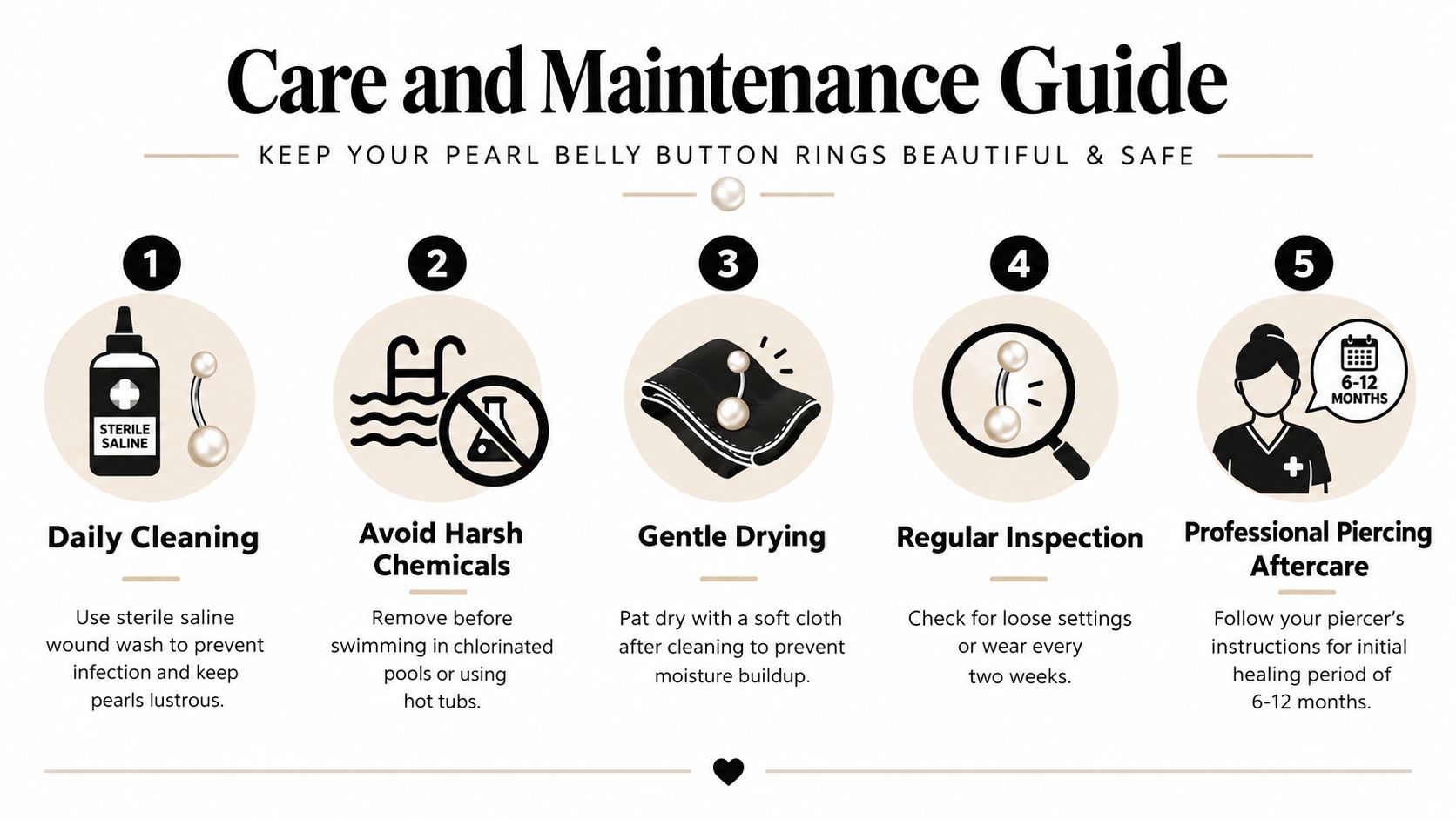
The Association of Professional Piercers recommends a sterile saline wound wash labeled for body piercing care, with .9% sodium chloride as the only ingredient. It also says that moving or rotating the jewelry isn't necessary during cleaning. Follow the professional body jewelry care guidance and your piercer's specific instructions.
A gentle routine works best
Apply sterile saline as directed, then let the area dry naturally or pat it carefully with a clean, soft disposable material. Don't twist the bar to force solution through the channel. That movement can add unnecessary friction, especially when the tissue is still settling.
Clean the pearl surface gently rather than polishing it with abrasive products. Avoid harsh chemicals, alcohol-based solutions, and household cleaners around the piercing. If residue collects around the setting, soften it with saline and remove only what comes away easily.
Watch the jewelry, not just the shine
Inspect the setting occasionally for looseness, sharp edges, or damage. A pearl or decorative accent that shifts can catch on fabric and place pressure on the piercing. If the design becomes loose, stop wearing it and ask a professional for help instead of tightening or repairing it with improvised tools.
Navel piercings commonly need a long healing period. One published aftercare guide advises waiting 4 to 10 weeks before changing jewelry and avoiding swimming or bathing until the piercing may have had up to 1 year to heal, which reinforces the need for patience during styling decisions. See the navel piercing aftercare guide for that longer healing perspective.
Seek professional advice if redness, swelling, pain, warmth, discharge, tearing, migration, or rejection concerns appear. A pearl does not trap bacteria by nature, but any raised setting, gap, or dangling element can collect residue or catch more easily than a smooth surface. Good fit, gentle cleaning, and material awareness keep the style practical.
BodyCandy offers pearl-related belly jewelry, including a White Faux Pearl Belly Ring with a 14-gauge curved barbell and acrylic pearl accents, alongside a broader belly button ring collection. Visit BodyCandy to compare pearl styles, materials, and profiles, then choose the piece that fits your piercing and your everyday look.