















You've found a belly button piercing barbell you love, but the moment you try it on, something feels off. The bar presses into your navel when you sit, the decorative end catches on your waistband, or the jewelry seems to sit at an awkward angle. Those problems usually aren't about style. They're about fit, anatomy, and choosing a piece that matches the way your navel moves.
A comfortable navel ring should stay put without digging into the skin, pulling the piercing channel, or constantly rubbing against clothing. The right belly button piercing barbell balances gauge, length, curve, end size, rise, and metal, so use the guide below before you insert a new piece or change an existing one.
Understanding Belly Button Piercing Barbell Sizes
A standard size won't fit every navel. Your anatomy changes when you stand, sit, bend, and relax, so a barbell that looks fine in front of a mirror may press against the upper or lower rim once your abdomen folds.
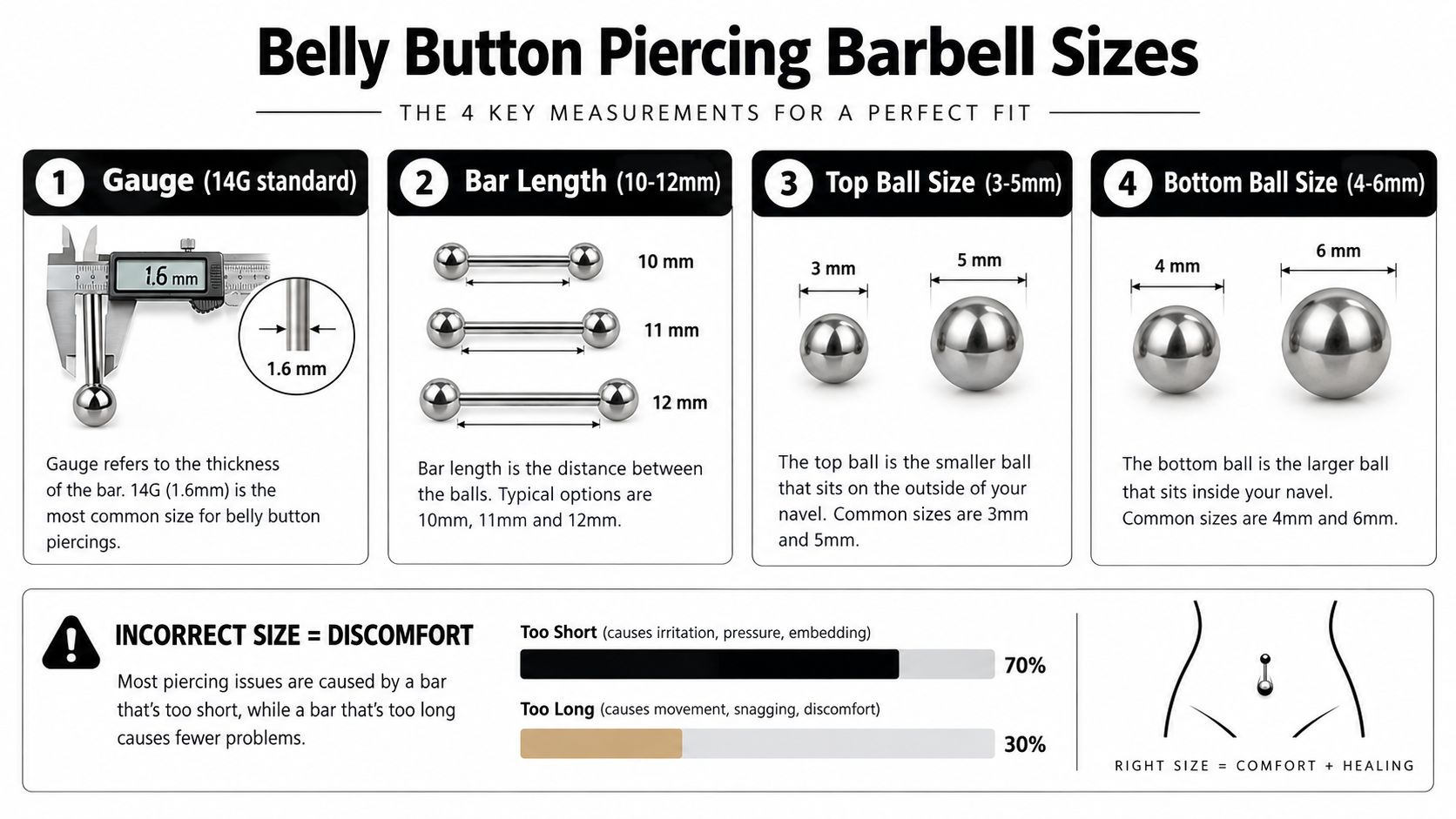
A fresh navel piercing is commonly fitted with a 14 gauge barbell, equivalent to 1.6 mm, and 11 mm is a common initial length, according to the American Academy of Family Physicians guidance on body piercing. Your piercer may choose a different length based on swelling, tissue depth, and the way your navel closes when you sit.
Four measurements that control the fit
- Gauge: This is the thickness of the bar passing through the piercing. A bar that's too thin can feel unstable, while a thicker piece may not match your existing channel. Don't guess if your piercing was made with a nonstandard gauge. Ask your piercer to confirm it.
- Bar length: Measure the wearable portion between the ends, not the full jewelry length. A short bar can become tight as swelling increases and may press into the skin. A long bar leaves more room for movement and snagging.
- Diameter: This usually refers to the size of the top or bottom ball, gem, disc, or decorative end. Larger ends create more visual impact, but they also add weight and can catch on clothes.
- Rise: Rise is the distance the jewelry needs to travel around your navel's natural fold. A deep, defined upper ridge may suit a traditional curved barbell, while a shallow or collapsing navel may need a lower-profile end or a floating style.
| Measurement | Standard Size | Why It Matters |
|---|---|---|
| Gauge | 14G, 1.6 mm | Matches a common fresh navel piercing |
| Bar length | Chosen by anatomy and swelling | Prevents embedding or excess movement |
| Top end diameter | Chosen for comfort and style | Controls pressure above the navel |
| Bottom end diameter | Chosen for comfort and style | Affects weight, snagging, and visual balance |
| Rise | Depends on your navel fold | Helps the curve sit naturally instead of pulling |
A useful fit check is simple. Stand naturally, then sit and bend forward. The bar shouldn't pinch, the ends shouldn't press into opposite sides of the fold, and the decorative piece shouldn't tilt sharply. For more guidance on measuring jewelry, use this barbell body jewelry sizing overview.
Practical rule: If a barbell feels tight, don't solve the problem by forcing the ends closed. Measure the wearable length and have a professional piercer assess the fit.
Selecting the Best Metal for Your Skin
Metal choice matters most while a piercing is healing, but it still affects comfort after the channel has matured. The safest starting point is a smooth, polished piece made from a material suited to body use. Scratches, rough edges, poor plating, and unknown alloys can create friction or irritation even when the size looks correct.
Authoritative health guidance commonly recommends titanium, surgical-grade stainless steel, gold, or niobium for navel jewelry. A navel piercing can take roughly 6 to 12 months to heal, so selecting an implant-friendly material is especially important during that first year, as explained by WebMD's belly button piercing guidance.
Titanium, steel, and gold compared
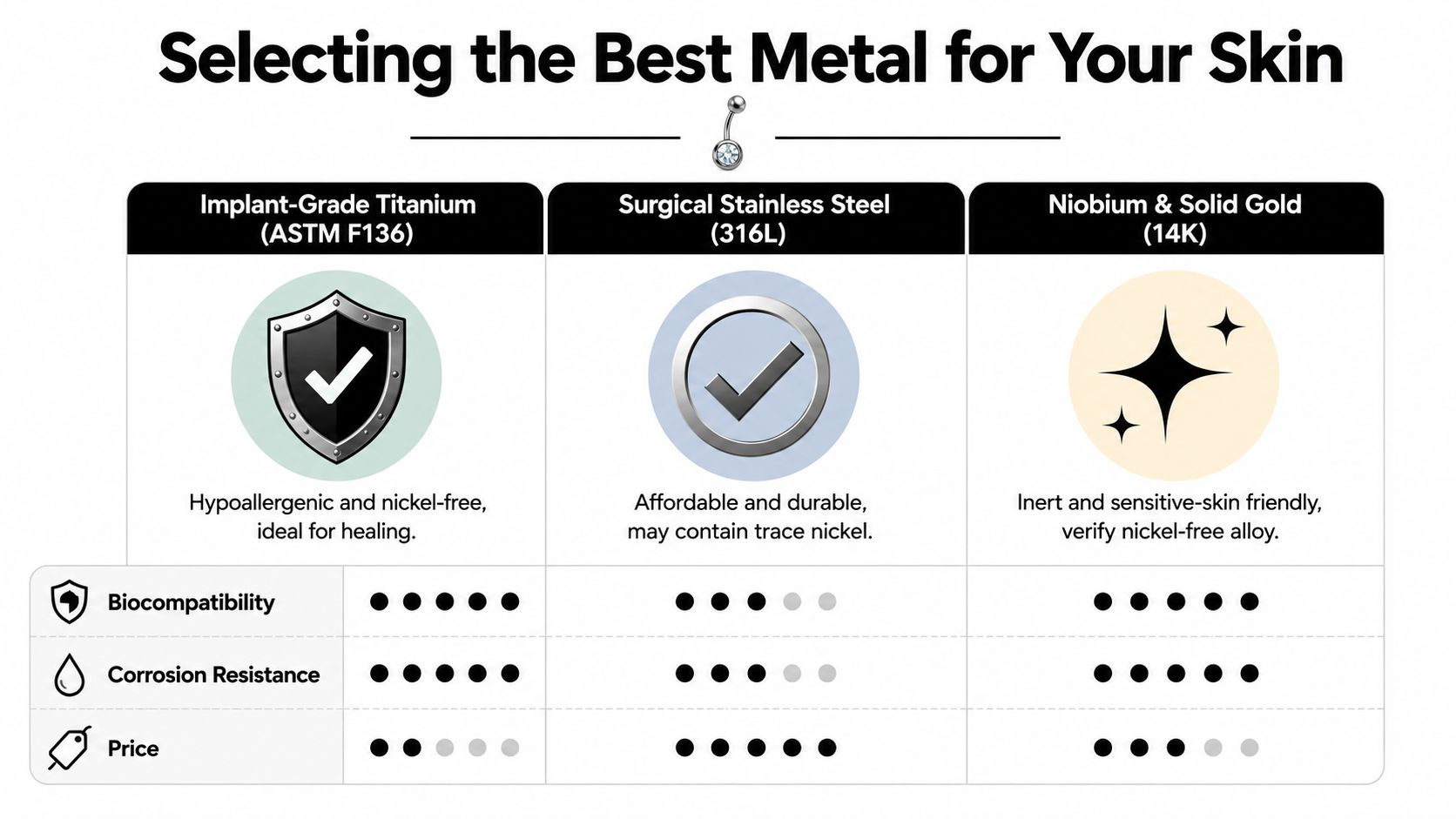
Implant-grade titanium is usually the most flexible choice for a new or sensitive piercing. Titanium made for implant use, including ASTM F136 or G23 material, is lightweight and nickel-free. That makes it a strong option if your skin reacts to unknown metals or you've had trouble with earrings and other jewelry in the past.
Surgical-grade stainless steel can be durable, polished, and more accessible for everyday jewelry. The trade-off is that some steel alloys contain trace nickel. If you already know nickel bothers your skin, titanium is the more cautious choice.
Solid gold can work well when the alloy is appropriate for body jewelry and the piece is made for a healed piercing. Avoid confusing solid gold with gold-plated jewelry. Plating can wear down, exposing the base metal underneath. Niobium is another body-friendly option for people who want an alternative to titanium.
| Material | Best For | Pros |
|---|---|---|
| Implant-grade titanium | New piercings and sensitive skin | Lightweight, nickel-free, and suitable for implant use |
| Surgical-grade stainless steel | Healed piercings without known metal sensitivity | Durable, polished, and practical |
| Solid gold | Healed piercings and refined styling | Attractive finish and long-term wear when properly alloyed |
| Niobium | Sensitive-skin customers seeking an alternative | Inert and suitable for body jewelry |
The finish matters as much as the label. Run a clean fingertip over the bar and inspect the threading. A well-made barbell should feel smooth, with no burrs, chips, scratches, or sharp transitions.
For the ends, internally threaded jewelry is generally gentler than externally threaded jewelry because the rough threading doesn't travel through the piercing channel. Threadless ends can also reduce handling during a change, provided the post and end are compatible. BodyCandy's titanium body jewelry guide offers another material-focused reference when you're comparing options.
How to Safely Insert and Change Your Barbell
Changing jewelry should never feel like a test of strength. If the bar doesn't follow the existing channel smoothly, stop. Resistance can mean the piercing isn't fully healed, the replacement has a different curve, or the size doesn't match your anatomy.
Prepare before removing the old jewelry
Wash your hands thoroughly and clean the new jewelry according to the manufacturer's directions. Work in a bright, clean area where a small threaded end won't disappear into a towel or sink. Keep the replacement within reach before you loosen the existing barbell.
If the piercing is still healing, changing jewelry at home is a poor gamble. A professional piercer can confirm whether the channel is ready, select the correct length, and change the piece without repeatedly dragging the bar through delicate tissue.
A careful changing method
- Clean your hands and the jewelry. Don't handle the barbell with freshly applied lotion, oils, or cosmetics on your fingers.
- Secure the removable end. Hold the bar gently and unscrew the end in the correct direction. Don't twist the jewelry through the skin.
- Keep the channel aligned. Follow the existing curve rather than trying to push a straight path through the navel.
- Stop at resistance. Never force the bar, rotate aggressively, or use a needle, pin, or other object to reopen the channel.
- Attach the end without overtightening. The end should be secure, but excessive pressure can damage threading and make the next change harder.
- Check movement and pressure. Stand, sit, and bend. The bar should remain comfortable without pinching or excessive swinging.
Downsizing deserves extra caution. A longer initial post may leave room for swelling, but reducing the length too early can cause pressure and embedding. Have a piercer handle the change if swelling hasn't clearly settled, the jewelry feels tight, or the piercing is producing persistent irritation.
For a visual walkthrough, watch the BodyCandy guide to changing a belly button ring.
After the change, leave the piercing alone. Repeatedly turning the barbell to check it only creates more friction, especially if the tissue is still maturing.
Essential Aftercare for a Happy Piercing
Navel piercings need patience because the area bends, folds, rubs against waistbands, and stays covered by clothing. Medical references describe healing as slow, with a window of up to 9 months in some cases, as noted by the American Academy of Family Physicians overview of navel piercing risks. The outside may look calm before the internal channel is ready for frequent jewelry changes.
Use a gentle cleaning routine
Sterile saline is the sensible default because it cleans without the harsh action of household antiseptics. The Association of Professional Piercers recommends a sterile wound wash labeled with 0.9% sodium chloride as the only ingredient, and says contact lens saline and eye drops aren't appropriate for body piercings. Its sterile saline aftercare guidance also describes a sea salt mixture as a fallback when sterile saline isn't available, using 1/8 to 1/4 teaspoon of non-iodized sea salt per 1 cup of warm distilled or bottled water.
A gentle rinse or soak is enough. Don't scrub crusts off, pick at dried fluid, or spin the barbell to distribute the solution. Published navel-care guidance supports cleaning with saline 1 to 2 times per day, while an additional rinse can make sense after heavy sweating or exposure to visible dirt, as described in this navel piercing cleaning guide.
Remove the friction before blaming the jewelry
Loose, breathable clothing gives the piercing room to settle. Tight waistbands can catch the lower end, press the curve into the navel, and repeatedly pull the channel as you sit or stand. Pat the area dry after bathing, and keep lotions, oils, fragrance, and sunscreen off the piercing itself.
Overcleaning causes its own problems. Alcohol, hydrogen peroxide, strong antiseptics, and improvised mixtures can dry or irritate the tissue, which may make normal healing look worse. The goal is a clean, calm piercing, not a raw one.
Clean the jewelry, protect the channel, and then leave it alone. More handling doesn't equal better healing.
Troubleshooting Common Issues and Red Flags
Most navel jewelry problems have a practical cause. The bar may be too short, the curve may not match your rise, the ends may be too heavy, or clothing may be applying pressure every day. Start by identifying the mechanical trigger before changing products or adding another cleaning step.
When the bar feels tight or starts pressing in
A barbell that leaves deep pressure marks, feels increasingly tight, or appears to sink into the skin needs prompt attention. Swelling can make an initially comfortable bar too short, while a poorly placed piercing may struggle to support a traditional curved shape. Don't remove a tight piece by force or replace it with a random longer bar. Ask a professional piercer to assess the tissue and fit.
A bar that's too long creates a different pattern. It may swing, snag on a waistband, and keep the channel irritated through repeated movement. Once swelling has resolved, a piercer can decide whether a shorter post is appropriate.
Irritation, bumps, and migration
A small irritation bump can follow friction, rough jewelry, excessive touching, or an unsuitable alloy. Remove the trigger, return to gentle saline care, and check whether the jewelry surface is smooth. If the bump continues to grow or the area remains painful, have the piercing examined instead of switching pieces repeatedly.
Rejection and migration require particular attention because navel piercings are disproportionately associated with complications. One study summarized in Allure's coverage of belly piercing risks identified local reactions such as infection, pain or swelling, and hypertrophic scarring, while older surveys linked about a third of reported complications to navel piercings. Watch for the bar becoming increasingly visible, the skin over it becoming unusually thin, or the openings appearing to shift.
Know when home care isn't enough
Normal healing can include tenderness and some light fluid, but worsening pain, spreading redness, marked heat, significant swelling, foul-smelling discharge, or feeling unwell warrants medical attention. A healthcare professional should evaluate suspected infection. Don't seal a problem inside by removing jewelry without professional advice.
See a piercer when the bar is embedded, the piercing angle seems wrong, the jewelry keeps catching, or the channel won't accept a replacement smoothly. The earlier you address a fit or placement problem, the more options you'll have.
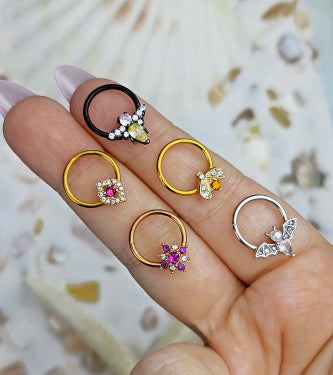
BodyCandy offers curved barbells, J-curved styles, and navel jewelry in a range of decorative finishes and materials for different looks. Visit BodyCandy to compare belly button piercing barbells, then choose a piece that matches your anatomy, healing stage, and everyday style.