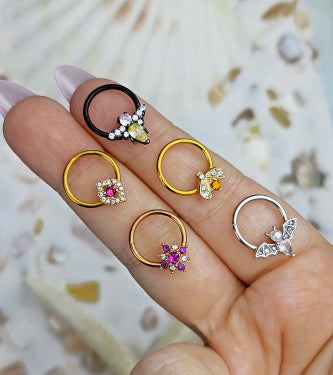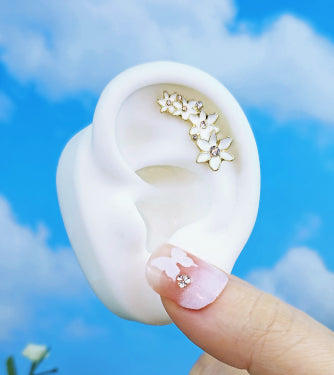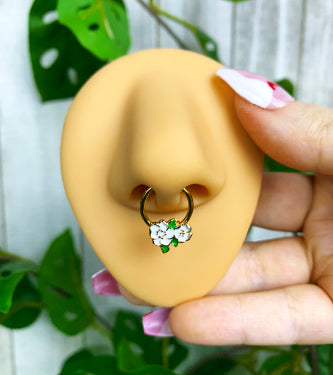















That buzzing excitement when you’re ready for a new nose ring is one of the best feelings. But once you start looking, it can get a little overwhelming. From tiny, subtle studs to bold septum clickers, the sheer number of nose ring jewelry types can make your head spin.
Don't sweat it. We’ve got you. Think of this as your personal consultation—a complete guide to finding a piece that doesn't just look incredible but feels like it was made for you.
Welcome to the World of Nose Piercings
Choosing a new nose ring isn't just about grabbing a pretty piece of metal. It’s about finding something that clicks with your unique style and personality. Whether you're brand new to piercings or you've been rocking them for years and just want to switch things up, knowing your options is everything.
Every single detail matters, from the way it fits in your piercing to the material it's made from. This guide is here to walk you through it all, breaking down the different styles, materials, and sizes in a way that actually makes sense. We'll help you land on jewelry that not only polishes your look but is also comfortable and safe for your piercing.
More Than Just an Accessory
Believe it or not, nose piercing isn't some modern trend—it's an ancient practice with deep cultural roots. We're talking a history that stretches back over 4,000 years to places like the Middle East and South Asia, where a nose ring could symbolize anything from wealth and marital status to tribal identity.
Today, it’s a global fashion statement, a way for people all over the world to put their individuality on display. This long history is exactly why we have such a massive variety of styles now. It's a huge part of the global body jewelry market, which was valued at a whopping USD 13.5 billion in 2023 and is expected to hit USD 20.9 billion by 2032. You can check out more stats on the global body jewelry market trends on dataintelo.com.
Choosing your nose ring is a personal journey. The right piece should make you feel confident, comfortable, and unapologetically you.
Our goal here is to give you all the info you need to choose with confidence. Ready to find the perfect piece to level up your style? Let's dive in.
Finding Your Perfect Nostril Jewelry Style
Alright, let's get into the fun stuff—choosing the jewelry for your nostril piercing! This is where you really get to let your personality shine. Each style has its own unique vibe and, just as importantly, a different way of staying put. Finding the right one is all about striking that perfect balance between your personal aesthetic and what feels comfortable for you day-to-day.
It’s no surprise that nose piercings are a huge deal. The entire nose piercing segment is surging, with projections showing it will have the highest growth in the entire body piercing jewelry market all the way through 2034. In 2025 alone, the nose segment is expected to pull in around $2.28 billion—that’s a whopping 29% of the total market share! If you want to see just how big this trend is, you can explore more insights into the body piercing jewelry market on fortunebusinessinsights.com.
This diagram breaks down the three core factors—styles, materials, and sizes—that you'll want to consider when picking out the perfect piece.
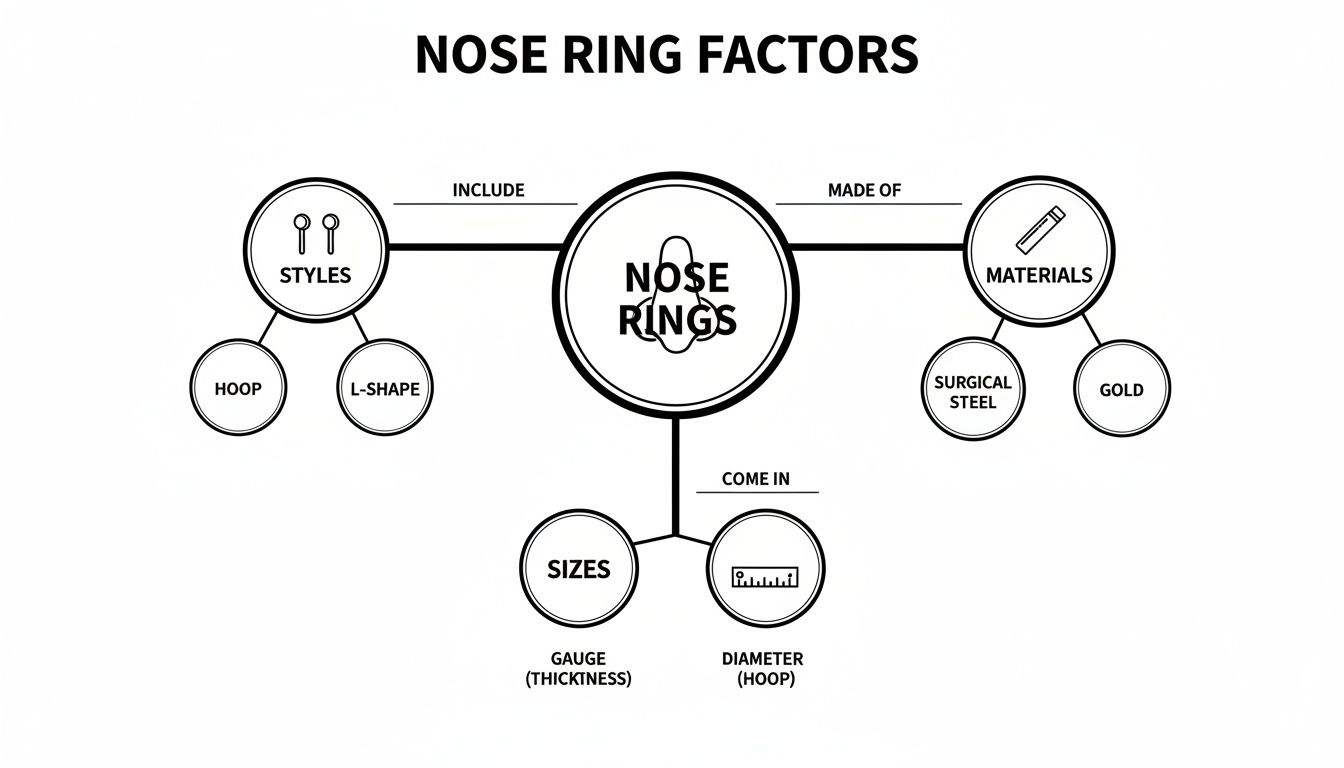
As you can see, finding your ideal nose ring is all about creating a perfect harmony between the jewelry's design, its material, and its precise fit.
Quick Guide to Nostril Ring Styles
Feeling a bit overwhelmed by the options? Don't worry, we've got you. This handy table breaks down the most common nostril jewelry types to help you choose the best fit for your lifestyle and piercing stage.
| Jewelry Type | How It Stays In | Best For | Pros | Cons |
|---|---|---|---|---|
| L-Shape Stud | A 90-degree bend inside the nostril. | New & healed piercings; easy changes. | Simple to insert/remove, comfortable. | Can sometimes twist or fall out. |
| Nostril Screw | A corkscrew-like curve that hugs the nostril. | Anyone worried about losing jewelry. | Extremely secure, low profile inside. | Can be tricky to insert at first. |
| Nose Bone | A small ball on the end is pushed through. | Fully healed piercings only. | Very easy and fast to change. | Can irritate new or sensitive piercings. |
| Hoops | Varies: seamless, captive bead, or segment closure. | Healed piercings ready for a bolder look. | Versatile style, makes a statement. | Can be difficult to change, may snag more easily. |
| Fishtail | Custom bent by a piercer to fit your anatomy. | Anyone who struggles with standard sizing. | A perfect, custom-tailored fit. | Not ready-to-wear; requires a professional. |
Ultimately, the best style for you comes down to your anatomy, how active you are, and whether you prefer security over the convenience of quick changes.
The Classic L-Shape Stud
Think of the L-shape stud as the trusty, reliable go-to for nostril piercings. It’s a straight post with a sharp 90-degree bend at the end, creating that signature "L" shape. That little bend is what rests against the inside of your nostril to hold it securely in place.
Because of its straightforward design, it's one of the easiest styles to pop in and out, making it a favorite for both fresh piercings and fully healed ones. You get a good amount of security without all the fuss.
The Ultra-Secure Nostril Screw
If you're looking for something that’s absolutely not going anywhere, meet the nostril screw. This style features a post that curves into a distinct C-shape, sort of like a tiny corkscrew. You gently twist it into your piercing, and that curve hugs the inside of your nostril, locking it down tight.
Getting the hang of inserting it can take a bit of practice, but once it's in, it’s one of the most secure nose ring jewelry types you can find. It's the perfect choice if you're active or just constantly worried about your jewelry coming loose.
The Simple Nose Bone
The nose bone is all about minimalist design. It's a short, straight post with a decorative top on one end and a small, slightly thicker ball on the other. That tiny ball is what keeps the stud from slipping out of your piercing.
To insert it, you gently push the balled end through. This is exactly why this style is best reserved for fully healed piercings. Pushing that ball through can easily irritate a fresh or still-sensitive piercing channel.
The key takeaway? For new piercings, stick with styles like L-shapes or screws that won't cause extra trauma during insertion. Save the nose bones for when you're completely healed up and ready for a quick-change option.
Hoops Galore: Seamless, Captive, and Segment Rings
Ready to switch to a bolder look? Hoops are a fantastic way to make a statement. They come in several variations, each with a different aesthetic and closure mechanism.
- Seamless Rings: These hoops create a flawless, continuous circle. You gently twist the ends apart to open them, insert the ring, and then twist it back into place. They offer a clean, polished look that’s super popular.
- Captive Bead Rings (CBRs): A CBR is a classic for a reason. It's a ring with a small gap, which is held closed by a tiny bead or gem secured by the ring's own tension. They are incredibly secure but can be tricky to change without the right tools (like ring-opening pliers).
- Segment Rings: Similar to a seamless ring, a segment ring has a small, removable piece that clicks into place to complete the circle. This creates that same smooth look while being a bit easier to manage than a traditional CBR.
The Customizable Fishtail
Finally, there’s the fishtail. This isn't ready-to-wear jewelry; instead, it's a long, straight post (usually around 19mm) that you take to a professional piercer. They will then custom-bend it into an L-shape or screw that fits your unique nostril anatomy perfectly.
This is the ultimate solution if you struggle to find a comfortable fit with off-the-shelf jewelry. If you’re curious about this unique option, you can learn more about how a fishtail nose ring is customized in our detailed guide.
Choosing the right style is a totally personal decision based on your anatomy, lifestyle, and how often you like to switch things up. Don't be afraid to experiment (once your piercing is healed, of course!) to find what makes you feel the most confident.
Must-Have Septum Jewelry Styles
Ready to go bold? While nostril piercings have tons of options, septum jewelry is where you can really let your personality shine. This piercing is a statement piece, and the sheer variety of nose ring jewelry types designed for it is incredible.
If you're looking to make a serious impact, you're in the right place. We’ll walk through the most popular styles, from the ridiculously convenient to the absolute classics, so you can find the perfect piece to show off who you are.
The Fan-Favorite Septum Clicker
Let’s start with the style that completely changed the game for septum wearers: the septum clicker. The design is just pure genius. It has a hinged bar, either straight or slightly curved, that literally "clicks" securely into place to form a complete hoop.
Say goodbye to fumbling with tiny beads or wrestling a ring open. Swapping your jewelry with a clicker is an absolute breeze, making it one of the easiest and most user-friendly styles you can find. Better yet, they come in a massive array of designs, from simple and sleek to over-the-top pieces dripping with gems and wild details.
The Classic Captive Bead Ring
A true icon in the piercing world, the Captive Bead Ring (CBR) is a timeless pick for any septum. This style is simple: a ring with a small gap that's filled by a single bead or gem. The bead is held in place by the ring's natural tension, giving you a secure, seamless circle.
They're incredibly secure, so you never have to worry about one accidentally popping out. While they can be a bit of a challenge to change yourself (sometimes you'll need a pair of ring-opening pliers), that classic, perfect-hoop look is totally worth it.
The Versatile Circular Barbell
You've definitely seen these around—they're often called "horseshoes" because of that signature U-shape with a bead or ball screwed onto each end. The circular barbell is probably one of the most versatile pieces of septum jewelry you can own, and for one very cool reason.
Its biggest claim to fame is its ability to be flipped up and hidden inside your nostrils. This makes it the perfect choice if you need to hide your piercing for work, school, or maybe a formal family dinner. You get all the style when you want it, and complete discretion when you don't.
Septum jewelry isn't just an accessory; it's a centerpiece. The right piece can define your entire look, whether you're going for subtle and chic or bold and rebellious.
The Unique Septum Pincher
If you're chasing a more organic or minimalist vibe, the septum pincher is a fantastic option. Shaped like a crescent or a "C," this style is held in place by tiny rubber O-rings or sometimes just by the tension of its fit inside the piercing.
Pinchers often have a slightly tapered design, which makes them super easy to slide in. They give off a unique, almost tribal aesthetic that really stands out from more common hoops and clickers. It's a simple yet powerful way to express your style.
Real-World Styling Tips for Your Septum
Picking out your jewelry is the first step, but styling it is what brings your whole look to life. Here’s how you can rock each type, no matter the occasion:
- For a Daring Night Out: This is the perfect moment for a show-stopping septum clicker. Go for one with dangling chains, sparkly pavé gems, or a bold, intricate design that demands attention.
- For Everyday Subtle Style: A simple, polished captive bead ring or a small-diameter circular barbell is perfect for daily wear. A classic silver or gold tone goes with everything without being too loud.
- For Professional Settings: The circular barbell is your best friend. Wear it down for a touch of personality, or easily flip it up when you need a more conservative look. No one will ever know!
- For an Edgy, Alternative Vibe: A chunky septum pincher, especially in a material like black steel or titanium, adds instant edge. Pair it with other bold jewelry for a cohesive, powerful look.
While clickers and horseshoes are super popular, don't feel like you have to stop there. If you want to dive even deeper into the world of septum accessories, you can explore even more septum jewelry styles in our guide. The possibilities are truly endless, so have fun and experiment until you find your signature look.
Choosing The Best Material For Your Nose Ring
Picking out a cool new nose ring is the fun part, but the material your jewelry is made from is probably the most important decision you'll make. This is especially true if you have sensitive skin or are choosing jewelry for a piercing that's still on the mend.
The right material keeps your piercing happy, healthy, and free from irritation. Think of it this way: your skin is going to be in constant contact with this new piece of metal. You want to give it something it gets along with, not something that's going to make it angry. Let’s break down the best options so you can make a smart, safe choice for your body every time.
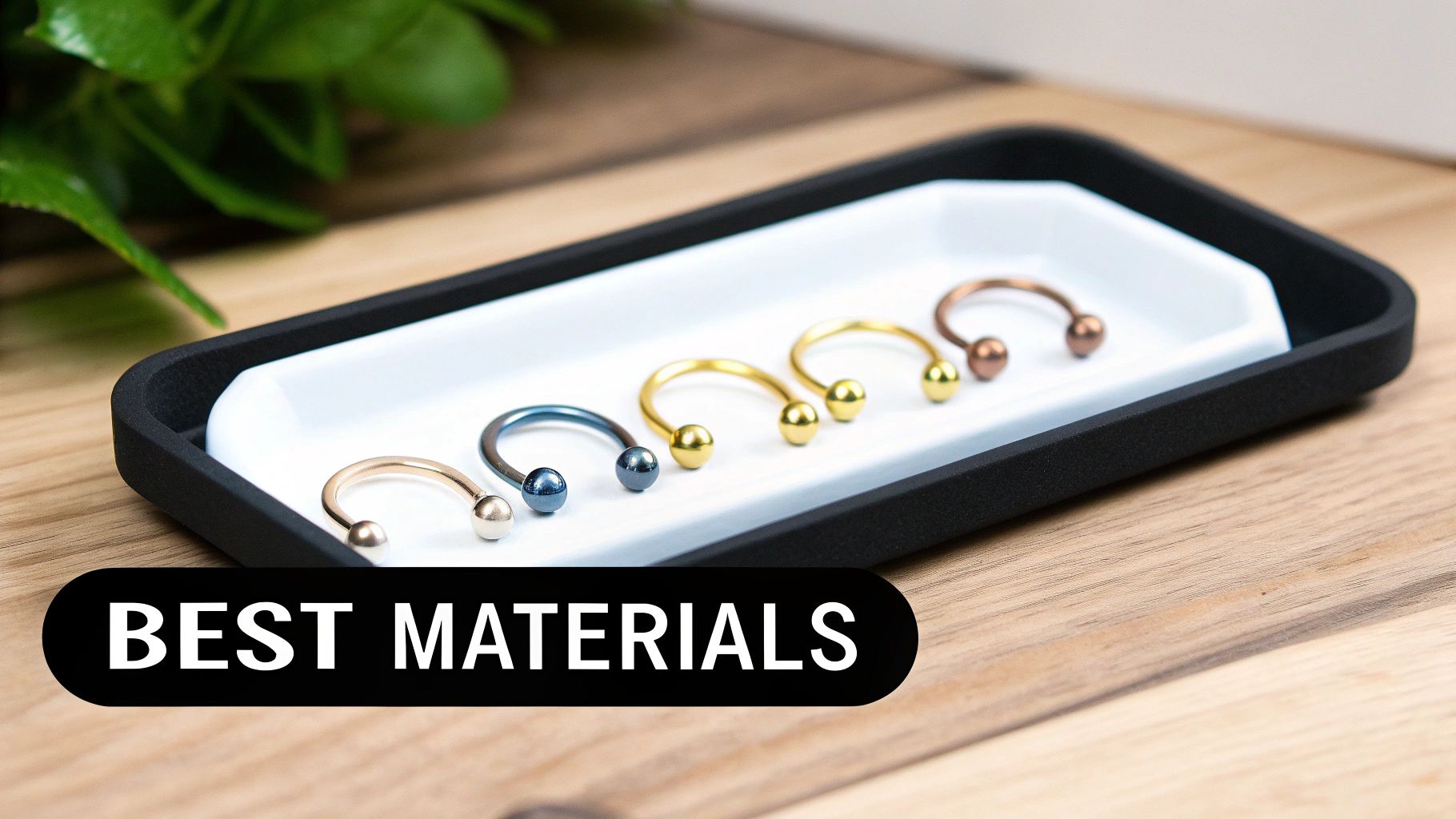
The Gold Standard: Implant-Grade Titanium
When it comes to new piercings, implant-grade titanium (specifically ASTM F-136) is the undisputed champion. This isn't just any titanium; it's the same stuff used for medical implants like bone screws and joint replacements. That means it’s literally designed to live peacefully inside the human body without causing drama.
Its biggest selling point? It's 100% nickel-free, making it incredibly hypoallergenic. It’s also surprisingly lightweight and durable, so you get comfort and longevity all in one. If you have sensitive skin or are picking out your very first piece of jewelry, this is your safest bet, hands down.
The term "hypoallergenic" simply means a material is less likely to cause an allergic reaction. For piercings, especially fresh ones, choosing a truly body-safe material like implant-grade titanium is the best way to avoid the dreaded irritation, redness, and swelling.
The Popular Choice: 316L Surgical Steel
You'll see 316L surgical steel everywhere, and for good reason. It's affordable, super durable, and has that classic polished look that so many people love. For a piercing that’s fully healed, it’s a solid choice for most people.
The one thing to keep in mind is that surgical steel does contain trace amounts of nickel. While the levels are very low and don't bother most, it can be a real problem if you have a known nickel allergy or extremely sensitive skin. Because of this, it's best to wait until your piercing is completely healed before switching to steel.
The Touch of Luxury: 14k Gold
Who doesn't love a little gold? For a touch of timeless elegance, 14k or 18k solid gold is a fantastic option for healed piercings. It’s a classic for a reason, offering a beautiful, warm shine that looks great on any skin tone.
Here’s the catch: you have to make sure you're getting high-quality, nickel-free solid gold. Steer clear of "gold-plated" jewelry for a healing piercing. The plating can wear off over time, exposing the base metal underneath—which often contains nickel and other irritants. To find out more about what makes a material right for you, you can learn about picking the right material for your nose piercing in our guide.
The Flexible Friend: Bioplast
Bioplast is a unique, medical-grade plastic that is flexible, lightweight, and biocompatible. This material is a total lifesaver for a few specific situations.
- During Medical Procedures: If you have an MRI or X-ray coming up, you’ll have to take out your metal jewelry. A Bioplast retainer keeps your piercing open without interfering with the scans.
- For Added Comfort: Its flexibility can make it more comfortable for some people, especially during sports or other physical activities.
- Pregnancy: As your body changes during pregnancy, flexible Bioplast can offer a much more comfortable fit than rigid metal.
While it's an excellent temporary solution, it is more porous than metal, meaning it can harbor bacteria more easily if you're not diligent about cleaning it. It's best used for short-term wear in fully healed piercings.
Navigating the world of piercing materials can seem tricky, but it really comes down to listening to your body. The table below breaks down the most common options to help you see how they stack up against each other.
Nose Ring Material Comparison
A detailed look at the pros, cons, and best uses for common nose ring materials, helping you make a safe and stylish choice.
| Material | Hypoallergenic? | Best For | Pros | Cons |
|---|---|---|---|---|
| Implant-Grade Titanium | Yes (Nickel-Free) | Fresh & Healed Piercings, Sensitive Skin | Extremely body-safe, lightweight, durable, comes in various anodized colors | Can be slightly more expensive than steel |
| 316L Surgical Steel | No (contains nickel) | Fully Healed Piercings (for non-sensitive skin) | Affordable, durable, widely available, classic look | Can cause reactions in those with nickel allergies |
| 14k/18k Solid Gold | Yes (if nickel-free) | Fully Healed Piercings | Luxurious appearance, timeless, holds value | Higher cost, gold-plated versions can cause irritation |
| Bioplast | Yes | Temporary Wear, Medical Scans, Pregnancy | Flexible, non-metallic, comfortable for specific situations | More porous than metal, can degrade over time, not for long-term wear |
Ultimately, the best material is the one that your piercing tolerates well. For new piercings, titanium is always the winner. Once you're healed, you can start experimenting with other high-quality materials like solid gold or surgical steel to find what you love.
How to Measure for the Perfect Nose Ring Fit
Have you ever ordered a nose ring online, waited excitedly for it to arrive, and then discovered it's way too tight or ridiculously oversized? We've all been there. It's time to put an end to the sizing guesswork for good.
Figuring out your measurements is the secret to shopping for new nose ring jewelry types with total confidence, knowing that what you buy will actually fit you.
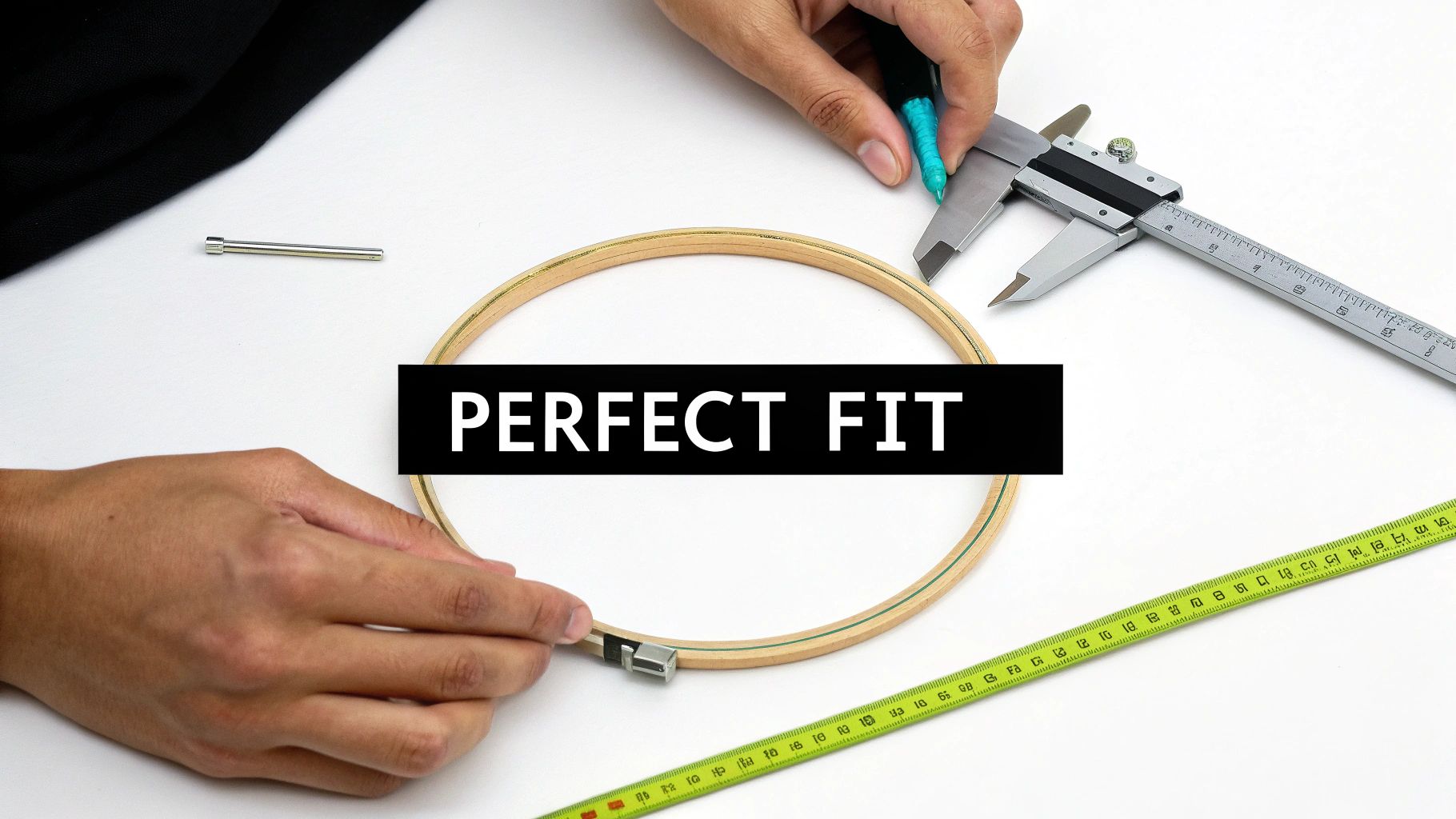
There are really only two measurements that matter: gauge and diameter/length. Getting these right is the difference between a piece that feels like it was made for you and one that just feels... off.
Understanding Gauge Thickness
First up is the gauge. That’s just the industry term for the thickness of the post that goes through your piercing. It works a little backward from what you might expect: the smaller the gauge number, the thicker the jewelry. A 16g post is thicker than a 20g post.
- Standard Nostril Gauge: Most nostril piercings are done with either a 20g or 18g needle. 20g is the finer, more delicate of the two, while 18g is a bit more substantial and durable.
- Standard Septum Gauge: Septum piercings are usually thicker, typically started at 16g or even 14g. This sturdier gauge opens the door to a wider range of bolder jewelry styles.
If you have no idea what gauge you have, the easiest move is to just ask your piercer. They keep records and can tell you exactly what size they used.
Heads Up: Never, ever try to force a thicker gauge into your piercing. You risk tearing the delicate tissue, causing major irritation, and setting your healing back to square one. Stick with the size your piercing was created for.
Nailing the Right Diameter and Length
Next, let's talk about the overall size of the jewelry. For studs, this is the wearable length of the post. For hoops, it’s all about the inner diameter—that's the distance straight across the inside of the ring.
A hoop that’s too small will pinch and dig into your skin (ouch), but one that’s too big will spin around and look like it's floating. The goal is that sweet spot: snug, but not constricting.
How to Measure for a Hoop at Home
Here’s a quick and easy trick to find your perfect hoop diameter right at home:
- Take a small strip of paper and hold the edge right up against your piercing hole.
- Use a fine-tip pen to make a tiny mark on the paper right where your piercing is.
- Without moving the paper, make another small mark at the very edge of your nostril.
- Now, just lay the paper flat and use a ruler to measure the distance between the two marks in millimeters (mm).
This number is the smallest inner diameter you can wear for that perfectly snug look.
Most hoops range from 6mm (super snug) to 10mm (a bit looser). Once you know your personal measurement, you can shop with the power to pick the exact size you need to nail the look you're going for—the first time.
Styling Your Nose Jewelry for Any Vibe
Okay, this is where the fun really begins—making your nose piercing totally yours. Your jewelry is way more than just a piece of metal; it’s a statement about who you are and a huge part of your overall look. Let's dive into how you can style different nose ring jewelry types for any occasion, mood, or aesthetic you're feeling.
Think of your piercing as a versatile canvas. The very same piercing can whisper "subtle and professional" one day and scream "rock concert ready" the next. It all comes down to swapping in the right piece for the right moment.
From Minimalist Chic to Bold and Edgy
First, what's the vibe you're going for today? A tiny, sparkly prong-set gem stud is the perfect choice for a clean, minimalist look. It adds just a little hint of shimmer, which is fantastic for professional settings or days when you want your style to feel polished and put-together. It’s your secret weapon for effortless, everyday elegance.
But when you’re ready to be the center of attention on a night out? That's when a bold piece becomes your best friend. A septum clicker with intricate details or a nostril hoop that features a delicate dangling chain will instantly dial up the drama and edge. Don't ever be afraid to go big when the mood strikes!
Your nose ring is a powerful tool for self-expression. A simple swap can transform your entire look from office-appropriate to concert-ready in seconds.
Creating a Curated Look
Why stop at just one piercing? If you're rocking both a nostril and a septum piercing, you've got the perfect setup to create a stunning, curated look. The trick is to find a balance that feels intentional and cool, not cluttered.
- Complementary Metals: Try pairing a simple gold hoop in your nostril with a more ornate gold septum clicker. Sticking to one metal family creates a cohesive, high-end feel that always looks sharp.
- Mix and Match: For a more eclectic, personalized style, don't be afraid to mix your metals. A sleek silver nostril stud paired with a warm rose gold septum ring can look incredibly stylish and unique.
- Theme It Up: Feeling a bit celestial? Match a tiny moon-shaped nostril stud with a star-studded septum ring. The possibilities are truly endless!
At the end of the day, styling is all about playing around and having fun with it. Mix, match, and swap out your jewelry until you land on the combinations that make you feel the most confident and authentically you.
Your Nose Ring Questions Answered
Still have a few questions buzzing around? Don't worry, we've got you. This is where we tackle the most common questions we hear about choosing and wearing different nose ring jewelry types.
Think of this as your personal FAQ session with your piercing-obsessed bestie. We’ll give you the quick, clear answers you need to shop and style with total confidence. Let's clear up any confusion so you can get back to the fun part—picking out your next amazing piece!
What’s The Best Jewelry For A Brand New Piercing?
For a brand-new piercing, your top priority is a smooth, irritation-free healing process. Hands down, we always recommend starting with simple studs made from implant-grade titanium. This stuff is incredibly body-safe and won't cause the frustrating allergic reactions that can sometimes happen with other metals.
Styles like L-shapes or nostril screws are perfect for that initial jewelry. They're designed to stay put without a lot of movement, which is exactly what you want. Too much twisting and turning can really annoy the delicate healing tissue. Hoops are an awesome look, but they should definitely wait until you're 100% healed.
How Do I Know If I’m Having An Allergic Reaction?
It's totally normal for a new piercing to be a little sore, red, and swollen at first. An allergic reaction, however, is a different beast entirely. The tell-tale signs of an allergy include persistent itching, a rash popping up around the piercing site, and swelling or redness that just doesn't seem to get better—or even gets worse over time.
This is exactly why sticking to hypoallergenic materials like titanium or 14k gold is so important, especially when your piercing is still fresh. If you even suspect an allergy, chat with your piercer right away. They'll know what to do.
Which Nose Ring Is The Easiest To Put In?
When it comes to easy jewelry changes, L-shape studs and septum clickers are the clear winners for most people. The 90-degree bend on an L-shape just glides in smoothly, and the hinged clasp on a clicker is about as user-friendly as it gets. Seriously, it just clicks shut.
Nostril screws, on the other hand, definitely have a bit of a learning curve since you have to gently twist them into place. But once you get the hang of it, they are one of the most secure styles out there and you'll know that baby isn't going anywhere.
Ready to find your new look? Bodycandy.com has an incredible selection of every style and material you could ever want. Shop our full collection of nose rings today!