












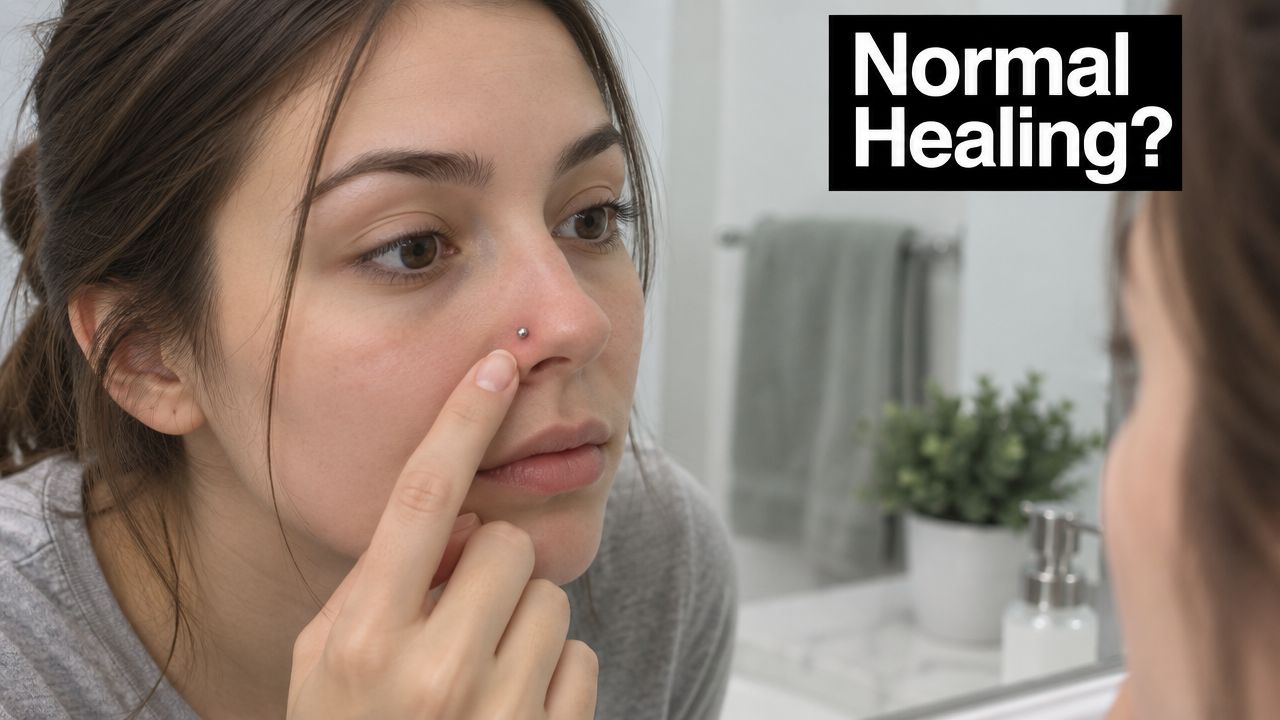
You're standing in front of the mirror, tilting your head from side to side, wondering whether that little bump beside your new jewelry is part of healing or a sign that something's gone sideways. Maybe the nose ring hole looks red, feels tender, or seems to shrink the moment you remove the jewelry. Welcome to the very normal, occasionally confusing world of nose piercings.
Introduction Your Nose Ring Hole Questions Answered
A nose ring hole isn't just an opening in your skin. Once it heals, it becomes a small fistula tract, or a tunnel of remodeled tissue that lets jewelry pass through comfortably. That tunnel needs time, low friction, and the right jewelry to settle.
This guide starts with the basics, then moves into the details that make everyday care much easier. You'll learn how nostril and septum placements differ, why some areas heal more slowly, how long to leave jewelry in, and how to clean the piercing without turning your bathroom into a chemistry lab.
You'll also get practical ways to choose jewelry, understand fit, and change a piece without forcing it. A nose ring hole can feel surprisingly fussy when the gauge, diameter, backing, or material doesn't suit your anatomy.
The biggest goal is simple: help you tell normal healing irritation from symptoms that deserve professional attention. A little tenderness and crusting can happen during recovery. Worsening pain, spreading redness, significant swelling, or pus is a different conversation.
Nose piercing has a long history, too. Written evidence appears in the Hebrew Bible, and archaeological and historical estimates place its origins more than 4,000 years ago in the Middle East. Historical accounts describe the practice moving to India in the 1500s and entering Western culture by the 20th century, including a U.S. popularization wave in the 1960s. Learn more about the history of nose piercing.
So whether you're nursing a fresh stud, planning a septum ring, or troubleshooting a stubborn nose ring hole, you're in the right place. Think of this as your friendly piercing-sidekick guide, anatomy made understandable, aftercare made doable, and jewelry choices made much less mysterious.
What a Nose Ring Hole Really Is and Where It Sits
A healed nose ring hole works like a tiny lined tunnel through tissue. Your piercer creates the channel, your body gradually repairs and remodels it, and jewelry keeps that pathway open while it matures.
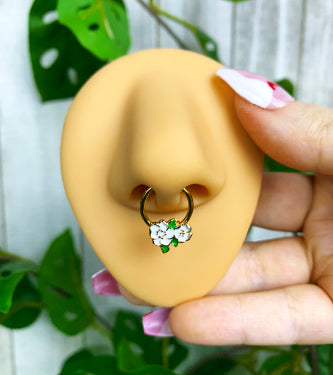
The exact location changes the experience. A standard nostril piercing usually passes through the lower nostril area, where the tissue is relatively soft. A high nostril sits farther upward, where tissue becomes thicker and more cartilage-backed. A septum piercing passes through the thin soft-tissue area between the nostrils, often called the “sweet spot” when anatomy allows.
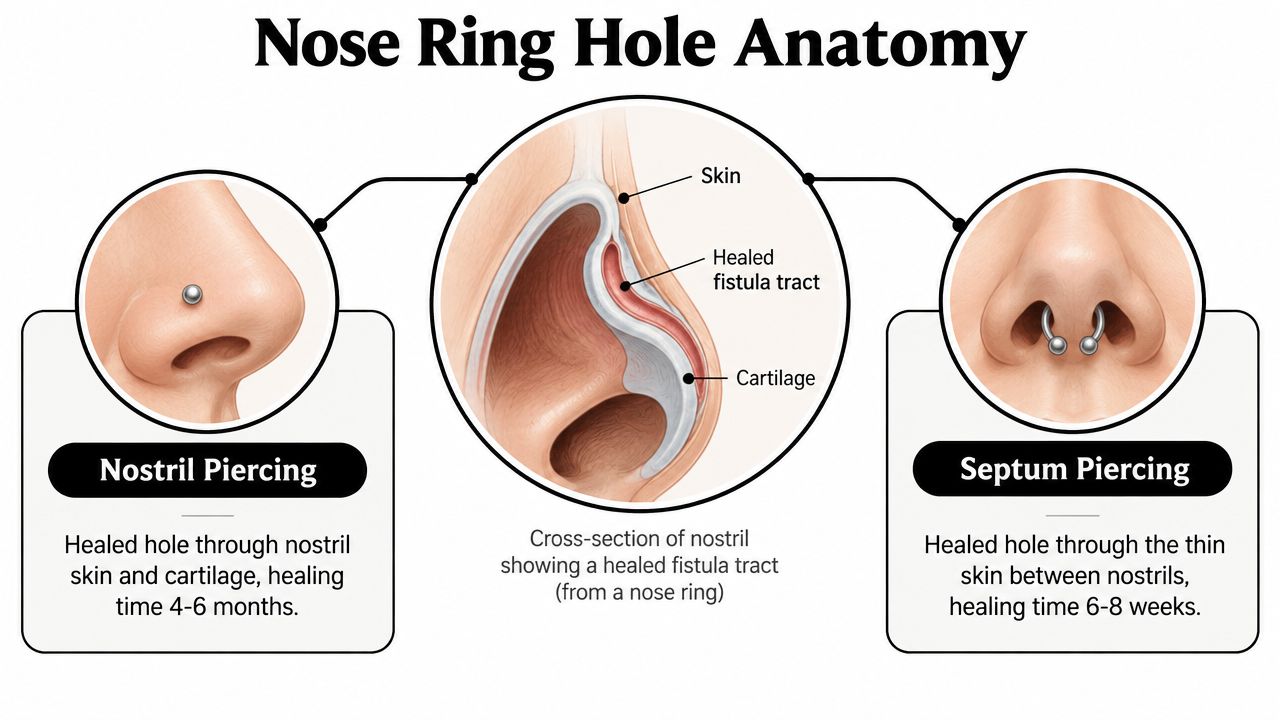
Nostril placement versus septum placement
Think of lower nostril tissue like a soft fabric panel. It still needs patience, but it generally has an easier path to recovery than thicker, cartilage-adjacent tissue. Standard nostril piercings are commonly reported to heal in about 4 to 6 months, while higher nostril placements may take 6 to 12 months. See a breakdown of nose piercing types and healing times.
The septum is different because a correctly placed piercing travels through soft tissue rather than the tougher cartilage itself. Septum piercings are often reported to heal in about 3 to 6 months, with some sources describing an initial closure window of 6 to 8 weeks. Review university guidance on body-piercing healing.
Why anatomy changes your jewelry experience
Cartilage has a more limited blood supply than softer tissue, so remodeling tends to move more slowly. That's why a high nostril may look calm on the outside while the inside is still sensitive.
Your nose also determines how jewelry sits. A hoop that looks perfect on one person may press against another person's nostril, twist forward, or catch during sleep. Placement isn't just about appearance. It affects pressure, movement, cleaning access, and the amount of room your jewelry needs.
The useful takeaway is this: the nose ring hole and the jewelry must work together. A comfortable fit follows your anatomy instead of trying to bully it into a certain look.
Healing Timelines and Everyday Aftercare That Works
Healing doesn't move in a perfectly straight line. Your piercing may look settled for a few days, then develop mild tenderness or crusting after it gets bumped. That doesn't automatically mean infection.
A nostril piercing hole typically takes about 2 to 4 months to fully heal, while a septum piercing often heals in about 1.5 to 2 months. Depending on placement and aftercare, healing can extend to 12 to 24 weeks. Read the medical overview of nose-piercing safety.
Your simple twice-daily routine
Keep care gentle and boring. Boring is excellent for a healing piercing.
- Wash your hands first. Clean hands prevent you from transferring everyday grime directly to the jewelry and piercing channel.
- Rinse with warm water and saline. Aftercare guidance commonly recommends cleaning a new nose piercing twice a day with warm water and saline. If you need soap, choose a gentle, unscented option. Follow this practical healing-piercing care routine.
- Let softened crusting release naturally. Don't pick dry buildup off the nose ring hole. Warm water can loosen it so you aren't tugging on fresh tissue.
- Dry by dabbing. Use a clean towel or paper towel, and avoid rubbing the jewelry back and forth. See additional nose-piercing aftercare guidance.
- Leave the jewelry alone. Spinning, twisting, and checking the piece repeatedly creates friction inside the tract.
Practical rule: If your piercing feels better when you stop touching it, that's useful information. Hands-off care is often the upgrade.
Why early removal causes trouble
A healing tract can narrow quickly when jewelry comes out. One medical source notes that the channel can close within hours, so removing jewelry too early may make reinsertion difficult or impossible. Learn why a nose piercing can close rapidly.
University guidance recommends leaving a new stud in for at least 8 weeks, while healing may take 12 to 24 weeks depending on location. Surface calm doesn't always equal complete maturity, so ask a qualified piercer before changing initial jewelry.
Sizing and Jewelry Types Made Simple
Jewelry fit has four moving parts: gauge, length, diameter, and style. Gauge describes thickness. Length matters most for studs and flat backs, while diameter describes the inside measurement of a hoop.
A piece that's too tight can press into swelling and trap debris. One that's too loose may snag on clothing, towels, hair, or pillows. The goal is comfortable stability, not jewelry that disappears into the tissue or swings around like a tiny pendulum.
Nose Jewelry Types at a Glance
| Jewelry Type | Best For | Fit and Comfort Notes |
|---|---|---|
| Stud | Healing nostril piercings and understated everyday wear | Offers a stable profile, but the post and backing need enough room for swelling. |
| Flat back | Low-profile comfort and a clean interior feel | A flat disk rests inside the nose and can reduce movement when correctly fitted. |
| L-bend | Easy removal for an established piercing | The bent section holds the piece in place, but insertion requires the correct angle. |
| Nose screw | A secure curved design for a healed nostril | The curve follows the tract, though it can be trickier to insert without irritating the channel. |
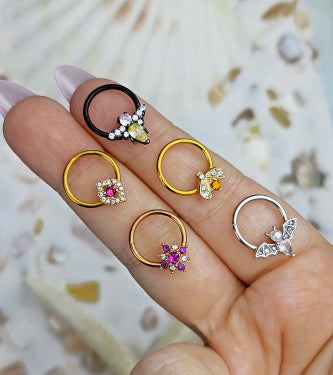
| Hoop | Styling a healed nostril | Needs enough diameter to avoid pulling or pressing against the nostril. |
| Septum ring or circular barbell | Septum styling and flipping options | The diameter and shape should follow your septum anatomy without pinching. |
Match the piece to the moment
For a fresh or still-healing nostril, a well-fitted stud or flat back is usually easier to keep stable than a hoop. Hoops move more, and movement can irritate a developing nose ring hole. Once the tract is mature, a hoop can give you a completely different look, but it still needs the right diameter.
Use a sizing guide to measure from the piercing hole toward the bottom edge of the nostril rather than guessing from a product photo. Learn how to measure for a comfortable nose ring fit.
Don't treat a standard size as a guarantee. The correct piece depends on where your piercing sits, how much room your anatomy provides, the jewelry style, and whether your tissue is currently swollen. A piercer can check the channel and help you choose a post or hoop that rests without pressure.
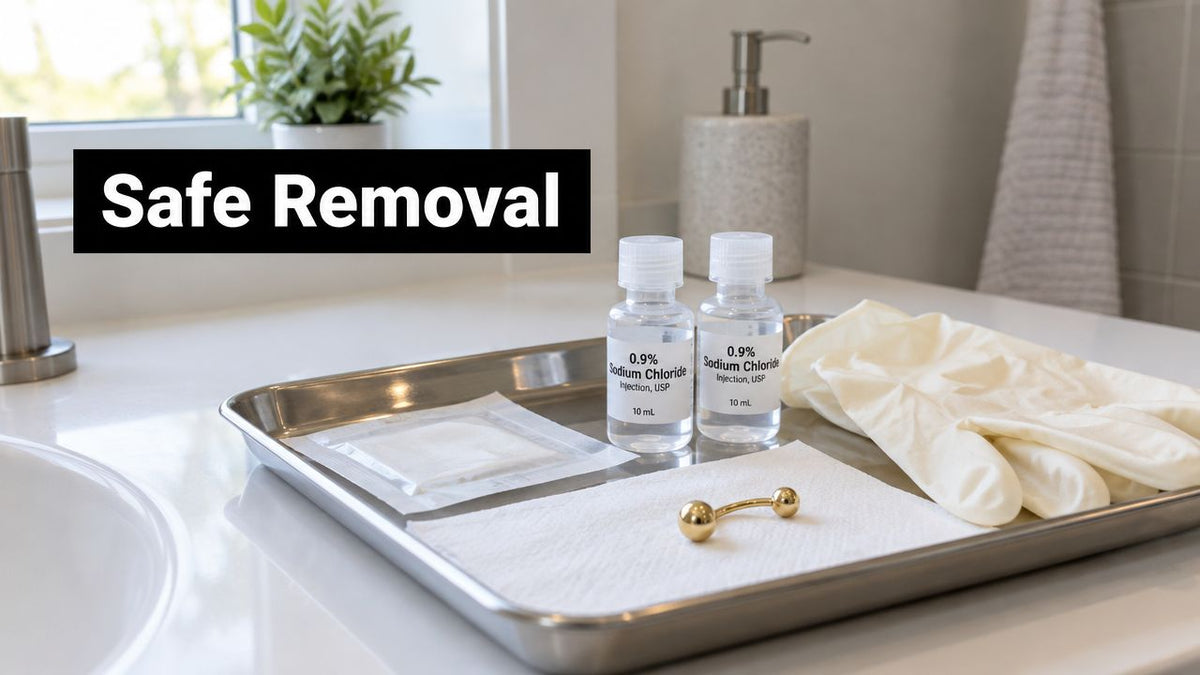
How to Insert and Remove Jewelry Without Stress
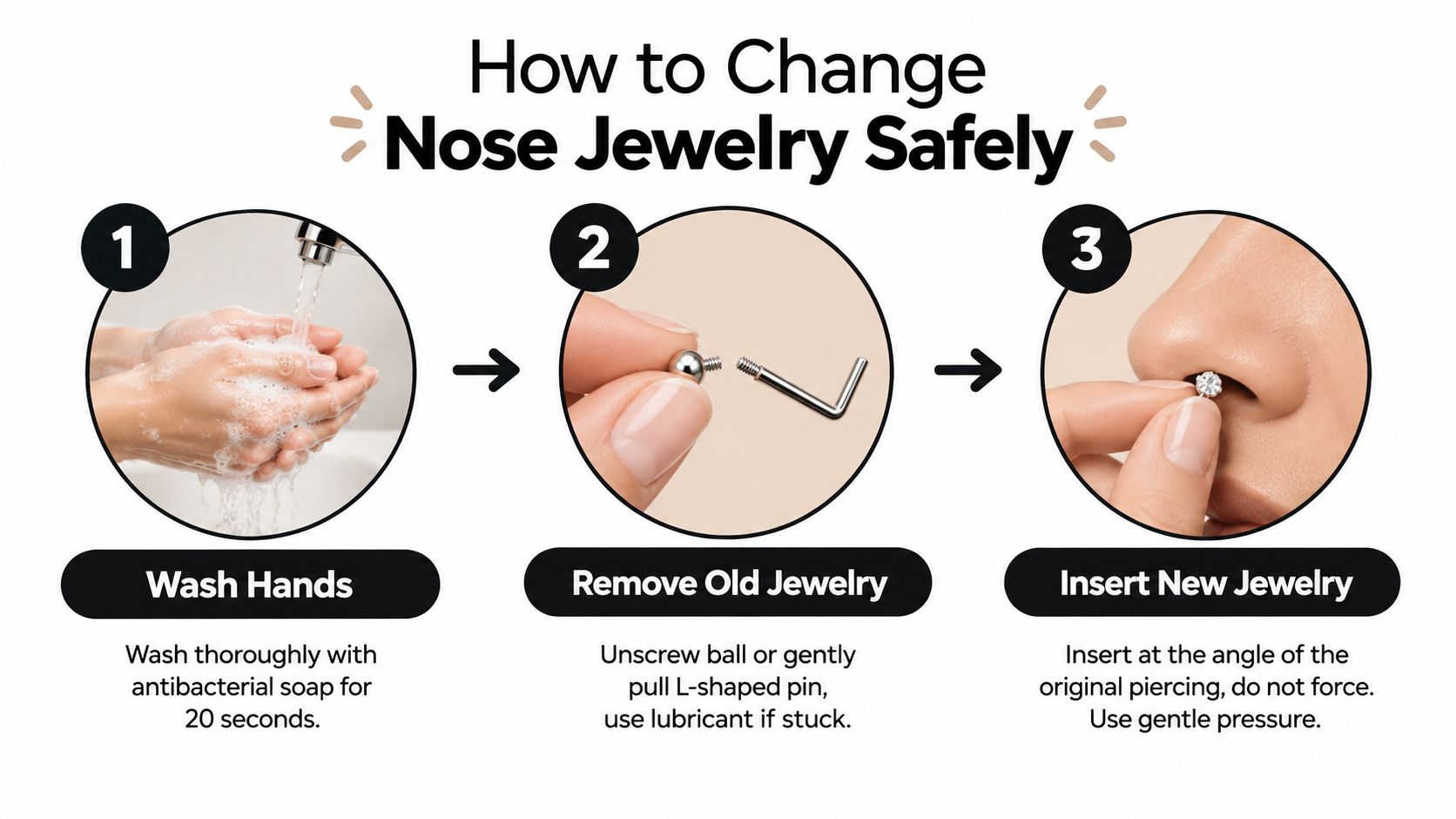
Changing jewelry should feel like a careful handoff, not a wrestling match. If the piece doesn't slide through smoothly, stop. Force can scrape the fistula tract, create swelling, and turn a simple jewelry change into a fresh irritation cycle.
Before you touch the nose ring hole
Change jewelry only when the piercing is sufficiently healed and a professional has confirmed that switching is appropriate. Prepare the new piece, clean your hands, and work somewhere with good lighting. Dropping a tiny end into the sink is a classic piercing rite of passage, but it's still better to close the drain first.
Wash your hands thoroughly with soap and water. Clean the new jewelry according to the manufacturer's care guidance, and avoid applying harsh disinfectants directly to the piercing channel.
A gentle removal and insertion sequence
- Hold the jewelry steady. Stabilize the visible end so you don't pull the skin through the tract.
- Open the correct connection. Unscrew a threaded end, release a threadless end as designed, or guide an L-bend through its original angle. Don't yank a stuck piece.
- Follow the existing pathway. Insert the replacement at the same angle your piercer used. The channel is not necessarily straight from the outside to the inside, especially with screws and bends.
- Use lubrication only when appropriate. A piercer may recommend a sterile, water-based lubricant for a stubborn healed channel. Avoid household oils, thick creams, and anything fragranced.
- Secure without overtightening. Threaded ends should be snug, not cranked down. Excess pressure can make removal harder and irritate the skin.
When to hand the job to a piercer
Pause and get professional help if the new piece won't enter, the old jewelry is embedded, you see bleeding that doesn't settle, or the nose ring hole feels sharply painful. A qualified piercer can assess the tract without repeatedly poking at it.
Never push a thinner or thicker piece through by force. Size changes should happen gradually and with professional guidance, particularly if the channel has started narrowing.
Troubleshooting Bumps Enlarged Holes and Warning Signs
A small bump beside a healing piercing often reflects irritation from movement, pressure, snagging, or unsuitable jewelry. It doesn't automatically mean you have a keloid or an infection.
A nose ring hole that looks a little pink after being caught on a towel may settle when the trigger stops. The more useful question is whether the problem is stable and improving or progressively worsening.
Signs that can fit ordinary irritation
Mild tenderness, limited redness, and light crusting can appear during healing. These symptoms should generally stay localized rather than spreading, and they should gradually calm when you reduce friction and return to gentle saline care.
Try this decision path:
- If it follows a bump or snag and begins settling, keep hands off, clean gently, and avoid changing jewelry.
- If the jewelry feels tight, contact a piercer promptly rather than removing it yourself.
- If a bump keeps returning, inspect pressure, hoop movement, sleeping habits, and jewelry material with a professional.
- If the hole looks enlarged, chronic trauma or infection may be contributing, so stop tugging and arrange an assessment.
For a focused explanation of common piercing bumps, read BodyCandy's guide to nose piercing bumps.
Red flags deserve medical attention
Common technical complications include infection, scarring, hypertrophic scars or keloids, and an enlarged hole caused by repeated trauma or infection. Nasal and cartilage-adjacent piercings can involve Pseudomonas more often than some soft-tissue sites, and an infection can spread beyond the local area in rare cases. Review Cleveland Clinic's guidance on an infected nose piercing.
Seek medical advice for worsening pain, spreading redness, marked warmth, significant swelling, thick or foul-smelling discharge, fever, or jewelry becoming embedded. Don't remove jewelry from a suspected infection unless a healthcare professional tells you to, because closing the outside can trap infection inside.
Clinical writing also documents less common but serious risks such as septal hematoma, perichondritis, necrosis, embedded jewelry, aspiration or swallowing, and rare systemic infections. Population data summarized in one clinical review found complications in about 31% of non-ear piercings among people aged 16 to 24, with swelling, infection, and bleeding among the most common concerns. Read the clinical review from the American Academy of Family Physicians.
Sensitive Skin Materials and Your Next Shine
If your skin reacts easily, jewelry material deserves as much attention as shape and size. Persistent itchiness, rash-like redness, or irritation that appears mainly under the jewelry can point to a material sensitivity, although infection and mechanical irritation can look similar.
Ask your piercer about implant-grade titanium or another documented biocompatible option suited to your piercing. Implant-grade steel may work well for some people, but sensitive wearers should discuss nickel exposure and their personal reaction history before choosing it. “Hypoallergenic” is useful marketing language, but it isn't a substitute for knowing the actual material and finish.
Build comfort into your styling plan
Choose a low-profile piece while the nose ring hole is settling. Once the tract is mature, you can explore hoops, decorative ends, curved designs, and coordinated facial jewelry without asking a healing piercing to handle every style at once.
Quality matters because rough surfaces, damaged plating, or poorly finished edges can scrape the channel. Inspect jewelry before wearing it, and retire pieces that feel sharp, flake, discolor, or make the skin react.
If irritation continues despite gentle care and a well-fitted piece, don't keep experimenting blindly. A professional piercer can check placement and sizing, while a healthcare professional can evaluate infection, allergy, or abnormal scarring.
Your nose ring hole doesn't need to be perfect every day. It needs thoughtful care, jewelry that respects your anatomy, and enough time to mature. Once those pieces line up, styling gets much more fun.
BodyCandy offers nose rings and body jewelry in a range of styles for updating a healed nose ring hole, from simple everyday pieces to more expressive looks. Visit BodyCandy to browse your next nose jewelry option, and share your aftercare questions in the comments or sign up for new-arrival updates.