




You're standing in front of the mirror, holding a tiny hoop against your nostril and wondering why it looks perfect in the product photo but awkward on your face. Maybe your first stud keeps sliding, your skin hates mystery metal, or you're ready for something with more attitude. Choosing nose piercing jewelry for men isn't about grabbing the biggest ring or copying someone else's look. It's about getting the material, measurements, backing, and silhouette right for your anatomy.
Why Nose Piercings Are a Timeless Choice for Men
A first nose piercing often starts small. You choose a discreet stud, get used to seeing it in the mirror, then realize the jewelry doesn't quite match your style anymore. The post may sit too low, the finish may feel too shiny, or the piece may look generic against your facial hair. That upgrade is where nose jewelry gets interesting, because the right replacement can change your whole face without taking over it.
Nose piercing also has far more history behind it than the current fashion cycle. Historical summaries place the earliest documented nostril piercings at roughly 4,000 to 5,000 years ago, with roots in the Middle East before the practice moved into India by around the 1500s and later reached Western civilization in the 20th century. The history of body piercing shows that this isn't a disposable trend invented for social media. It's a long-running form of adornment, identity, and self-expression.
Men have always had a place in the category
Western fashion didn't treat nose jewelry as a mainstream men's accessory right away. In the early 20th century, piercings beyond the earlobes were uncommon in the West, then body piercing became more visible after World War II in gay male subcultures. That history matters because it places men's nose jewelry within a broader story of community, rebellion, style, and visibility, rather than reducing it to a recent celebrity affectation.
Population-level evidence backs up the idea that male nose piercing exists beyond niche scenes. A large survey of adults in England recorded nose piercing among men at 0.6%, compared with 5.3% among women, and found the difference remained significant after adjustment. The survey data on body piercing in England also placed nose piercing below nipple and eyebrow piercing for men, showing that facial jewelry formed part of a broader male piercing pattern.
You don't need a loud piece to make the choice feel bold. A matte titanium flat-back can look sharp and controlled, while a fitted black hoop brings more edge. Either way, you're participating in a style with deep cultural roots and a documented place in modern men's fashion.
Nailing the Perfect Fit and Sizing Mechanics
Fit beats design every time. A beautiful nose ring that pinches, spins, snags, or falls out will spend more time irritating you than improving your look.
Start by finding the gauge, which describes the thickness of the jewelry. Common initial nostril sizes are 20G, 0.81 mm, and 18G, 1.02 mm, according to initial nose piercing sizing guidance. Independent piercing guidance also identifies 18G and 20G as common nostril sizes. FreshTrends sizing help lists standard post lengths of 1/4 inch or 5/16 inch, while noting that twists, bones, and fishtails are measured differently.
Standard Nose Jewelry Sizing Guide
| Gauge Size | Thickness (mm) | Best For |
|---|---|---|
| 20G | 0.81 mm | Standard nostril studs and subtle everyday jewelry |
| 18G | 1.02 mm | A slightly sturdier post or a thicker-looking hoop |
| 22G | Not specified in the verified sizing guidance | Only when your piercer confirms that size matches your piercing |
Gauge numbers work backward, so a lower number means thicker jewelry. Don't force an 18G piece into a piercing made for 20G, and don't assume a thicker post automatically looks more masculine. Using jewelry that's too thin can increase tissue trauma and migration risk, while jewelry that's too thick can put unnecessary stress on the channel. Your original piercing size is the safest starting point.
Next, check the post length. A 7 to 8 mm post length or inner diameter is commonly used for initial fit and swelling tolerance, but your nostril thickness and placement still decide what sits correctly. A flat-back should feel secure without pressing hard into the tissue. If the front moves constantly or the back catches on the inside of your nose, the fit needs attention.
Practical rule: The jewelry should stay put without squeezing your nostril or leaving a deep pressure mark.
For hoops, look at diameter, not post length. Nostril hoops commonly range from 6 to 12 mm, depending on placement and preference, according to nose ring types, materials, and care guidance. A smaller diameter creates a close, clean fit. A larger one gives you more movement and a more visible silhouette, but it can also snag more easily.
Before you buy, confirm these details:
- Match the gauge to your piercing or ask your piercer.
- Measure the post, inner diameter, or wearable length required by the jewelry shape.
- Choose a hoop diameter based on where the piercing sits, not only on the look you want.
- Skip earrings. Their backs, proportions, and metal choices aren't designed for nostril anatomy.
For a deeper breakdown of why a nose ring may feel loose, tight, or misplaced, use BodyCandy's nose ring sizing guide.
Choosing Metals That Will Not Irritate Your Skin
Material is the decision that protects your piercing. A dramatic finish means nothing if the metal leaves you with itching, swelling, discoloration, or an irritation bump.
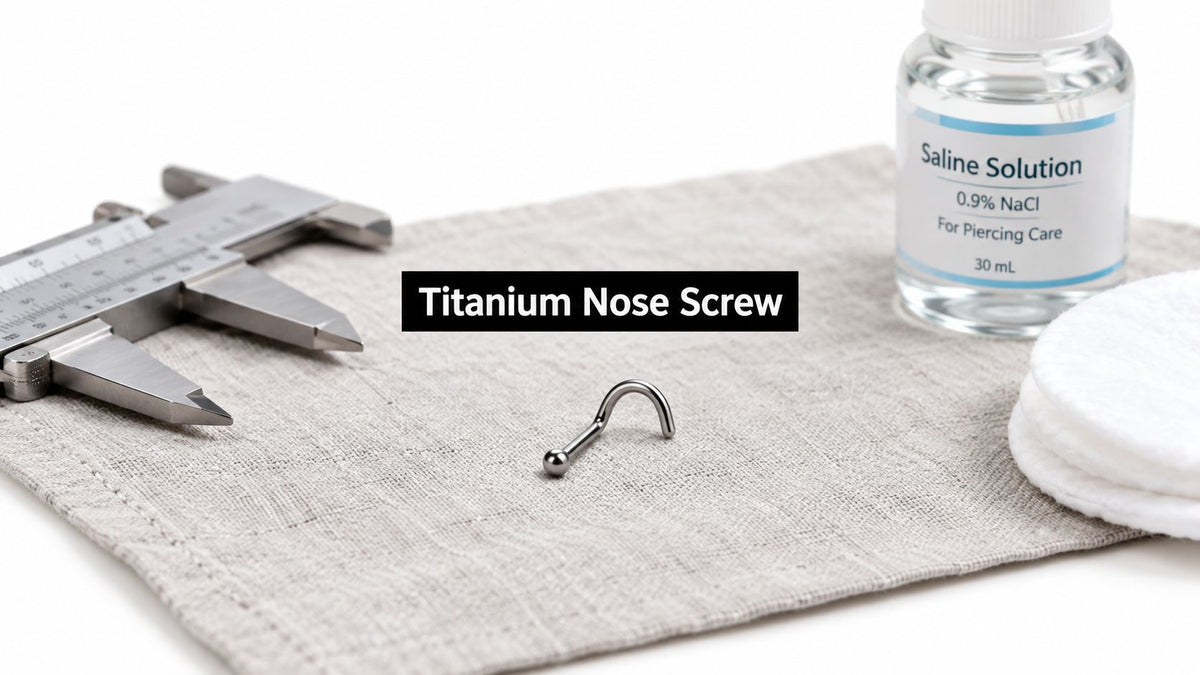
Implant-grade titanium is the strongest recommendation for a fresh piercing or nickel-sensitive skin. Look for ASTM F-136 titanium, also called Ti-6Al-4V ELI. It's nickel-free, lightweight, and widely recommended for reducing irritation and allergic response. Guidance on hypoallergenic nose rings identifies implant-grade titanium as the safer benchmark for sensitive wearers.
Read past the marketing label
“Hypoallergenic” sounds reassuring, but it isn't a material specification by itself. Generic “surgical steel” can still contain trace nickel, so it may work for many people but isn't the safest default if your skin reacts to nickel. The same logic applies to vague alloy descriptions. You want a named material and, for titanium, an implant-grade standard.
Niobium is another reliable option for sensitive skin. Solid 14k or 18k gold can also work, provided it's suitable for body jewelry and not a plated or mystery-alloy piece. White gold deserves extra scrutiny because some formulations use nickel. Choose a clearly identified, nickel-free option when available.
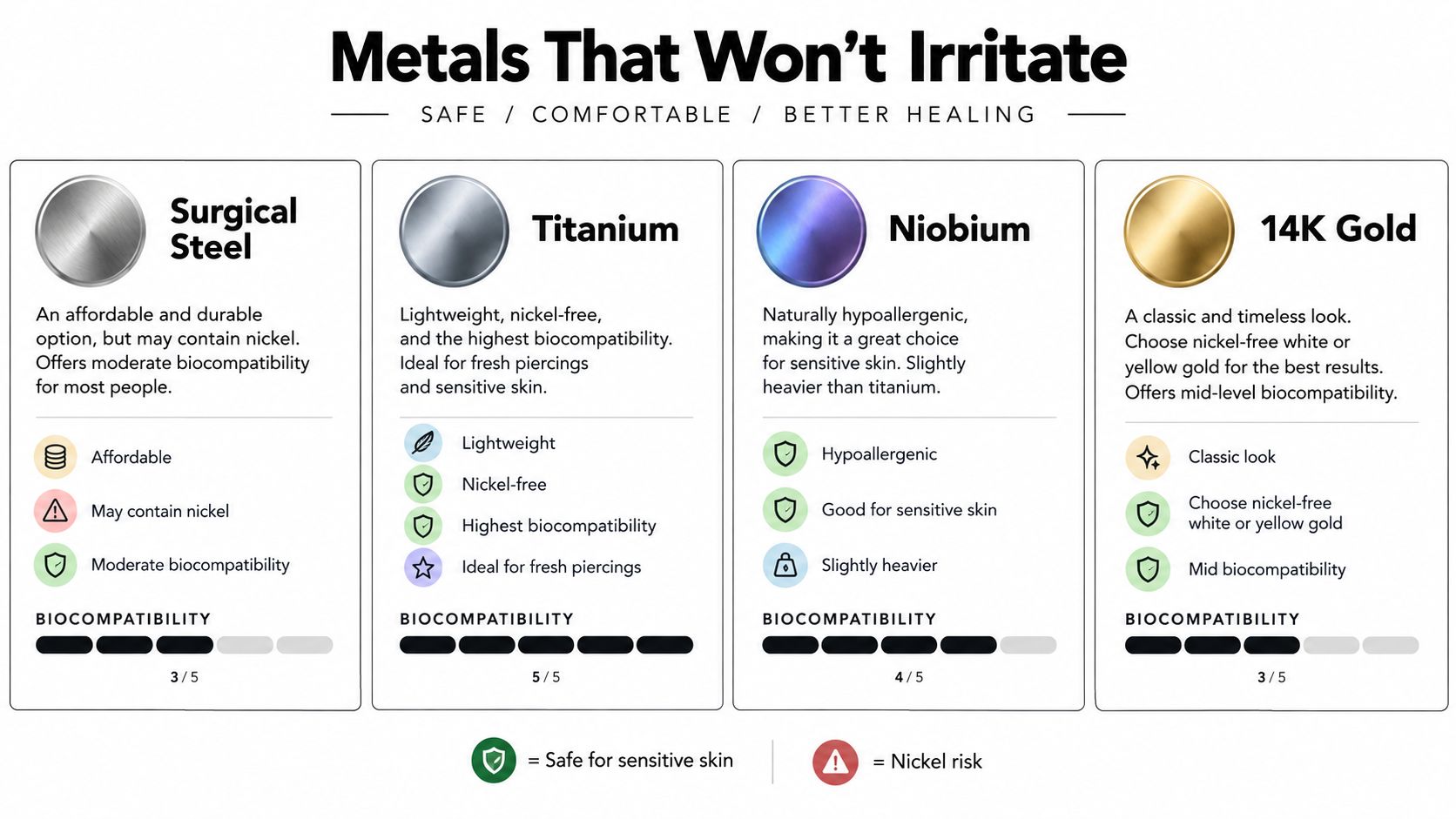
BodyCandy's nose piercing material guidance is useful when you're comparing materials instead of judging a piece only by its finish.
My material ranking
- Implant-grade titanium: The clear first choice for new piercings, swelling, and nickel sensitivity.
- Niobium: A solid hypoallergenic alternative with a distinctive weight and finish.
- Solid 14k or 18k gold: Best for a refined look on a healed piercing, as long as the alloy is appropriate and nickel-free.
- Surgical steel: Acceptable for many wearers, but not my first pick for someone who already knows their skin is reactive.
Green discoloration, persistent itching, or a hot, painful bump isn't a style issue. Remove the guesswork from your jewelry description before you put the piece in your face.
Masculine Styles and Silhouettes That Actually Work
Masculine nose jewelry doesn't need to be oversized. The strongest looks usually come from proportion and placement, not sheer bulk.
A flat-back titanium stud is the cleanest everyday option. Choose a small, low-profile top if you want the piercing to read as intentional but controlled. It works especially well with short facial hair, glasses, or other minimal jewelry because it adds definition without creating visual clutter.
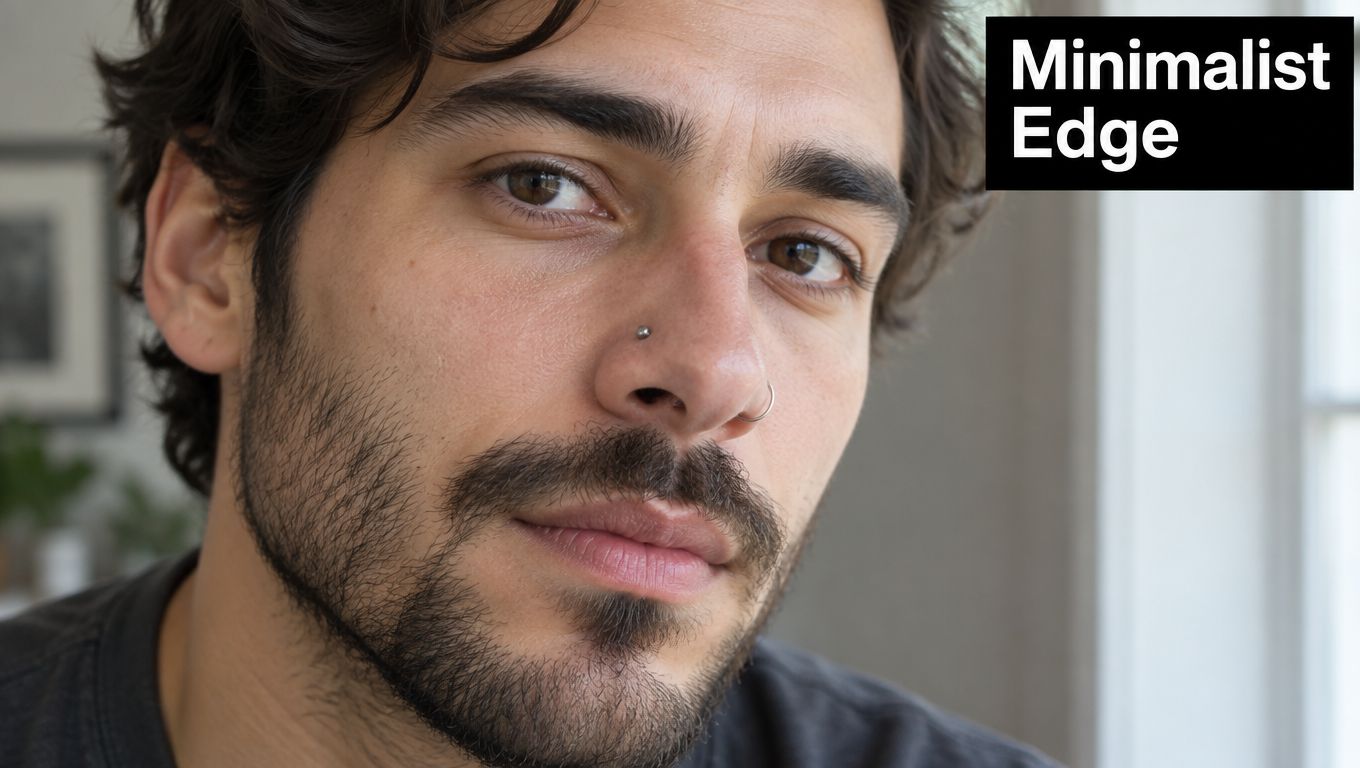
Studs, hoops, and secure shapes
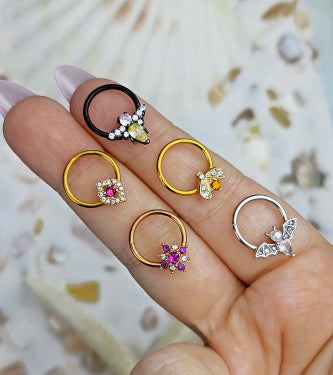
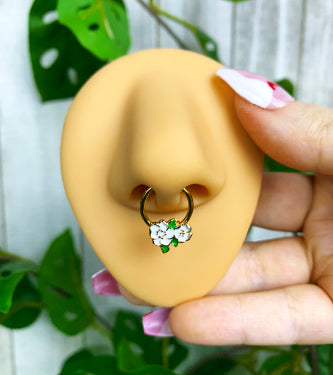
A small hoop brings more movement and attitude. Pick a snug diameter for a sharp, close-to-the-nose look, or choose a little more room if you want the ring to frame the nostril. Don't let the hoop hang so low that it competes with your upper lip or beard line.
A nose bone gives you a straight, minimal front with a small end that helps retain it. It can look crisp, but it's better suited to a healed piercing and a wearer who already knows the correct fit. A nostril screw adds security through its curved shape, while an L-shaped ring offers straightforward insertion but needs the right length to stay comfortable.
Your face shape can guide the silhouette, but anatomy comes first:
- Rounder features: A close-fitting hoop or vertical-looking stud can add definition without overloading the center of the face.
- Angular features: A compact stud softens the look, while a clean hoop emphasizes structure.
- Longer facial proportions: Keep the piece fitted and avoid excessive drop, especially if you wear a full beard.
- Layered piercings: Use a tiny stud beside a septum ring or high nostril piece, but keep the metals coordinated.
Black, silver, and muted titanium finishes suit rugged or industrial styling. Gold adds contrast and looks deliberate against darker hair or facial hair. If you're unsure, start with the least complicated piece that matches your daily wardrobe. You can always add drama later, but a badly fitted statement hoop will make you regret the upgrade quickly.
No-Nonsense Aftercare and Healing Protocols
Your piercing needs boring, consistent care. That's good news because the routine is simple, and most problems come from touching, twisting, over-cleaning, or changing jewelry before the channel is ready.
Use a sterile saline product intended for wound care and follow the product directions. A practical routine is a saline rinse twice daily, with contact lasting about 5 minutes, while avoiding harsh sprays and aggressive scrubbing. BodyCandy's sea salt soak guidance can help you understand the cleaning approach without turning aftercare into a chemistry project.
The daily routine
- Clean gently: Rinse with saline and let softened crust move away naturally.
- Leave the jewelry alone: Don't twist, spin, pick, or repeatedly check the backing.
- Reduce contact: Keep makeup, hair products, dirty hands, pools, and unnecessary friction away from the site.
- Dry carefully: Pat around the area with clean disposable material rather than rubbing it.
- Watch the fit: A snug flat-back should stay stable without sliding or pressing into the tissue.
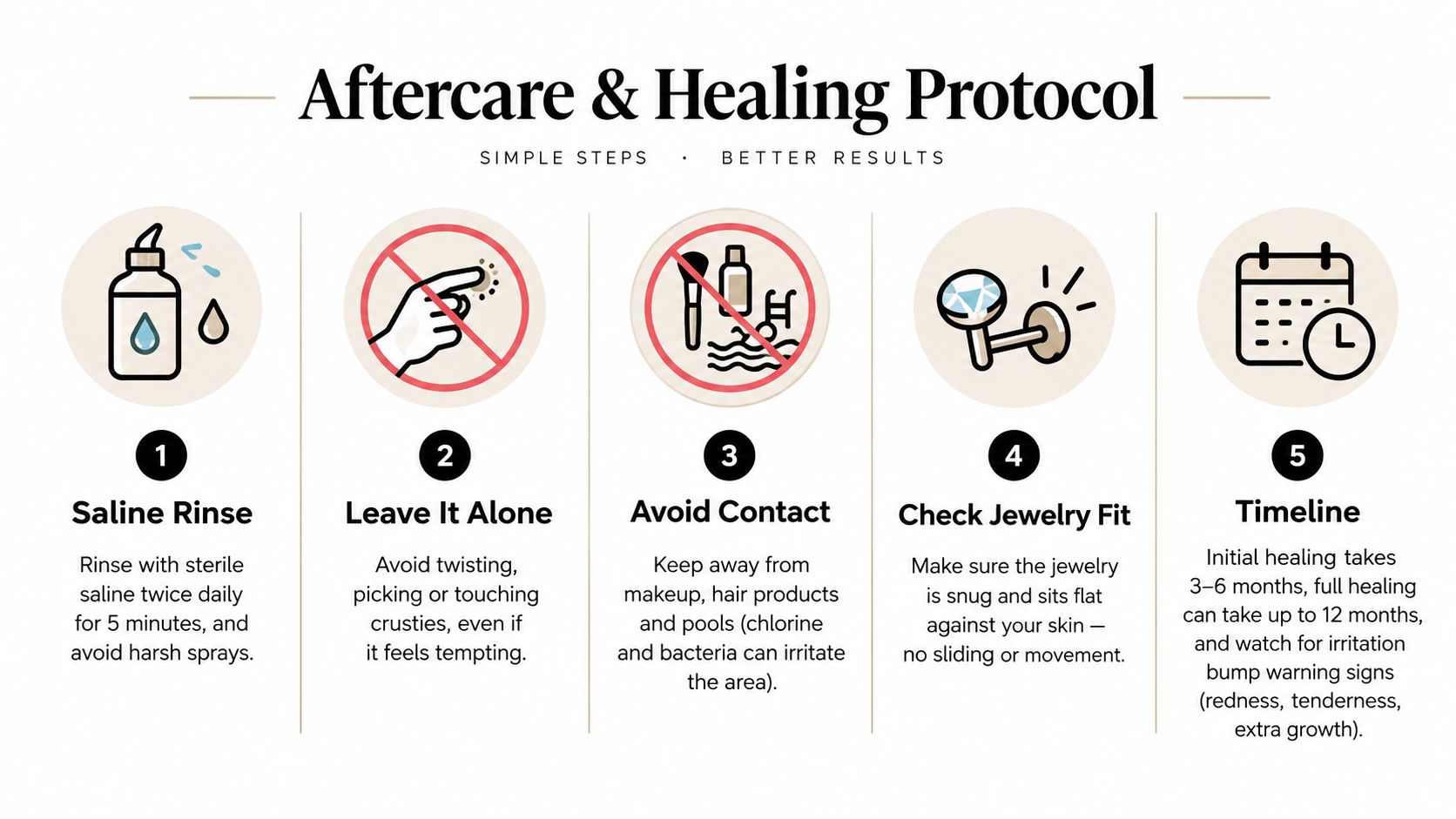
Leave the initial jewelry in place while the piercing settles. Initial healing is commonly described as 3 to 6 months, with full healing taking up to 12 months, according to the supplied aftercare guidance. Don't treat the outside appearance as proof that the inside has finished healing. A piercer should assess the channel before you downsize or swap jewelry.
The fastest way to create an irritation bump is to keep testing whether the piercing is healed.
Here's a visual walkthrough to keep the routine clear:
Contact a qualified piercer or medical professional if pain, swelling, heat, discharge, or redness worsens instead of settling. Don't remove jewelry from a suspected infection without professional advice, because closing the channel can complicate drainage.
Ready to Upgrade Your Look
The right men's nose jewelry comes down to three decisions: fit, material, and attitude. Match the gauge to the piercing, choose a post or hoop diameter that suits your actual anatomy, and prioritize implant-grade titanium when the piercing is fresh or your skin is sensitive.
Then make the style yours. A low-profile flat-back looks precise and modern. A fitted hoop adds movement and edge. A nose bone or screw gives you a different balance of security and visibility. You don't need to follow a gendered rulebook, but you should respect the mechanics that keep the jewelry comfortable.
Read product descriptions like someone who knows body jewelry. Look for the material, gauge, wearable length, backing style, and hoop diameter. Skip mystery alloys and avoid using earrings in a nostril piercing, because the shape and retention system aren't designed for that job.
BodyCandy offers nose hoops, nose bones, nostril screws, fishtails, L-shaped nose rings, and non-pierced clip-on options for different looks and wearers. Visit BodyCandy to compare styles and choose a piece that fits your piercing, your skin, and your actual vibe.