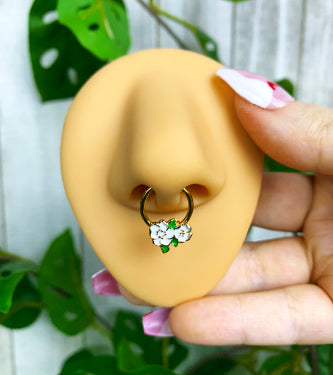




















So, you've got a gorgeous new nose piercing—congrats! You're probably dying to know, "How long until I can swap this starter stud for a super cute hoop?"
Let's get real: it depends! A standard nostril piercing typically takes around 4 to 6 months to fully heal. But septum piercings? They're way faster, usually healing up in just 2 to 3 months.
Your Quick Guide to Healing Times
Welcome to the piercing club! Getting new bling is the best feeling, but patience during the healing phase is your new BFF. Rushing to change your jewelry can lead to irritation, infection, and a healing timeline you definitely didn't sign up for.
Your body is incredible and starts healing the new piercing (called a fistula) right away. But different spots on your nose heal at totally different speeds, which is why there's no single, one-size-fits-all answer.
Common Nose Piercing Healing Windows
The type of tissue your piercing goes through is the biggest deal-maker for its healing timeline. A septum piercing, for instance, goes through a thin strip of soft tissue (aka the "sweet spot"), which heals much faster than the thicker cartilage of your nostril.
A nostril piercing generally takes about 4 to 6 months to heal fully. Septum piercings tend to heal more quickly, usually within 2 to 3 months. More complex piercings like the rhino can require 6 to 9 months, while bridge piercings heal in about 2 to 3 months. You can find more deets about various piercing healing timelines in our comprehensive guide.
To make it super simple, here’s a quick breakdown of what you can generally expect.
Quick Guide to Nose Piercing Healing Times
This table gives you a snapshot of the average healing times for the most common nose piercings.
| Piercing Type | Average Healing Time |
|---|---|
| Nostril | 4 - 6 Months |
| Septum | 2 - 3 Months |
| Bridge | 2 - 3 Months |
| Rhino (Vertical Tip) | 6 - 9 Months |
Knowing these timelines helps you set realistic expectations. Just remember, these are just averages—your personal healing journey is totally unique to you!
Navigating the Three Stages of Piercing Healing
Your nose piercing's healing time isn’t just one long waiting game; it’s a journey that happens in three distinct phases. Knowing what your body is up to behind the scenes can save you a ton of stress, because you'll know exactly what’s normal and what’s not. Think of it like your body is an expert builder working on a very specific construction project.
First up is the Inflammatory Stage. For the first few days, your body rushes resources to the area, which is why you'll see some redness, swelling, and feel a bit of tenderness. This is your body's perfectly healthy way of saying, "Okay, we've got a new situation here, let's start the cleanup!"
Next, your piercing moves into the Proliferative Stage, which is the longest and most critical part of the process. During these weeks, your body gets busy building a brand new tunnel of skin, called a fistula, all the way through the piercing. This is the delicate foundation for your fully healed piercing, and it’s precisely why being gentle is so crucial.
To help you picture the whole journey, this infographic breaks down the general timeline for each stage.
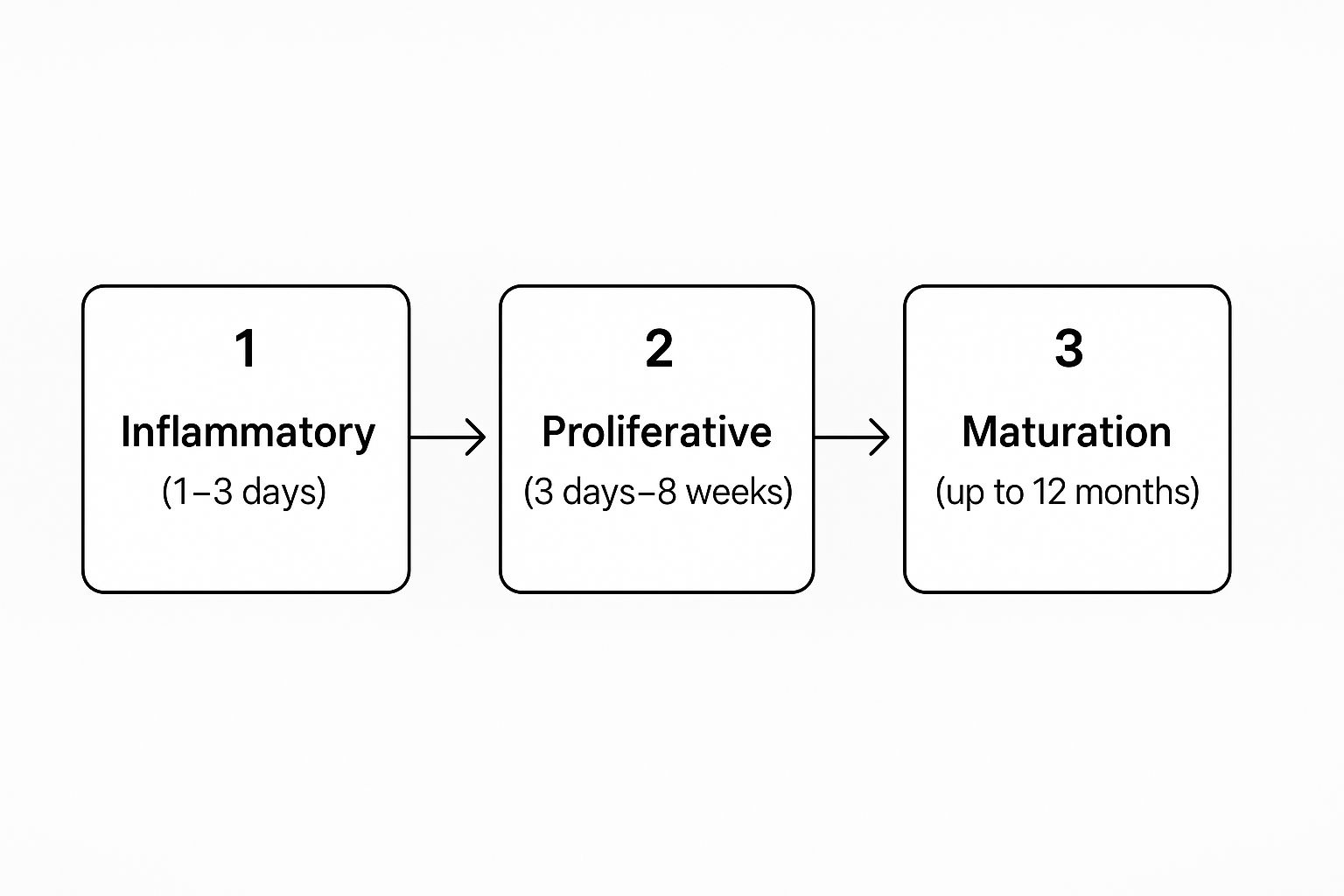
As you can see, the initial inflammation doesn't last long. The real construction work happens over the next several weeks, followed by an even longer period where everything strengthens up.
The Final Stretch: Maturation
Finally, you hit the Maturation Stage. Just because your piercing looks healed on the outside doesn't mean the project is finished. This final stage can last for several months as the new fistula tissue strengthens, toughens up, and becomes a stable, permanent part of you.
Key Takeaway: The "Proliferative" or rebuilding stage is where the magic happens. Your piercing is super vulnerable to irritation during this time, so sticking to your aftercare routine is non-negotiable for a smooth journey.
Trying to rush things or changing your jewelry too soon can totally disrupt this delicate construction work, leading to major setbacks. Patience is truly your best friend for a happy, healthy piercing.
What Factors Impact Your Healing Time
Ever wondered why your friend's new nostril piercing seemed to heal in a flash while yours is taking its sweet time? It’s not just you! Several key factors influence your unique nose piercing healing time, making each person's journey a little different.

One of the biggest game-changers is the piercing placement itself. A piercing through cartilage (like a nostril) will always take longer to heal than one through soft tissue (like a septum). That's because cartilage has way less blood flow, which means your body’s healing squad takes longer to get to the site and work its magic.
The initial jewelry you get pierced with also plays a starring role. Your body is much happier when it's healing around a high-quality, non-reactive material.
Your Body and Your Bling
The material of your first piece of jewelry is non-negotiable for a smooth start. Low-quality metals can cause all sorts of problems, from irritation and allergic reactions to major healing setbacks.
- Implant-Grade Titanium: This is the undisputed champion for initial piercings. It's hypoallergenic, completely nickel-free, and super lightweight, making it the perfect choice to keep irritation at a minimum.
- Surgical Steel: While it's pretty common, "surgical steel" can be a bit of a gamble. Many alloys contain nickel, a frequent cause of allergic reactions. If you go this route, you have to make sure it’s a verified implant-grade (ASTM F-138) option.
- Gold: If you love a gold look, make sure it’s 14k or 18k solid gold—not plated! Plated jewelry is notorious for flaking off, exposing your sensitive new piercing to whatever mystery metals are underneath.
Choosing the right metal is one of the most important decisions you'll make. Giving your body a high-quality, non-reactive material creates the best possible environment for a happy and speedy heal.
Of course, your overall health is another huge piece of the puzzle. A strong immune system, a balanced diet, and getting enough sleep are your healing superpowers. When your body is well-rested and nourished, it can dedicate more energy to healing your awesome new piercing.
Want to go deeper? Check out our guide on picking the right material for your nose piercing to become a total pro.
Your Foolproof Piercing Aftercare Routine
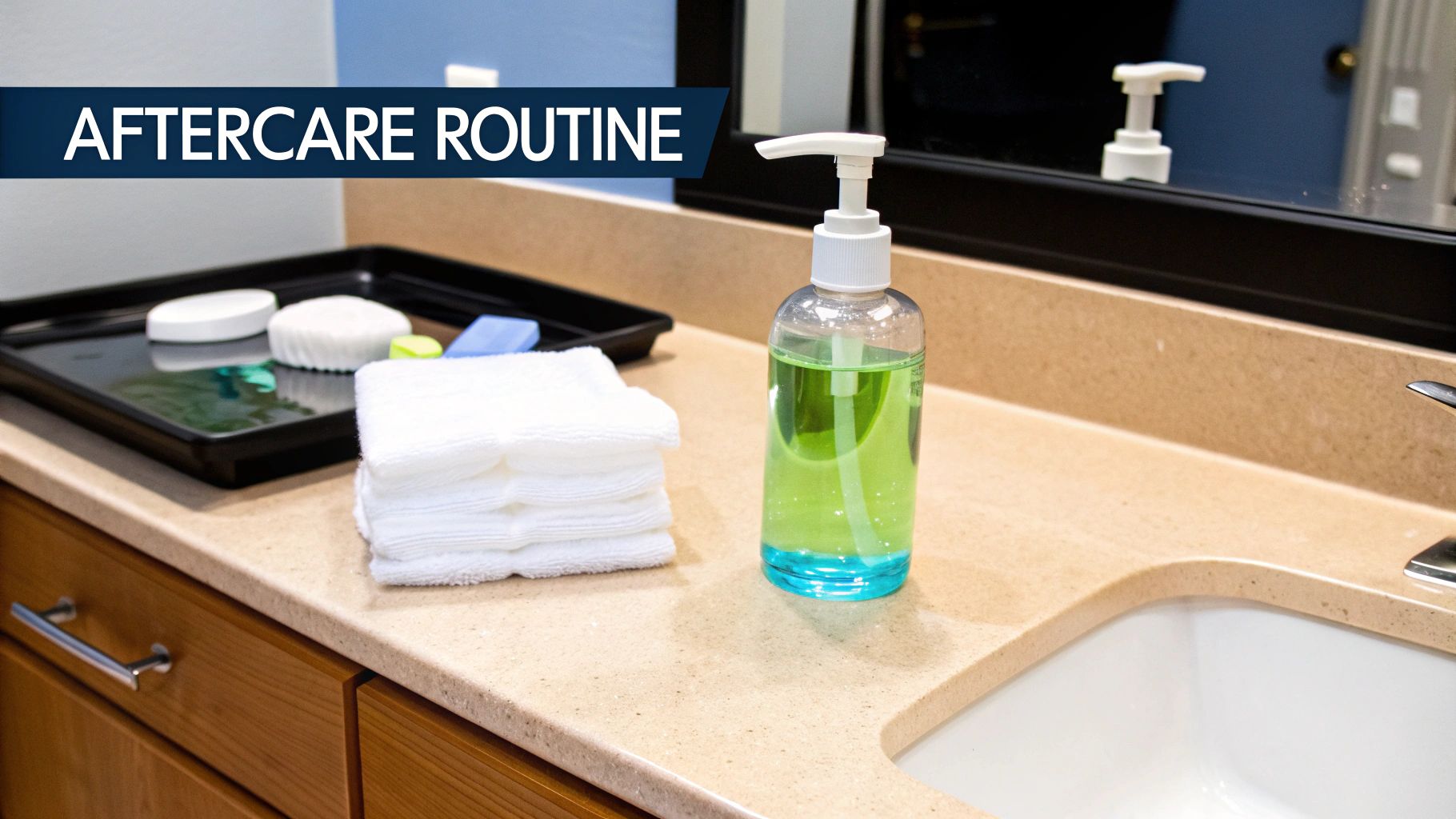
Alright, let's talk about the single most important thing that controls your nose piercing healing time: aftercare! A solid routine is your golden ticket to a happy, healthy piercing, and it’s honestly way simpler than you might think.
Forget harsh soaps, alcohol, or weird DIY concoctions you saw online. Your new piercing has one best friend, and its name is sterile saline solution.
The secret to great aftercare is actually doing less, not more. We call it the LITHA method, which stands for "Leave It The Heck Alone." Your body is a healing machine, and your main job is to just keep the area clean and let it work its magic. That means no twisting, turning, or fiddling with your jewelry!
The Daily Cleaning Ritual
Keeping it simple is the name of the game. All you really need is a gentle touch and the right solution.
- Clean Twice a Day: Just spray a sterile saline solution directly onto the front and back of your piercing twice daily. That's it—no need to go overboard!
- Don't Touch: Seriously, resist the urge to poke, prod, or rotate your jewelry. This just invites bacteria and irritates the delicate healing tissue.
- Handle ‘Crusties’ with Care: Seeing some yellowish crust form around your jewelry is totally normal. Don't pick at it! Let the warm water from your shower soften it, then gently wipe it away with sterile gauze or a clean paper towel.
The LITHA (Leave It The Heck Alone) philosophy is your most powerful tool. The less you mess with your piercing, the faster and happier it will heal. Touching it constantly is a fast track to irritation and a much longer healing time.
Here's a quick cheat sheet to keep your aftercare on point.
Nose Piercing Aftercare Dos and Don'ts
| Do This! | Avoid This! |
|---|---|
| Use sterile saline spray twice a day. | Over-clean! More isn't better and can cause dryness. |
| Wash hands thoroughly before any contact. | Touch, twist, or fiddle with the jewelry. |
| Pat dry with sterile gauze or a paper towel. | Use cotton balls or swabs that leave fibers behind. |
| Let warm shower water rinse the piercing. | Use harsh soaps, alcohol, or peroxide. |
| Be mindful when washing your face or blowing your nose. | Apply makeup, lotions, or creams on the piercing. |
| Sleep on clean pillowcases. | Go swimming in pools, lakes, or oceans until healed. |
Following these simple rules makes a huge difference.
Navigating daily life just requires a little extra awareness. When you wash your face, be gentle around your nose and try to keep cleansers away from the piercing itself. If you need to blow your nose, be mindful of your new bling. And definitely keep makeup and foundation far away from the piercing site to prevent irritation.
Want to see how someone else handled their healing journey? Check out Ashleigh’s nose piercing experience for some real-world perspective.
Identifying Trouble Signs and When to Get Help
While most piercings heal up just fine, knowing how to spot a problem early is your secret weapon. Your body will give you little clues, and being able to tell the difference between normal healing quirks and actual red flags will save you a ton of stress.
A little bit of redness, some swelling, and even some clear or whitish fluid (that’s just lymph) is totally normal in the beginning. But if things start to feel off, you'll want to act fast.
Normal Healing vs. Potential Infection
It’s super easy to mistake the normal healing process for trouble, but there are some key differences to watch for. Keep an eye out for anything that gets worse over time instead of better.
- Normal Discharge: Thin, whitish, or clear fluid that dries into "crusties" is just lymph fluid. It's a great sign your body is hard at work healing!
- Infection Pus: If you see thick, opaque discharge that's yellow or green, or has a funky smell, that's a major warning sign of an infection.
- Normal Swelling: Mild swelling and tenderness, especially in the first week or so, is totally expected. This should gradually go down on its own.
- Infection Swelling: Swelling that is excessive, painful, and hot to the touch is a problem. If it's paired with redness that seems to be spreading, it's time to get it checked out.
Don't Panic, But Pay Attention: Keep an eye on your piercing. If something seems wrong, don't just hope it goes away. Catching an issue early is the best way to keep your piercing journey on track.
Demystifying Piercing Bumps
Ah, the dreaded piercing bump. It's one of the most common issues people run into, but it’s usually not an infection. It’s more like your piercing is throwing a tiny tantrum because something is irritating it.
This could be caused by anything from snagging your jewelry and sleeping on it to using harsh aftercare products. These are typically irritation bumps, which look like small, reddish bumps right next to the piercing hole. The good news? They're treatable and usually disappear once you remove whatever is bugging them.
It's also worth knowing that these kinds of complications are more common than you might think. One study found that 50% of people dealt with local reactions within six months of getting pierced, ranging from infections to inflammation and scarring. The healing for these issues took anywhere from 2 to 12 months, which shows why seeing a pro piercer is so critical. You can read the full research on piercing complications to dig deeper.
If you suspect a true infection—we're talking intense pain, heat, and that nasty green or yellow pus—it's time to get professional help. Do not remove the jewelry, as this can trap the infection inside. Your first call should be to your piercer, but if symptoms feel severe, a trip to the doctor is a must.
Frequently Asked Questions About Nose Piercing Healing
Alright, let's talk about some of the questions that pop up during the healing journey. The whole process can feel a bit mysterious, so we've gathered the most common queries we hear to help you feel totally confident.
When Can I Finally Change My Jewelry?
This is the big one, isn't it? It's so tempting to swap that starter stud for a cute hoop right away, but you absolutely have to wait until the piercing is fully healed.
For a nostril piercing, you're looking at a minimum of 4 to 6 months. For a septum, it's a bit quicker, usually around 2 to 3 months.
If you change it too early, you risk tearing the delicate new skin (the fistula) that your body worked so hard to build. This is a one-way ticket to irritation, bumps, and a much longer nose piercing healing time. Patience is your best friend here!
How Do I Know It's Really Healed?
A fully healed piercing is a happy, drama-free piercing. Here’s what you should (and shouldn't) be seeing:
- No Pain or Tenderness: The area shouldn't hurt at all, even when you gently touch it.
- No Discharge: Those "crusties" are a thing of the past.
- No Redness or Swelling: The skin around your jewelry should look and feel totally normal.
- Loose Jewelry: The post or ring should move freely without any sticking or discomfort.
Pro Tip: Don't be fooled if it looks perfect on the outside! The tissue inside the piercing is the last part to mature. Always wait out the full recommended healing time before you even think about a jewelry swap.
What If I Accidentally Snag My Piercing?
Ouch! It happens to literally everyone. First, don't panic.
If you snag your piercing on a towel or shirt, the area will probably get red, swollen, and angry for a day or two. Just go back to basics and treat it like it's brand new again—be extra gentle, do a calming saline soak, and try your best not to touch it. It should settle back down pretty quickly.
Can I Go Swimming?
You'll need to put your mermaid dreams on hold for a little while. It's super important to avoid submerging your new piercing in bodies of water—that means pools, hot tubs, lakes, and oceans are off-limits until you're fully healed.
These places are basically a party for bacteria, and a fresh piercing is an open invitation for a nasty infection. It's just not worth the risk!
Ready to plan your post-healing glow-up? Shop our full collection of nose rings today and find the perfect piece to celebrate! https://bodycandy.com