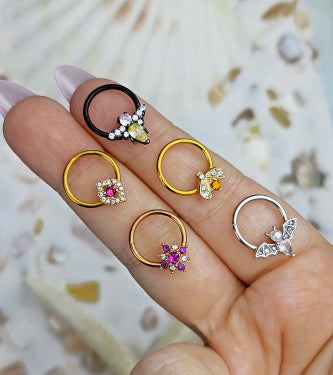


















You spot a little yellow crust on your nipple ring while getting dressed, and suddenly every possibility feels serious. Is it normal healing fluid, irritation from your bra, or a genuine infection? Before you scrub, squeeze, twist, or remove the jewelry, pause. The most important decision in infected nipple ring care is usually to leave the jewelry in place unless a clinician tells you to remove it.
Nipple piercings are deep puncture wounds, so swelling, friction, and discharge deserve careful attention. The safest approach combines gentle cleaning, open drainage, and a clear plan for medical escalation when symptoms don't settle.
What to Do First When Your Nipple Piercing Turns Red
A red nipple piercing isn't automatically infected. It may be reacting to pressure, a snag, sweat, or jewelry movement. The mistake is treating panic with aggressive cleaning or taking the jewelry out immediately.
Leave the jewelry in place
Don't remove the ring or barbell on your own if you suspect infection. The Association of Professional Piercers explains that quality jewelry should generally remain in place so the infection can drain. Closing the channel too soon can trap bacteria inside and increase the risk of an abscess, as described in its piercing troubleshooting guidance.
That trade-off feels counterintuitive. Jewelry can look like the source of the problem, but removing it may seal the outer openings while infected fluid remains deeper in the tissue. A clinician may recommend removal in a specific situation, but that decision should follow an examination.
Reduce contact immediately
Wash your hands before you inspect or clean the area. Then stop touching the jewelry except when necessary for care. Don't twist it to “loosen” crust, pick at dried discharge, squeeze a bump, or test the soreness repeatedly.
Check whether clothing is pressing or rubbing against the piercing. A tight bra, rough fabric, or repeated snag can keep tissue inflamed even when your cleaning routine is sensible.
Practical rule: Keep the channel open, keep your hands clean, and let warmth and gentle saline do the work.
For immediate care, use sterile isotonic saline and a warm compress or soak. Avoid alcohol, hydrogen peroxide, iodine, and harsh antibacterial products. They can irritate healing tissue and make the area harder to assess.
If symptoms are already severe, spreading, or accompanied by feeling unwell, don't rely on home care alone. Start arranging medical advice while continuing gentle care and leaving the jewelry undisturbed.
Decoding the Signs of an Infection Versus Normal Irritation
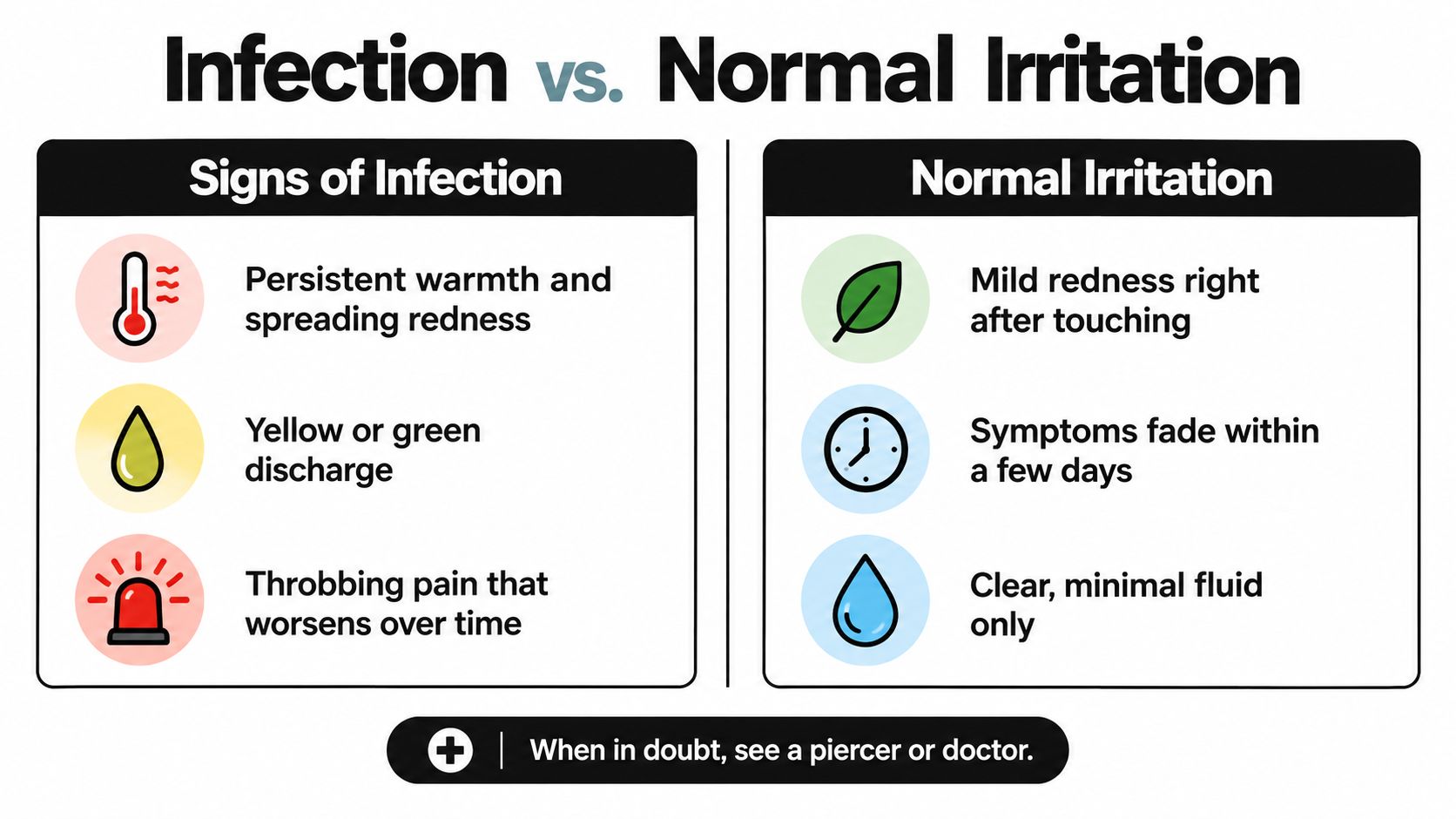
Not every crust or small color change means infection. A healing piercing may produce clear or pale fluid that dries on the jewelry, and mild tenderness can follow pressure or accidental contact. The surrounding trend matters more than one isolated spot.
Look for a pattern, not one symptom
A localized infection is more concerning when several signs appear together:
- Heat and tenderness: The skin feels distinctly warm and increasingly sore.
- Expanding redness: Redness moves outward instead of staying close to the piercing holes.
- Thick discharge: Yellow, green, or brown drainage is more concerning than a small amount of clear fluid.
- Odor: A bad smell adds weight to the concern, especially when paired with swelling or discoloration.
- Worsening pain: Throbbing or persistent pain that increases over time needs attention.
The NHS guidance on infected piercings identifies localized heat, swelling, redness or darkening, tenderness, and yellow, green, or brown discharge as warning signs. Foul odor or redness spreading away from the piercing suggests a more serious problem than simple irritation.
Normal irritation usually has a clearer trigger, such as catching the jewelry on clothing, and begins to settle when friction stops. Mild redness after touching the area, minimal clear fluid, and decreasing discomfort fit irritation more closely than an infection.
For a broader comparison of symptoms and aftercare decisions, see BodyCandy's guide to normal irritation versus a piercing infection.
Use the direction of change
Ask yourself whether the area is calming down or becoming more angry. A piercing that looks slightly irritated after a snag but improves with rest is different from one that grows hotter, more swollen, and more painful.
Don't diagnose from color alone. Pale dried fluid can occur during healing, while infected drainage becomes more concerning when it is thick, discolored, foul-smelling, and paired with worsening tissue changes.
The Best Way to Clean and Soak Your Piercing at Home
Once you've washed your hands and left the jewelry in place, keep the routine simple. Your aim is to reduce surface contamination and support drainage without scraping, drying, or repeatedly reopening the tissue.
Follow a gentle saline routine
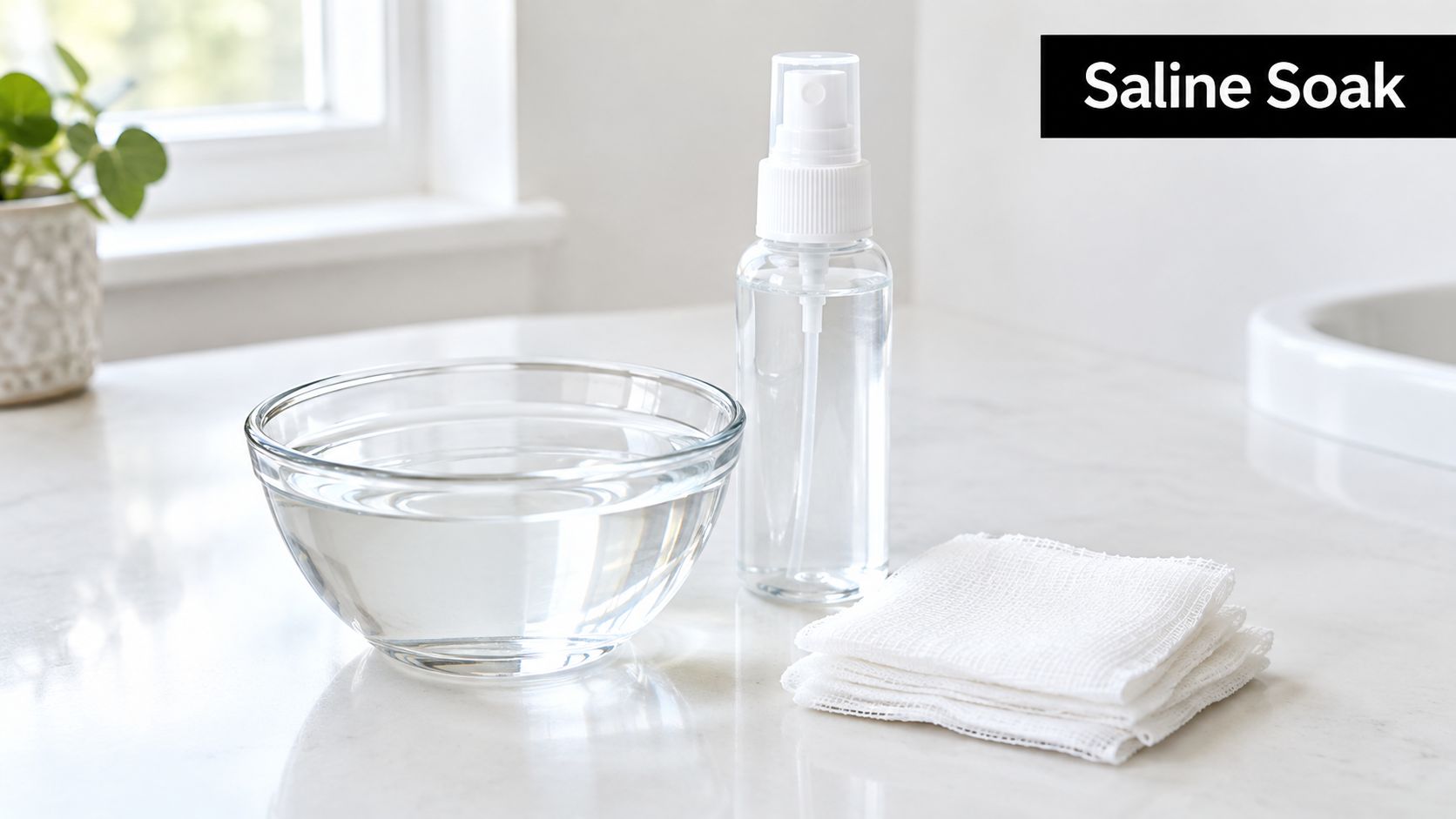
Use a commercially prepared sterile saline wound wash when possible. Choose a product made with sterile isotonic saline, without fragrance or added cosmetic ingredients. If you use a homemade salt solution, inaccurate salt concentration can sting and irritate, so a correctly prepared sterile product is the simpler option.
Follow these steps:
- Wash your hands thoroughly. Clean hands prevent you from adding bacteria during care.
- Apply sterile saline. Let the solution soften crust and run over the piercing rather than scraping buildup away.
- Use warmth for drainage. Apply a warm compress or soak the area in warm water for 20 minutes, 3 or 4 times a day, following Kaiser Permanente's piercing infection care guidance.
- Clean surrounding skin gently. Mild soap and water can be used twice daily, but don't scrub the channel or rotate the jewelry.
- Dry without friction. Pat the area with a clean disposable paper product. Don't use a shared towel that can snag the jewelry or leave lint behind.
The Association of Professional Piercers suggests sterile saline rinsing 1 to 3 times a day, while dermatology guidance supports gentle washing with a mild, fragrance-free cleanser and water. You can read more about the reasoning behind saline care in this guide to using salt as piercing aftercare.
Warmth can soothe tight, tender tissue and encourage drainage. It shouldn't become an excuse to press, massage, or pop the area.
Use clean supplies for every session, and stop if the skin becomes sharply more painful or irritated. Home care should feel gentle, not like a chemical treatment or a mechanical cleaning job.
Topical Treatments and What to Avoid Completely
The safest topical approach is usually boring: sterile saline, clean hands, warm water, and minimal handling. That routine reduces surface contamination without damaging the tissue barrier.
A clinician may recommend a topical antimicrobial such as mupirocin or bacitracin for a localized infection. Don't start prescription medication from an old tube, share someone else's ointment, or assume a topical product is enough for a deeper infection.
Products that commonly make things worse
Avoid these on or around the piercing:
- Alcohol and rubbing alcohol: They dry and irritate delicate tissue.
- Hydrogen peroxide: It can damage healing cells and delay recovery.
- Iodine and harsh antiseptics: They may create more irritation than benefit.
- Scented soaps and lotions: Fragrance can aggravate already reactive skin.
- Heavy creams and greasy ointments: They can trap moisture and debris around the jewelry.
- Mechanical cleaning: Cotton swabs, scraping, squeezing, and jewelry rotation can injure the channel.
The American Academy of Dermatology's piercing-care advice recommends gentle daily washing with a mild, fragrance-free cleanser and water, while advising against hydrogen peroxide and antibacterial soaps. Saline is useful because it cleans without the same harshness associated with strong antiseptics.
If a medical professional prescribes a product, follow that person's directions rather than combining several treatments. More products don't equal better infected nipple ring care. Often, they create more variables and more irritation.
When to Stop Home Care and See a Doctor
Home care supports drainage and cleanliness. It doesn't replace evaluation when infection is spreading, persistent, or deep. Nipple piercing infections can require culture-directed oral antibiotics, and an abscess may need drainage or aspiration.
Get prompt medical advice if you notice
- Spreading redness or rapidly increasing swelling
- Fever, chills, body aches, or feeling generally unwell
- Foul-smelling yellow, green, or brown discharge
- Pain that persists or worsens instead of easing
- A deeper lump, severe pressure, or possible abscess
- Numbness, pale or cool skin, or bleeding that soaks through a bandage
The available clinical guidance recommends seeking medical care if the infection isn't improving within 5 to 7 days, or sooner if symptoms progress. Kaiser Permanente also notes that bacterial infections may need oral antibiotics, while abscesses can require drainage.
Don't wait for every warning sign to appear together. A small infection that's getting worse deserves earlier assessment than one that's gradually settling.
Keep the jewelry in place while arranging care unless a clinician directs otherwise. Tell the healthcare professional what jewelry is installed, when symptoms began, what cleaning products you've used, and whether the area has been exposed to friction or trauma.
How to Prevent Future Issues and Keep Your Piercing Healthy
Prevention starts with jewelry that fits correctly and has a smooth, body-compatible finish. Implant-grade titanium is a practical choice for people concerned about metal sensitivity, while properly finished high-quality surgical steel may suit some wearers.
Keep the area clean, wash your hands before touching it, and avoid unnecessary rotation. Reduce friction from tight clothing, change damp garments, and don't sleep directly on a tender piercing.
A previous infection doesn't mean you have to abandon the piercing. It does mean the fit, material, placement, and daily habits deserve a careful review with a reputable piercer. For additional guidance on choosing and caring for nipple jewelry, read what to know about nipple rings.
BodyCandy offers nipple rings and other body jewelry in styles and materials suited to different preferences, including options for people who need to think carefully about comfort and fit. Visit BodyCandy to explore your next piece, and speak with a qualified piercer or healthcare professional before changing jewelry on a healing or infected piercing.