











You're scrolling through a curved barbell listing, and the numbers look like a secret code: 16g, 5/8, maybe ASTM F-136. The piece looks simple, but choosing the wrong thickness, length, or material can leave a piercing feeling pinched, loose, or irritated.
Curved barbells jewelry makes much more sense once you start with the body placement instead of the decoration. The curve affects how the jewelry sits, while the piercing's anatomy determines the gauge, wearable length, material, threading, and aftercare you'll need. This guide walks through each decision in plain language, so you can shop with confidence and know when a professional piercer should make the final call.
What a Curved Barbell Actually Is
A curved barbell is a barbell with a gentle arc instead of a perfectly straight shaft. A removable ball or decorative end sits on each side, and the curved post passes through the piercing. That small change in shape makes a big difference when the tissue naturally arches, folds, or slopes.
A straight barbell wants to hold one rigid line. A curved barbell follows the body's contour, helping the jewelry sit more naturally against the skin. That can reduce pressure and unwanted shifting in placements such as the eyebrow or navel, where a straight post may push against the tissue rather than rest with it.

Learn the three parts
Every product title becomes easier to understand when you identify the main components:
- Shaft: The curved post that passes through the piercing.
- Threading: The mechanism that attaches the ends. It may be internal, external, or threadless.
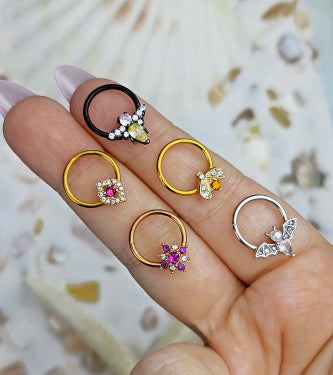
- Ends: Balls, gems, cones, spikes, clusters, or charms that create the visible style.
The length usually refers to the straight distance between the two ends, not the distance along the arc. Gauge describes the post's thickness, and the higher the gauge number, the thinner the jewelry is, as explained in this body jewelry gauge guide.
Think of the curve as the engineering choice and the ends as the styling choice. The engineering has to suit your anatomy first. Once the fit and material are right, you can have fun with the look.
Where Curved Barbells Came From
Curved barbells became a recognizable modern piercing-jewelry form during the 1970s, when professional body piercing began taking shape in the United States and Europe. Jim Ward, founder of Gauntlet, the first body piercing studio in the United States, helped popularize barbell-style jewelry. The design's direct lineage also connects with European piercers Horst Streckenbach and Manfred Kohrs, placing curved barbells within the early professional piercing movement rather than treating them as a recent fashion invention. The historical and product background for curved barbells reflects that established lineage.
The reason the shape lasted is practical. A curved post can follow the slope of an eyebrow, the fold of a navel, or another contoured piercing site more comfortably than a rigid straight bar. The design came from anatomy-first thinking. Piercers needed jewelry that worked with the body, not just hardware that looked interesting in a display case.
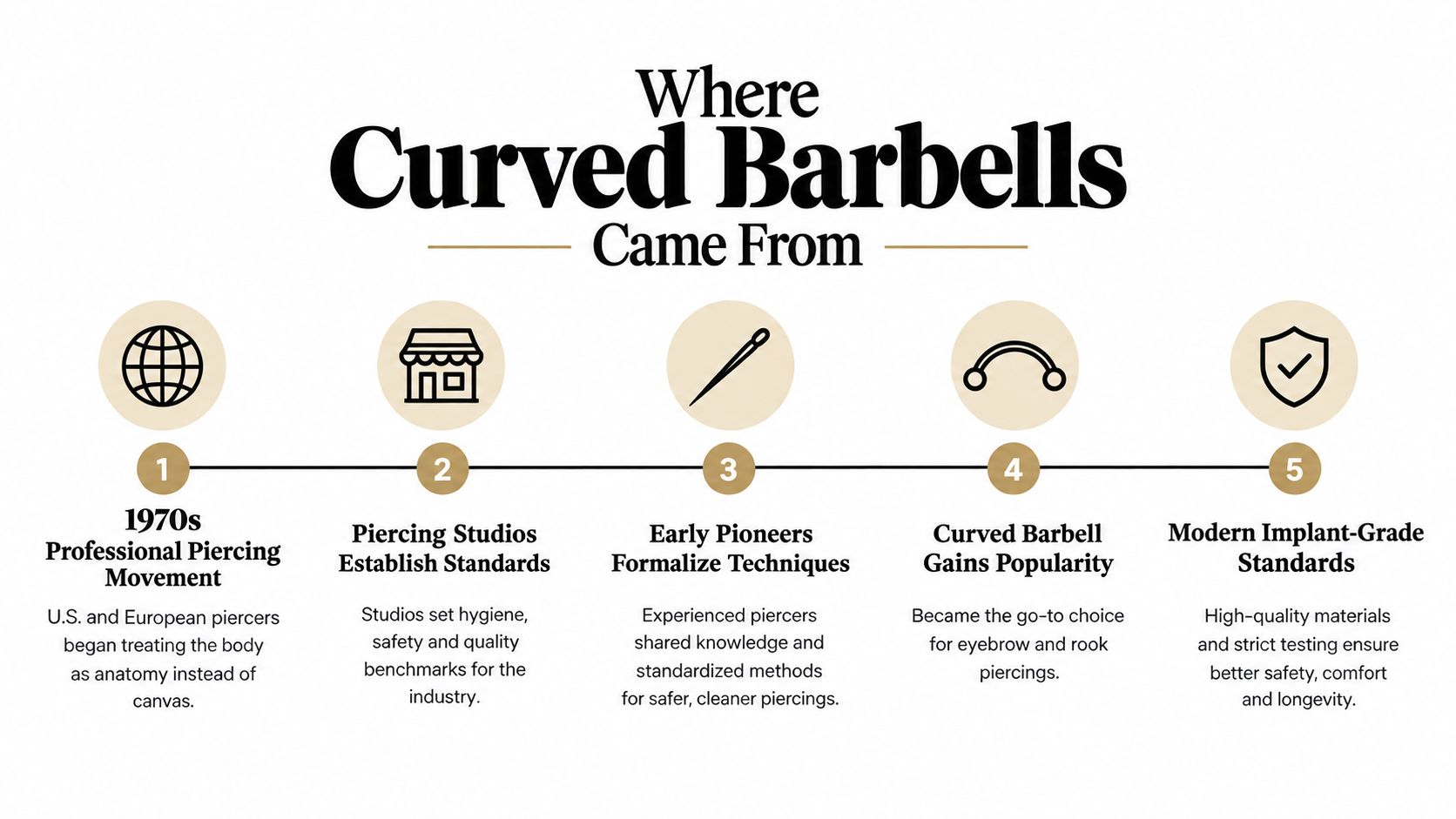
Over time, professional studios standardized familiar gauge and length combinations. That made curved barbells easier to fit, replace, and sell across different placements. Today, piercing guidance commonly treats them as starter-jewelry options for anatomy such as the navel, eyebrow, and some surface placements, provided the jewelry is selected for the individual piercing.
The curved barbell's staying power comes from that balance. It has a recognizable look, but its real job is to follow the body's shape and reduce unnecessary pressure while the piercing settles.
Common Piercings That Use Curved Barbells
A curved barbell makes sense when the piercing follows a bend, fold, or vertical path. That is why placement comes before shopping for a size. Tissue depth, piercing angle, swelling, movement, and nearby clothing all influence the gauge, length, material, and aftercare the piercing will need. A professional piercer should confirm the fit, especially for a new piercing.
The eyebrow is a familiar example. Its curve can follow the brow ridge and sit more naturally than a straight bar. Many eyebrow pieces use 16g or 14g, but the length should match the wearer's tissue rather than another person's jewelry.
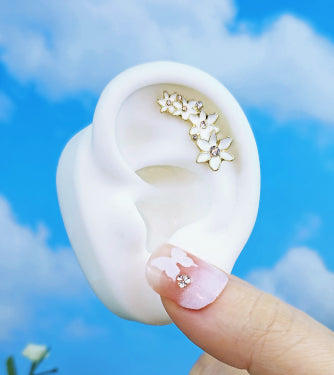
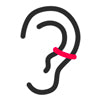
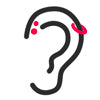
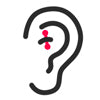
A rook piercing rests inside the folded cartilage of the upper ear. A curved post can nest within that fold, like a small rail following a bend, while keeping the ends from pressing into nearby cartilage. Rook jewelry is often slimmer and shorter than navel jewelry, although each ear calls for its own assessment.
The navel is the classic curved-barbell placement. The jewelry follows the navel fold, and a decorative top or dangling end can be added after the piercing has fully healed. A common starter specification is 14g with a 7/16-inch shaft, about 11 mm. Swelling, tissue depth, and the shape of the navel may require a different length.
Some people also wear curved barbells in the vertical clitoral hood, Christina, selected daith, and certain surface-oriented piercings. These placements are anatomy-dependent. The curve helps only when the piercing path and surrounding tissue support it, so a familiar jewelry style does not guarantee a suitable fit.
Curved Barbell Sizes by Piercing Placement
| Piercing | Common Gauge | Typical Length | Curve Direction |
|---|---|---|---|
| Eyebrow | 16g or 14g | Anatomy-dependent | Follows the brow ridge |
| Rook | Often 16g | Anatomy-dependent | Nests into the cartilage fold |
| Navel | Often 14g | 7/16 inch, about 11 mm, is a common starter specification | Follows the navel fold |
| Vertical clitoral hood | Placement-dependent | Anatomy-dependent | Follows the vertical tissue path |
| Christina | Placement-dependent | Anatomy-dependent | Follows the surface contour |
Use the table as a starting point, not a shopping prescription. The right curved barbell should sit securely without digging into either opening or leaving extra room to catch on clothing. Placement determines the fit first, and the jewelry details follow.
How to Read Gauge and Length
A curved barbell can look small in a product photo yet fit very differently on another person. Gauge describes the bar's thickness: common options include 16g, which is 1.2 mm, and 14g, which is 1.6 mm, according to curved barbell sizing information. The scale runs backward, so a higher gauge number means a thinner post. A 16g bar is thinner than a 14g bar.
Length follows a separate measurement. For curved jewelry, manufacturers generally measure the straight distance between the two threaded ends, rather than tracing the outside of the arc. That straight line works like a ruler laid between the openings, and Independent body jewelry sizing guidance explains why the distinction matters at curved anatomy sites.
Use tissue depth as your starting point
Measure the tissue depth where the piercing sits, then leave room for swelling and ordinary movement. For a fresh piercing, guidance commonly allows about 4 to 7 mm beyond the measured tissue. A healed piercing generally needs 2 to 4 mm, depending on its fit and placement.
A bar that presses into the skin is too short. Extra room should make cleaning possible and accommodate normal swelling, while avoiding a loose fit that swings, snags, or twists.
| Piercing | Common Gauge | Typical Length | Notes |
|---|---|---|---|
| Eyebrow | Often 16g or 14g | Anatomy-dependent | The curve should follow the brow without pinching |
| Rook | Often 16g | Anatomy-dependent | Cartilage thickness varies considerably |
| Navel | Often 14g | 7/16 inch, about 11 mm, is a common starter size | Extra room may be needed during early swelling |
| Other curved placements | Placement-dependent | Anatomy-dependent | A piercer should measure the tissue and angle |
Placement changes every sizing decision. Two eyebrows or navels can appear alike yet require different lengths because tissue depth, swelling, and piercing angle vary. For a clear explanation of bar thickness and gauge terms, read BodyCandy's guide to gauge sizing. A professional piercer can confirm the measurement before you buy.
Choosing the Right Material
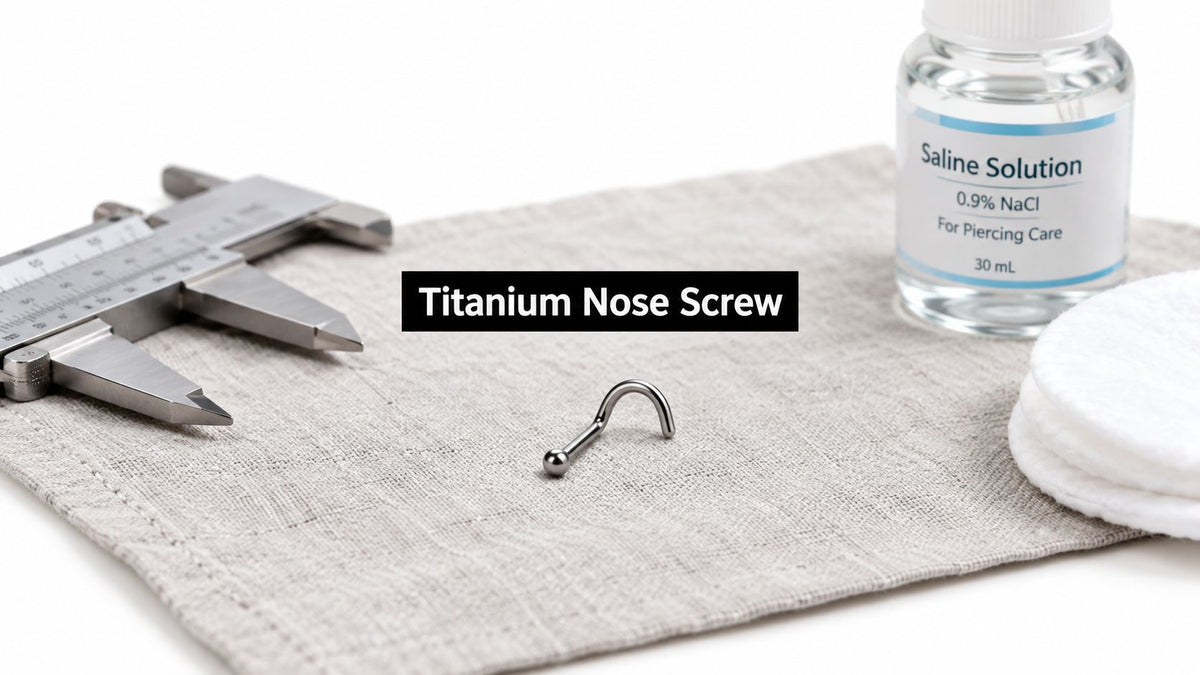
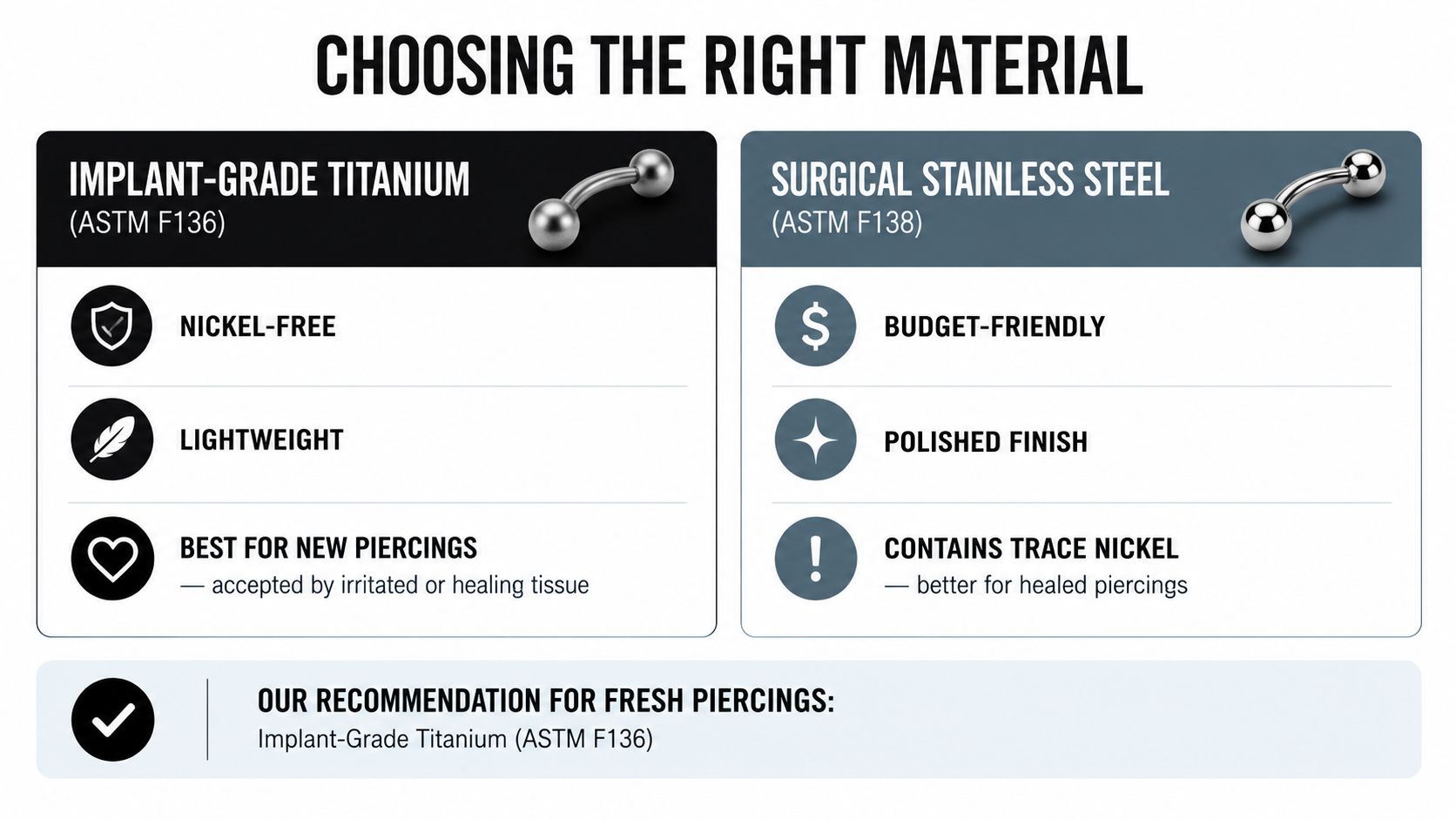
A fresh piercing can be fussy about what touches it. Implant-grade titanium, specifically ASTM F-136 or Ti-6Al-4V-ELI, is widely treated as the technical baseline for curved barbells because it is lightweight, corrosion-resistant, and nickel-free. Review the ASTM F-136 titanium product reference and confirm that the jewelry you choose states its material standard clearly.
Titanium, steel, and gold
Titanium is a practical starting point for new or sensitive piercings. Its low weight puts less pull on curved placements, and its silver-toned surface can be anodized for color. Anodizing changes the surface color without adding a coating that could chip.
Surgical stainless steel may suit a healed piercing, but the label alone does not identify its grade or nickel content. Ask what specific steel standard was used before putting it into a fresh or reactive piercing. A material that feels fine in one placement may still cause trouble in another, especially where tissue is easily irritated.
Gold works well for long-term styling when its composition is appropriate for body jewelry. 14k or higher gold may suit some wearers if it is made without problematic alloys. Gold is softer and more expensive than titanium, so piercers often reserve it for fully healed tissue rather than initial jewelry.
| Material | Main strength | Watch for | Suitable use |
|---|---|---|---|
| Implant-grade titanium, ASTM F-136 | Nickel-free, lightweight, biocompatible | Confirm the material standard | New, sensitive, and long-term wear |
| Surgical stainless steel | Polished appearance and broad availability | Trace nickel and unclear grading | Healed piercings for people who tolerate it |
| Gold | Premium color and finish | Alloy quality, softness, and cost | Fully healed piercings |
Skip plated metals and mystery alloys. A smooth, well-finished surface matters because rough areas can catch tissue and hold buildup. For a broader explanation of jewelry metals, read BodyCandy's body-jewelry material guide.
Threading affects comfort too. Internally threaded and threadless designs keep rough fittings away from the piercing channel, making insertion and later jewelry changes gentler.
Styling and Decorative Ends
Healing is the wrong time to let a heavy charm or sharp spike run the show. A curved barbell should stay simple, secure, and easy to clean while the tissue is still settling. More decoration creates more surfaces for buildup, more opportunities to snag, and sometimes more weight than the curved shaft can comfortably support.
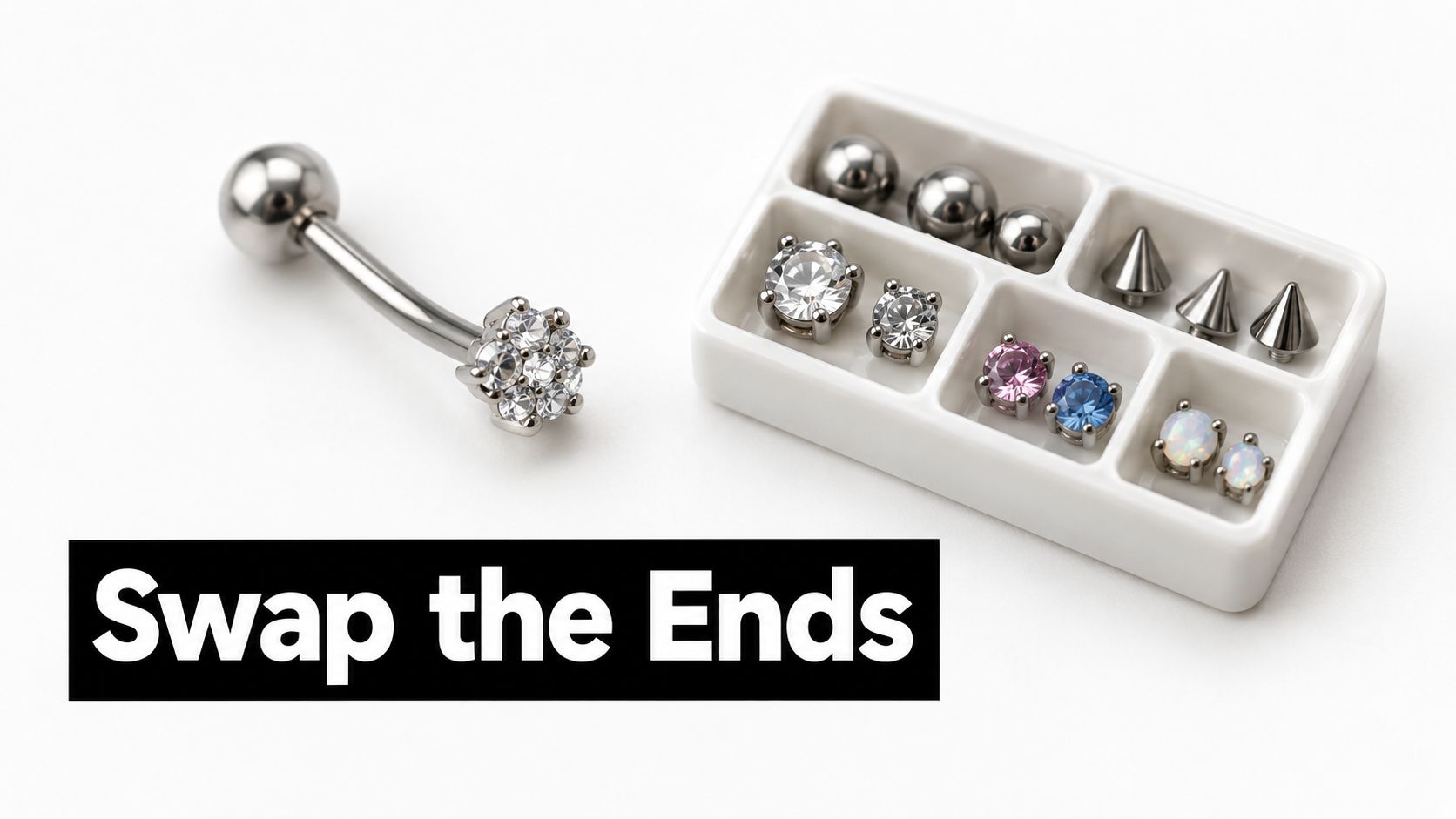
Once the piercing is fully healed, the ends become your style switch. 3 mm and 5 mm balls are practical everyday options, while cones, spikes, and prong-set gems add a sharper edge. Navel pieces can carry clusters or charms especially well because the lower end is visible, but keep the weight appropriate for the placement.
Match the ends to the thread
Most curved barbells use internal threading around 1.2 mm or 1.6 mm, depending on the gauge, but ends aren't automatically interchangeable across brands. Check the thread type, post gauge, and manufacturer compatibility before ordering replacement ends.
A smooth ball is usually the easiest daily-wear choice. A gem can add sparkle without creating a large profile, while a dangling charm needs more caution because it can pull on the piercing or catch on clothing.
Style rule: Let the base jewelry do the supporting work. Decorative ends should complement a healed piercing, not make a healing piercing carry extra weight.
Keep a simpler set available for sleeping, exercise, travel, or days when a larger end might snag. If an end feels heavy, constantly rotates the bar, or leaves pressure marks, switch it out and ask a piercer whether the jewelry is appropriate.
Healing, Cleaning, and When to Swap
Curved barbells need placement-specific care, but the core rule is consistent: leave the original jewelry in place until the piercing has healed enough for a professional or experienced piercer to assess a change. Public aftercare guidance for navel piercings also emphasizes avoiding unnecessary handling, as outlined by WebMD's belly-button piercing guidance.
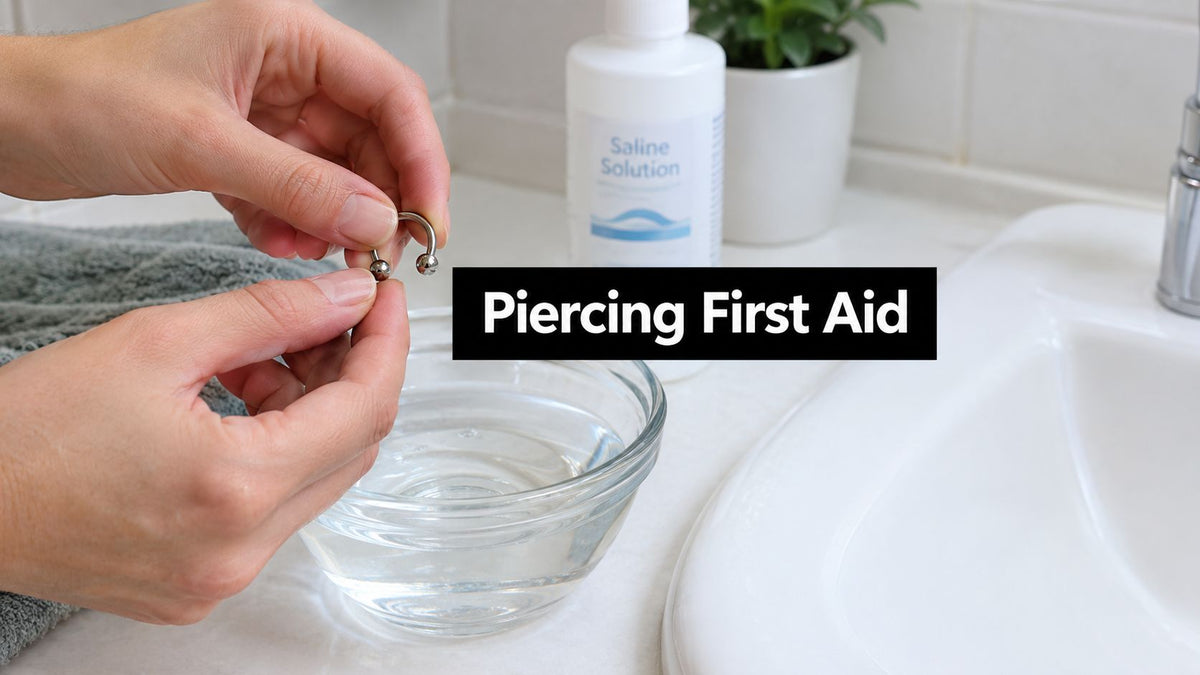
Clean with sterile saline or a fragrance-free wound wash, then pat the area dry with non-woven gauze. Cotton balls can snag on the curved shaft and leave fibers behind. Don't twist, rotate, or slide the bar back and forth. The jewelry is already shaped to sit in the channel, and movement can irritate the healing tissue.
Keep friction under control
Clothing, bedding, towels, cosmetics, and hands can all disturb a piercing. Be especially careful with face creams, makeup, and sunscreen around an eyebrow placement, and with waistbands or tight clothing around a navel.
Avoid swimming pools, hot tubs, saunas, and lake water while the tissue is still open. If the area becomes increasingly painful, hot, swollen, or produces unusual discharge, contact a qualified piercer or healthcare professional rather than trying to solve the problem by changing jewelry yourself.
Change jewelry carefully
When the piercing is fully healed:
- Wash your hands thoroughly or use clean gloves.
- Prepare the replacement piece before removing the original.
- Unscrew or release one end according to the threading system.
- Guide the new jewelry through gently, without forcing a different angle.
- Secure the end so it's snug but not painfully tight.
A piercer may recommend downsizing after swelling has settled. Never reuse a bar that is bent, scratched, poorly polished, or damaged. Keep the original curved barbell as a backup if it still fits and remains in good condition.
Your Curved Barbell Checklist and What's Next
Before you click add to cart, pause over the details that affect comfort. The decorative end may catch your eye first, but the piercing placement should control the decision.
Your quick fit checklist
- Confirm the placement: Eyebrow, rook, navel, and other curved sites may need different shapes and clearances.
- Match the gauge: Use the thickness you were pierced with unless a professional has advised a change.
- Check the wearable length: Remember that curved-barbell length refers to the straight distance between the ends.
- Allow appropriate clearance: Fresh and healed piercings have different space requirements, as outlined earlier.
- Choose the material: Implant-grade titanium is the conservative option for new or sensitive piercings.
- Verify the threading: Internal, external, and threadless ends aren't interchangeable by default.
- Keep healing jewelry simple: Save heavy charms, clusters, and dramatic spikes for a settled piercing.
- Inspect the finish: Don't use a bent, scratched, rough, or damaged bar.
- Save a backup: Store your original barbell if it remains clean, smooth, and properly fitted.
A well-fitted curved barbell can become a low-maintenance staple. Once the piercing is mature, you can rotate between simple beads, gems, spikes, and themed ends without losing sight of the fit that keeps the jewelry comfortable.
BodyCandy offers a dedicated selection of curved barbells and related body-jewelry styles, including options for shoppers comparing different gauges, materials, and decorative finishes. Browse the collection with your placement, current gauge, wearable length, and healing stage in mind.
Ready to choose your next piece? Visit BodyCandy to explore curved barbell jewelry and compare styles for your piercing. If you're unsure about the fit, take the product details to your piercer before changing a healing piece.