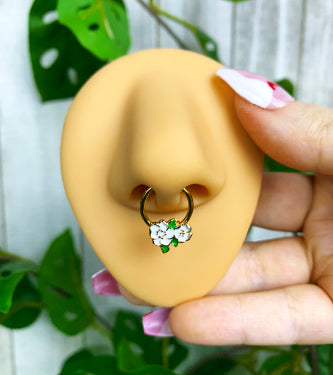




















38% of jewelry customers said they boycotted a brand because of poor customer service, and that's the kind of number that should make any retailer sit up straight (WorldMetrics summary). In body jewelry, the stakes are even sharper, because people aren't just buying something pretty. They're trusting you with comfort, healing, fit, and material safety.
That's why jewelry customer service isn't just “being nice.” It's the thing that decides whether a shopper feels calm enough to buy, confident enough to come back, and cared for enough to tell a friend. In a category where one bad reply can turn into a lost sale, a return, or a straight-up boycott, service is part of the product.

Why Jewelry Customer Service Makes or Breaks Your Brand
Body jewelry shoppers bring a different kind of anxiety to the checkout page. They're not just wondering whether a piece looks cute, they're wondering whether it'll fit, whether it'll irritate their skin, and whether it's safe for a fresh or sensitive piercing. That's a lot of trust to ask from a single product page and a contact form.
The loyalty numbers make the point clearly. In the same WorldMetrics summary, 89% of consumers who had a positive in-store experience made repeat purchases, compared with 32% for online-only customers (WorldMetrics). That gap tells you something important. People don't just remember the jewelry, they remember how they were treated while choosing it.
Practical rule: in body jewelry, the service interaction often feels like part of the fitting room. If the shopper can't get a straight answer about size, material, or wearability, they hesitate.
Why generic retail scripts fall flat
Generic retail support assumes the customer only needs shipping help or a refund. Body jewelry buyers need more than that. They need guidance on gauge, wearable length, thread type, metal choices, and what to do when a piercing feels off.
That's also why advice from a professional piercer matters so much. A strong retailer-piercer relationship gives customers a better path for fit and aftercare questions, especially when they're buying something that touches healing tissue and personal comfort. You can see that mindset reflected in BodyCandy's discussion of working with a professional piercer through this guide on why that relationship matters.
Service also changes how much people spend. The WorldMetrics summary reports that personalized in-store consultations are associated with a 35% higher average order value (WorldMetrics). You don't need to turn every support interaction into a sales pitch, but you do need to answer carefully enough that the customer feels safe expanding the order.
What buyers punish fastest
Jewelry customers don't give unlimited chances. Zendesk reports that 73% of consumers switch to a competitor after multiple bad experiences, and that people give companies only 2.2 chances on average before leaving (Zendesk). In practice, that means one sloppy response about a sensitive-skin issue can cost you the next order, not just the current one.
What Body Jewelry Customers Actually Expect
Before someone buys body jewelry, they're usually trying to solve a small puzzle. Will this ring fit my piercing? Is this metal okay for sensitive skin? Will it match what I already wear? Good support answers those questions before they turn into abandoned carts.

Pre-purchase help should feel easy, not clinical
At the browsing stage, the customer wants quick clarity. That means clear sizing charts, material descriptions written in plain language, and notes about who each piece is made for. If you sell body jewelry, the site should make it easy to see whether a piece is meant for a healed piercing, a stretched piercing, or a specific placement.
A jewelry-service CRM should also store details that make future help easier, including occasion context, ring size by finger, metal and style preferences, and communication preferences (Gem Logic). In body jewelry, that translates beautifully to piercing location, preferred materials, and whether the shopper tends to ask about healing or comfort.
Purchase-stage clarity reduces friction
This is the moment where policy matters. Customers want to know what happens if the item arrives wrong, if a package is damaged, or if they change their mind. They also want shipping and return language to be easy to find, not buried in legal-looking text that reads like it was written to scare people away.
Simple truth: the faster a shopper finds your policy, the less likely they are to email in frustration.
That's where response expectations come into play. Help Scout says 90% of consumers rate an “immediate” response as essential or very important, and 60% define immediate as 10 minutes or less (Help Scout). For jewelry ecommerce, that doesn't mean every message needs a lightning-fast full solution, but it does mean the customer should feel seen right away.
Post-purchase support is where trust gets tested
After the sale, the questions get more personal. Maybe the jewelry feels tight. Maybe a fresh piercing looks irritated. Maybe the customer isn't sure whether they chose the right material. For these situations, a retailer should have a clear path for aftercare education and escalation, not just a canned “sorry for the inconvenience” reply.
You can reinforce that support with written care guidance, and BodyCandy's own body jewelry care guide fits naturally into that kind of follow-up. The goal is simple. Give people enough confidence to keep wearing the jewelry safely, or enough direction to get the right help when something doesn't look right.
For deeper service touchpoints, different channels also matter. Phone is best for high-trust situations, live chat works well while someone is still browsing, and email is better when the customer needs a documented record of the conversation. More on that next.
Handling Common Body Jewelry Issues Like a Pro
A customer writes in because the hoop looks smaller than expected. Another says their ear is red and tender. A third is worried the new jewelry is causing a reaction. Those are three different problems, and they need three different responses.
Sizing mistakes need calm, not blame
Start by asking what the customer measured and where they measured it. With body jewelry, “I ordered the wrong size” usually means one of three things. The buyer confused gauge with length, measured from memory instead of a piercing site, or assumed one standard size works across every placement.
A good reply sounds like this in spirit, not as a script to copy blindly. Acknowledge the mix-up, ask for a photo if needed, and explain how the next measurement should be taken. If the item is unopened and your policy allows it, an exchange is usually easier to manage than arguing over who guessed wrong.
Useful habit: document the customer's piercing location and the size issue in their profile so the same mistake doesn't happen again.
Irritation and material concerns need a careful eye
Body jewelry service gets especially sensitive. Not every red or tender piercing means an allergy, and not every uncomfortable fit is a material problem. But you should never brush off the complaint.
Medical and public-health sources note that body piercing carries real infection risk, and that local infection, allergic contact dermatitis, and migration or rejection can all happen in piercing care situations (CDC and related medical reviews summarized in Tuple Strategy). That means your team's job is not to diagnose, it's to escalate responsibly and keep the customer from feeling dismissed.
If the customer says the piece is rubbing, explain your fit options. If they say the skin seems reactive, ask about the metal they're wearing, how long they've had the piercing, and whether the jewelry was changed recently. If the situation sounds like more than a simple material mismatch, point them toward a professional piercer or medical care.
Healing concerns need clear boundaries
Some shoppers want you to tell them whether a piercing is infected. Don't do that. You can give aftercare guidance, but you can't replace a piercer or clinician. The cleanest service move is to explain what you can help with, what you can replace, and when they need professional eyes on the problem.
That's also why this discussion of piercing infection versus rejection is so useful to keep handy for support teams. It helps staff stay grounded without overpromising answers they shouldn't give.
Choosing the Right Support Channels for Different Situations
Not every question deserves the same lane. A customer who's casually comparing nose rings should not wait in the same queue as someone worried about a healing problem. Matching the channel to the moment keeps support faster and a lot less chaotic.

Phone, chat, and email each have a job
Phone support is strongest when trust is fragile. That includes custom orders, serious complications, and first-time buyers who need reassurance before they commit. Jewelry ecommerce guidance says phone is best for high-trust or high-value situations with an expected answer under 60 seconds (Ringly.io).
Live chat belongs on the product page. It's ideal for browsing-stage questions about size, material, and availability, and the same jewelry ecommerce guidance says live chat should target under 2 minutes for an answer (Ringly.io). If someone is already staring at a cart, chat keeps them moving.
Email is best for policy, returns, and detailed aftercare where a record matters. The same guidance says email responses for policy or repair cases should arrive within 4 hours to preserve documentation while still meeting expectations (Ringly.io).
Route the question to the right person
A support system works better when the message is matched to the customer moment, such as sale, repair intake, pickup, appointment, appraisal, custom design, or follow-up (Convert Local). In body jewelry, that also means separating fit questions from repair issues and aftercare concerns from basic order tracking.
Here's a simple way to think about it.
- Simple browsing questions go to chat, because the customer wants speed and doesn't need a long record.
- Policy or return issues go to email, because the paper trail protects both sides.
- Sensitive or high-trust concerns go to phone, because the tone matters as much as the answer.
- Complex sizing sessions can move to video or screen share when the customer needs real-time visual help.
Escalate before frustration builds
If a chat turns into a health concern, move it out of chat. If an email back-and-forth keeps getting longer because the customer is confused, call them. And if your team can't answer within the expected window, send a quick acknowledgment so the buyer knows someone is on it.
That approach matters because speed is part of perceived care. Help Scout's response data shows that people notice delay fast, and body jewelry shoppers are especially sensitive to silence when the issue involves comfort or safety (Help Scout).
Sample Policies and Scripts That Actually Work
Good jewelry customer service gets easier when your team isn't inventing replies from scratch. Policies and scripts give everyone the same footing, which is especially important when customers are upset, embarrassed, or worried about a piercing issue.
Policy language should set expectations early
A return policy for body jewelry should explain hygiene concerns in plain language. If a piece was worn, opened, or exposed to the body, say what can and can't be returned, and explain why. Customers usually accept boundaries more easily when they're told the reason up front.
For sizing, don't promise magic. Say that fit questions can be checked before purchase, and that your team will help customers measure when they're unsure. For material issues, keep the promise tied to the facts. If a piece arrives damaged, defective, or incorrect, spell out the steps for sending photos and a short explanation to customer service so the team can verify the problem.
Scripts should calm the customer first
A strong support reply does three things. It acknowledges the issue, gives the next step, and offers choices. That structure works whether the customer got the wrong item or feels unsure about how the jewelry wears.
You can use this style in chat or email.
- Sizing reply: “Thanks for reaching out, I can help you check the fit. If you send the piercing location and a photo of the piece next to a ruler, I'll help you confirm whether the gauge or length needs to change.”
- Material reply: “I'm sorry this feels uncomfortable. Let's look at the metal, the piercing stage, and how long you've worn it so I can point you to the right next step.”
- Problem order reply: “That's not the experience we want for you. I can help with a replacement, a refund, or a closer look at the item details, depending on what happened.”
Documentation matters after the conversation ends
Once the issue is resolved, log what happened. Note the material the customer wears comfortably, the size that worked, and any complaint patterns. That record saves time later, and it helps the next support rep avoid repeating the same questions.
If you want a practical reference point for how post-purchase care language can be framed, the BodyCandy care guide is a useful example of how to keep instructions clear without making them stuffy.
Building Long-Term Loyalty Through Exceptional Service
Great service isn't just damage control. It's how you turn one buyer into someone who trusts your shop enough to come back for the next piercing, the next style change, or the next gift order.
Capture the details that actually help
Track the things that matter in body jewelry, not just the basics. That includes piercing location, preferred materials, known sizing quirks, and special occasions tied to future purchases. When you know a customer usually shops for gifts or seasonal changes, your follow-up becomes relevant instead of annoying.
That kind of record also helps with timing. A check-in after a purchase feels thoughtful when it answers a real question, like whether the customer needs help with a size change or wants suggestions that match a piece they already love. The point isn't to chase people. It's to make their next visit easier.
Turn service into education
Every support touchpoint can teach something useful. A short aftercare reminder, a material explanation, or a note about how to avoid sizing mistakes reduces repeat tickets later. It also shows customers that your brand understands body jewelry as an experience, not just a catalog.
Best long-term move: give people a resource they can save and return to later. A simple knowledge base often does more for loyalty than a polished apology ever could.
Measure what really matters
Response times matter, but they're not the whole story. Watch whether customers come back, whether they refer friends, and whether support conversations end in confidence instead of confusion. That's how you tell the difference between a team that closes tickets and a team that builds trust.
When service feels human, clear, and respectful, customers remember it. In body jewelry, that memory is often the reason they come back for the next piece.
If you're ready to make your support feel as confident as your style selection, shop with BodyCandy and explore body jewelry built for real wear, real questions, and real customers. You'll find pieces and support-minded shopping tools that fit the way body jewelry buyers shop, from first piercing to favorite everyday stack.