Titanium Septum Rings

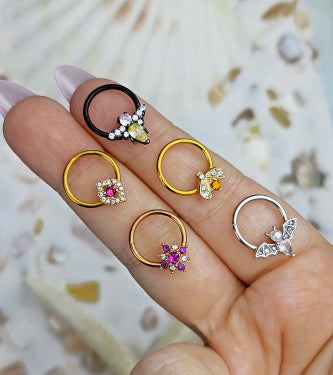
The septum ring for skin that argues with everything else: implant-grade ASTM F-136 titanium, nickel-free, half the weight of steel and certified to the same standard as surgical implants. Forward-facing CZ hinged segment rings, double-row hoops, horseshoes and a retainer, all in the septum-standard 16G, in polished titanium, gold and black PVD. This is the premium lane and it is priced like one. Since 1999.


Titanium Septum Ring Fit & Material Guide

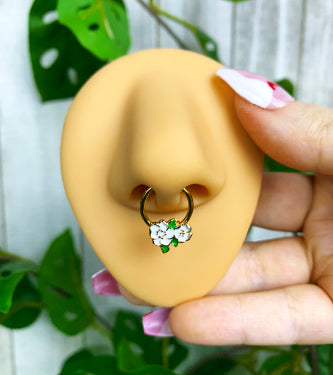
Fit: everything here is 16G, the septum standard. Choose 5/16 inch (8mm) for a snug fit that keeps a forward-facing gem centered under the nose, or 3/8 inch (10mm) for a little more hang. The hinged rings swing open and click shut with nothing to unscrew; the horseshoes flip up to hide.

Material: ASTM F-136 is the implant specification for the Ti-6Al-4V ELI titanium alloy, the standard behind surgical implants. It is nickel-free, corrosion-proof and light, which is why piercers use it for initial jewelry and why it is the answer when steel makes a piercing itch. Gold, rose gold and black are PVD finishes bonded onto the titanium; some colors are anodized, which changes the metal's surface with nothing added. Either way, still titanium, still nickel-free.

Honest note on price: titanium costs more than steel, and the detailed CZ settings here cost more again. If your skin has never reacted to good steel, the steel septum pages will treat you well for a fraction of the money. If it has, stop testing your luck.

More ways in:

- Every septum style, by size → Septum Rings & Clickers

- Decorative clickers in every metal → Septum Clickers

- Stretched to 14G? The titanium horseshoe lives here → Horseshoe Septum Rings

- Titanium for the nostril (18G and 20G) → Titanium Nose Rings

- All titanium body jewelry → Titanium Body Jewelry

FAQ

Because it is nickel-free. Implant-grade titanium is the metal piercers reach for when skin reacts to everything else: it does not corrode, it weighs about half what steel does, and the septum is one of the most sensitive spots you can wear jewelry. If a steel ring has ever made your nose itch or crust, this is your page.

It is the specification for the titanium alloy (Ti-6Al-4V ELI) certified for surgical implants: the same material standard used for bone screws and joint replacements. Implant grade means it has passed that standard; plain titanium means someone is hoping you will not ask. Our titanium septum rings are made to F-136.

16G is the septum standard and everything on this page. Diameter is 5/16 inch (8mm) for a snug fit or 3/8 inch (10mm) for a little more hang; forward-facing gem designs are made to sit at the front of the sweet spot, so size them snug. Match the numbers on the ring you wear now.

Implant-grade titanium is the material piercers use for initial jewelry, so it is the safest choice for a healing septum. That said, keep the jewelry your piercer placed until they clear you (4 to 8 weeks for most septums) and let them do the first change if you are unsure. After that, swap freely.

Yes. Gold, rose gold and black are PVD finishes bonded onto the titanium; some colors are anodized, which changes the surface of the titanium itself with no added metal. Either way the base is implant-grade titanium and still nickel-free.

316L surgical steel suits most people and costs less; it does hold a trace of nickel locked in the alloy. If your piercings react even to good steel, that is your answer: go titanium and stop testing your luck. If steel has never bothered you, the full septum wall is open to you.