Opal & Gem Septum Rings

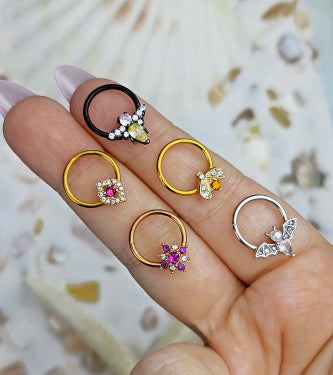
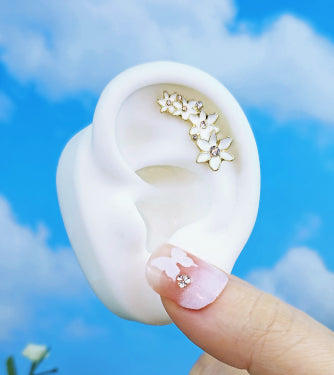
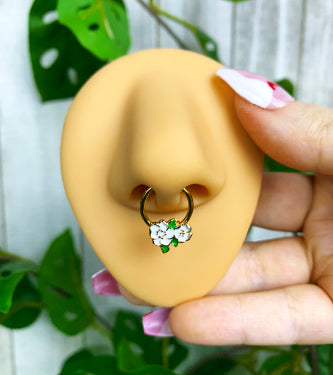
The sparkle shelf of the septum wall: synthetic opal, CZ and crystal set into hinged clickers, captive beads and horseshoes, from a single forward-facing stone to full paved fans. White and blue opal that shifts color as you turn your head, clear CZ that reads like diamond at a glance, aurora and jewel tones for the rest of the week. Nearly all in the septum-standard 16G, in steel, titanium and solid 14k gold. Since 1999.


Opal & Gem Septum Ring Fit & Stone Guide

Fit: septum rings are 16G. Choose 5/16 inch (8mm) to keep a forward-facing stone tucked up under the nose where it catches light, or 3/8 inch (10mm) for bigger stones and a little more hang. Stretched septums take 14G. Match the numbers on the ring you wear now; every product page lists both.

The stones, honestly named: synthetic opal is lab-grown with the mined stone's play of color; faux opal is an opal-look glass or resin cabochon; CZ is cubic zirconia, the bright hard stone that stands in for diamond; crystal and glass bring the colors. The title says which you are getting, every time, and nothing here is sold as natural opal or diamond.

Keeping the stones: they are prong- or bezel-set in metal, not glued, so they stay put as long as you open the ring by its hinge or segment and never by the gem. Warm water and a soft cloth clean everything here; keep faux opal away from chlorine and perfume for long stretches.

The metal under the stone is what your piercing lives with: 316L steel for most, implant-grade titanium or solid 14k gold for sensitive skin and forever pieces.

More ways in:

- Gems on nickel-free titanium → Titanium Septum Rings

- Gems in solid gold → 14k Gold Septum Rings

- Every clicker, gem or not → Septum Clickers

- Every septum style, by size → Septum Rings & Clickers

- Opal for the nostril → Opal Nose Rings

FAQ

They are synthetic or faux opal, and the product title tells you which. Synthetic opal is grown in a lab with the same play of color as the mined stone, minus the price and the fragility. Faux opal is an opal-look glass or resin cabochon for the same shimmer at pocket money. Neither is natural opal, and we would never label it that way.

Mostly cubic zirconia (CZ), the hard, bright stone that reads like a diamond at a glance, plus faceted crystal and glass accents in every color. Each stone is prong- or bezel-set into the metal, not glued onto the surface. Anything rarer than CZ, like a solid-gold piece, says so in its title.

Not in normal wear; the settings are metal, not adhesive. The way stones get lost is by prying a ring open by the gem instead of by the hinge. Open a clicker by the segment, open a captive by the ring, and the stones stay put for years.

16G is the septum standard and nearly all of this page. 5/16 inch (8mm) keeps a forward-facing gem tucked up under the nose where it catches light; 3/8 inch (10mm) hangs a touch lower and suits bigger stones. Match the numbers on the ring you wear now.

CZ, crystal and synthetic opal shrug off water. Faux opal is a resin or glass look-alike and prefers not to meet chlorine, perfume or jewelry polish for long; rinse it in plain water afterwards and it keeps its glow. None of these stones need special cleaners: warm water, mild soap, soft cloth.

Most are 316L surgical steel, some are implant-grade titanium and a few are solid 14k gold; every product page names it. The gem is decoration; the metal is what your piercing lives with. Steel suits most people and holds a trace of nickel in the alloy, so if your skin reacts, filter for titanium or gold.