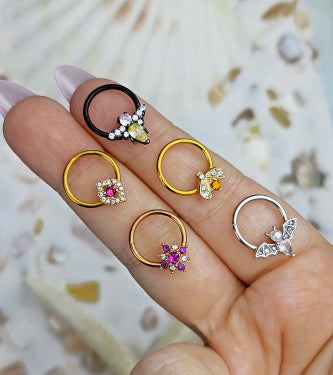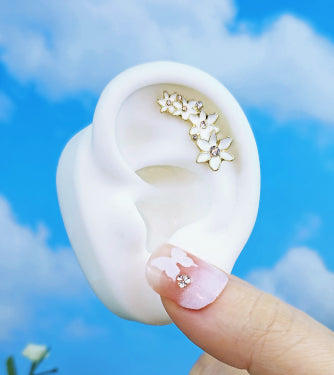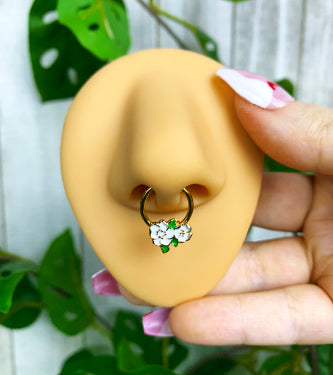

















Titanium Body Jewelry
Titanium is widely recognized as one of the best and safest materials for body jewelry, making it an excellent choice for healing fresh piercings and long-term daily wear. Specifically, ASTM F136 implant-grade titanium is certified safe by medical standards for use in surgical implants, guaranteeing superior biocompatibility. Titanium is entirely hypoallergenic, naturally nickel-free, and incredibly lightweight, offering maximum comfort in any piercing location—from sensitive cartilage piercings to belly buttons. The material's durability and resistance to corrosion ensure your jewelry maintains its integrity and polish over time. Our collection features a wide variety of titanium styles, including seamless rings, captive rings, labret studs, and barbells, allowing you to find the perfect piece for any occasion.
The Superiority of Implant-Grade Titanium
Medical-Grade Safety: ASTM F136 implant-grade titanium is the gold standard, widely used in surgical implants due to its exceptional safety and non-reactive nature with body tissue.
Hypoallergenic and Nickel-Free: Titanium is completely free of nickel and other common irritants, making it the top choice for individuals with extreme metal sensitivities and a perfect material for initial, healing piercings.
Incredibly Lightweight: Titanium has a high strength-to-density ratio, making it significantly lighter than steel or platinum. This minimal weight is crucial for comfort in piercings like cartilage, facial, and ear projects, reducing stress and healing issues.
Durability and Low Maintenance: Titanium is highly resistant to corrosion, rust, and fading. It can also be anodized to achieve various vibrant, consistent colors (unlike white metals), offering style without compromising safety.
FAQ
Yes, titanium is considered one of the best and safest materials for body jewelry, especially for initial piercings.
Professional piercers widely recommend ASTM F136 implant-grade titanium because it is:
- Hypoallergenic: It is completely nickel-free and highly biocompatible, meaning the human body accepts it and rarely causes allergic reactions or irritation.
- Ideal for Healing: Its non-porous and non-corrosive nature makes it resistant to body fluids and bacteria, which supports faster and healthier healing for new piercings.
- Lightweight and Comfortable: Titanium boasts a superior strength-to-weight ratio, which makes it nearly half the weight of steel. This reduces stress and strain on the piercing site.
- Customizable: Titanium can be electrically anodized into a wide spectrum of vibrant colors (without using any unsafe plating or coating) while maintaining its medical-grade safety.
If you are looking for safety, durability, and comfort for any piercing, titanium is an excellent, industry-approved choice.
In short, titanium is considered very good for the human body, especially in its pure and medical-grade forms.
Its safety and high compatibility are why it's the gold standard for long-term medical implants:
- Biocompatibility: Titanium is highly biocompatible, meaning the human body does not recognize it as a foreign material. It is chemically inert and highly resistant to corrosion from bodily fluids.
- Medical Use: It is extensively used for permanent medical devices, including hip and knee replacements, dental implants, and pacemaker casings, because it can physically bond with bone tissue (osseointegration) and is rarely rejected.
- Safety for Piercings: For body jewelry, specifically the medical-grade ASTM F136 alloy, titanium is considered extremely safe, non-toxic, and hypoallergenic (nickel-free), making it ideal for direct, continuous contact with human tissue.
Yes, implant-grade titanium is an ideal material for daily wear and 24/7 use, even for highly active individuals.
It has a unique combination of qualities that make it one of the most practical and comfortable metals for continuous wear:
- Exceptional Durability: Titanium has the highest strength-to-weight ratio of any metal used in jewelry. It is highly resistant to bending, warping, and corrosion, ensuring the piece maintains its integrity over a lifetime.
- Lightweight Comfort: It is significantly lighter than steel, gold, or platinum, making it highly comfortable for all-day wear—you can often forget you're wearing it.
- Tarnish and Corrosion Proof: Titanium will not rust, tarnish, or corrode when exposed to sweat, water, or most common household chemicals, allowing you to wear it while showering, exercising, or swimming.
Hypoallergenic Safety: Since it contains no nickel, it is entirely safe for continuous skin contact, helping prevent the allergic reactions often seen with lower-quality metals.
The single safest material for body jewelry, especially for initial or healing piercings, is:
Implant-Grade Titanium (ASTM F136 Compliant)
Professional piercers and health organizations (like the Association of Professional Piercers) strongly recommend this material for its superior qualities:
- 100% Hypoallergenic: It is completely nickel-free, making it the top choice for anyone with sensitive skin or nickel allergies.
- Biocompatible: It is a medical-grade material used for surgical implants, meaning the body accepts it without adverse reaction, a crucial factor for successful healing.
- Lightweight and Durable: It is robust yet very light, ensuring comfort and longevity.
Other highly safe and recommended options (which must also meet strict international standards like ASTM or ISO) include:
- Niobium: A metal with properties very similar to titanium; it is also hypoallergenic.
- Solid Gold (14k or 18k): Must be nickel- and cadmium-free and from a reputable jeweler.
- Biocompatible Glass: Such as fused quartz or borosilicate, which is inert and safe for healing.
Implant-Grade Surgical Steel (ASTM F138): A standard, affordable option, but it contains small amounts of nickel and should be avoided by people with known nickel sensitivity.
It is doubtful that small, standard titanium body jewelry will set off a metal detector, especially at an airport.
Here's why:
- Non-Ferrous and Low Magnetic Field: Titanium is a non-ferrous (non-iron-based) metal with very low electrical conductivity. Metal detectors primarily detect strong magnetic fields or highly conductive materials. Titanium's reaction is typically too weak to trigger the alarm.
- Small Mass: Standard body piercings (like studs, small rings, or labrets) do not contain enough metal mass to reach the sensitivity threshold of most walk-through detectors.
- Medical Use: Titanium is the metal of choice for permanent medical implants (such as screws, plates, and joint replacements) precisely because of its low reactivity with security screening technology.
What to Expect at Security Checkpoints
Modern airport security often uses full-body scanners (millimeter wave) instead of, or in addition to, traditional metal detectors. While these scanners can detect the presence of metal, they are designed to flag potential threats, not small, typical piercings.
If an alarm is triggered:
- It's usually due to a large quantity of metal (e.g., multiple stacked piercings or heavy belts) or the metal being an alloy with higher-reactivity metals.
- You should inform the security personnel that you have a titanium piercing. They are accustomed to screening individuals with body jewelry and will typically resolve the issue quickly with a quick hand-scanner check or visual inspection.
The safest non-metal alternative for travel (especially if you have a healing piercing you cannot remove) is a plastic or Bioplast retainer.
It is essential to separate titanium's proven scientific properties from the claims associated with jewelry, especially those with magnetic components.
1. Proven Health Benefits (Biocompatibility and Safety)
Yes, titanium is demonstrably good for the human body in a medical context, but not in a magical or healing sense.
The proven benefits of wearing solid, medical-grade titanium jewelry are related entirely to its safety profile:
- Hypoallergenic: Titanium is completely nickel-free and is the most biocompatible metal, meaning the body does not treat it as a foreign object. This is a crucial health benefit for people with metal allergies or for a healing piercing.
- Non-Toxic and Inert: Titanium does not corrode or react with body fluids, preventing the leaching of ions or toxins into the tissue.
- Medical Standard: The same grade of titanium used for body jewelry (ASTM F136) is used for permanent surgical implants (like joint replacements, dental implants, and bone screws) because of its exceptional acceptance by the body.
2. Unproven Health Claims (Energy and Pain Relief)
No, there is no consistent scientific evidence that simply wearing non-magnetic titanium jewelry provides general health benefits such as pain relief, improved circulation, or energy balancing.
- Magnetic Claims: Many titanium bracelets are sold with claims of "magnetic therapy" or "ion balancing" to reduce pain from arthritis or migraines. The vast majority of medical research on these magnetic devices concludes that any perceived benefit is due to the placebo effect (the psychological belief that the treatment works).
- Not Medicinal: Titanium metal is an excellent structural material, but it is not a medicinal element. It does not actively cure diseases, enhance athletic performance, or provide internal therapeutic effects by simply resting on the skin.
In summary, the only guaranteed health benefit of titanium jewelry is that it is safe, comfortable, and highly unlikely to cause irritation or allergic reactions.