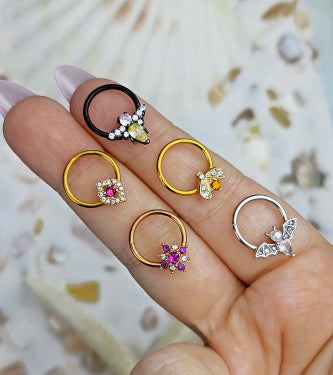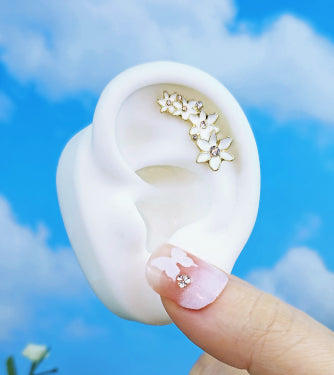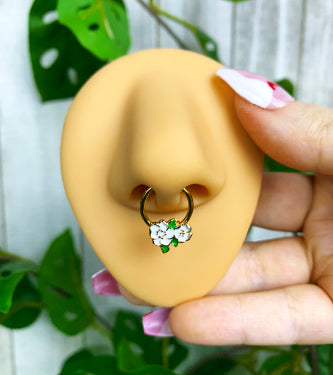




















You've got the look in your head already, a sleek black piercing stack that feels sharp, clean, and a little rebellious. The catch is that you don't want the wrong metal near your skin, especially if you've had irritation before or you're choosing jewelry for a new piercing.
That's where black titanium body jewelry earns its reputation. It gives you the dark aesthetic people want, while keeping the practical benefits that made titanium a staple in piercing studios in the first place, lightweight wear, corrosion resistance, and a material profile that's widely trusted for sensitive skin and fresh piercings when the piece is implant-grade titanium Healthline on titanium for piercings. The trick is knowing what's black titanium, what's just marketing, and when a black finish makes sense.
Why Black Titanium Body Jewelry Is Trending
You've probably seen the moment already. Someone wants a darker look for a septum, helix, or navel piercing, but they also know a cheap metal stud can leave the skin irritated, swollen, or just plain unhappy. The result is a very specific shopping goal, a piece that looks bold without creating extra problems.
Black titanium body jewelry fits that goal because it starts with a material people already trust. In the broader body jewelry market, titanium is the largest material segment in 2025, with about 31.7% share and a value of approximately USD 887.6 million in the same year, according to one market report on the category Wise Guy Reports body jewelry market. That matters because the black look is usually a finish choice on top of a titanium base, so the color is only part of what you are buying.
The market demand points in the same direction. The body jewelry market itself is estimated at USD 3.36 billion in 2024 and USD 3.48 billion in 2025, with growth projected to USD 5.0 billion by 2035 at a 3.7% CAGR Wise Guy Reports body jewelry market. Titanium and gold are expected to outperform the overall market, which helps explain why titanium-based styles keep showing up in piercing cases and why black finishes have moved from a niche option to something people ask for every day.
Why shoppers keep reaching for it
The appeal is practical as much as visual. Titanium is light, durable, and widely considered a body-friendly base metal, so it tends to feel easy to wear day after day. Black titanium gives people a darker look without changing the fact that the piece is still anchored in a material category known for comfort and compatibility.
There is also a styling reason. Black reads as flexible, because it works with minimalist looks, gothic styling, all-black outfits, and mixed-metal stacks. It can recede into the skin or stand out, depending on the placement and the rest of the jewelry. That makes it a useful choice for clients who want something intentional without drawing too much attention.
Practical rule: if you want the black look but you are worried about skin reactions, check the base metal first. The finish matters, but the titanium underneath matters more.
That is why black titanium body jewelry keeps gaining ground. You are not just choosing a color, you are choosing a material family that already has real trust behind it, and the black finish gives that familiar foundation a sharper, more modern look.
Understanding PVD Coatings and Anodized Finishes
A black titanium piece usually looks dark because of the finish, not because the titanium underneath is naturally black. In most cases, the color comes from Physical Vapor Deposition, or PVD, a vacuum-based process that bonds a thin, hard coating to the jewelry surface Tribu Piercings on black titanium body jewelry. The base metal stays titanium, while the outer layer provides the color and much of the surface character.

Why the coating is only part of the story
The titanium underneath does the heavy lifting. Titanium is highly corrosion-resistant, lightweight, and widely regarded as biocompatible, while the PVD layer adds the dark tone and surface hardness Tribu Piercings on black titanium body jewelry. That is why a black piece can still wear like titanium, even though the surface looks very different from bare metal.
A phone with a protective case is a useful comparison. The case changes the look and adds surface protection, but the device inside still determines the core experience. With black titanium, the coating creates the visual finish, and the titanium base supports the skin-contact side of the story.
Good to know: black titanium usually means titanium with a black finish, not a different kind of metal.
Why anodized titanium gets mentioned so often
Anodized titanium comes up because it is another way titanium can be colored, but it is not the same as a black PVD finish. That difference gets missed often, which is why shoppers see product names and assume they all mean the same thing. If you want a clear explanation of how anodizing works and how it differs from other titanium finishes, BodyCandy's guide on whether to anodize titanium body jewelry is a helpful reference.
The simple buying test is this. Ask whether the jewelry is PVD-coated, anodized, or just labeled as black titanium. Those details tell you more about how the color was made than the product photo does.
Black Titanium vs Other Black Jewelry Materials
Black jewelry is not one category, even if a shop groups it that way. The metal underneath changes how a piece feels, how it wears, and how it behaves in a piercing, especially if your skin is sensitive.
A black finish on titanium is a coating or surface treatment applied to a titanium base. That is different from materials that are naturally dark or that rely on a surface color alone. If you want a plain-language overview of titanium jewelry basics, BodyCandy's guide on titanium body jewelry is a useful starting point. The main point is simple. The color tells you one thing, but the base metal tells you much more about how the jewelry may sit in your piercing.
A quick comparison that actually helps
| Material | Hypoallergenic | Best For | Durability |
|---|---|---|---|
| Black Titanium | Usually yes, when the base is implant-grade titanium | Healed piercings, dark everyday looks | Strong, but the finish is a coating |
| Niobium | Usually yes | Shoppers who want a dark look with fewer coating concerns | Very good, with no coating to wear away |
| Black Surgical Steel | Not ideal for sensitive skin if nickel is a concern | Lower-cost fashion wear in some cases | Can be durable, but less skin-friendly |
| Acrylic | Not a metal, so not ideal for everyone | Temporary style use after healing | Less durable, more scratch-prone |
How to read that table without overthinking it
If your piercing reacts easily, start with the metal, not the color. Niobium is often favored by people who want a dark look without depending on a surface coating, while black titanium gives you the titanium base with a darker finish on top. Black surgical steel is where many nickel-sensitive shoppers run into trouble, and acrylic is more of a short-term style material than a serious long-wear choice.
Here is a simple way to separate the options. If you want the most familiar piercing-safe base with a black appearance, black titanium makes sense. If you want a dark metal with less concern about a coating layer, niobium is worth a closer look. If your skin is reactive, the safer decision usually comes from choosing the right base metal first, then treating black as the visual finish rather than the reason to buy.
Fresh vs Healed Piercings When to Wear Black Titanium
A black finish can look clean and low-profile, but a new piercing is not the place to guess about coatings or product quality. Fresh tissue needs the simplest setup you can give it, because every extra variable makes irritation harder to sort out.
Implant-grade titanium is one of the materials many piercers recommend for initial piercings, and titanium does not contain nickel, which makes it a good fit for people with sensitive skin or nickel allergies Healthline on piercing with titanium. That is the base-metal reason titanium has such a strong reputation in piercing work. The finish comes after that, and the finish is where the decision changes.

A quick comparison that helps
If the piercing is new, plain implant-grade titanium is the simplest starting point. Some piercers will use a black-coated titanium piece if the titanium grade is verified and the finish is made by a reputable process, but many still prefer to keep healing as straightforward as possible.
That caution is practical, not dramatic. A fresh piercing is already managing swelling, cleaning, and tissue repair, so adding a coating layer can make troubleshooting harder if the skin starts to react. The cleaner the setup, the easier it is to tell whether a problem comes from the jewelry, the fit, or the healing process itself.
Best practice for new piercings: ask for the exact titanium grade, ask how the black finish was applied, and do not rely on a product description that leaves those details vague.
Healed piercings allow more flexibility. Once the tissue is fully settled, black titanium is easier to wear because the piece is no longer sitting in an actively healing channel, and the dark finish can do its job without the same level of concern you would have in a brand-new piercing. If you want a darker stack or a more polished black look, healed piercings are usually the safer place to start.
The practical split is simple. Fresh piercing, choose the least complicated material and finish you can verify. Healed piercing, black titanium becomes much more workable, especially if you want the dark color without giving up the light feel of titanium.
If you are unsure whether a piercing is healed enough, check with your piercer before swapping jewelry. Tenderness, shape changes, or ongoing irritation are signs that the tissue may still need time, and healing pace varies by placement and by person. A quick in-person check is better than guessing at home.
Sizing, Fit, and Care Instructions
A black titanium piece can still feel wrong if the size is off. A tight fit puts steady pressure on the tissue, while a loose fit can shift, snag, or sit at an angle that never settles comfortably.

Start with the measurement, not the style
For labrets, the post length should match the thickness of the tissue it passes through, with a little room for normal swelling. Too short and the jewelry presses into the piercing. Too long and it moves around more than it should. The most reliable approach is to measure the piercing's actual depth instead of choosing by photo or by guesswork, and a piercer can do that quickly with calipers or fitting tools.
The infographic above gives helpful reference ranges for common placements, including nose (20g-16g), ear lobe (20g-14g), and navel (14g). Those ranges are a useful starting point, but they do not replace an in-person fit check. Anatomy, jewelry style, and the amount of tissue each piercing has all affect what sits well.
Keep the black finish looking sharp
Black finishes hold up well, but they still need care. PVD coatings can resist everyday wear, yet harsh cleaners, rough storage, and repeated rubbing against other jewelry can still dull the surface or leave marks over time.
A simple routine usually works best. Clean with saline, rinse well, dry fully, and keep each piece separate so it does not rub against chains or rings in a jewelry dish. If you already wear coated or plated pieces, BodyCandy's aftercare guide for coated and plated body jewelry is a useful reference for keeping the finish in good shape.
Do
- Use saline cleaning: Keep the routine gentle and skin-friendly.
- Store pieces separately: A soft pouch or lined compartment helps prevent scuffs.
- Check the fit regularly: If swelling changes or the jewelry starts to pinch, it needs a new size check.
Don't
- Don't use harsh chemicals: They can damage the coating and irritate the skin.
- Don't toss black pieces loose with other jewelry: Scratches can happen quickly.
- Don't assume every black finish behaves the same way: The coating method matters.
When the fit is correct and the care stays consistent, black titanium keeps its look longer and feels better for daily wear.
Smart Buying Tips for Black Titanium Jewelry
A black finish can look sharp in a product photo and still be the wrong choice for your piercing. The useful details sit in the material description, the coating method, and whether the piece matches how the piercing is being worn.
A good starting point is to separate the base metal from the color. Implant-grade titanium can be a strong choice for body jewelry, while the black appearance may come from a coating rather than the metal itself. That matters because the finish and the base metal do different jobs. One gives you color, the other gives you the material you're wearing against your skin.
What to look for before you buy
- Verified titanium grade: Look for implant-grade, Grade 5, or Grade 23 language, not just “titanium look.”
- PVD coating details: Good sellers name the finish method instead of hiding behind vague terms like “black plated.”
- Clear material descriptions: The listing should tell you what the base metal is, not just the color.
- Reputable branding: Sellers that explain their materials are usually easier to trust than shops that only push style photos.
A helpful way to judge a listing is to ask, “Would I know what touches the piercing if the color were stripped away?” If the answer is no, the description is too thin. In body jewelry, clarity is a quality signal, especially for fresh or sensitive piercings.
Red flags that should slow you down
A suspiciously low price can mean a thin coating, an unknown alloy, or a piece that was never made with piercing wear in mind. Vague descriptions like “premium black metal” or “fashion titanium” do not give you enough information to judge safety or fit. If the seller will not specify the base material, keep scrolling.
Fresh piercings need the clearest answers of all. If the jewelry is going into new tissue, the base metal and finish should both be easy to verify, because there is less room for guesswork while the piercing is healing. Healed piercings give you more flexibility, but even then, a solid product page is a better sign than a flashy photo.
BodyCandy's Titanium Body Jewelry collection is one option to check if you want implant-grade rings, studs, and hoops in a more structured shop environment, alongside the black pieces you're comparing. The value here is not hype, it is clarity. Good product pages make it easier to choose with confidence.
Frequently Asked Questions About Black Titanium
Can I wear black titanium in a fresh piercing?
Sometimes, but only if the piece is implant-grade titanium and the seller or piercer clearly states how the black finish was made. Even then, many piercers still start with plain titanium during the earliest healing stage, because fewer variables make it easier to watch how the piercing responds.
Will the black color fade over time?
It can, depending on the finish and how the jewelry is worn. PVD coatings are made to hold up well, but friction, harsh chemicals, and rough handling can wear the surface down sooner than expected.
How do I clean black titanium jewelry?
Use saline, rinse it gently, and dry it fully. Skip abrasive scrubbers and harsh cleaners, since they can dull the finish and irritate the skin around the piercing.
Is black titanium better than black niobium?
That depends on what matters most for your piercing. Black titanium gives you a titanium base with a dark coating, while niobium can be darkened without a coating, which some piercers and shoppers prefer when they want to avoid coating concerns.
What should sensitive-skin shoppers prioritize first?
The base metal. If you know you react easily, start with verified implant-grade titanium or ask your piercer whether niobium makes more sense for the piercing and the healing stage.
Is black titanium just a style label?
Often, yes. The phrase can describe titanium with a black surface treatment, so the product name alone does not tell you everything. Always check the metal grade and the coating method.
If you are comparing materials for your next piercing, check the titanium grade and coating method on each product page before deciding. A trusted piercer can also help you match the right piece to your healing stage. BodyCandy's body jewelry selection can be a useful place to compare those details while you shop.