









The most popular advice about hood piercings tends to focus on how they look and how quickly they heal. That's not enough. A piercing in this area can affect sexual comfort, barrier contraception, and everyday decisions while it heals, so the central question isn't just whether you like the jewelry. It's whether the placement suits your anatomy and whether you're ready to manage the trade-offs.
| Upside | Downside | What decides it |
|---|---|---|
| A distinctive way to express your style | Bleeding, infection, irritation, or scarring | Piercer skill, sterile technique, and aftercare |
| Jewelry contact may feel stimulating for some wearers | Sensitivity, snagging, or discomfort during sex | Placement, fit, and individual response |
| Hood tissue can heal relatively quickly | Embedding, migration, or rejection can occur | Anatomy and jewelry sizing |
| Jewelry can be removed | Removal or changes during irritation or infection need care | Professional guidance and the situation |
Why Hood Piercings Deserve a Serious Look
Better sex is a poor reason to book a hood piercing. Personal style is a stronger starting point, provided you are willing to account for sexual comfort, partner contact, and barrier contraception during healing. Those decisions deserve as much attention as the finished look. Choose the piercing for something you want, rather than an outcome jewelry cannot promise.
The distinction between hood and direct clitoral piercing matters even before you choose a style. A medical case report and review of genital piercings describes lower risks of clitoral injury, infection, and fibrosis with hood or prepuce piercings than with direct glans piercings. Lower risk still leaves room for complications, including migrating jewelry or injury to sensitive tissue. A professional assessment is more useful than choosing placement from a photograph.
The appeal is personal: you may like the appearance, and some wearers report added stimulation from jewelry contact.
Sexual-performance benefits are anecdotal, not clinically proven, so treat any sensation change as a possible bonus, not a promise. The practical trade-offs are less glamorous but deserve equal weight. Medical guidance on genital piercings identifies concerns including snagging and condom breakage. If you use barrier contraception, ask about jewelry contact and protection before booking, rather than discovering a problem during sex.
Make your decision around whether your anatomy supports the piercing, whether a qualified piercer is available, and whether you can protect the area while it heals. Include jewelry fit and aftercare in that conversation.
My take: Book an anatomy consultation before committing. Choose a hood piercing because you want it and can manage the trade-offs, with sexual comfort and contraception included in the decision from the start.
Anatomy and Placement Decisions That Shape Everything
A hood piercing is only a good option if the tissue can safely support it. A qualified piercer should examine the fold, tissue depth, and how the jewelry would sit before agreeing to a placement. Anatomy varies, so the style you've seen on someone else may not suit you.
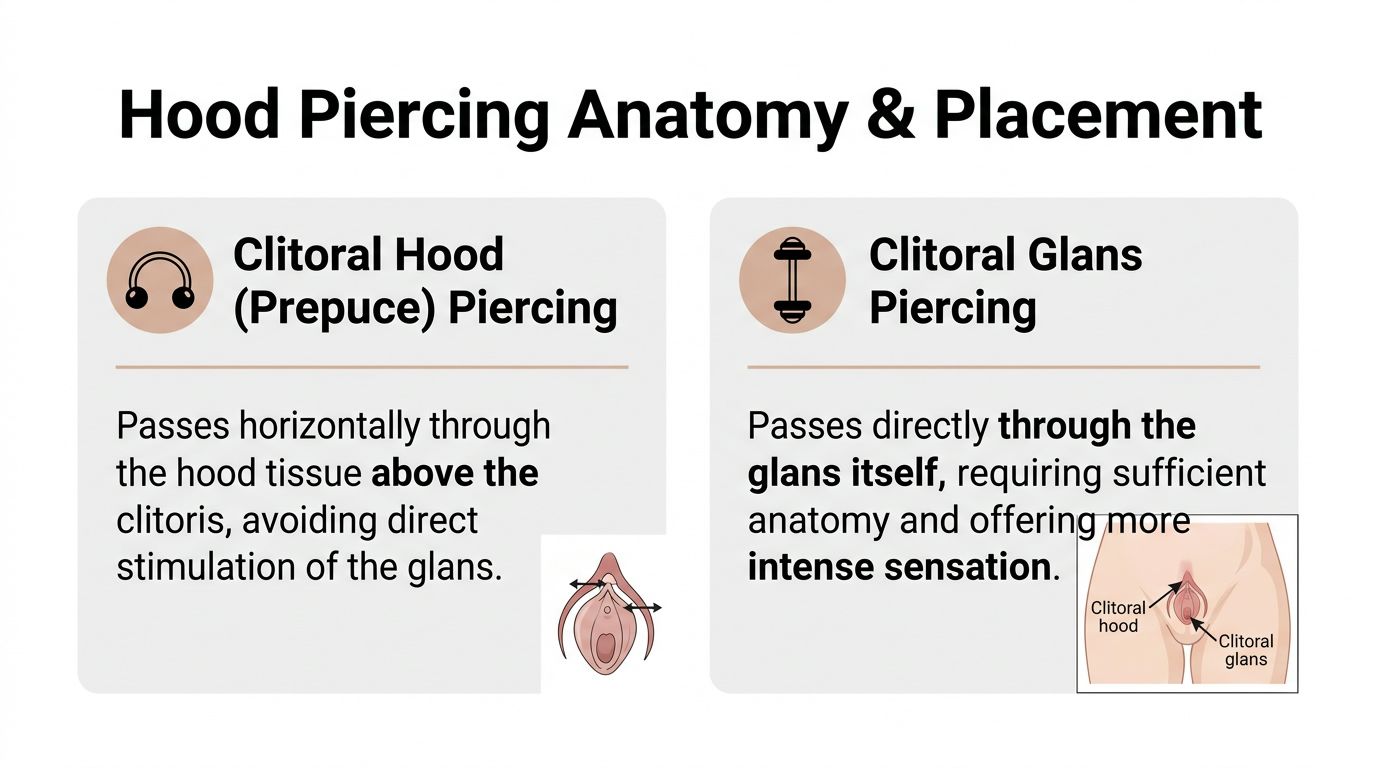
The most important distinction is between piercing the hood and piercing the glans. The hood is the fold of tissue over the clitoris; the glans is the clitoris itself. Piercing through the hood avoids deliberately passing jewelry through the glans and its major nerves and blood vessels. Direct glans piercing carries greater potential for nerve and vascular damage, loss of sensation, and diminished sexual function. A review of clitoral piercing placement describes this difference in risk.
Vertical and horizontal placements
A vertical clitoral hood piercing, often called a VCH, passes through the hood fold vertically. A curved barbell is a common jewelry choice, but the piercer should select a shape and fit that work with your tissue and anatomy.
A horizontal hood piercing passes through the fold from side to side. Jewelry may include a curved barbell or ring if the anatomy supports it. Don't assume a particular look means a particular placement is suitable for you; ask the piercer to explain where the entry and exit points would sit and how the jewelry will rest.
Before any procedure, the piercer should confirm that there's enough suitable tissue for the proposed placement and jewelry. They should also tell you if your anatomy doesn't support that style, rather than trying to make it work anyway. If you're unsure how individual anatomy can shape piercing options, BodyCandy's guide to how anatomy can affect piercing choices is a useful starting point.
A consultation should feel like an assessment, not a sales pitch. If the piercer can't clearly distinguish hood tissue from the glans or explain why a placement suits your anatomy, get another opinion.
The Honest Pros and Cons at a Glance
A hood piercing is a personal choice with practical consequences, not a guaranteed route to better sex. Its strongest appeal may be how it looks; some wearers also enjoy the feeling of jewelry against the area. A well-placed hood piercing goes through hood tissue rather than deliberately piercing the glans, but that does not remove the need to assess anatomy and placement carefully.
The trade-off beyond appearance
The choice also affects day-to-day decisions. During healing, you have to follow aftercare and avoid activities that pull, press, or catch the jewelry. Once healed, clothing, movement, sexual contact, and jewelry changes can still affect comfort. If those adjustments sound like more hassle than the piercing is worth, wait.
Discuss your medical history with the piercer before booking, especially allergies to jewelry materials or a tendency to form raised scars. Bleeding, infection, irritation, allergic reactions, scarring, and jewelry becoming retained or embedded are documented concerns in a peer-reviewed case report and literature review. They are possible complications, not inevitable outcomes. Get clear advice about what symptoms need medical attention and whom to contact if they occur.
Fit and placement shape the experience as much as the decision to get pierced. Jewelry that is too long may snag on clothing; an unsuitable fit can press against tissue or irritate it. Ask the piercer to explain why the proposed jewelry suits your anatomy, how it should sit, and what to do if it catches or feels uncomfortable. A careful assessment should take priority over the look you have in mind.
The sexual-health trade-off deserves equal weight. Some wearers like the added contact, while others feel no change or find it uncomfortable. Treat stimulation as a possible individual benefit, not a promised result or a sexual-performance guarantee. The practical question is whether the look and possible sensation are worth the healing care, activity adjustments, and potential complications for you. If you are unsure, postpone the appointment rather than letting anyone rush your decision.
Healing Timeline and What Complication Rates Actually Look Like
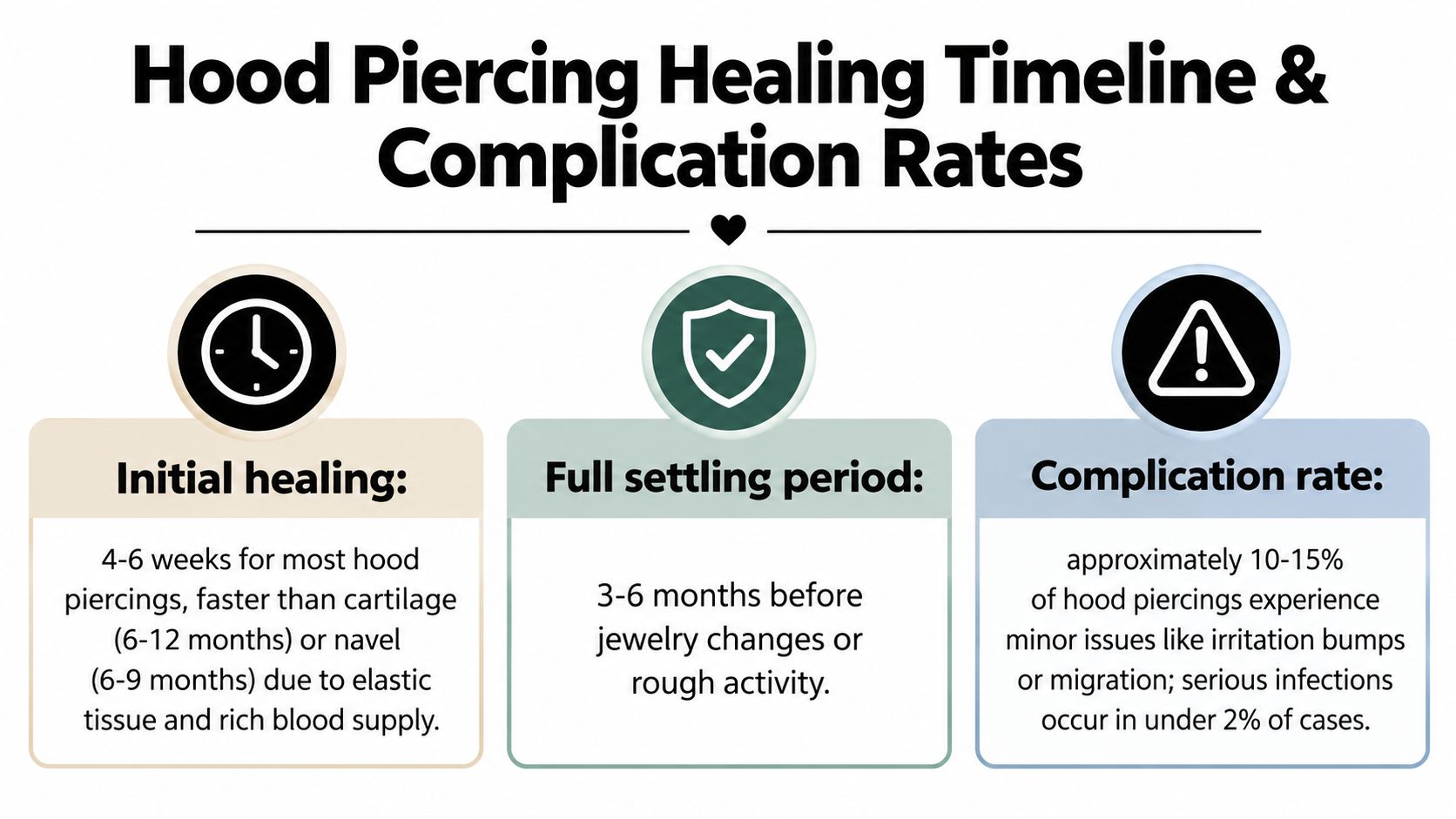
A vertical hood piercing typically takes about 4–8 weeks to heal, according to guidance on vertical clitoral hood piercings. The tissue and its relatively protected position may support a shorter healing period than cartilage or navel piercings. Still, the calendar is no guarantee that the piercing is ready for rough contact or a jewelry change. Let comfort and healing, not the expected timeline, guide those decisions.
Survey findings offer perspective, not a precise forecast for an individual piercing. In a survey of 240 women with genital piercings, 64% reported no problems. Reported issues included site hypersensitivity in 23%, skin irritation in 8%, keloids in 4%, infection in 3%, urinary-tract infection in 1%, and sexual problems in less than 1%. The survey covered genital piercings broadly, not hood piercings alone, and relied on participants' own reports. The survey findings show that irritation and sensitivity deserve attention, even though infection was not the most frequently reported issue.
Watch for changes, not just the calendar
Some tenderness or mild discomfort can occur during healing. Worsening pain, spreading redness, fever, pus-like discharge, or a foul odor needs medical evaluation. Heavy bleeding or visible tissue injury also calls for prompt attention.
Snagging and sexual activity can aggravate healing tissue. A bar that is too short may press into swelling and become embedded; placement without enough supporting tissue can also cause problems. Watch for migration or rejection: if the jewelry appears to shift or the tissue over it thins, contact your piercer for an assessment.
Your piercer can advise on fit and placement, but suspected infection or tissue injury needs a clinician. Keep to a consistent cleaning routine and follow reputable instructions for caring for a healing piercing. If symptoms worsen, seek medical care rather than waiting for the piercing to settle on its own.
Jewelry Choices That Make or Break the Experience
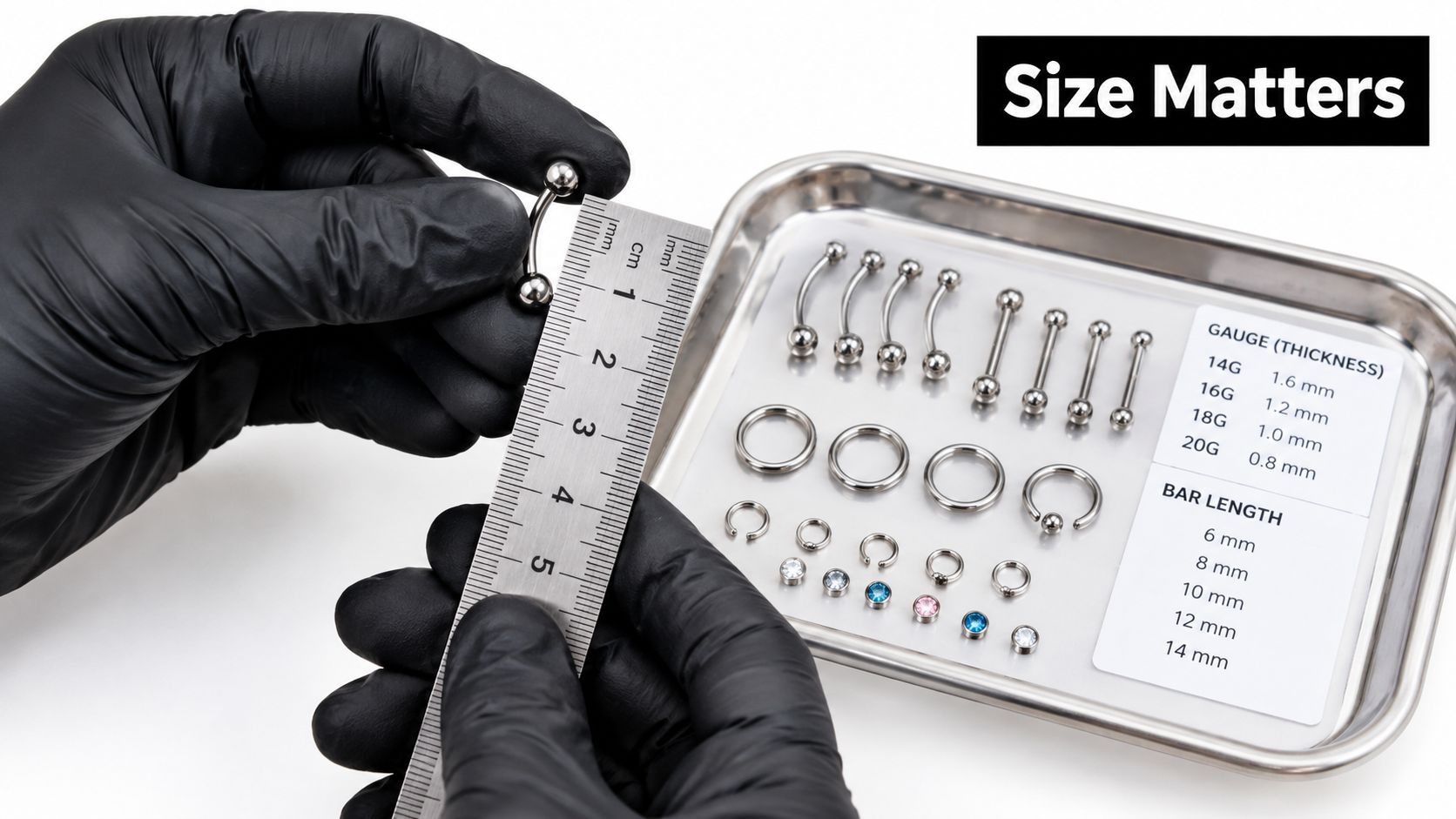
A good-looking piece can still be the wrong choice. For fresh hood piercings, ask your piercer to select jewelry based on your anatomy, placement, and expected swelling. For a VCH, initial jewelry should allow room for swelling, with a follow-up to discuss downsizing once it settles.
Ask about material and style
If you have sensitive skin or allergy concerns, ask about implant-grade titanium or nickel-free solid gold. Choose a qualified piercer who can explain the jewelry material, fit, placement, sterilization, and aftercare. These choices affect comfort and how well the piercing heals.
A curved barbell is commonly used for a vertical hood placement. For a horizontal placement, a curved barbell or ring may work, depending on the fold and how the jewelry rests. Looks come second: the piece should sit comfortably without pressing into tissue or catching.
Consider clothing, movement, and sexual activity before choosing a style. Smooth, well-fitted jewelry is easier to manage than a piece that catches on fabric or shifts during routine movement. Ask why the recommended gauge and length suit your anatomy, and when to return for a fit check.
Fit check: Before leaving the studio, ask how to recognize pressure, migration, or jewelry that has become too loose. Don't resize or change healing jewelry yourself.
For healed piercings, watch for thinning tissue, a change in angle, pressure marks, or ongoing irritation. If you notice these changes, consult a qualified piercer or clinician instead of forcing the jewelry to stay in place. For practical ideas about intimate jewelry, read this guide to body jewelry and women's piercings.
Sex, Contraception, and Day-to-Day Realities
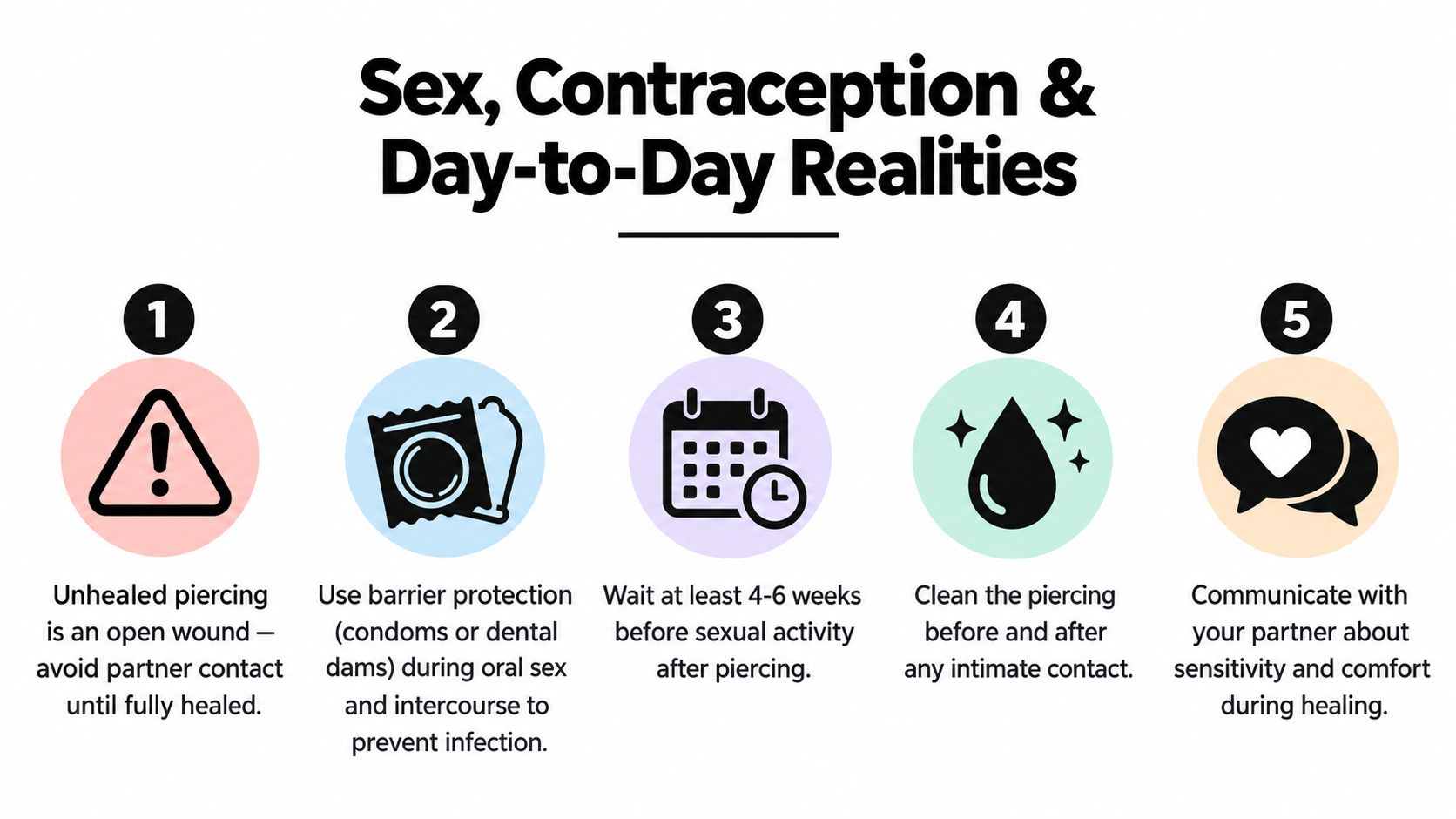
A healing hood piercing is a wound, so sexual contact needs more thought than a simple “wait until it feels fine.” Friction, oral contact, and a partner's fingers can irritate the area or introduce bacteria. Follow your piercer's care instructions, and don't treat the absence of pain as proof that healing is complete.
Barrier contraception is another detail people often overlook. Medical guidance warns that genital jewelry may contribute to condom breakage or cause a diaphragm to dislodge, potentially increasing pregnancy or STI exposure. Medical guidance on genital piercing risks also describes possible infections ranging from abscess and cellulitis to severe conditions such as sepsis and toxic shock syndrome.
Talk about comfort before the moment
A direct partner conversation can be simple: “I'm healing, so I need to avoid contact with the area for now,” or “Let's stop if anything pulls or feels sore.” That isn't awkward over-explaining. It gives both of you a clear way to avoid painful movement or accidental snagging.
If jewelry catches or bleeding starts, stop the activity. Don't tug the jewelry free or keep going to see whether the discomfort passes. Get medical advice for heavy bleeding, tissue injury, or signs of infection such as worsening pain, spreading redness, fever, pus-like discharge, or a foul odor.
A clinician should assess those warning signs rather than relying on a piercer alone. If infection is suspected, ask a clinician before removing the jewelry; removal can affect drainage, so don't make that decision without medical guidance. The practical bottom line is to plan sexual activity around healing and comfort, and to keep barrier protection compatible with the jewelry rather than assuming it'll work as usual.
Who Should Get One and Who Should Wait
A hood piercing makes sense when you want it for your own reasons, a qualified piercer confirms your anatomy suits the placement, and you can follow aftercare without rushing. Be ready for healing to affect clothing, movement, and sex for a while, and make sure you can get properly fitted jewelry.
Wait if you have a health concern that needs a clinician's advice, a history of significant metal reactions or keloids, or circumstances that make careful aftercare difficult. Pregnancy, upcoming medical procedures, and persistent irritation are good reasons to consult a healthcare professional before getting pierced or changing jewelry. A partner's preference is not a reason to go ahead, and a studio should assess your anatomy before agreeing to the placement.
Get clear about your reasons first. Write down your top three. If none still matter when you ask, “Would I want this with no change in sensation?”, wait. Experiences vary, and risks depend on anatomy, placement, jewelry quality, and aftercare. Guidance on genital piercings and their potential effects can help you consider the personal appeal alongside possible effects.
Before booking, ask the piercer to explain the placement, confirm they use sterile single-use equipment, and outline jewelry fit and aftercare. You should feel comfortable asking questions, and the piercer should be willing to say when a placement does not suit your anatomy. If you're ready, explore jewelry options, ask questions in the comments, and sign up for new-arrival updates before choosing a piece.
BodyCandy offers body jewelry in a range of styles to explore as you plan. Visit BodyCandy to browse options and find a style that suits your taste.