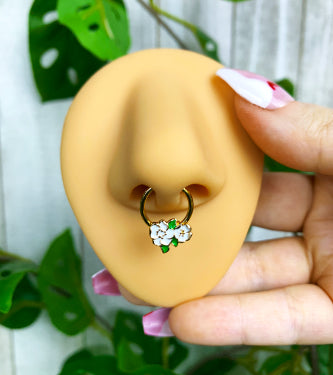




















No, solid titanium does not tarnish the way silver or copper does, and the discoloration people see usually comes from coatings, anodized colors or non-titanium parts.
The popular advice that titanium never changes appearance skips the detail you need at the checkout: the metal, the finish and the seller's label aren't the same thing. Your hoop can resist corrosion beautifully while its decorative surface gets scratched, its setting collects residue or its coating wears thin. Before you reach for metal polish or ditch a favorite piece, figure out which part has changed.
Does Titanium Tarnish? The Short Answer by Metal
Solid, uncoated titanium has a very low risk of conventional tarnishing during everyday wear. That makes it a useful choice if you're tired of jewelry that darkens between cleanings, but it doesn't make every titanium-labeled piece equally durable.
Use this comparison to separate base-metal behavior from changes you might see on the surface. The finish row belongs at the bottom because it describes an added layer, not another titanium grade.
Tarnish risk by body jewelry metal
| Metal | Tarnish risk | What drives it |
|---|---|---|
| F136 titanium | Very low | Stable oxide film that rebuilds after light scratches |
| Grade 2 or Grade 5 titanium | Very low | The same protective mechanism; grade usually matters less than finish for visible color changes |
| 316L surgical steel | Low | Chlorine, salt and prolonged exposure can contribute to staining or pitting |
| Solid 14k gold | Low | Alloying metals, including copper, can dull the surface; gold itself resists tarnishing |
| Sterling silver | High | Sulfur exposure forms dark silver sulfide |
| Copper or brass | High | Surface reactions produce green or brown patina |
| Plated or coated titanium | Medium for visible finish changes | The coating can wear through and reveal the material beneath |
What water exposure really means
A technical review published in IOP Conference Series describes titanium's excellent corrosion resistance in seawater at room temperature, including flowing, polluted and marine-mud conditions, and attributes that resistance to rapid self-passivation. That supports a practical expectation: sweat, shower water and occasional swimming are unlikely to turn a solid titanium hoop black.
It isn't permission to ignore what's attached to the hoop, though. A decorative end, coating or setting may need gentler treatment than the titanium post.
Water-resistant doesn't mean self-cleaning
Soap, sunscreen, salt and skin oils can collect on jewelry without chemically tarnishing the metal. A cloudy surface after a beach day may need a gentle wash, not a stronger cleaner.
Also, the metal's resistance to water says nothing about whether swimming is appropriate for a healing piercing. Follow your piercer's aftercare guidance rather than treating a material label as a swimming pass.
Practical rule: If the piece is solid titanium without a decorative coating, expect silver-grey metal. If it's colored or coated, check what creates that finish.
Why Solid Titanium Resists Tarnish Naturally
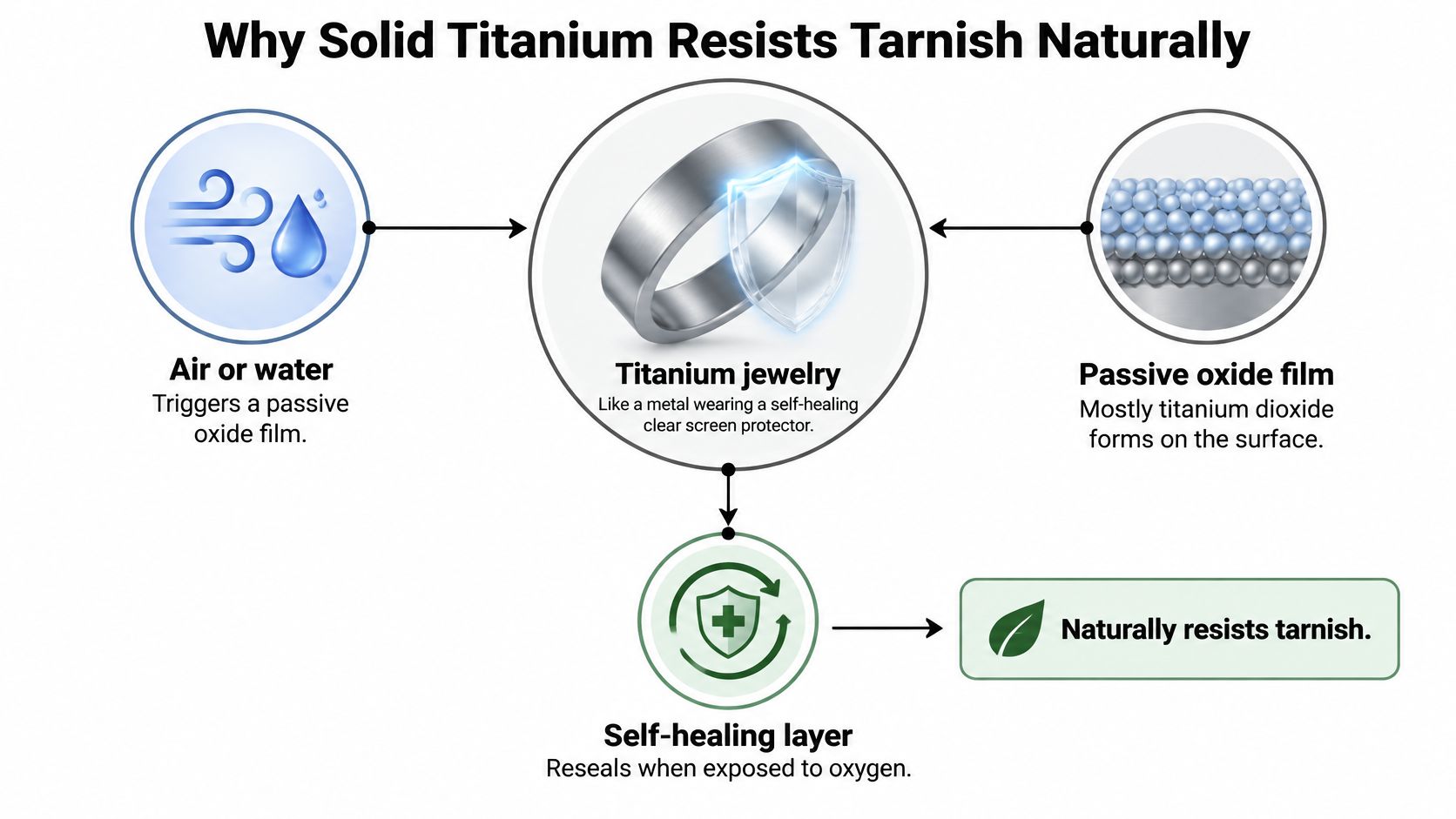
Titanium is like a metal wearing a self-healing clear screen protector. When it meets air or water, its surface forms a tightly bonded passive oxide film, mostly titanium dioxide, that limits further reaction with the metal underneath.
A technical document hosted by RWTH Aachen University describes this protective film as typically about 2–7 nanometers thick in ordinary ambient conditions. That's an extremely thin barrier, but its chemical stability and strong attachment matter more than its bulk.
The protection forms naturally rather than arriving as a separate anti-tarnish coating.
How the surface repairs itself
A light scratch can interrupt the film and briefly expose underlying titanium. When oxygen or water is available, that exposed area can rapidly form a new protective layer, a process called repassivation.
That doesn't erase the scratch. A scuff can remain visible because you've changed the physical texture, even though the surface has regained corrosion protection. Self-healing chemistry isn't self-healing polish.
Film thickness also isn't a fixed specification for every piece of jewelry. A surface-film study available through ScienceDirect characterizes an outer titanium dioxide layer approximately 10–20 nanometers thick, illustrating how measurements change with conditions and surface history. A technical paper on titanium surface protection also describes a fresh film starting thinner and thickening slowly over years.
For your jewelry, a few nanometers in ordinary air is a useful mental model, not a thickness guarantee.
Where that protection has limits
You don't need to baby plain titanium, but you shouldn't test it with whatever cleaner happens to be under the sink.
- Strong acids and concentrated chemicals: Aggressive exposure can destabilize the protective surface.
- Low-oxygen crevices: Tight, unusual environments can make protective-film maintenance less reliable.
- Halide-containing environments: Chloride and other halides can damage the film under particular chemical conditions, as outlined in this engineering reference on oxide layers.
- Other materials on the piece: Solder, plating, decorative coatings and stone assemblies don't inherit titanium's properties just because they're attached to it.
Judge corrosion resistance by the base titanium. Judge how the complete piece will look over time by its finish and attachments.
Implant-Grade vs Industrial Titanium Compared
Titanium grades and what they mean for body jewelry
| Grade | Standard or alloy | Typical use | Tarnish behavior |
|---|---|---|---|
| ASTM F136 | Ti-6Al-4V ELI | Surgical implants and implant-grade body jewelry | Very low; an implant-material specification, not a finish guarantee |
| Grade 23 | Ti-6Al-4V ELI | Medical and dental parts | Very low; shares the ELI alloy designation associated with F136 |
| Grade 5 | Ti-6Al-4V | Aerospace, bike parts and some jewelry | Corrosion-resistant; the label alone doesn't establish suitability for piercing wear |
| Grade 2 | Commercially pure titanium | Cookware and some rings | Very low; softer and more easily scratched |
| Unlabeled titanium | Not stated | Unspecified products | Unverified; establish the grade and base material |
The shopping trap is assuming titanium and implant-grade titanium are interchangeable descriptions. They aren't, and neither phrase tells you everything about the finished jewelry's polish, dimensions or construction.
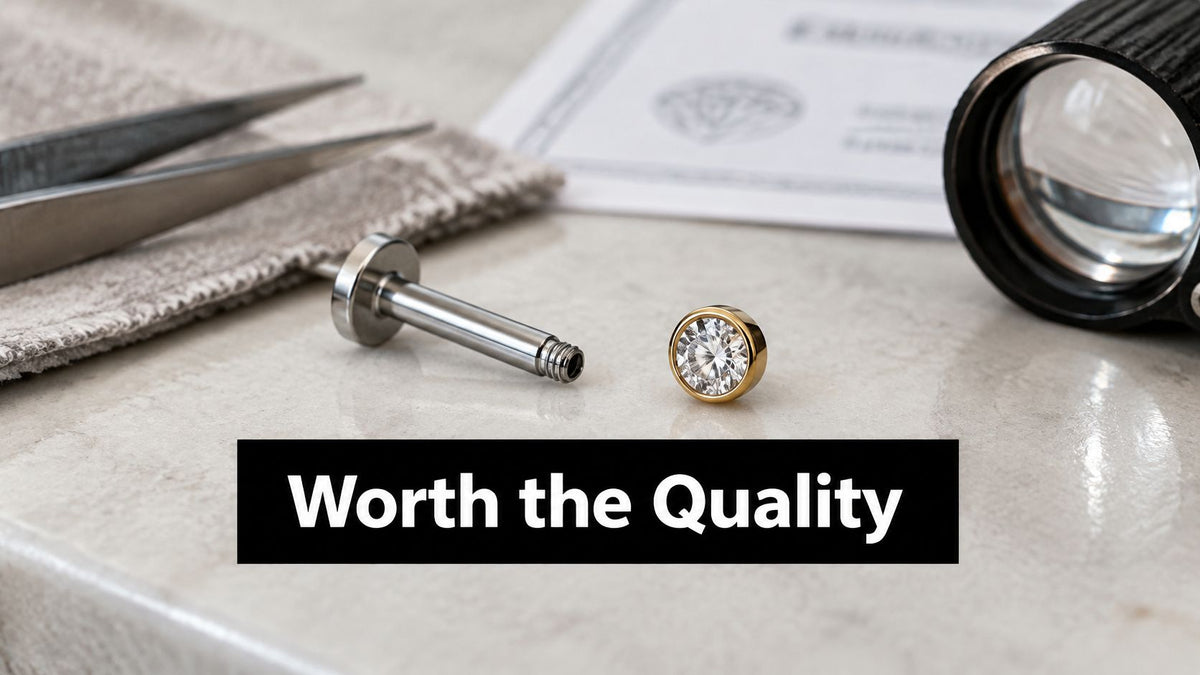
ASTM F136 identifies a specification for an extra-low-interstitial titanium alloy intended for surgical implant applications. ELI means extra low interstitial, referring to controlled levels of particular elements within the material.
Grade is more than a tarnish ranking
Grade 23 uses the same ELI alloy designation, but a Grade 23 label isn't automatically documentation that a finished piece meets ASTM F136. Look for clear material specifications rather than treating similar-looking names as identical certifications.
Grade 5 can be strong and corrosion-resistant without being the best-supported choice for a piercing. Grade 2 also resists corrosion well, but its softer surface can show wear more readily. Those are differences in material selection and durability, not evidence that industrial titanium turns black.
A review of titanium surface damage and corrosion highlights why mechanical wear and surface condition matter alongside material identity. A good alloy name doesn't excuse rough machining, damaged coatings or poorly finished contact surfaces.
Read the whole listing
For piercing jewelry, F136 is a useful specification to look for, and a Grade 23 listing deserves a closer look at its supporting material information. A bare titanium label leaves too much unanswered.
Use our guide to body jewelry metals to compare material names before choosing a piece. Then check details that affect daily wear:
- Material scope: Does the specification cover the post, decorative end and any other metal components?
- Surface quality: Look for a smooth finish without burrs, rough threads or damaged edges.
- Fit: Confirm the gauge, wearable length or diameter with your piercer.
- Label clarity: Titanium-look describes an appearance, not a verified titanium base.
A bright surface doesn't prove a material is appropriate for a piercing. Buy the specification and construction, not just the shine.
Coatings, Color Fades and Real Corrosion
A color change usually points to the finish before the metal. Anodizing, plating, physical vapor deposition coatings and stone settings can all change appearance for different reasons, so treating every dull spot as tarnish sends you toward the wrong fix.
A visible scratch is a reason to inspect the surface, not automatically a reason to declare the titanium corroded.
Anodized color isn't paint
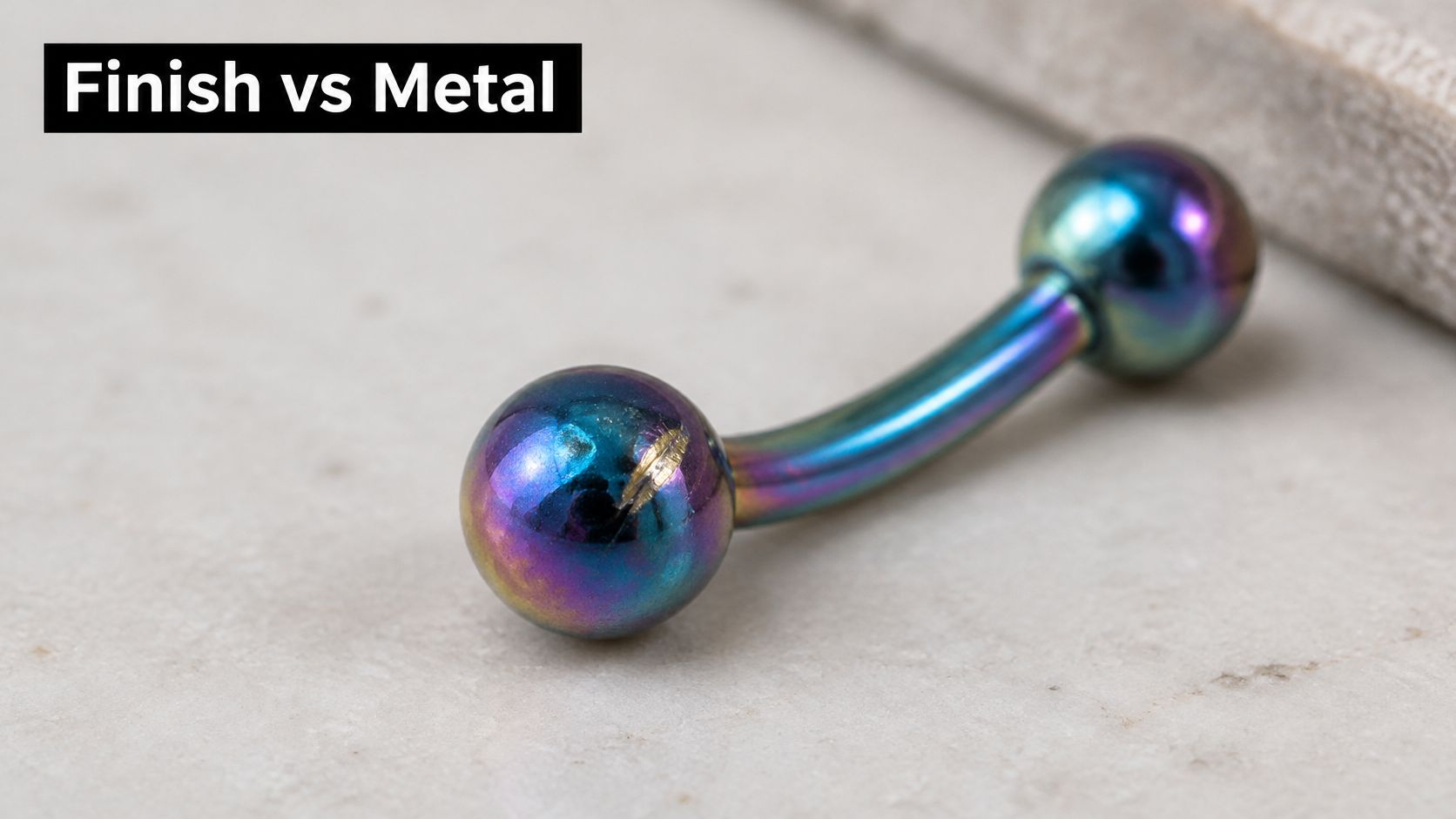
Aalberts Surface Technologies' anodizing guide explains that titanium's anodized colors come from light interacting with a transparent oxide layer, rather than added pigment. Scratching or abrasion can alter that optical effect locally, leaving a patchy appearance while the underlying titanium remains corrosion-resistant.
Gold, blue and purple can be anodized colors, but a color name doesn't identify a process. Don't assume a black finish is ordinary titanium anodizing; check whether the listing specifies a coating or another treatment.
Our titanium anodizing overview helps distinguish that process from an added decorative layer.
Titanium finishes and how they change over time
| Finish | Typical look | How it changes | Usual cause |
|---|---|---|---|
| Bare titanium | Silver-grey metal | Scuffs or reduced shine | Physical scratching or residue |
| Anodized titanium | Gold, blue or purple; verify the process for black | Color shifts or becomes patchy | Abrasion or changes to the colored oxide surface |
| PVD gold or black coating | Bright gold or black | Contact points and edges can expose the base | Friction and abrasive cleaning |
| Gold plating over base | Yellow gold | Wears through or flakes | Loss of the plated layer |
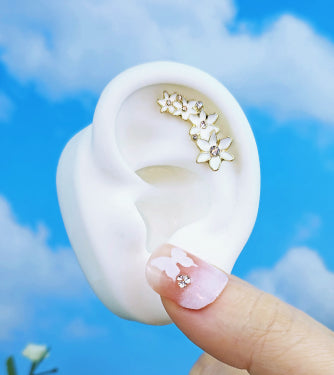
| Set stones, including CZ | Clear or colored | Clouding or loose stones | Buildup or setting wear, not titanium tarnish |
Match the symptom to the fix
Don't scrape the piece to test it. Clean gently first, then inspect it under good light.
- Dull grey film that wipes away: Skin oils and soap residue are likely candidates. Wash, rinse and dry before deciding anything permanent has happened.
- Faded or patchy anodized color: Friction or harsh cleaning may have altered the finish. More polishing won't restore the original color and can make the mismatch worse.
- Chipped coating with another color underneath: You're seeing layer wear. Cosmetic replacement may be enough for an external decoration, but damaged surfaces that contact a piercing need a piercer's assessment.
- Green or black staining: Check for copper-containing components, silver settings or an undisclosed base metal. Set the suspect piece aside rather than repeatedly cleaning the stain and ignoring its source.
- Pitting or persistent roughness: Stop using the damaged piece and have a professional piercer assess it. Roughness can indicate damage, but it isn't a reliable at-home corrosion diagnosis.
- Redness despite shiny metal: Irritation, fit problems or sensitivity to another material may be involved. Have a piercer assess the cause before switching to appropriately specified titanium.
For another look at titanium body jewelry, watch the video below.
Pain, swelling, heat or discharge isn't a finish problem. Get medical advice when infection is possible, and don't remove jewelry from a potentially infected piercing without professional guidance. A piercer can help assess fit and jewelry condition, but a jewelry swap isn't a substitute for healthcare.
How to Clean Titanium Jewelry the Right Way
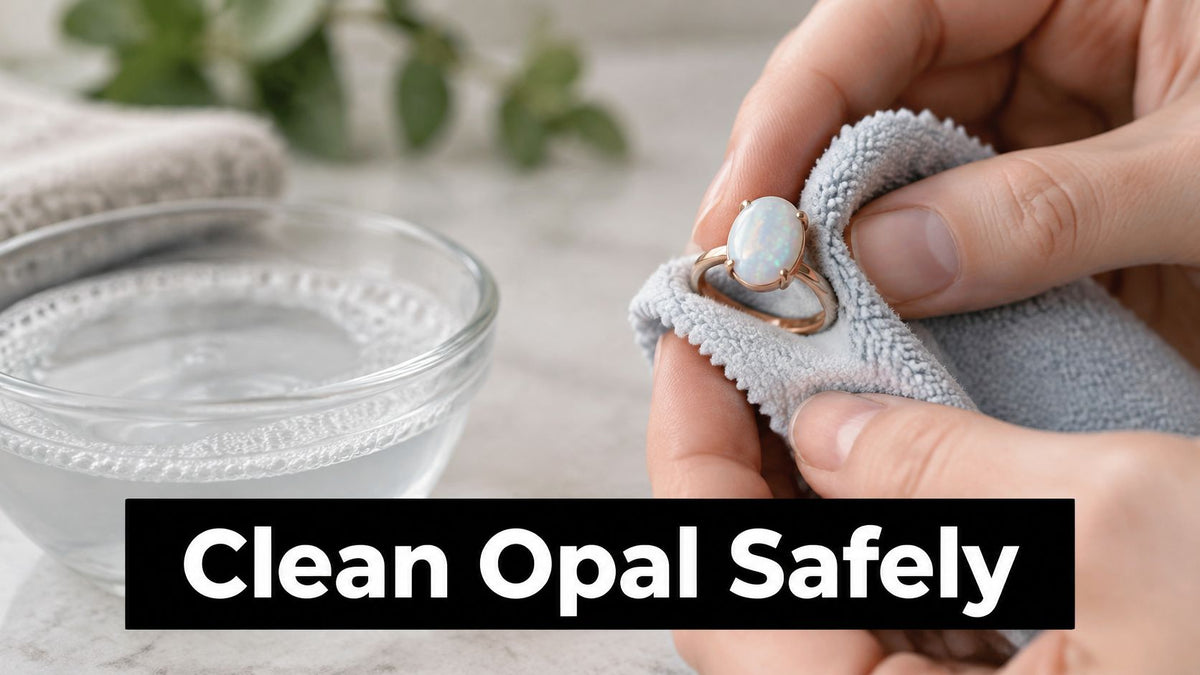
Start with gentle cleaning, not metal polish. This routine is for removable jewelry from healed piercings, not a replacement for fresh-piercing aftercare.
Keep the supplies simple: warm water, mild fragrance-free soap, a soft cloth and a clean lint-free drying cloth. For an assembled piece, use the care method suitable for its most delicate component.
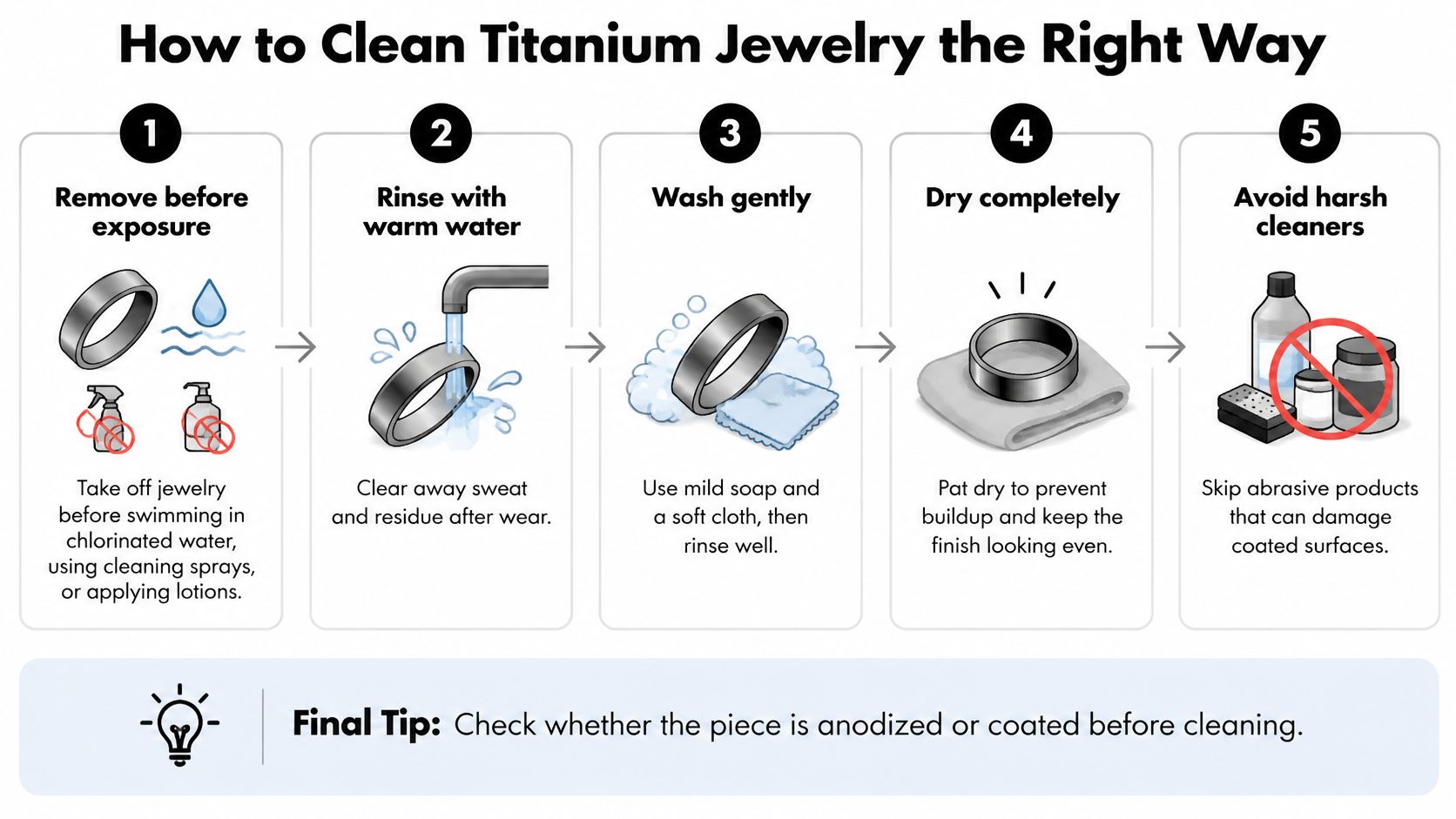
- Remove it before avoidable exposure. For healed piercings, take jewelry off before swimming in chlorinated water, using cleaning sprays or applying lotions. That reduces chemical contact and keeps products from collecting around settings and hinges.
- Rinse under warm water. Flush away sweat, sunscreen and loose soap residue before rubbing the surface. Don't use very hot water to compensate for stubborn buildup.
- Wash gently with mild soap. Use a drop of fragrance-free soap and a soft cloth, working carefully around threads and beneath accessible decorations. Reserve a very soft toothbrush for sturdy, uncoated areas where the piece's care instructions permit it; don't scrub colored finishes or delicate settings.
- Rinse again and dry completely. Remove all soap, then pat dry with a clean lint-free cloth. Pay attention to threaded ends and hinges, where retained water and product residue are easy to miss.
- Inspect under good light. Look for chipped coatings, uneven color, loose stones and rough contact surfaces. Cleaning removes buildup, but it won't repair worn plating or restore an abraded anodized color.
- Store separately in a dry pouch or compartment. Keep jewelry away from bath products and loose metal pieces that could scratch it. Put it away dry rather than sealing damp jewelry into storage.
The essentials are easy to keep beside your jewelry box.
What to leave out
Skip abrasive powders, toothpaste, scouring pads and silver-polishing products. Aggressive rubbing can turn a removable film into permanent finish damage.
Our body jewelry cleaning guide offers more care guidance for mixed-material pieces. Clean bare titanium should look evenly silver-grey without a greasy film; colored jewelry should be free of residue, even if existing wear remains visible.
Sink-side check: If gentle washing doesn't remove a mark, identify the finish before trying a stronger product.
Check Your Titanium Before You Buy or Clean
Discoloration is easier to diagnose when you separate the base metal from its finish and the seller's material label. Check each before buying, then match your care to the surface you have.
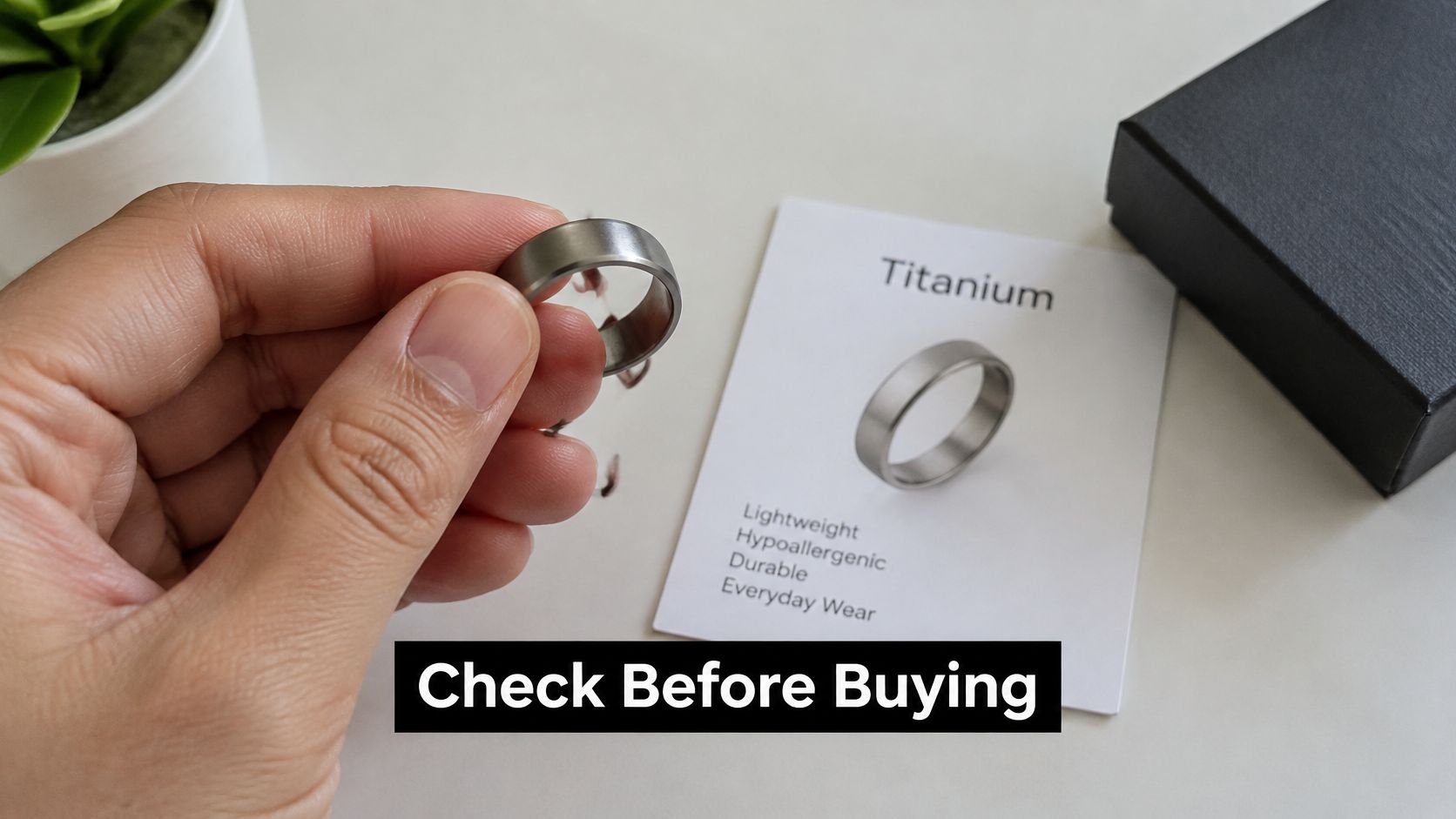
Your checkout checklist
- Confirm the grade: Look for F136 or clearly documented Grade 23 material, rather than a listing that only says “titanium.”
- Identify the finish: Check whether the surface is bare, anodized, plated or coated. Color changes can come from a worn finish, not tarnish in the base metal.
- Verify the base: “Titanium-look” describes appearance, not necessarily solid titanium. Look for a clear material description.
- Check the fit: Match the gauge and dimensions to your piercing.
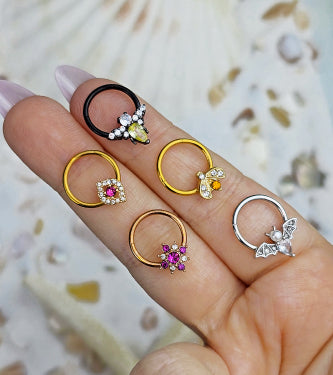
The 20G Implant Grade Titanium Triple Sided Micro Gem Hinged Nose Hoop is on sale from $39.99. Apply the same checks for material, finish and sizing to this product as to any other piece.
When the jewelry arrives, compare its appearance with the listing and keep the care information handy. If the material or finish is unclear, choose a better-specified piece instead of guessing at how to clean it.
BodyCandy offers F136 titanium jewelry for nose, septum, belly, nipple, cartilage and flat-back piercings, as well as tongue rings. Visit BodyCandy to browse the options and confirm the grade and finish before buying.