














You spot the bump at the worst possible time, right when your piercing was finally starting to feel like yours. It's a little red, a little angry, and suddenly every search result, forum thread, and group chat has the same loud suggestion, tea tree oil. That's where the panic starts, because now you're not just wondering what the bump is, you're wondering if you should pour something harsh on a healing wound and hope for the best.
Piercing bumps get mislabeled often. Many people refer to every raised spot as a keloid, even when it's more likely to be irritation or a hypertrophic scar. This confusion is significant, because does tea tree oil help keloids is the wrong question if the bump isn't even a keloid in the first place.
That Dreaded Bump The Panic Is Real
You clean your piercing, you sleep on the other side, you try not to touch it, and then one morning there it is. A small lump can make a fresh piercing feel like a disaster, especially when the internet starts acting like tea tree oil is some kind of magical fix.
The problem is that people usually talk about piercing bumps like they're all the same thing. They're not. One bump can come from friction, another can be a scar that stays in bounds, and a true keloid behaves very differently.
That's why the advice gets messy so fast. A salty-soak post, a tea tree oil reel, and a horror story about a “piercing keloid” all get mashed together, even though the treatment path changes depending on what the bump is.
Practical rule: if a piercing bump is changing after you touch, twist, overclean, or sleep on it, irritation belongs high on the list before you assume anything scar-related.
The useful move is to slow down and identify the bump before you treat it. That saves you from making a small annoyance worse with the wrong home remedy.
Is It Really a Keloid Piercing Bumps Explained

Start With the three usual suspects
Think of a piercing bump like a weed problem in a garden. Some growth is just a fast, annoyed response to something irritating the area. Some is a stubborn scar that stays where the injury happened. A true keloid is the one that keeps growing past the original border and usually needs medical care.
Many piercing bumps are really irritation bumps. They tend to show up when jewelry moves too much, the site gets bumped, or aftercare is too harsh. If the trigger calms down, the bump often does too.
A hypertrophic scar is different. It's raised and firm, but it stays within the original wound area. It can linger, but it isn't the same thing as a keloid.
A keloid is the most serious of the three. It's a scar that grows beyond the original piercing site and doesn't usually settle down on its own. Healthline also notes there's little evidence tea tree oil reduces existing scars, and that skin sensitivity is a real issue for piercing wounds, which is why the question is often less “what oil should I use?” and more “what am I looking at?” Healthline on tea tree oil for piercings
Quick comparison for your mirror check
| Feature | Irritation Bump | Hypertrophic Scar | Keloid |
|---|---|---|---|
| Usual cause | Friction, pressure, poor aftercare | Healing response after injury | Strong scar response that extends beyond the wound |
| Where it stays | Around the piercing site | Within the original wound area | Past the original wound area |
| Common feel | Tender, annoyed, sometimes wet-looking | Raised, firm, can itch | Firm, shiny, persistent |
| Typical trend | Can calm down with better care | May flatten slowly over time | Usually doesn't shrink on its own |
That distinction is why a one-size-fits-all fix falls apart. If you've got irritation, changing your routine can help. If you've got a scar, home care alone may not be enough. If it's a true keloid, you're in dermatologist territory, not internet-remedy territory.
For a deeper breakdown of how keloids behave, BodyCandy has a helpful guide on keloids, what, how, and why.
The Tea Tree Oil Hype Vs Scientific Reality
Tea tree oil gets attention because it sounds like the kind of thing that should work. It's known for antimicrobial and anti-inflammatory properties, so people naturally assume it can calm a bump, dry it out, and make it disappear. That sounds tidy on paper.
Real-life keloids are not tidy. A 2020 review of keloid management found that tea tree oil has only anecdotal support. The authors noted that some patients report improvement, but they also emphasized that no treatment has been proven to fully induce keloid regression or prevent recurrence, and there are no conclusive clinical statistics showing tea tree oil works for keloids 2020 keloid management review.
That's the big gap. Anecdotes are not evidence. A friend saying it helped, or a comment section swearing by it, doesn't tell you whether the bump was a keloid, irritation, or just a healing phase that would've calmed down anyway.
People love a simple answer for a complicated wound. Keloids don't care about popular trends, they care about biology.
There's also a pattern in consumer coverage that matters here. Some sources talk about tea tree oil like it might help prevent irritation or support general wound cleaning, but that's not the same thing as proving it can shrink a keloid. The evidence doesn't get you there, and that's why the medical summary around this topic keeps circling back to uncertainty rather than results Derm Collective on tea tree oil for keloids.
So if you're asking does tea tree oil help keloids, the most honest answer is that it has popularity, anecdote, and a lot of online momentum, but not convincing proof that it changes keloid tissue. That's a very different thing from a real treatment.
The Big Risks of Using TTO on Your Piercing
Tea tree oil can be rough on normal skin, and a healing piercing isn't normal skin. It's an open, sensitive channel that's still trying to settle down. Putting a strong essential oil near it can turn a manageable bump into a more irritated one.

Why sensitivity matters more than hype
For safety, a 24 to 48 hour patch test is recommended before skin use because allergic or irritant reactions can happen, and dilution is necessary before topical application Medical News Today on tea tree oil and piercing care. That matters even more around piercing tissue, because the area is already inflamed or fragile.
If you use tea tree oil undiluted, you're gambling with irritation. If you use a blend that's still too strong, you can still dry the skin out or make it sting. Either way, the bump can look angrier, which makes people apply even more of the same product. That spiral helps no one.
There's another risk people miss. A bump that looks like “keloid growth” after a tea tree oil experiment may be a reaction to the oil itself. That's especially frustrating if you're trying to figure out what your body is doing versus what you just put on it.
BodyCandy has a post called Dear Alley, I've Tried Alcohol Tea Tree that fits this exact frustration, because the issue is often that harsh products keep the wound irritated.
What to watch for instead
- Burning or stinging: That usually means the product is too harsh for the area.
- More redness after use: A calmer routine should reduce redness, not increase it.
- Dry, flaky skin around the piercing: Over-drying can make the site more reactive.
- Swelling that keeps getting worse: Stop using the product and reassess the bump.
If your piercing is fresh or touchy, think gentle first. Tea tree oil isn't gentle by default, and a healing wound doesn't owe it a chance to prove itself.
Proven Ways to Soothe and Heal Piercing Bumps

The boring answer is usually the useful one. Most piercing bumps respond better to calm, consistent care than to anything dramatic, and that's especially true when the bump is really irritation.
What helps most day to day
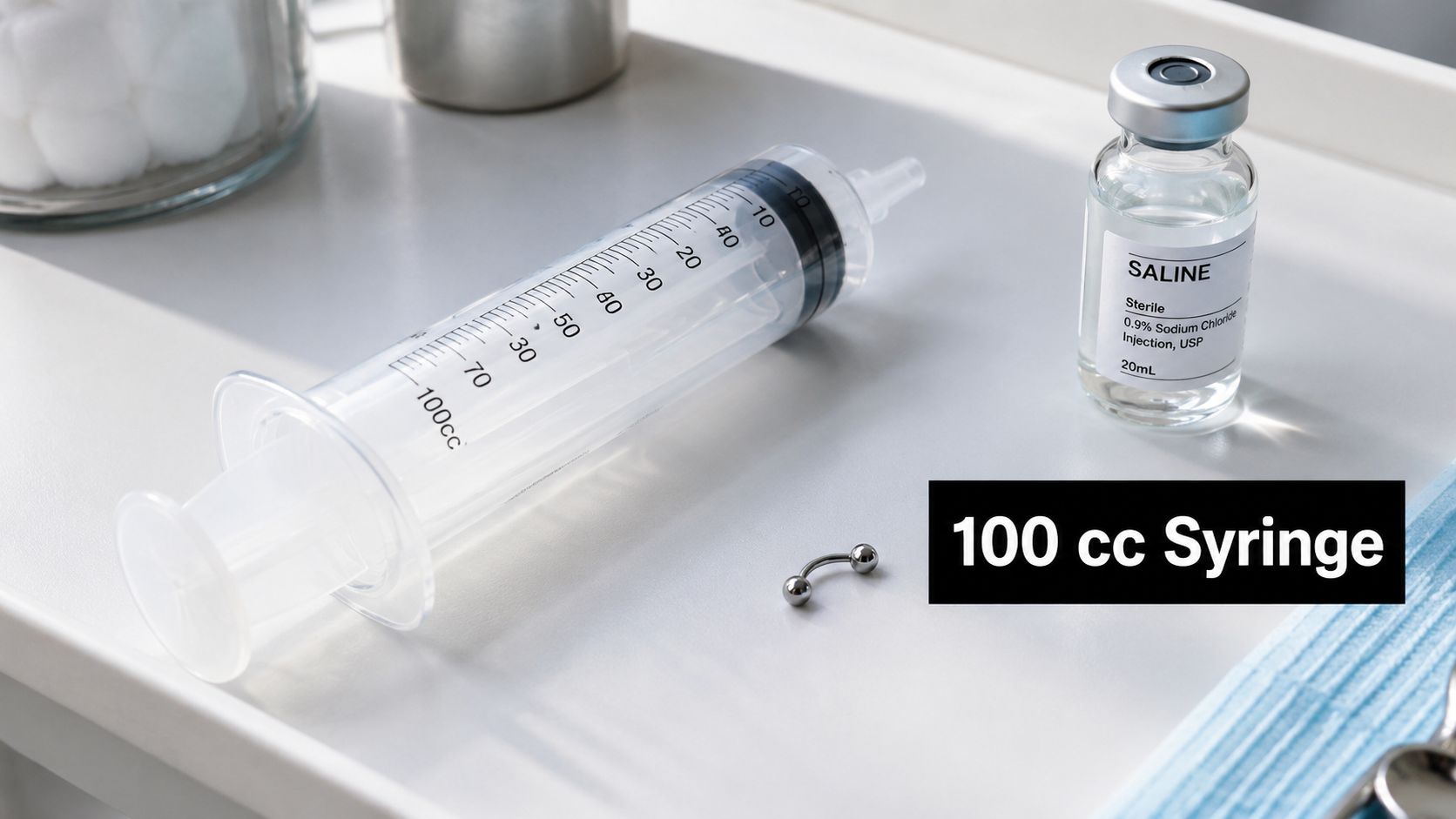
Sterile saline is the first stop for a lot of piercing issues. It's simple, low-drama, and much easier on healing tissue than harsh DIY mixes. If you want a salt-soak style routine, keep it gentle and clean, not aggressive or overdone. You can also use BodyCandy's guide to basic piercing care and how to make a sea salt soak if you're comparing aftercare approaches.
Leave it alone matters just as much. Twisting, touching, and checking the bump every hour keeps the area annoyed. Sleeping on it can do the same thing, especially with cartilage piercings.
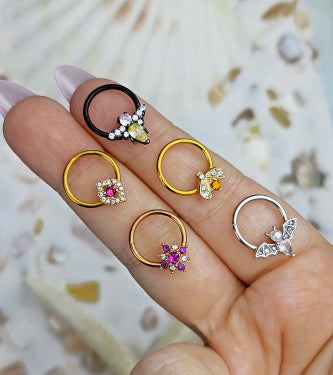
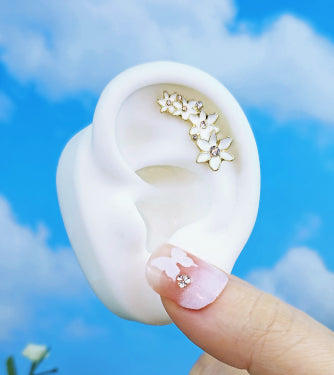
Jewelry quality matters too. Poor fit or low-grade material can keep a piercing irritated, which means the bump never gets a chance to settle. If you're changing jewelry, implant-grade titanium or surgical steel options are common places to start, depending on your sensitivity and your piercer's advice.
When the bump is a scar, not irritation
If a dermatologist says you're dealing with a hypertrophic scar or a true keloid, home care isn't the main event anymore. Established medical options can include silicone gel sheets, steroid injections, or cryotherapy, depending on the case and the clinician's plan. Those treatments belong with a professional, not a bathroom counter.
There's also a useful line to keep in mind. Healthline says there is no evidence tea tree oil removes existing scars, including keloids and hypertrophic scars, and one medical review says it won't help to remove scars Healthline on tea tree oil for scars. That makes the choice pretty clear when you're trying to treat a scar, not just soothe a temporary bump.
If the bump is painful, spreading, warm, or getting worse instead of better, don't keep experimenting. A piercer can help you check jewelry fit, and a dermatologist can tell you whether you're dealing with a scar that needs medical treatment.
Your Piercing Deserves Better Than Guesswork
The shortest version is this. Most piercing bumps are not true keloids, tea tree oil is a risky guess, and the best path is usually gentler care, better jewelry, and a little patience. The longer version is that your piercing is asking for consistency, not chaos.

Neutral sources keep coming back to the same point, there are few clinical studies, tea tree oil has not been proven effective for keloids, and popular advice often runs ahead of the data Derm Collective on tea tree oil for keloids. That matters because an unproven remedy can cost you healing time if it keeps the area irritated.
So keep the bump detective work simple. If it looks like irritation, calm the routine down. If it looks like a scar, stop guessing and get real guidance. If it's a true keloid, don't waste time on oil folklore.
Your piercing is body art, not a science experiment. Treat it like something worth protecting.
A CTA for BodyCandy.