














You catch it in the mirror at the worst possible time. One second you're checking your lip piercing, the next you spot a little bump inside your mouth and your brain goes straight to worst-case scenarios, infection, rejection, disaster, the whole dramatic playlist.
Take a breath. A bump inside lip piercing jewelry is often a friction problem, not a piercing apocalypse, and the inside of your lip is a chaotic little environment anyway. It's wet, it gets bumped by teeth, and it never stops moving when you talk, eat, sip, smile, or accidentally bite down a little too hard.

The good news is that once you know what kind of bump you're looking at, the next move gets a lot clearer. That's the key win here, figuring out whether you're dealing with irritation, a mucus-filled cyst, a problem with the jewelry, or something that needs a pro to look at it.
Why Bumps Show Up Inside Lip Piercings
The inside of your lip is basically the wild west for healing. It's constantly wet, constantly moving, and constantly close to teeth, food, and whatever else your mouth is up to that day. That means even a tiny bit of pressure or rubbing can turn into a visible bump before you've had time to spiral.
There's a reason oral and perioral piercings come with real dental and gum risks, not just cosmetic annoyance. In one clinical study, people with lip piercings were 4.14 times more likely to develop gingival recession, 26% had tooth injuries, and the pierced side of the lower lip showed double the rate of tooth fractures and cracks compared with the non-pierced side PubMed. That doesn't mean every bump is serious, but it does mean the mouth is rough territory for jewelry.
A bump can also be the body's normal irritation response. The inner lip gets tugged by every smile, every sip, and every little bite you don't even notice until later. If the jewelry is rubbing, the tissue gets cranky fast.
Practical rule: if the bump sits right where the jewelry moves, friction is high on the suspect list.
One more thing makes this area tricky. Mucoceles, which are mucus-filled cysts, are common on the lower lip in oral-lesion data, and that location overlaps with where lip jewelry lives Haute Living. So if the bump is inside the mouth, don't assume it's automatically an infection.
The Different Types of Bumps and How to Tell Them Apart
A lot of guides mash every lip bump into one bucket, but that's where people get mixed up. A bump near a piercing can be simple irritation, a mucus-filled cyst, excess healing tissue, or an infection that needs attention. The look and feel tell you a lot.
| Bump Type Quick Reference | Typical Look | Pain Level | Common Location |
|---|---|---|---|
| Irritation bump | Small, soft, red or pink, often near the jewelry hole | Mild to tender | Right next to the piercing |
| Hypergranulation | Raised, moist, beefy-looking tissue | Tender, can bleed easily | Around a healing wound |
| Mucocele | Smooth, round, soft lump inside the lip | Often painless or mildly annoying | Inner lip, away from the skin surface |
| Infection | Red, swollen, warm, may ooze pus | Sore or throbbing | Around the piercing and nearby tissue |
| Keloid | Firm, raised scar tissue that keeps growing | Often itchy or tight | Less common inside the mouth |
What to notice first
Irritation bumps usually act like overreactive little puff-ups. They're small, they show up around healing or after the jewelry gets snagged, and they usually settle when friction drops.
Hypergranulation is more of an overgrowth response. It often looks moist or shiny, which is why people mistake it for infection when it's a healing issue.
Mucoceles live in a different lane. They're usually smooth and squishy, and because they form inside the lip, they can sit a bit away from the jewelry itself. That's a huge clue.
Infections are the ones that tend to bring heat, spreading redness, and worsening pain into the chat. If the area is getting angrier instead of calmer, don't guess.
A bump's location matters. Inside-the-mouth bumps can be caused by piercing irritation, but they can also be fibroma, mucocoele, or abscess territory, which is why the label matters before the treatment.
What Actually Causes Those Inner Lip Piercing Bumps
An inner-lip bump usually has a plain mechanical cause. The tissue gets rubbed, pinched, or repeatedly disturbed, and your mouth responds by swelling up in the exact spot that keeps getting bothered.
The usual troublemakers
Jewelry that's too tight presses into the tissue and keeps it irritated. Oral-piercing care guidance points out that red bumps can show up when the jewelry is compressing healing tissue, and that pressure can keep the area angry Painful Pleasures.
Biting the jewelry while eating is another common trigger. A labret disc or barbell end can slip between the teeth and lip faster than people expect, especially while swelling is still changing and the fit no longer feels predictable.
Snags and suction are sneaky. Catching the jewelry on a toothbrush, floss, or a straw creates small bursts of trauma, and sucking motions, like using a straw or vape pen, keep the piercing moving in a way that can drag irritation out longer.
The inside of the mouth is also a busy place. Saliva, food, makeup, and bacteria are always moving through it, so a lip piercing can stay irritated while the tissue is still trying to settle in. BodyCandy's oral piercing care guide breaks down how that daily wear and tear adds up.
Quick self-check: if your daily routine keeps bumping, pulling, or sucking on the jewelry, the bump is getting re-irritated, not being stubborn.
Safe At-Home Care Steps for an Irritation Bump
A bump inside the lip can look dramatic in the mirror, then calm down a little by the afternoon. If it behaves like irritation, the job is to lower friction and let the tissue settle instead of prodding it into a bigger mood.
Start with a clean saline routine. One concrete option is 1/4 teaspoon non-iodized sea salt in 1 cup, or 8 oz, of warm water, applied for 5 to 10 minutes, 2 to 3 times daily The Minor Surgery Center. Keep it gentle and consistent. Saltwater works like a steady rinse after a spill, it helps clear the area without adding more stress.
- Wash your hands first. Every time. Your mouth already has plenty going on, so clean hands keep you from adding extra germs to the mix.
- Use saline, not harsh stuff. Skip alcohol, hydrogen peroxide, and aggressive soaps. A mild rinse gives the piercing a chance to calm down.
- Avoid materials that shed fibers. Tissues, thin towels, cotton balls, and cotton swabs can leave little fibers behind, and those fibers can catch on jewelry and keep the bump irritated.
- Leave the jewelry alone. No twisting, rotating, popping, squeezing, or trying to drain it yourself. Extra handling usually turns a small problem into a bigger one.
BodyCandy's oral piercing care guide is a helpful companion if you want a fuller look at mouth-friendly cleaning and daily habits.

A simple irritation bump should usually get less dramatic when friction drops. If it stays the same or keeps getting angrier, stop escalating the home routine and let a piercer or doctor take a look.
When to See a Piercer and When to See a Doctor
A good piercer can help with fit, jewelry choice, and aftercare habits. A doctor needs to see anything that looks more like a spreading infection or a separate oral lesion. The trick is knowing who's right for which symptom.

See a piercer if the issue is mostly about fit, rubbing, or a bump that stays mild but won't settle. That's the lane for jewelry that feels wrong, irritation that keeps returning, or a routine that needs tightening up.
See a doctor if you've got worsening pain, spreading redness, warmth, pus, fever, or a bump that's growing fast. Those signs point beyond a simple jewelry issue and into medical territory. A lip bump that doesn't behave like a standard irritation bump may need dental or medical evaluation, especially if it could be a fibroma, mucocoele, or abscess.
For a clearer comparison between infection and rejection signs, this guide helps separate the two: piercing infection vs. rejection.
If the bump is inside your mouth and your gut says, “this looks weird,” trust that instinct and get it checked. Mouth tissue can hide more than it shows.
Best Hypoallergenic Jewelry Choices for Sensitive Lips
If your bump keeps coming back, the metal itself may be part of the story. Sensitive tissue tends to do better with materials that are stable, smooth, and less likely to stir up irritation.
Implant-grade titanium is the usual heavy hitter for sensitive lips. It's lightweight, well tolerated, and a strong choice if your skin tends to complain about mystery metals.
Niobium is another solid option. It's often a good pick for people who want a less reactive material without jumping straight to gold.
14k or higher solid gold can work well too, as long as it's solid gold, not plated. Plated pieces and mystery alloys are where trouble starts, especially for inside-the-mouth placements.
Simple material rule: if the lip is already acting fussy, skip plated jewelry and low-grade alloys. Calm materials make calm healing easier.
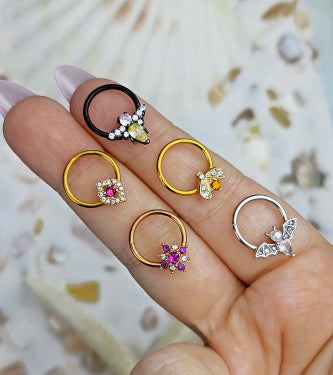
If you're comparing options, a quick note on styles matters too. BodyCandy's lip jewelry collection is a useful place to browse examples of lip-friendly shapes and styles: lip jewelry styles.
Prevention Habits That Keep Bumps From Coming Back
Once the bump settles, keep the friction low so it doesn't return for an encore. The biggest habit is getting the jewelry fitted properly after the initial swelling drops, because too much extra length or a piece that sits awkwardly can keep grinding the tissue.
Choose ends that don't rub your gums or inner lip too hard, and eat carefully on the non-pierced side while everything is still healing. Skip straws and vape pens during that sensitive stretch, since suction keeps the area moving.
A simple saline routine still helps after the bump fades. You don't need to baby the piercing forever, but a little consistency goes a long way when the inside of your mouth likes to stir up drama.
Ready to calm the bump and stop the repeat irritation cycle? Shop BodyCandy for lip jewelry and aftercare-friendly styles that fit more comfortably, heal more smoothly, and give your piercing less to fight with.