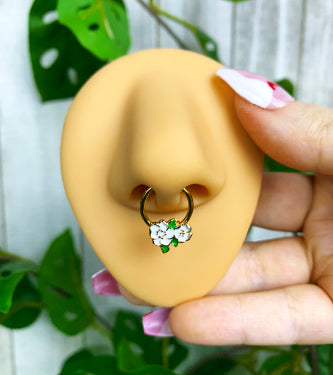














Thinking about getting a nose piercing, or maybe just switching up your style? You're in the right place. The world of nose jewelry is massive, with everything from tiny, subtle studs to bold, statement-making hoops. Figuring out the different types is your first step to finding a piece that feels totally you.
Your Ultimate Guide to Nose Jewelry
Welcome! Let's dive into the amazing variety of nose jewelry out there. Getting a new piercing is an awesome way to show off your personal style, but choosing that first (or next) piece of jewelry can feel like a lot. What’s the deal with a stud versus a screw? What in the world is a septum clicker? Don't sweat it—we're here to break it all down for you.
Think of this guide as your piercing-obsessed best friend, ready to walk you through everything. We'll explore how nose rings went from ancient traditions to the ultimate modern accessory for self-expression. Consider this your personal map for navigating all the incredible choices available.
Here's a quick peek at what you'll discover:
- Nostril Jewelry Styles: We'll get into all the popular options for nostril piercings, from secure-fitting nose screws to sleek seamless hoops.
- Septum Jewelry Deep Dive: Get ready to explore the styles that really make a statement, like classic captive bead rings and super versatile circular barbells.
- Materials and Sizing: Learn exactly why picking the right metal and size is so important for a happy, healthy piercing.
By the time you're done here, you won't just know the names of different types of nose ring jewelry—you'll feel totally confident and inspired to find the perfect piece for your unique anatomy and style. We’ll cover everything you need to know to make a choice you'll love for years. Let's get started on finding a look that lets your personality shine.
Exploring Popular Nostril Jewelry Styles
Alright, let's get into the good stuff—the actual jewelry! Choosing a style for your nostril piercing is where your personality really gets to shine. Think of this as your personal tour through the most popular and beloved types of nose ring jewelry. We'll break down how each one works, what makes it great, and what you should know before you commit.
First up is the classic Nose Screw. Imagine a tiny corkscrew—that's basically what this is! It has a small decorative top that sits on your nostril and a curved, screw-like tail that rests snugly inside. This clever design is fantastic for keeping your jewelry secure without needing a separate backing.
They're a favorite for a reason! Nose screws are super comfortable once they're in and are much less likely to fall out than other styles. The only catch? They can be a little tricky to insert and remove for the first time, often requiring a little twist-and-push maneuver.
The Straightforward And Secure Styles
If the twisty nature of a nose screw isn't your vibe, you'll love the L-Shaped Nose Ring. Just like its name suggests, this piece is bent at a perfect 90-degree angle. The straight part goes through your piercing, and the short "L" part rests flat against the inside of your nostril to hold it in place.
L-shaped rings are a dream to put in and take out, making them a fantastic choice if you like to switch up your look often. They offer a great balance of security and convenience that many people find is just right.
Another super simple option is the Nose Bone. This is just a straight post with a decorative top on one end and a slightly larger, ball-shaped tip on the other. You gently push it through your piercing, and that little ball on the end keeps it from slipping out. It's comfort and simplicity rolled into one.
Heads Up: Nose bones are best for fully healed piercings! Pushing that slightly larger end through a fresh or sensitive piercing can cause some serious irritation. Save this comfy style for when you're completely healed up and ready for an easy-to-wear piece.
Hoops, Hoops, And More Hoops
Ready to rock a hoop? Seamless Hoops offer that clean, continuous ring look that’s both edgy and elegant. These rings are designed with a tiny break in the metal that you gently twist open, insert, and then twist closed. The result is a flawless circle that looks amazing.
Seamless hoops are incredibly versatile and come in a huge range of diameters, letting you choose between a snug fit or a looser, more dramatic look. While they look perfect once they're in, they can be a bit fiddly to open and close. You might need a little practice (or a quick visit to your piercer) to get the hang of it. For a deeper dive, check out our guide on choosing the perfect nose hoop for your style.
Finally, we have the powerhouse of piercing jewelry: the Labret Stud. While you might associate them with lip piercings, flat-back labrets are an amazing option for nostrils. They consist of a post with a decorative, screw-on top and a completely flat disc for the back.
This style is incredibly secure and comfortable, as the flat back won't poke or irritate the inside of your nose. In fact, they are a top choice for initial piercings because they minimize movement and help promote fantastic healing.
To help you sort through these options, here's a quick comparison of the most popular nostril jewelry styles. This should make it easier to choose the best fit for your lifestyle and your piercing.
Nostril Ring Style At-A-Glance Comparison
| Style | Best For | Pros | Cons |
|---|---|---|---|
| Nose Screw | Long-term wear, active lifestyles | Very secure, comfortable once inserted | Can be difficult to insert/remove at first |
| L-Shaped Ring | Frequent jewelry changes, ease of use | Super easy to insert and remove | Less secure than a nose screw |
| Nose Bone | Healed piercings, ultimate simplicity | Easiest to wear, very low-profile | Not for new piercings, can fall out easily |
| Seamless Hoop | A clean, continuous ring aesthetic | Looks flawless, highly versatile style | Can be tricky to open and close correctly |
| Labret Stud | New piercings, maximum comfort | Extremely secure, comfortable flat back | Requires two pieces (post and top) |
Hopefully, seeing the pros and cons laid out like this gives you a clearer picture of what might work best for you. Each style has its place, and what's perfect for a brand-new piercing might not be what you want to wear a year from now!
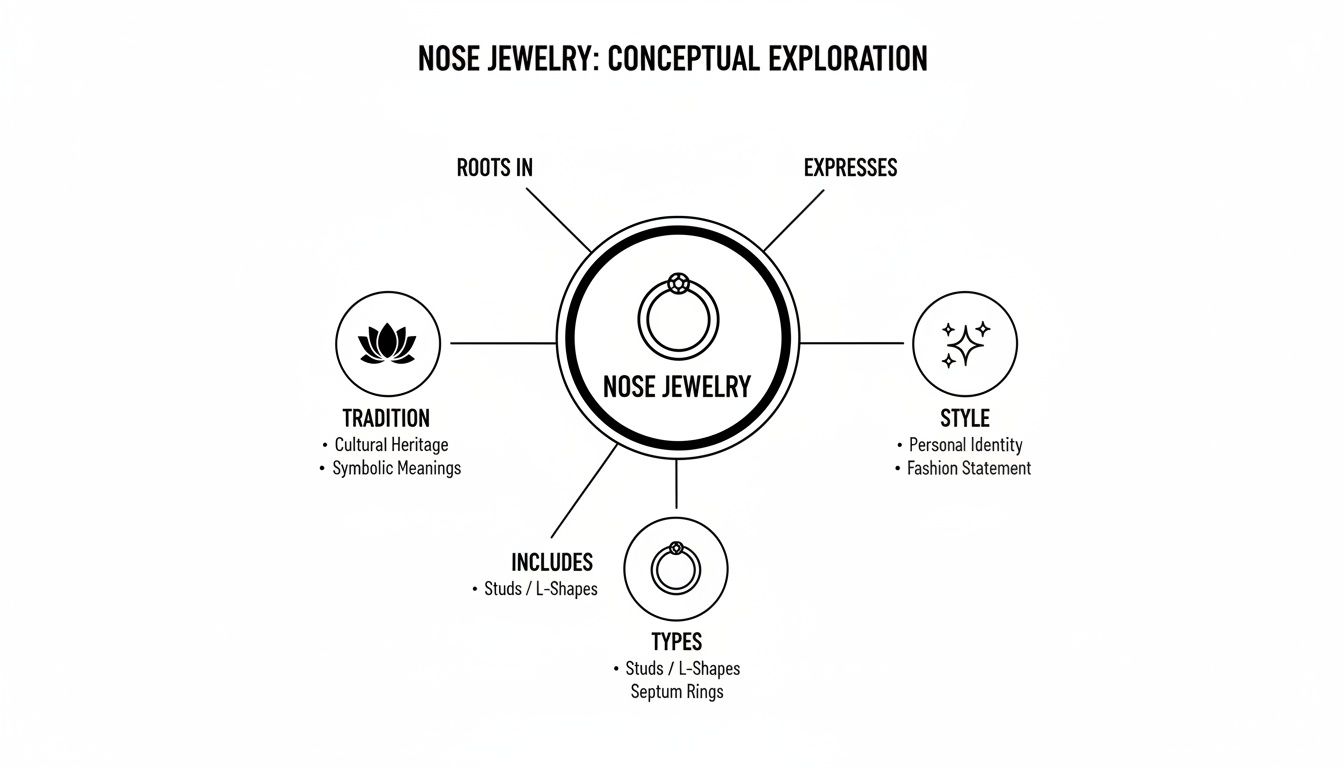
This quick visual guide breaks down nose jewelry into its core elements of tradition, style, and different types. It's a great reminder of how much thought can go into picking a single piece—blending cultural roots with modern fashion trends.
Among the diverse types of nose ring jewelry, the classic nostril screw and hoop varieties consistently lead the sales charts. This reflects a blend of comfort and bold aesthetics that we specialize in here at BodyCandy. In the global body jewelry market, projected to hit $3.48 billion by 2025, nostril hoops alone account for roughly 35% of nose piercing sales in North America. This surge is largely thanks to younger demographics—teenagers and young adults—who make up 55% of buyers and tend to favor lightweight 14k gold or surgical steel hoops for daily wear.
Making a Statement with Septum Jewelry
If nostril piercings are the classic rock of the nose ring world, the septum piercing is the bold, unapologetic headliner. This piercing is all about impact, turning a look from quietly cool to something that really makes a statement. Let's dive into the essential jewelry styles that define the septum piercing.
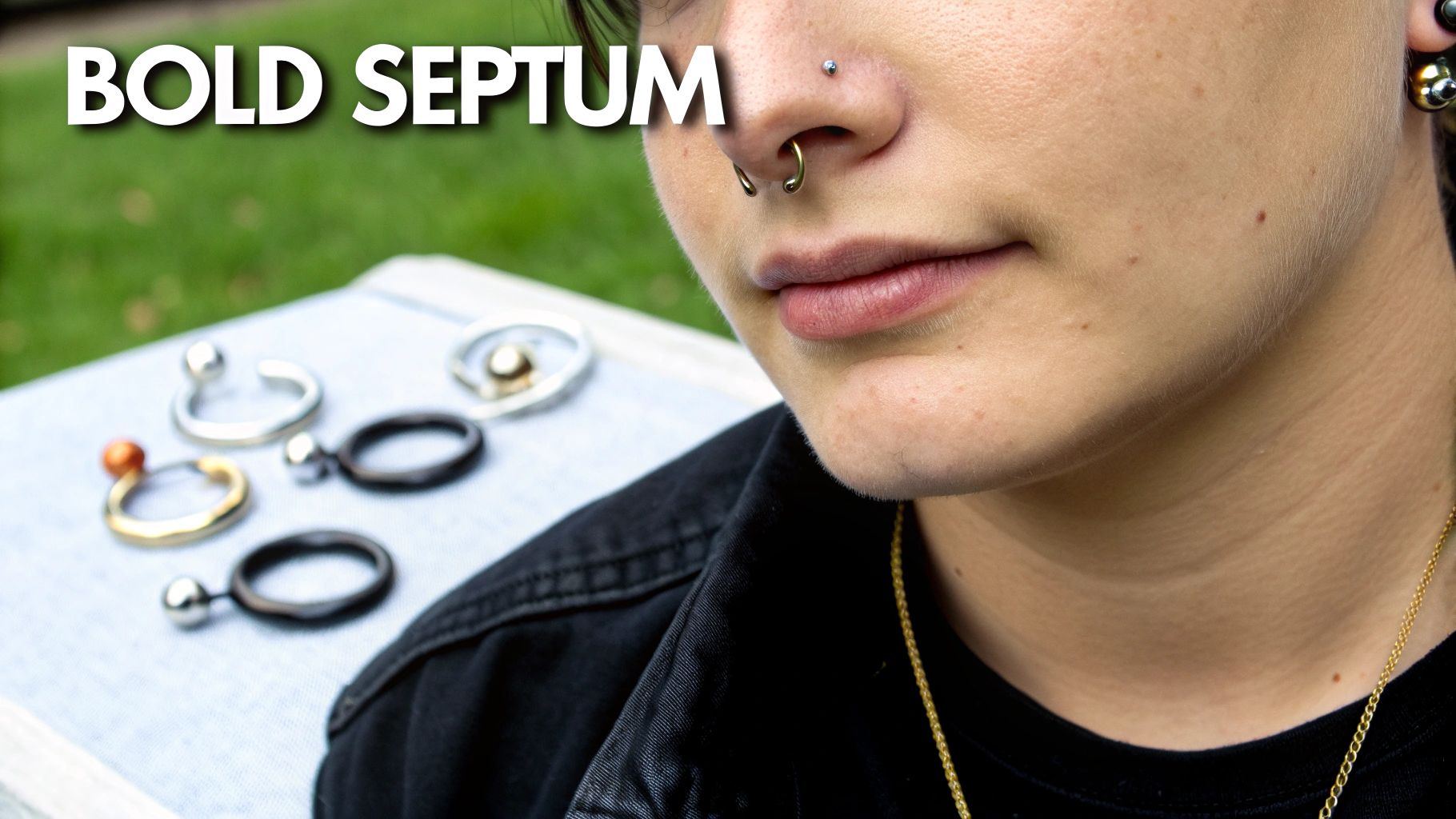
Septum jewelry has a seriously rich history, starting in ancient tribal traditions and evolving into the modern symbol of self-expression we know today. It's a fascinating story, and you can learn all about it in our deep dive on how the septum piercing went from tribal to trendy.
Captive Bead Rings: The Timeless Classic
First up is the iconic Captive Bead Ring, or CBR. You can think of this as the original septum hoop. It's a simple, smooth ring where a single bead is held in place—literally held captive—by the tension of the ring itself.
This design gives you a seamless, secure look that's not going anywhere once it's in. The only catch? Popping that bead in and out can be a bit tricky, often needing some practice or a special pair of ring-opening pliers.
- Best For: A secure, classic, and uninterrupted hoop look.
- Keep in Mind: They can be tough to change on your own, especially the smaller ones.
Septum Clickers: Effortless Style
Love the look of a full hoop but dread the thought of fumbling with a tiny bead? Say hello to your new best friend: the Septum Clicker. These are an absolute game-changer.
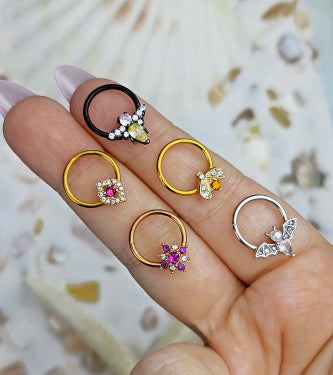
Clickers have a hinged bar that just swings open and clicks shut. That's it. This genius little mechanism makes changing your jewelry an absolute breeze. Plus, the design opens up a world of possibilities, from simple, minimalist rings to wildly ornate, gem-covered pieces that demand attention.
Septum clickers are easily one of the most popular choices today. Their blend of security, ease of use, and endless design possibilities makes them a perfect fit for both seasoned piercing pros and newcomers alike.
Circular Barbells: The Versatile Horseshoe
Last but definitely not least is the Circular Barbell, which everyone just calls the Horseshoe. This U-shaped piece has a small, screw-on bead or ball at each end, and its biggest claim to fame is its incredible versatility.
Want to show off your piercing? Wear it down for that classic, edgy vibe. Need to be a bit more low-key for work or a family thing? Just flip it up and hide it completely inside your nostrils. This "best of both worlds" feature makes it a fantastic choice, especially for a brand-new septum piercing.
From subcultural roots to mainstream appeal, septum rings have seen explosive growth. Once common among ancient Aztecs and Indigenous tribes, septum piercings now make up 20-25% of the nose jewelry market. Sales of septum styles in North America jumped 30% after 2020, with the share of men and unisex buyers growing from 25% to 35% by 2025. Today, 42% of 18 to 24-year-olds in U.S. surveys see septum rings as a form of rebellion and identity.
Choosing the Right Material for Your Nose Ring
Alright, let's talk about something that can make or break your entire piercing experience: the material your jewelry is made of. This is a huge deal, especially when you're dealing with a brand-new piercing or just have generally sensitive skin. Think of it like this: you wouldn't use a harsh, cheap soap on your face, right? The same logic applies here—the wrong metal can cause irritation, allergic reactions, and a miserable healing journey.
Picking a high-quality, body-safe material is the secret sauce to a piercing that not only looks incredible but feels great, too. A happy piercing starts with happy metal.
Implant-Grade Titanium: The Hypoallergenic Hero
If your skin throws a fit over the slightest thing, implant-grade titanium is about to be your new best friend. Seriously, this is the gold standard for a reason, and it's what professional piercers recommend above all else. Why? It’s completely nickel-free and biocompatible, which is just a fancy way of saying your body will welcome it with open arms instead of trying to fight it off.
This is the exact same material used for medical implants like bone screws and joint replacements, so you know it’s legit. It’s also surprisingly lightweight, so you can wear your favorite pieces all day without feeling weighed down.
- Pros: It's 100% hypoallergenic, tough as nails, won't corrode, and is fully endorsed by the Association of Professional Piercers (APP).
- Cons: It doesn’t quite have that warm, luxe shimmer you get from precious metals like solid gold.
14k Gold: The Timeless Classic
There's a reason gold has been the go-to for gorgeous jewelry for, well, forever. When you want that touch of timeless elegance, 14k gold is a phenomenal choice. It has that classic, warm glow that flatters literally every skin tone.
A word to the wise, though: be picky with your gold. For a fresh piercing, you absolutely want to steer clear of anything gold-plated. That thin layer of gold can flake or wear off, exposing your sensitive skin to whatever mystery metal is lurking underneath. Stick with solid 14k or 18k gold to make sure you're getting the real deal that won't tarnish or cause a fuss.
Pro Tip: Always double-check for nickel-free gold. While solid gold is fantastic, some alloys mix in nickel, which is public enemy number one for skin sensitivities. At BodyCandy, we make sure our gold jewelry is as kind to your body as it is beautiful.
Surgical Steel: The Durable All-Rounder
Looking for something that's both easy on the wallet and built like a tank? Say hello to 316L surgical steel. It's one of the most popular materials in the body jewelry world, and for good reason. It’s incredibly strong, stands up to corrosion, and holds its polished shine for ages.
This is a fantastic option for fully healed piercings, especially if you don't have a known nickel sensitivity. Now, "surgical grade" sounds super official, but it's important to know that it does contain a small amount of nickel. For most people, this is a total non-issue. But if you know you have a serious nickel allergy, titanium is definitely the safer bet.
- Pros: It’s super durable, incredibly affordable, and comes in an absolutely massive variety of styles.
- Cons: It might cause a reaction for people who are highly sensitive to nickel.
Choosing your material is a key part of your piercing journey, and we've got a ton more info to help you out. For a deeper dive, check out our complete guide on picking the right material for your nose piercing.
Bioflex: The Flexible Champion
So what do you do when you need something that isn't metal at all? That's where Bioflex comes in. This is a special medical-grade plastic that's designed to be flexible, biocompatible, and completely inert—meaning your body just ignores it. It's an awesome choice if you play sports, have an active job, or just want something ridiculously comfortable and lightweight.
Because it can bend, Bioflex puts way less stress on your piercing if it gets accidentally snagged or bumped. It's also the perfect material for retainers if you need to make your piercing less noticeable for work or school.
- Pros: It’s totally hypoallergenic, super flexible, and ideal for active situations or as a discreet retainer.
- Cons: It doesn't offer the high-end, flashy look of metal, and the style options are a bit more limited.
Understanding Nose Ring Sizes and Gauges
Alright, let's get into one of the most important—and often most confusing—parts of buying nose jewelry: the sizing. Getting the size right is everything. It’s the difference between a piece that fits like a dream and one that’s just plain awkward or irritating. But don't worry, we're about to make this whole process a lot clearer.
The two measurements you absolutely need to know are gauge and diameter.
Think of the gauge (g) as the thickness of the jewelry's post—the part that actually slips through your piercing. It works a bit like wire sizes, which can feel a little backward at first: the smaller the number, the thicker the jewelry.
So, a 16g post is actually thicker than an 18g post, and an 18g is thicker than a 20g. Once you get the hang of that, you're halfway there! Getting the gauge right is key to keeping your piercing healthy and happy in the long run.
Cracking The Gauge Code
So, what's the standard size? Most professional piercers will use either a 20g or 18g needle for a new nostril piercing. A 20g is a bit more delicate and dainty, while the 18g is a little sturdier. Septum piercings, on the other hand, usually start at a thicker 16g to better support those bolder, statement-making styles.
It’s super important to stick with the gauge you were pierced with, especially when you're still healing. Trying to shove a thicker gauge into a smaller piercing hole is a recipe for irritation, and can even damage the tissue. On the flip side, wearing a gauge that’s too thin for a long time can actually cause your piercing to shrink.
Friendly Advice: If you're ever unsure about your gauge size, the best move is to pop in and see your professional piercer. They'll know exactly what size you are and can recommend the perfect fit. When it comes to your body, it's always better to be safe than sorry!
To help you get a better visual, we’ve put together a simple guide to the most common nose piercing gauges.
Common Nose Piercing Gauge Guide
Choosing the right gauge is the first step to a comfortable fit. This table breaks down the standard sizes you’ll encounter when shopping for nose jewelry.
| Gauge Size | Millimeters (mm) | Commonly Used For | Appearance |
|---|---|---|---|
| 20g | 0.8mm | Nostril piercings | Very delicate and thin |
| 18g | 1.0mm | Nostril piercings | A popular, slightly sturdier option |
| 16g | 1.2mm | Septum piercings | The standard for most septum jewelry |
| 14g | 1.6mm | Stretched septum piercings | A thicker, bolder look |
This should give you a great starting point for finding jewelry that not only looks good but feels great, too.
Finding Your Perfect Hoop Diameter
Now, let's tackle diameter. This measurement is for all the hoop lovers out there, as it applies to any circular styles like hoops, clickers, and seamless rings. The diameter determines how snugly the ring will fit against your nose. It's measured from one inside edge of the ring straight across to the other.
A smaller diameter, like 6mm or 8mm, will give you that trendy "huggie" look that sits right up against your nostril or septum. If you're going for a more dramatic or relaxed style, a larger diameter like 10mm will give you a looser fit.
Here's a trick you can do at home: just hold a small ruler up to your piercing and measure the distance from the piercing hole to the very edge of your nostril (or bottom of your septum) in millimeters. That number is the smallest diameter you can wear for a snug fit. Want a little more breathing room? Just add a millimeter or two to find your comfort zone.
Nailing your perfect size is a total game-changer. It takes the guesswork out of shopping for all the awesome types of nose ring jewelry and ensures every piece you pick from BodyCandy's collection of nose rings will fit you perfectly.
Styling and Caring for Your Nose Piercing
Alright, you’ve got the lowdown on materials and sizes. Now for the really fun part—making your piercing look incredible while keeping it happy and healthy. Picking out jewelry is all about expressing yourself, and there are so many cool ways to do it.
One of the biggest trends right now is the 'stacked' nostril. This is where you rock multiple delicate hoops or tiny studs in different piercings on the same side for a layered look. You can also play with contrast, like pairing a simple, elegant nostril hoop with a more elaborate septum clicker. The whole point is to find pieces that feel like you, whether you're into minimalist vibes or you want to bring on the sparkle.
Nose rings aren't just a fleeting trend; they've been a powerful form of expression in cultures for thousands of years. Today, they're a huge piece of the global body jewelry market, which was valued at a massive $13.5 billion back in 2023 and is expected to soar to $20.9 billion by 2032. Here in North America, the piercing jewelry scene is worth an eye-watering $9.36 billion in 2025. Women make up about 60-70% of the buyers, and with 40% of young adults using piercings to show off their personality, it’s easy to see why this is so much more than fashion. Want to dive deeper? Check out more insights on the global body jewelry market.
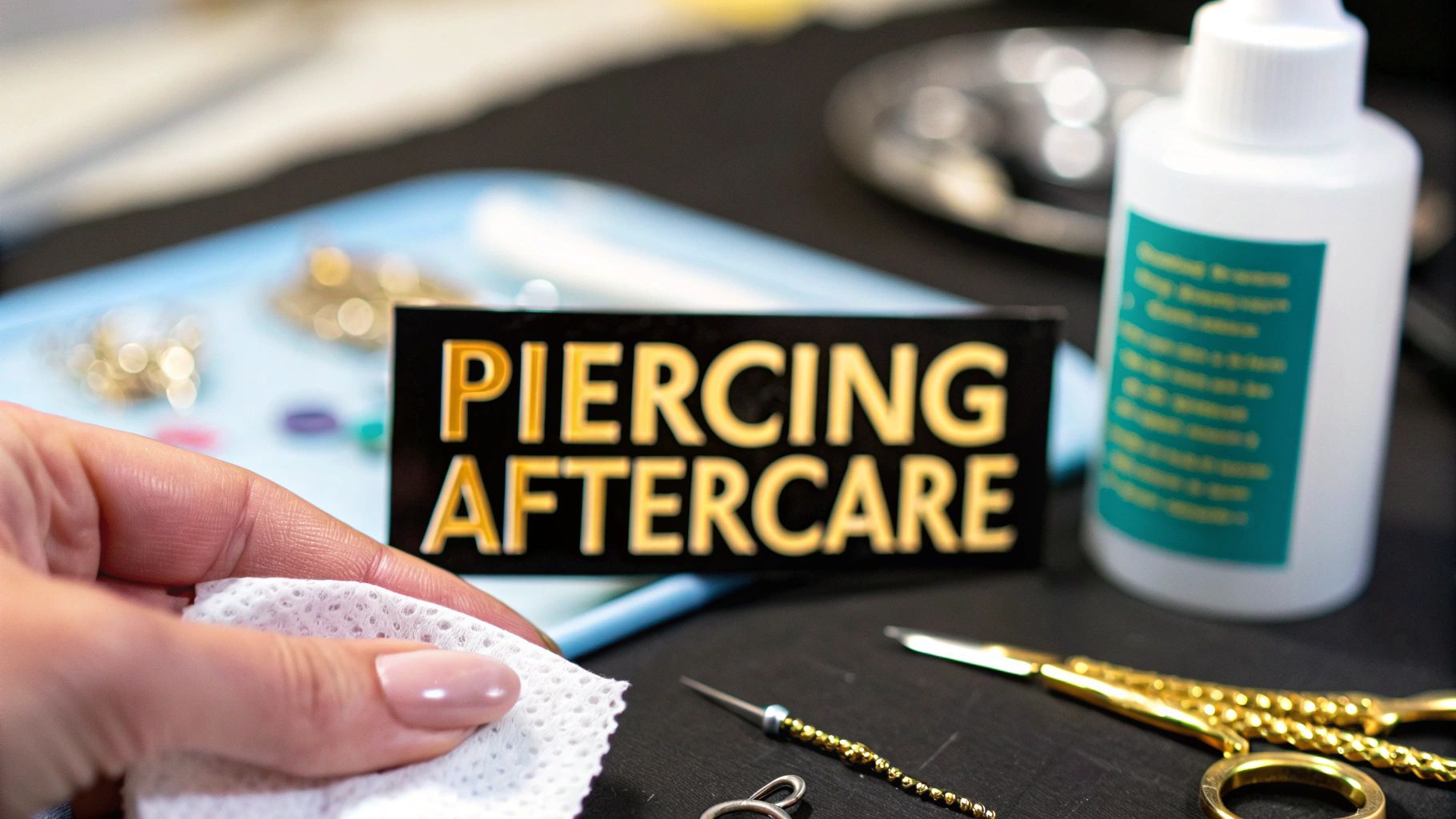
The Golden Rules of Aftercare
A gorgeous piercing is a healthy piercing, and that all boils down to great aftercare. Keeping your new piercing clean is absolutely non-negotiable if you want it to heal smoothly. Your piercer is your best friend here—always listen to their specific instructions!
But here are the universal must-dos for a happy piercing:
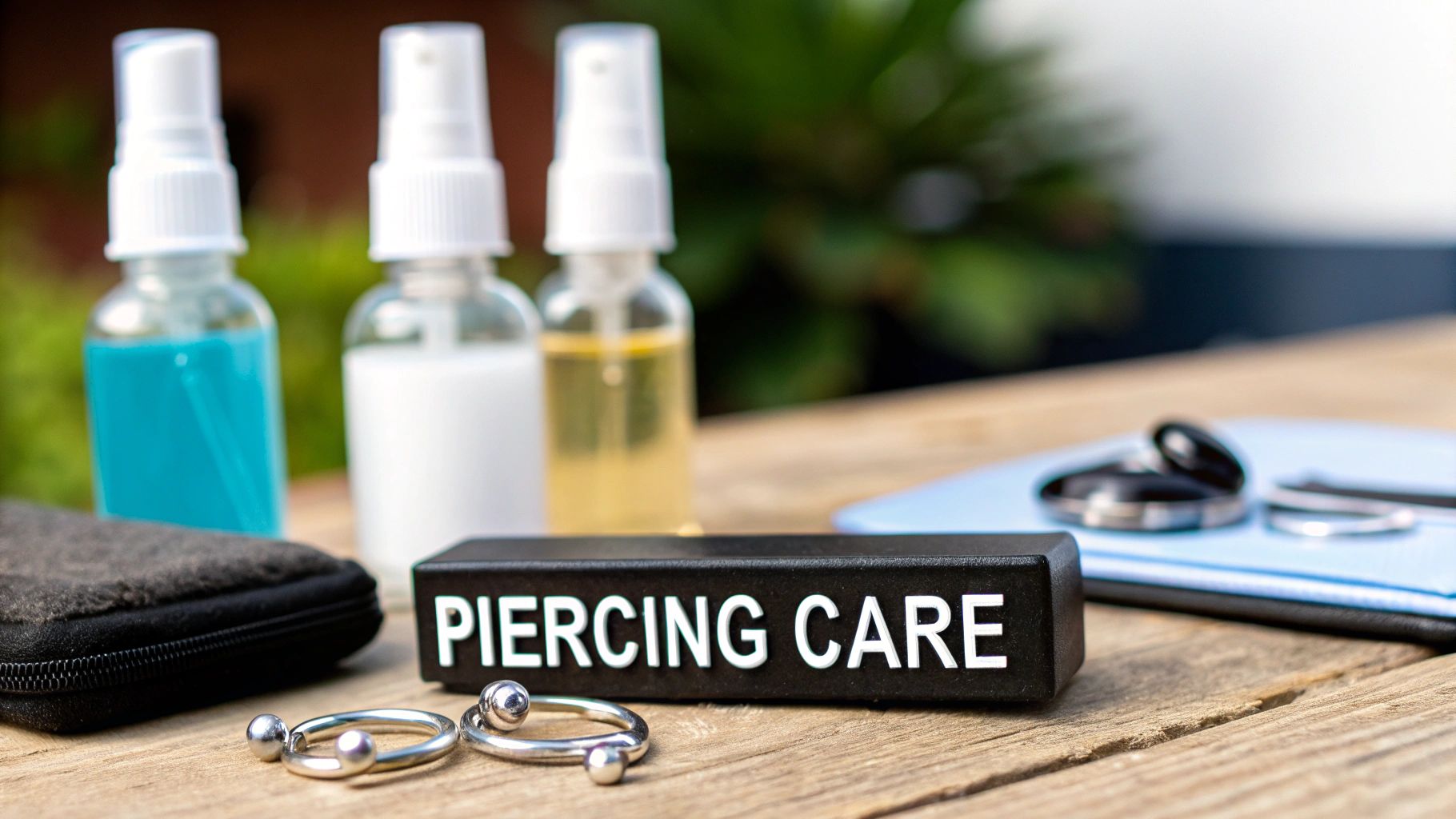
- Clean It Daily: Grab a sterile saline solution spray and give your piercing a quick spritz 2-3 times a day. Just let it air dry or gently pat the area with a fresh paper towel. Whatever you do, don't twist or turn the jewelry!
- Hands Off: This is probably the toughest rule, but it’s the most critical. Don't touch, fiddle with, or play with your new jewelry. Your hands are covered in germs that can cause serious irritation or even an infection.
- Keep It Dry: After you shower, gently pat the area completely dry. A damp piercing can be a perfect home for bacteria, so keeping things dry is a huge part of a successful heal.
What To Absolutely Avoid
Knowing what not to do is just as important as knowing what you should do. Steer clear of these common mistakes to keep your piercing out of the danger zone.
Stay away from harsh chemicals like alcohol, hydrogen peroxide, and antibacterial soaps. These are way too aggressive for a healing piercing and can cause major irritation, drying out the delicate skin and delaying your healing time.
Also, be super careful with things that can snag your new jewelry—towels, washcloths, and even pulling a shirt over your head can be risky. A bad snag is not only painful, but it can also set your healing way back. Just be patient, be gentle, and soon you'll have a beautifully healed piercing ready to show off all the stunning types of nose ring jewelry from our collections.
Got Questions About Your Nose Ring?
Still have a few things you're wondering about? You're not alone! The world of nose piercings is full of little details, and getting them right makes all the difference. We've pulled together some of the most common questions we get about the different types of nose ring jewelry to give you clear, expert answers.
What's the Best Type of Nose Ring for a New Piercing?
For a brand-new nostril piercing, your piercer will almost always start you off with a labret-style stud (the kind with a flat back) or a classic nose screw. Why these? They're incredibly secure and designed to keep movement to a minimum, which is exactly what a healing piercing needs to do its thing.
Hoops might be your end goal, but they're generally a no-go for initial piercings. They can spin and move around way too much, which can really aggravate the healing channel (piercers call this the fistula) and drag out your healing time. The bottom line is simple: always listen to your professional piercer—they know what’s best for your anatomy and a happy healing journey!
How Do I Know What Size Nose Ring to Get?
Sizing really boils down to two key things: gauge (the thickness of the post) and diameter/length. The most common gauge for a nostril piercing is 18g or 20g. Septum piercings, on the other hand, are typically a bit thicker at 16g.
Want to find the perfect hoop diameter? An easy trick is to measure the distance from your piercing hole to the very edge of your nostril in millimeters. That'll give you a nice, snug fit. If you're ever in doubt, the safest move is to ask your piercer or check out a detailed sizing guide before you click "buy."
Is It Possible to Be Allergic to My Nose Ring?
Oh, absolutely. Metal allergies are a real thing, and nickel sensitivity is the most common troublemaker. If you're noticing redness, itching, or irritation that seems like more than just normal healing, you could be having a reaction to the metal in your jewelry.
The best way to avoid all that drama is to always choose high-quality, hypoallergenic materials. Implant-grade titanium is the undisputed champion here because it's completely nickel-free. Other great options for many people are solid 14k gold and 316L surgical steel, but if you have sensitive skin, titanium is your safest bet.
How Long Until I Can Change My Nose Jewelry?
Patience is everything when it comes to piercings! A nostril piercing typically needs a full 4-6 months to completely heal up. A septum piercing is a little quicker, usually ready in about 2-3 months.
You should never, ever try to change your initial jewelry before your piercing is 100% healed. Swapping it out too early can cause some nasty irritation, damage the delicate new tissue, and seriously crank up your risk of infection. Once you're fully healed, you can finally start playing with all the awesome styles out there! We always suggest having a piercer help you with your very first jewelry change, just to be on the safe side.
Ready to put all your new knowledge to good use? Explore endless styles and find the perfect piece to show off who you are at BodyCandy. Shop our full collection of nose rings today