
















Thinking about taking the plunge into the world of intimate piercings? You've come to the right place. Genital piercings are a deeply personal and empowering way to decorate your body, connect with your confidence, and maybe even turn up the heat on sensation.
From the ever-popular Vertical Clitoral Hood (VCH) to the classic Prince Albert, there's a whole world of intimate piercings to explore, each with its own unique look and feel.
Your Guide To Intimate Piercings
So, you're curious about genital piercings. That's awesome! It's a big step, but a seriously exciting one. It’s all about claiming your body and exploring a new side of yourself. But with so many different types, it's easy to feel a little lost. That's where we come in.
Consider this your friendly, no-nonsense guide to everything you need to know. We'll walk you through the different types of genital piercings, breaking down the anatomy involved, the jewelry you can wear, and what to expect during healing, all in a way that makes sense.
Why People Choose Genital Piercings
Everyone's "why" for getting a genital piercing is different—and that's the beauty of it. For a lot of people, it's purely about the aesthetic. It's a beautiful, secret little piece of adornment that's just for you or a partner to enjoy. For others, it’s about feeling empowered and taking ownership of their body in a bold, personal way.
And then, of course, there's the pleasure factor. There's no denying the thrill of enhanced sensation. Many of these piercings are placed with the specific goal of increasing sensitivity and pleasure, adding a whole new layer of excitement to your intimate life.
A genital piercing is more than just a piece of jewelry. It's a personal statement, a way to celebrate your body, and a choice you make for you—something to make you feel incredible, inside and out.
No matter your motivation, doing your homework is the most important first step. This guide is here to give you the real-deal details so you can make a choice you'll be happy with for years to come. We'll get into the most common styles for both female and male anatomy so you can find what feels like the perfect fit for you. Let's get started.
Popular Types Of Female Genital Piercings
When you start exploring the world of female genital piercings, you’ll find an incredible range of choices. Each one offers a unique look and feel, and the best part is finding the one that perfectly suits your anatomy and what you’re hoping to achieve—whether that's a boost in confidence, a beautiful secret, or enhanced sensation.
Let's walk through some of the most popular options out there. Think of this as your personal guide to discovering the piercing that’s calling your name. We'll break down where they go, what makes them special, and what kind of jewelry you’ll start with.
The Vertical Clitoral Hood (VCH)
First up is the undisputed queen of intimate piercings: the Vertical Clitoral Hood (VCH). There's a very good reason it’s one of the most sought-after female genital piercings. It’s a vertical piercing that passes through the delicate tissue covering the clitoris, allowing the bottom ball of the jewelry to rest right against it.
Because the piercing doesn't actually go through the clitoris, the healing process is surprisingly fast—typically just 4 to 8 weeks. The main appeal, and why it's such a fan favorite, is the direct stimulation it can provide. A curved barbell is the standard starter jewelry, as it offers a comfortable fit and maximizes that pleasurable contact.
Many people choose a piercing for a combination of reasons, like empowerment, building confidence, and exploring new sensations. These motivations are all beautifully intertwined.

It’s a perfect illustration of how these motivations feed into each other, creating a cycle where feeling empowered boosts your confidence, which in turn can lead you to embrace and enhance sensation.
A Quick Look At Popular Female Genital Piercings
With so many beautiful options, it can be helpful to see them side-by-side. Here’s a quick comparison of the most common placements to help you get a feel for what might be right for you.
| Piercing Type | Anatomy Placement | Common Initial Jewelry | Primary Appeal |
|---|---|---|---|
| Vertical Clitoral Hood (VCH) | Vertically through the clitoral hood | Curved Barbell | Sensation & Fast Healing |
| Horizontal Clitoral Hood (HCH) | Horizontally through the clitoral hood | Captive Bead Ring | Sensation & Aesthetics |
| Inner Labia | Through the inner labia (labia minora) | Captive Bead Ring | Aesthetics & Symmetrical Looks |
| Outer Labia | Through the outer labia (labia majora) | Captive Bead Ring | Aesthetics & Larger Jewelry |
| Christina | Vertically at the top of the pubic mound | L-Bar or Surface Bar | Purely Aesthetic |
| Triangle | Horizontally under the clitoral shaft | Curved/Circular Barbell | Intense Internal Sensation |
This table gives you a snapshot, but remember, the best piercing is always the one that works with your unique anatomy and personal goals.
Labia And Christina Piercings
Moving on, labia piercings offer a fantastic way to create a beautifully decorated and often symmetrical look. You can get them on the inner labia (labia minora) or the fleshier outer labia (labia majora).
- Inner Labia Piercings: These are placed through the thin, delicate folds of skin closest to the vaginal opening. They tend to heal quite easily and look incredible with captive bead rings or circular barbells.
- Outer Labia Piercings: These go through the outer lips. Because the tissue is thicker, they take a bit longer to heal but can support larger, more eye-catching jewelry once they do.
Another stunningly beautiful choice is the Christina piercing. This is technically a surface piercing, located right where the outer labia meet at the top of the pubic mound. It’s almost entirely for aesthetics—a little private sparkle that sits beautifully right at the top. Due to its placement, your piercer will typically use a custom-bent L-bar or a surface barbell to reduce pressure and help prevent rejection.
Unique And Advanced Placements
Ready to look at some more advanced options? The Triangle piercing is a horizontal piercing that passes under the base of the clitoral shaft, just behind the clitoris. This one is highly dependent on your anatomy, but for those who can get it, it's famous for providing a very intense and unique kind of internal stimulation. Because it’s so complex, finding a piercer with extensive experience is absolutely critical.
The Triangle piercing is an advanced choice that requires specific anatomy—the tissue at the base of the clitoral hood must be pronounced enough for a safe and effective placement.
Then there’s the Princess Diana piercing. Think of it as a spin on the VCH. Instead of a single piercing in the center, you get two symmetrical vertical piercings, one on each side of the clitoral hood. This creates a gorgeous framed look and can offer stimulation from multiple points. Like the VCH, small curved barbells are the typical jewelry choice.
The demand for these piercings is well-established. The VCH has been a top choice for years. Even with studio closures in 2020, one shop still reported performing 143 VCH piercings, which really speaks to its lasting popularity. If you're curious to learn more about styling these piercings, you should check out our deep dive into body jewelry for ladies' piercings.
Exploring Male Genital Piercings
Just like with female anatomy, the world of male genital piercings is full of different options, each with its own look and feel. Whether you're after something subtle and classic or a bit more daring, there’s a piercing out there that will match your style.
Think of this as your guide to the different placements, the jewelry that goes with them, and what makes each one unique. We'll cover the piercings that many people start with, along with some of the more advanced options you can explore.
The Prince Albert and Frenum
When most people think of male genital piercings, the first one that usually comes to mind is the Prince Albert (PA). It's hands-down one of the most well-known and requested male intimate piercings.
- Location: The PA is a ring-style piercing that goes in through the urethral opening and comes out on the underside of the glans, to one side of the frenulum.
- Healing Time: It's popular for a reason! The healing process is fairly straightforward, typically taking about 6 to 10 weeks.
- Recommended Jewelry: A captive bead ring or a circular barbell is the classic choice for starting out. They sit comfortably and look great. Many wearers and their partners report that it enhances sensation.
Another incredibly popular option is the Frenum piercing. This is a horizontal piercing through the thin band of tissue (the frenulum) on the underside of the shaft, right below the head. It's often considered less intense than a PA and also heals quite fast.
The Frenum Ladder and Other Shaft Piercings
If you like the look of a single Frenum, you can take it a step further with a Frenum Ladder. It's exactly what it sounds like: a series of Frenum piercings that run down the underside of the shaft.
This creates a striking "ladder" effect and is an awesome way to customize your anatomy with multiple pieces of jewelry. For both single Frenum piercings and ladders, straight barbells are the standard. You can have a lot of fun playing with different colored and styled ends to make the look truly your own.
The popularity of these piercings isn't just something we hear about in the studio. Research shows that male genital piercings are a very intentional choice for self-expression, often among a more mature crowd.
One study, for example, showed just how dominant these choices are. It found that the Prince Albert was the pick for 56% of participants, making it the most common male genital piercing by a long shot. The Frenum and Frenum Ladder were also favorites, chosen by 36% of the men surveyed. You can dive deeper into these trends by reading the full study on male genital piercings.
Advanced and Trans-Scrotal Piercings
For those of you looking for something more adventurous, trans-scrotal piercings make a bold and powerful statement. These are definitely more advanced and require a very experienced professional piercer.
- Apadravya: This is a vertical piercing that passes straight through the glans (the head), usually from top to bottom. It often goes through the urethra.
- Ampallang: Think of this as the horizontal version of the Apadravya. It passes through the glans from side to side.
Both of these piercings are a serious commitment. They have a much longer healing time—often 6 months to a year or even more—and are considered some of the more intense genital piercings to both get and heal. Long straight barbells are used to accommodate the anatomy correctly.
Scrotum and Surface Piercings
Finally, you have piercings that are all about decorating the scrotum and the areas around it.
A popular choice here is the Hafada, which is a surface piercing placed on the scrotum. It's common to get them symmetrically with one on each side, but a single Hafada looks just as good.
Another option is the Guiche (pronounced geesh). This is a surface piercing placed on the perineum—that's the patch of skin between the scrotum and the anus. For both Hafada and Guiche piercings, your anatomy and your piercer's careful placement are everything for successful healing.
These are typically started with captive bead rings or curved barbells, depending on what works best for your body. They are primarily for aesthetics and open up yet another way to personalize your body.
Finding Your Perfect Genital Jewelry
So, you're thinking about the different kinds of genital piercings and getting hyped. Now we get to the best part—picking out the bling! Choosing your jewelry is way more than just grabbing a cool design; it's one of the most critical decisions for a smooth healing process and your long-term comfort.
Let's walk through your personal shopping guide for intimate piercings. We'll get into the essential materials, the most common jewelry styles, and how to nail that perfect fit so you can show off your new piercing with total confidence.

Why Material Matters Most
When you're dealing with a fresh piercing—especially in such a delicate area—the material of your jewelry is absolutely non-negotiable. Your body is working hard to heal, and the last thing you want is for it to be fighting off irritation from a cheap, low-quality metal. This is where "implant-grade" needs to become your new mantra.
For that initial piece of jewelry, you should only ever consider materials that are proven to be biocompatible. This just means your body is way less likely to freak out and have a bad reaction to them.
- Implant-Grade Titanium (ASTM F-136): This is the undisputed champion for a reason. It's incredibly lightweight, completely nickel-free, and one of the absolute safest metals you can put in a new piercing.
- 316L Surgical Steel: This is a solid, popular choice, but it’s crucial to know that it contains trace amounts of nickel. Most people handle it just fine, but if you have a known nickel sensitivity, titanium is always the safer road to take.
- 14k or 18k Gold: If you've got your heart set on the classic look of gold, make sure it’s solid gold, not gold-plated. Plating can chip and flake off into a healing piercing, which causes major irritation. Stick to nickel-free alloys and honestly, save the gold for after your piercing is fully healed.
Choosing a high-quality, implant-grade material isn't just a suggestion; it's the foundation of a healthy, successful healing journey. It drastically cuts down the risk of allergic reactions, infection, and other nasty complications.
Matching Jewelry Styles to Piercings
Once you’ve locked in the right material, it’s time to look at the different jewelry styles. Each piercing has a go-to style that’s best suited for its specific anatomy and healing needs.
-
Curved Barbells: These are the default for a huge number of genital piercings. Their gentle curve follows the body's natural shape, making them the perfect choice for Vertical Clitoral Hood (VCH) and some Hafada piercings.
-
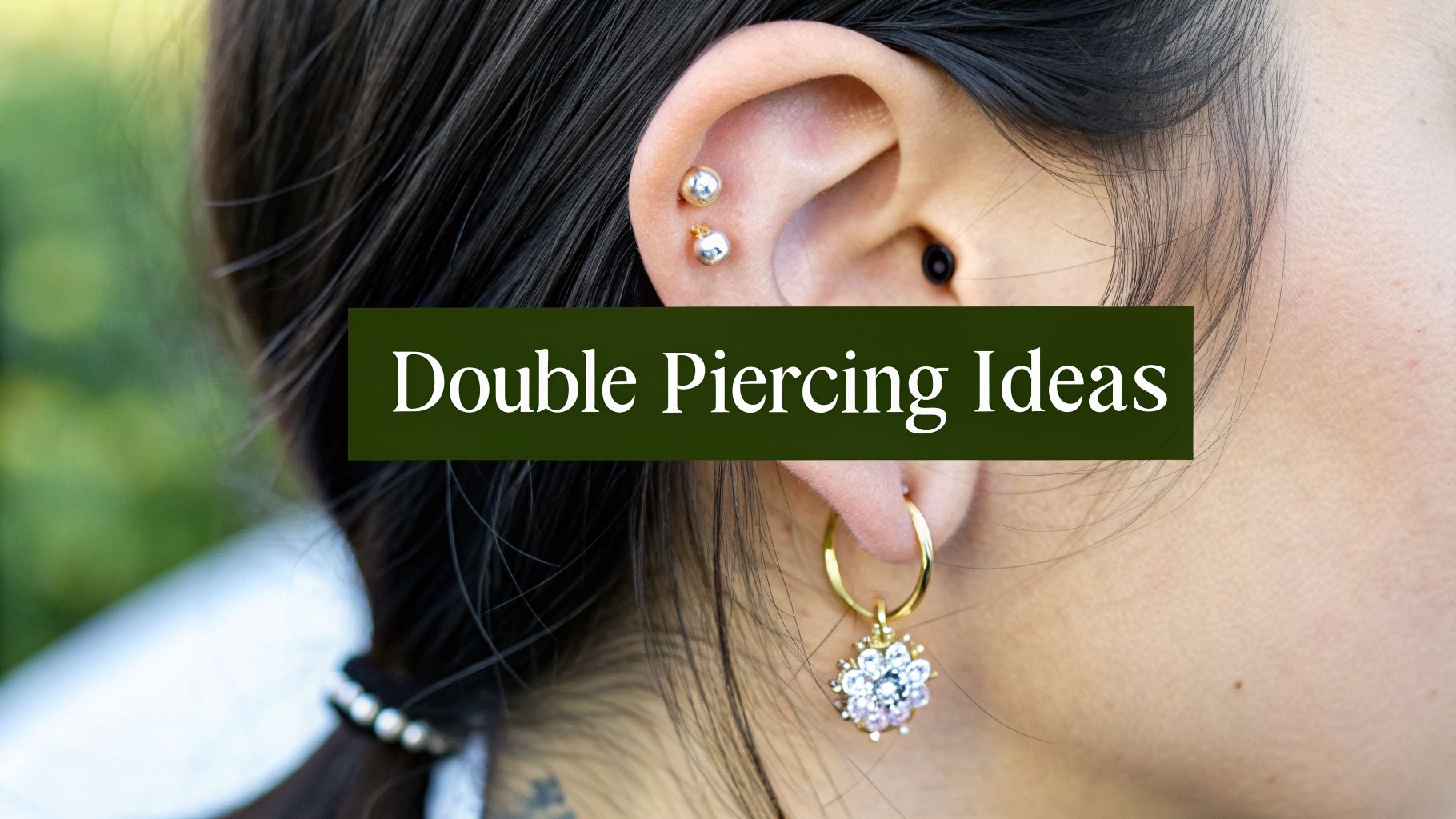
Captive Bead Rings (CBRs) & Circular Barbells: A true classic! These ring styles are ideal for Prince Albert (PA), labia, and Frenum piercings. They give a comfortable fit and a look that never goes out of style.
-
Straight Barbells: Just like the name says, these are straight posts with balls on each end. They are the number one pick for Frenum, Ampallang, and Apadravya piercings, where you need a straight path through the tissue.
Knowing how jewelry is put together can also help you make smarter choices. For instance, understanding the difference between internally and externally threaded jewelry is a game-changer. Check out our guide to learn more about internally vs. externally threaded body jewelry and see why one is so much better for a healing piercing.
Getting the Right Size and Fit
Last but not least, you need to make sure your jewelry is the right size. This boils down to two key measurements: gauge and length/diameter.
-
Gauge (Thickness): This is the thickness of the post itself. Most genital piercings use a thicker gauge, usually between 14g and 10g, to provide stability and prevent the dreaded "cheese-cutter" effect. Your piercer will choose the right initial gauge for you.
-
Length or Diameter: For barbells, this is the post length. For rings, it's the internal diameter. The initial jewelry your piercer uses will always be a bit longer or larger to leave room for swelling.
After you're fully healed, you can switch to something with a more snug fit. But never, ever guess your size! The only way to find your perfect fit is to get measured by your piercer or to carefully measure a piece of jewelry you already own that fits well. Getting the size right is the key to a piercing that is comfortable, looks amazing, and stays healthy for years to come.
The Piercing Process And Healing Journey
Knowing what you’re in for can make a world of difference, especially when it’s an intimate piercing. Being prepared for everything—from the moment you walk into the studio until you're completely healed—is the key to feeling confident and in control. Let's break down the entire process.
Your very first step, and the most critical one, is to find a reputable, highly experienced piercer. Let's be clear: for any genital piercing, this is absolutely non-negotiable. You're looking for a clean, professional studio with a solid portfolio of healed intimate piercings that you can look at. A great piercer will make you feel comfortable and patiently answer every single question you have during your consultation.
What To Expect During Your Appointment
Once you're in the piercing room, the actual process is typically quite quick and professional. It’s all about precision, safety, and maintaining a sterile environment.
First, your piercer will chat with you to confirm the exact placement and check to make sure your anatomy is a good fit. They'll then thoroughly clean the area and use a skin-safe marker to map out the entry and exit points. This is your chance to take a look in a mirror and give the final "okay"—make sure you love the placement before it's permanent!
The piercing itself is over in a flash. Your piercer will probably ask you to take a deep breath in and will perform the piercing as you breathe out. You'll feel a quick, sharp pinch, and then it's all done. To finish, they'll insert your starter jewelry. This will be a high-quality, implant-grade piece that's a little longer than usual to give any swelling some room.
The entire procedure, from marking to jewelry insertion, is typically very fast. The most critical part is the piercer’s expertise in ensuring correct placement and using sterile, single-use equipment like tri-bevel needles for a clean and precise process.
Mapping Out The Healing Timeline
Now comes the healing journey! Patience and consistent aftercare are going to be your two best friends. Healing times can vary wildly from person to person and piercing to piercing, depending on your body's unique healing abilities and how strictly you follow your aftercare routine.
Some piercings, like the Vertical Clitoral Hood (VCH), are famous for their speedy recovery, often healing in as little as 4 to 8 weeks. This is because the piercing passes through very thin, vascular tissue that gets a lot of blood flow. On the flip side, more complex piercings will require a much longer commitment.
Here’s a general idea of what to expect for healing times:
- Quick Healers (1-3 Months): VCH, Frenum, Inner Labia
- Moderate Healers (3-6 Months): Prince Albert, Outer Labia, Christina, Triangle
- Long-Term Healers (6+ Months): Apadravya, Ampallang, Guiche
Keep in mind, these are just estimates. Your piercer will give you a more personalized timeline for your specific piercing. During this healing period, it’s crucial to follow their aftercare instructions to the letter to avoid any complications and make sure your new piercing heals beautifully. Understanding this timeline from the start sets you up for a successful healing process and a stunning piercing you'll love for years to come.
Your Essential Aftercare And Cleaning Routine

Think of aftercare as the final step in getting your piercing. It’s not glamorous, but it is absolutely non-negotiable for a happy, healthy piercing. Being consistent here is what protects your new investment and ensures it heals up perfectly.
A solid routine is your best defense against infection and irritation. It’s what gets you to the fun part—showing off that new jewelry—as quickly and safely as possible. So, let’s get you set up with a simple plan that takes all the guesswork out of healing.
The Do's And Don'ts Of Daily Cleaning
The golden rule of aftercare is to keep it simple. Your body is a healing machine; your job is just to provide a clean, irritation-free environment for it to do its work. The best tool for this is a sterile saline solution.
You'll need to clean your new piercing one to two times daily. Just spray the saline directly onto the area and let it sit for a minute. This helps soften up any "crusties" (which is just dried lymph fluid and totally normal). Then, gently pat the area completely dry with a clean, disposable paper product like a paper towel. That's it!
Your piercer's instructions are your new best friend. Adhering strictly to their aftercare plan, especially regarding cleaning frequency and products, is the single most effective way to ensure a smooth and successful healing process.
Just as important as what you should do is what you absolutely must not do. These common mistakes can throw a real wrench in your healing journey.
- No Harsh Chemicals: Stay far, far away from alcohol, hydrogen peroxide, antibacterial soaps, and ointments. These are all way too aggressive for a healing wound and will cause more harm than good.
- Hands Off: Don't touch, twist, or play with your piercing, especially with unwashed hands. This is the number one way to introduce bacteria and trigger an infection.
- Avoid Soaking: For the entire initial healing period, you have to stay out of pools, hot tubs, lakes, and oceans. These are basically bacterial parties that your new piercing is not invited to.
Navigating Intimacy And Physical Activity
This is probably the biggest question on everyone's mind: when can things get back to normal, especially sexually? The honest-to-goodness answer is you need to wait. Your piercer will give you a specific timeline, but plan on abstaining from any sexual activity that puts pressure on or introduces friction to the piercing for at least the first few weeks.
When you do get the all-clear, open communication with your partner is everything. It's also smart to use a barrier, like a condom, to protect the piercing from bacteria and friction. No matter what, always give the piercing a good clean with your saline solution right after.
This waiting period is critical for all types of genital piercings to heal without any drama. For a deeper dive into the best products and methods, we highly recommend our guide on H2Ocean aftercare products. Following this simple but essential routine is your ticket to a beautifully healed piercing you'll love for years to come.
Frequently Asked Questions About Genital Piercings
It's completely normal to have a ton of questions floating around in your head when you're considering an intimate piercing. We get it. To help clear things up, we've put together some of the most common questions we hear, along with some straight-up, honest answers.
From the "ouch" factor to what happens in the bedroom afterward, we’re here to give you the real-world info you need. Let’s dive in.
How Much Do Genital Piercings Hurt?
Alright, let's tackle the big one: pain. The honest-to-goodness truth is that it's different for every single person. Most people will tell you it feels like a quick, sharp pinch that’s over before you can really even process it. A lot of clients are actually surprised it’s way less intense than they imagined.
As a general rule, piercings that go through thinner tissue—think a Vertical Clitoral Hood (VCH) or a Frenum—tend to be on the lower end of the pain scale. Piercings that pass through much denser tissue, like an Apadravya, are known to be more intense. But remember, that sharp feeling is temporary!
How Will My Genital Piercing Affect Sex?
Let's be real, this is a huge reason many people explore the different types of genital piercings in the first place—to add a little something extra for themselves or a partner! But first things first: you absolutely have to let it heal completely. Your piercer will give you a specific timeline, but you should plan on avoiding sexual activity for at least a few weeks.
Once it's fully healed, that's when the fun can really begin. A VCH is famous for increasing clitoral stimulation, while a Prince Albert can introduce a whole new kind of pleasure for both partners. The key, always, is open and honest communication with your partner as you figure out what feels good for both of you.
How Do I Find A Reputable Piercer For This Type Of Piercing?
Finding the right professional is, without a doubt, the most important step in this whole process. When it comes to an intimate piercing, you need a seasoned expert. No exceptions. A great place to start is by looking for piercers who are members of the Association of Professional Piercers (APP), as they are committed to the highest standards of safety and hygiene.
Don't be afraid to ask to see a portfolio, specifically of healed genital piercings. A skilled piercer will be proud to show you their work and will patiently answer every single one of your questions. The studio itself should be spotless, professional, and make you feel totally at ease. Never, ever settle for less when it comes to your safety and the piercer's experience for this kind of modification.
Ready to find the perfect jewelry to express your style? At BodyCandy, we have a massive collection of high-quality, body-safe jewelry for every piercing. Check out our full collection at https://bodycandy.com and find your new favorite piece today.