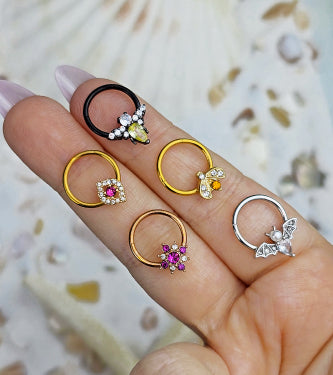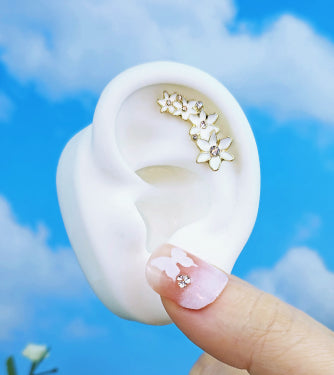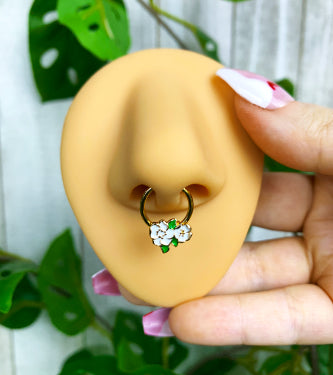




















“Always buy solid gold” is decent shopping advice, but it skips the detail your piercing cares about: which alloy touches your skin. A mystery solid-gold piece isn't automatically a better choice than clearly specified jewelry, and gold plating isn't a single quality level.
The useful way to compare solid gold vs gold plated is to check the karat, construction, exposed metals, and coating thickness. That tells you whether you're buying an everyday favorite or a cute occasional switch-up, without expecting either one to do a job it wasn't built for.
Solid Gold vs Gold Plated at a Glance
Solid gold and gold plated compared
| Feature | Solid Gold | Gold Plated |
|---|---|---|
| Construction | Gold alloy throughout the piece | Gold coating over a base metal |
| Gold content | 14K about 58.3%, 18K 75%, 24K about 99.9% | Only a surface layer of gold |
| Wear behavior | Doesn't wear through a coating; can scratch | Coating wears at edges and contact points |
| Skin contact | Alloy determines compatibility; nickel-free alloys available | Base metal becomes relevant when coating wears |
| Color over time | Holds its underlying color with regular care | Fades as the coating thins |
| Price | Higher, tied to gold content | Lower upfront, may need replacing |
| Best use | Daily wear, fresh or sensitive piercings when the alloy is suitable | Occasional wear, trends, tight budget |
The karat proportions and construction distinction follow the Federal Trade Commission's jewelry buying guidance; the practical difference is gold distributed through an alloy versus gold applied over another metal.
Solid nickel-free gold in a suitable alloy is the safer default for daily wear and fresh or sensitive piercings, with your piercer's approval. Plated pieces make sense for occasional wear, trend experiments, or a tight budget when the seller discloses the coating and base metal.
Karat tells you the gold proportion in the metal; plating tells you how the gold was applied.
Think of the table as a shopping filter, not a promise that solid gold is indestructible or that every plated piece is disposable. A well-made piece still needs the right size, smooth finish, secure closure, and a material that works for your body.
For a healed piercing you change occasionally, spending less can be completely reasonable. For a piece you want to leave in through your regular routine, reliable composition matters more than saving on the initial purchase.
Use this visual comparison to separate the finish from the metal underneath.
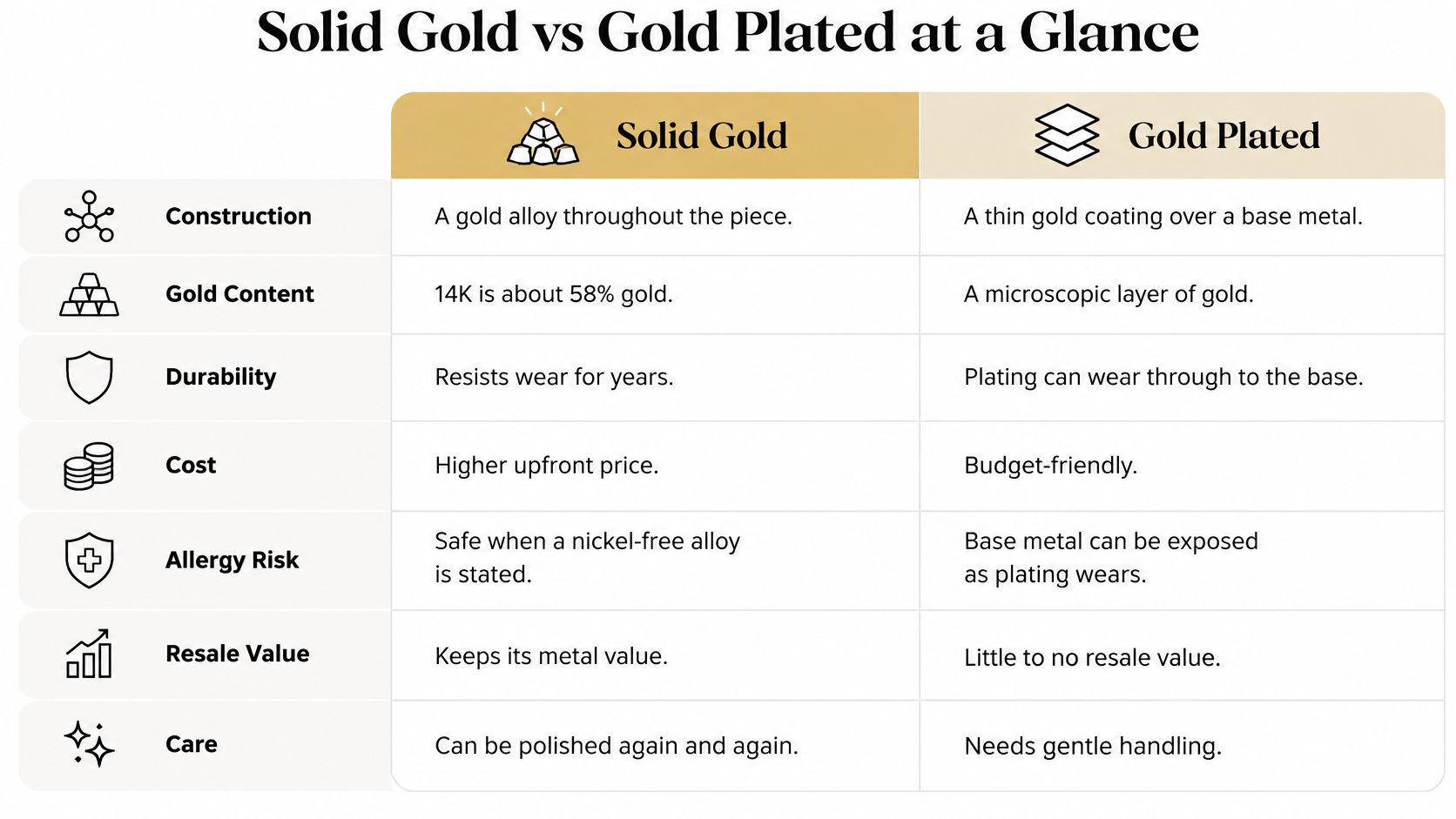
The strongest listing doesn't just say gold. It gives you enough material information to judge how that particular piece fits your wear habits.
What Solid Gold and Gold Plating Are Made Of
Solid gold is a gold alloy throughout the item, not pure gold by default. In FTC labeling, solid also distinguishes non-hollow construction, so gold content and physical construction deserve separate attention.
Karat measures gold in parts out of a whole: the FTC consumer guide explains that 14K contains 14 parts gold and 10 parts other metals, approximately 58.3% gold by mass. Those other metals aren't automatically a bad thing. Jewelers use them to adjust strength, working properties, and color.
Karat and gold content
| Karat | Gold content | What it means for jewelry |
|---|---|---|
| 24K | About 99.9% | Very soft, rarely used for piercing jewelry |
| 18K | 75% | Rich color with more strength from alloy metals |
| 14K | About 58.3% (14 of 24 parts) | Durable and the most practical karat for many body-jewelry designs |
Higher purity doesn't automatically mean better piercing jewelry. You also need a piece that keeps its shape and supports its setting or closure under normal handling.
Yellow-gold alloys often contain silver and copper. White-gold formulations may contain nickel, so the color alone can't tell you whether the piece suits a known metal sensitivity.
What's underneath gold plating
A plated piece starts with a base metal, such as brass or copper, and receives a thin gold-alloy coating. Some constructions also include an intermediate layer, which means the visible finish isn't necessarily the only material between your skin and the core.
That's why a plated item can contain real gold without being solid gold. The coating describes the surface, not the composition of the entire piece.
For a wider material vocabulary, our guide to what body jewelry is made of helps you separate metal names from decorative finishes.
Read the listing before the sparkle wins
- Confirm the karat. Check that the stamp and written description agree.
- Identify the construction. Solid, filled, and plated aren't interchangeable.
- Treat color words cautiously. Gold tone and gold color describe appearance, not verified gold content.
A magnet isn't a reliable solid-versus-plated test. Some base metals aren't magnetic, and a closure can contain components that behave differently from the decorative part.
Weight, edge wear, and a matching stamp can offer clues, but none authenticates a piece by itself. Leave acid testing to a jeweler, especially with small piercing jewelry where an improvised test can damage the surface you need to keep smooth.
How Long the Gold Layer Lasts Before It Wears Through
Gold layer thickness and typical wear
| Gold layer | Minimum thickness | Gold requirement | Typical wear |
|---|---|---|---|
| Gold electroplate | 0.175 microns | At least 10K gold | Months to a few years under suitable wear conditions |
| Older gold plate benchmark | About 0.5 micron (20 millionths of an inch) | Gold layer on significant surfaces | Generally shorter-lived than heavy plating under comparable conditions |
| Heavy plating | 2.5 microns or more | Gold layer over base metal | Substantially more wear resistance |
| Gold filled | 4.3 microns on significant surfaces | At least 10K gold, at least 5% of total metal weight | Heavier layer, generally longer life than ordinary electroplate |
| Solid gold | Not a layer; gold throughout | 10K to 24K alloy | Doesn't wear through a coating; can scratch or dent |
The electroplate and historical gold-plate benchmarks appear in FTC jewelry guidance discussed in its rulemaking document, which also describes gold-filled construction with at least 4.3 microns on significant surfaces and one-twentieth of total metal weight in the gold layer.
For practical wear expectations, AJ Luxe's plating guide describes standard plating as lasting months to a few years and identifies 2.5 microns or more as a thicker coating with greater wear resistance.
These aren't expiration dates. The table combines labeling benchmarks with conditional wear guidance, and a minimum coating specification isn't a service-life guarantee.
Where the finish goes first
Look at the places that rub, turn, or get handled. Ring edges, clasps, closure points, and the parts of piercing jewelry that contact surrounding surfaces usually show wear before protected decorative areas.
Lip and tongue jewelry deserve particular caution because movement and contact are part of the placement. A coating that survives happily on an occasional pendant doesn't automatically suit a constantly moving piercing.
Sweat, lotions, chlorine, clothing abrasion, and repeated polishing can make the finish deteriorate faster. Once you see brassy edges or a different-colored patch, cleaning won't put the missing gold back.
Practical rule: Compare coating thickness only after you've checked the base metal and decided whether plated jewelry suits the placement.
Gold filled isn't another name for plated
Gold-filled jewelry has a mechanically applied gold layer and a defined gold-weight component. That makes it materially different from ordinary electroplating, but it still isn't a gold alloy throughout.
Don't treat the category as automatic approval for a fresh piercing. Construction tells you how the item was made, not whether every exposed surface, joint, and underlying material is appropriate for healing tissue.
Before buying plated jewelry, ask for:
- Thickness in microns. A measurable specification beats premium-sounding wording.
- Gold karat. The coating's purity is separate from its depth.
- Base metal and intermediate layers. Both matter if the surface becomes damaged.
- Plating method. Ask whether the seller means flash, standard, or heavy plating, and request the actual thickness behind that label.
If those details are missing, buy with occasional-fashion expectations, not everyday-piercing expectations.
Skin Sensitivity Depends on the Alloy, Not the Label
Gold color isn't a skin-safety certification. Your skin contacts a material, not the reassuring word on the product page.
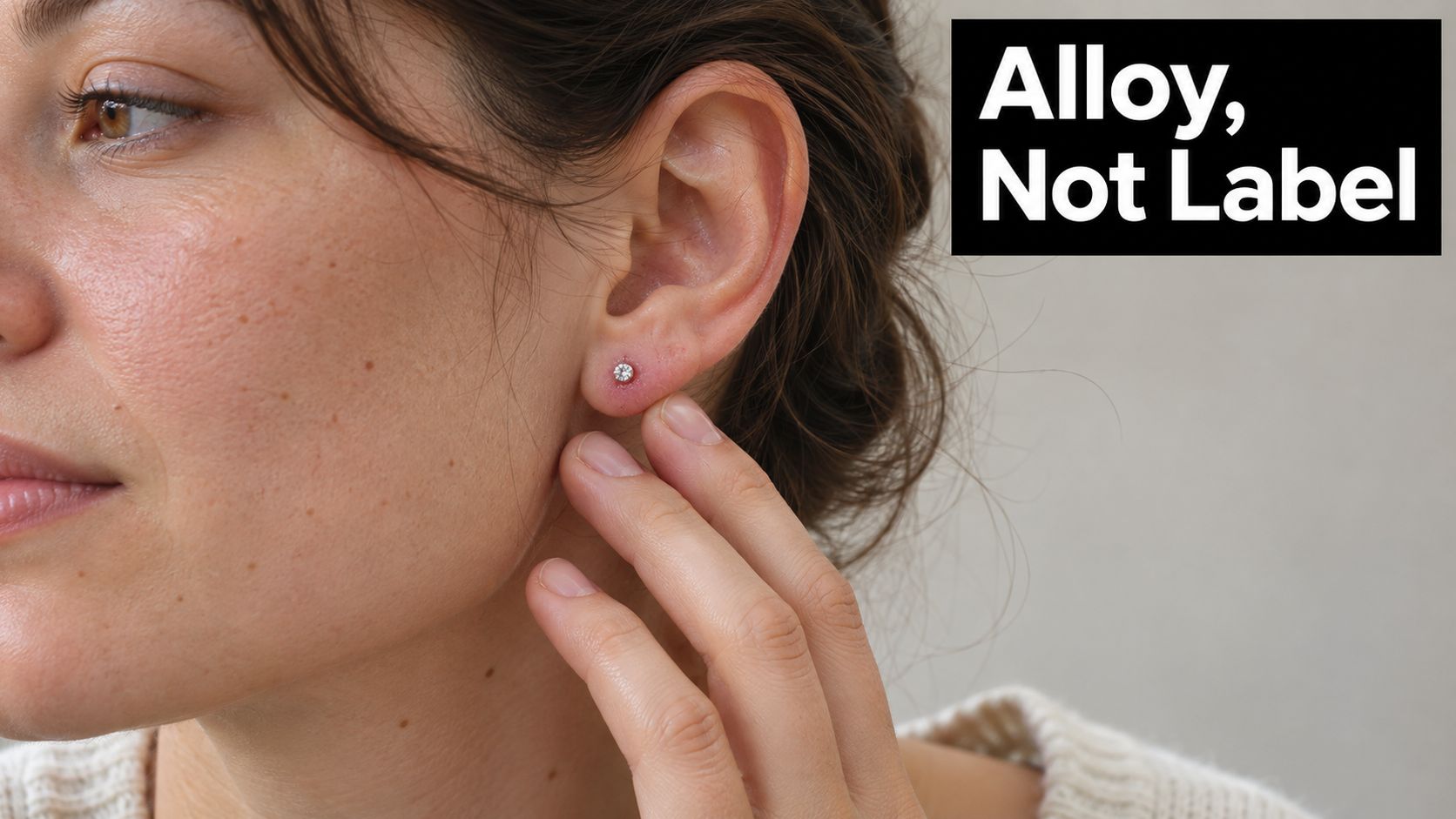
DermNet's jewelry-allergy guidance identifies nickel and cobalt as common causes of jewelry allergy and explains that plating can initially separate skin from an allergenic metal before wearing away over months or years. That delayed exposure explains why a piece can seem fine initially and become a problem later.
A small stud still deserves a proper material check, especially if it stays in place for long stretches.
Solid doesn't automatically mean hypoallergenic
Even very gold-rich jewelry needs scrutiny. 24K is about 99.9% gold and 18K is 75%, while lower karats leave more room for alloying metals; what those metals are matters more than assuming a higher price means no reaction.
White gold commonly uses nickel, while yellow gold may use silver and copper. A documented nickel-free formulation is more useful than guessing from whether a piece looks warm, pale, or rosy.
Solid 14K or 18K offers a more predictable long-term composition because there's no thin decorative gold layer to wear away. That's an advantage, not a guarantee that every alloy will agree with every wearer.
Your material verification list
- Confirm the karat. Don't settle for a gold-colored product photo.
- Look for a nickel-free alloy statement. Hypoallergenic alone isn't a complete specification.
- Ask what the base metal is. For plated jewelry, identify any intermediate layers too.
- Request the plating thickness. A coating shouldn't be your only protection from a metal you already react to.
- Check the manufacturer's material specification. Keep that information with your order details.
Our guide to allergic reactions and piercing materials can help you prepare more specific questions about your options.
Redness or soreness doesn't prove a metal allergy. Fit, pressure, movement, and other problems can look similar, so don't keep changing jewelry to diagnose yourself.
For a fresh piercing or a history of reactions, bring the material specification to your piercer before buying. If symptoms persist or worsen, get medical advice rather than trying to clean your way out of an unsuitable material.
Caring for Each So the Gold Keeps Its Color
Good care protects the finish, but body-jewelry care has an important boundary: don't repeatedly remove jewelry from a healing piercing to follow a fashion-jewelry cleaning routine. Have your piercer choose suitable jewelry and follow their healing-care instructions.
The routines below are for removable jewelry in healed piercings. Our coated and plated body-jewelry aftercare guide offers additional finish-specific guidance.
A solid-gold cleaning routine
- Rinse away residue. After sweat or seawater exposure, gently rinse removable jewelry.
- Wash with mild soap and warm water. Use your fingertips rather than a gritty cleaner, and check any gemstone-specific restrictions.
- Dry with a soft cloth. Pay attention to closures and recessed areas without forcing fibers into settings.
- Remove before chlorine or hot tubs. Avoid treating solid gold as permission for unlimited chemical exposure.
- Keep cosmetics off the piece. Apply perfume, hairspray, and lotion before putting jewelry on.
- Store separately. A dry pouch helps prevent neighboring pieces from scratching the surface.
Solid gold can still scratch or dent. What it won't do is lose a decorative gold skin and reveal an entirely different core metal.
Give plated jewelry gentler treatment
- Remove before workouts, showers, sleep, and swimming, provided the piercing is healed and suitable for routine changes.
- Wipe away sweat promptly. Use a soft cloth and light pressure.
- Skip abrasive polish. Scrubbing away a dull patch can also remove the thin coating.
- Use a dry, separate bag. Don't toss plated pieces into a pile of chains and barbells.
Watch for color changes along edges, dull patches showing another metal, or discoloration beneath the jewelry. Skin discoloration isn't automatically an allergy, but it is a reason to inspect the surface.
Aislinn D. describes her result this way: “the gold color hasnt faded or tarnished since putting them in.” That's one customer's experience, not a lifespan guarantee for every finish.
Replace plated piercing jewelry once the coating has worn through. For dull solid gold, ask a jeweler or your piercer about cleaning and surface inspection instead of reaching for an aggressive polishing compound.
What You Pay and Whether the Gap Is Worth It
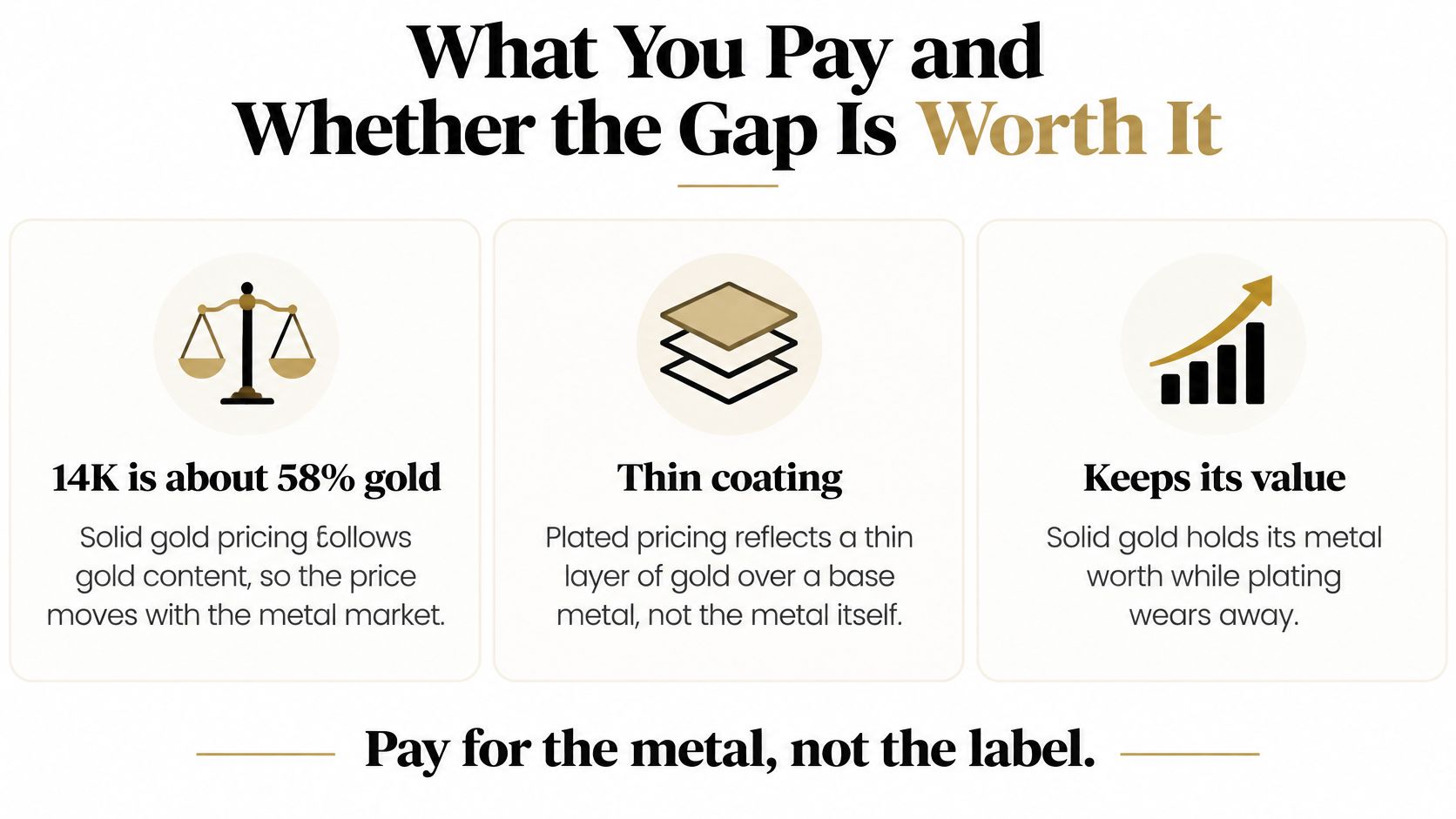
Solid gold costs more because you're buying a gold-bearing alloy throughout the piece, not just a decorative finish. With 14K, about 58% of the alloy is gold, so metal prices affect the starting cost, alongside craftsmanship, design, settings, and stones.
Plated jewelry uses much less gold. That's why it can deliver the look for a lower upfront price, but replacing worn pieces changes the long-term calculation.
Compare real pieces, not just material labels
Our 20G 14k Yellow Gold Crescent Moon Lab Grown Diamond Threadless Push In Flat Back Earring is on sale from $282.60. Our 14k Solid Gold Ball Internally Threaded Barbell Tongue Ring is on sale for $481.99.
Those examples aren't a universal solid-gold price range, and they're not directly interchangeable. One includes a lab-grown diamond and a flat-back design; the other serves a different placement with a different construction.
The broader affordability pressure is real: the World Gold Council reported that global jewelry demand fell 11% in 2024 to 1,877.1 metric tonnes from 2,110.6 tonnes in 2023, as high gold prices reduced affordability.
This comparison keeps the focus on what you're paying for.
Use cost per year, not wishful thinking
For a hypothetical plated piece that wears out in a year, its purchase price is also its annual replacement cost. A solid-gold piece you keep wearing spreads its purchase cost across your actual years of use.
The useful calculation is simple:
Annual ownership cost = purchase and maintenance costs divided by years actually worn.
Don't count imaginary wear. If you love changing your look and retire designs quickly, solid gold may never earn back its higher cost through use alone.
Likewise, don't assume resale will repay the retail price. Metal content isn't the same thing as recovering what you paid for workmanship and design.
The cheapest piece is only cheap if it lasts your wear pattern.
Choose the Right Gold for Your Piercing
Best gold by situation
| Situation | Best pick | Why |
|---|---|---|
| Fresh or healing piercing | Solid 14K or 18K with nickel-free alloy stated, approved by your piercer | No thin coating can wear through to the base metal |
| Daily wear with sensitive skin | Solid 14K with a documented suitable alloy | Composition stays predictable over time |
| Lip or tongue, high friction | Solid gold with a checked alloy and suitable fit | Friction wears plating fastest |
| Occasional wear or tight budget | Plated, 2.5 microns or more, base metal disclosed | Lower cost for infrequent wear |
| Trend piece for one season | Plated is acceptable for a suitable healed piercing | You plan to rotate it out rather than expect permanent wear |
A short planned lifespan doesn't guarantee that plating won't wear sooner. Inspect occasional pieces before putting them back in, especially around posts, curves, and closures.
Look closely at the finish as well as the design.
Make the choice fit your actual routine
Before you buy, check:
- Where it sits. A decorative end and a wearable post don't necessarily face the same contact or movement. Confirm the material of the complete assembly.
- How you wear it. Frequent handling, moisture, and rubbing call for a different choice than an occasional outfit accessory.
- What the seller discloses. Karat, alloy, construction, and coating details should support the purchase, not leave you guessing.
For oral placements, solid gold doesn't eliminate tooth or gum risks. Material is only part of the decision, so have your piercer assess fit and discuss contact with teeth.
Our solid 14K gold range includes belly rings, nose studs, and tongue rings, so you can choose for the placement rather than forcing a favorite design into the wrong job. Josh hand-makes every 14k gold diamond piece we sell.
Use the video as another way to take a closer look at the jewelry.
I would choose a documented suitable alloy before choosing a prettier finish. For everyday jewelry, that usually means prioritizing solid gold; for occasional styling in healed piercings, clearly specified plating can be a sensible budget choice.
BodyCandy offers solid 14K gold body jewelry, including belly rings, nose studs, and tongue rings, so you can match your next piece to your placement and daily routine. Visit BodyCandy to shop the solid gold range, and sign up for newsletter alerts on new arrivals. Have a sizing or aftercare question before you choose? Drop it in the comments.