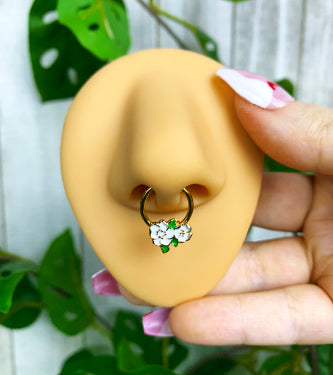




















Titanium jewelry usually sits in the affordable-to-mid-range price band. A plain piece may retail around $110, while a two-tone titanium-and-tantalum band can reach about $570, depending on its construction.
So, is titanium jewelry expensive? Usually, no. The metal itself has a low commodity value, but the price can climb quickly when a piece uses certified material, precision machining, detailed polishing, anodized color, gemstones, or a recognizable designer name.
That's the part many product pages gloss over. Titanium is light, durable, and practical, but “titanium” alone tells you very little about what you're buying. At the piercing counter, I'd judge the price in this order: grade first, finish second, design third, branding last.
The Quick Answer Most Stores Won't Tell You
Titanium jewelry is rarely expensive because of its raw material. U.S. Geological Survey data put the average import value of titanium sponge at about $11.10 per kilogram in 2022, or approximately $0.011 per gram. That's industrial feedstock, not finished jewelry, but it makes the basic point clearly: the metal itself accounts for only a small part of what you pay at retail. The USGS titanium report provides that industrial baseline.
The retail price covers the work around the metal. A maker may need to cut, machine, polish, thread, inspect, anodize, package, and ship the piece. A seller also has overhead and a margin. A simple titanium nose ring and a sculpted, custom-finished ring may share the same base metal while requiring completely different amounts of labor.
That's why a flat yes-or-no answer misses the useful part. Titanium is affordable when the design is simple and the manufacturing is straightforward. It becomes mid-range or premium when the piece demands precision work.
Counter rule: Don't ask only, “Is this titanium?” Ask, “What am I paying for besides titanium?”
A basic body-jewelry component can be inexpensive, especially when it has a plain finish and standard shape. An intricate ring, a colored piece, or jewelry with a stone setting belongs in a different pricing category. One retail comparison lists titanium bands around $110, while two-tone titanium-and-tantalum bands sit around $570. That comparison of alternative ring metals shows how dramatically construction can change the ticket.
The practical verdict is simple. Titanium is usually a value purchase for lightness, durability, corrosion resistance, and comfort, not for resale value. If a seller charges a premium, the listing should tell you exactly why.
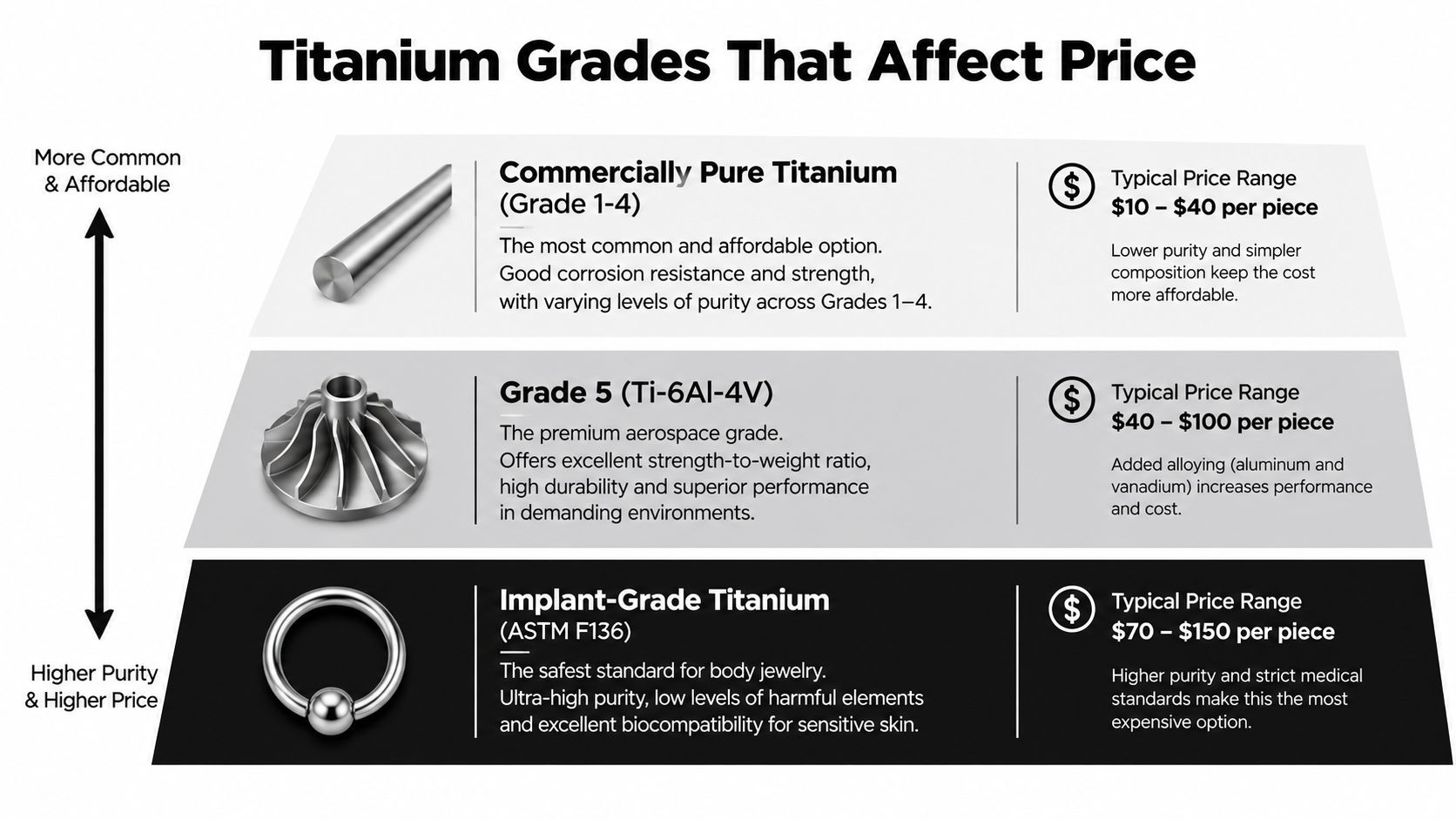
Titanium Grades That Actually Change the Price
Two pieces can look nearly identical and still differ meaningfully in material quality. The word titanium on a product page isn't enough to tell you whether you're looking at a basic fashion piece, a stronger alloy, or material made to a body-jewelry standard.
Commercially pure titanium
Commercially pure titanium includes Grades 1 through 4. These grades contain titanium with different levels of strength and impurity control, and they may appear in straightforward jewelry designs. They can be a sensible choice for a healed piercing or a simple fashion ring when the seller clearly identifies the grade and the piece doesn't need demanding mechanical performance.
The catch is documentation. A low price may reflect ordinary commercial material, limited finishing, or vague sourcing. That doesn't automatically make the piece bad, but it gives you less information about what touches your skin.
Grade 5 and Ti-6Al-4V
Grade 5 titanium, also called Ti-6Al-4V, is a stronger alloy used widely in demanding technical applications. It can support durable rings and other jewelry, particularly when the design needs strength without adding much weight.
Grade 5 isn't automatically the same thing as implant-grade body jewelry. A product page that says “Grade 5” has given you useful alloy information, but you should still look for the intended standard, surface quality, and component details if the item will go into a piercing.
ASTM F136 implant-oriented material
For body jewelry, ASTM F136 matters because it applies to Ti-6Al-4V ELI alloy and sets chemical and mechanical requirements for biomedical use. That specification gives you a stronger basis for evaluating jewelry intended for a new or sensitive piercing than a generic “hypoallergenic titanium” claim.
It can also justify a higher price. Certified or documented material costs more to source, and reputable makers tend to pair it with better polishing, threading, quality control, and traceability. The price difference should reflect a real specification, not just a shiny label.
Before buying, check the material language against this guide to titanium body jewelry. You want the exact alloy or standard, not just a broad promise.
A useful buying hierarchy looks like this:
- Unspecified titanium: Fine only when the use is low-risk and the seller is transparent about construction.
- Commercially pure titanium: A reasonable option for uncomplicated jewelry when the grade is stated.
- Grade 5 titanium: A strong, lightweight alloy that suits many ring and fashion-jewelry designs.
- ASTM F136 titanium: The specification I'd prioritize for body jewelry, especially when the piercing is new, irritated, or sensitive.
The important distinction is that grade affects confidence as much as cost. Paying more makes sense when you receive verifiable material information and workmanship. A generic label with a luxury price is just marketing.
What Really Drives the Price Beyond the Metal
If raw titanium is inexpensive by weight, why can one piece cost far more than another? Manufacturing. Titanium is difficult to machine because it conducts heat poorly, creates high temperatures at the cutting point, wears tools quickly, and often requires slower cutting conditions.
A peer-reviewed aerospace-materials review reports that titanium ingot production costs approximately 30 times more than steel and about 6 times more than aluminum. The same review reports that titanium machining costs at least 10 times more than aluminum machining. The aerospace-materials review explains why a small piece can still carry a meaningful production cost.
The work hidden inside a small piece
A plain ring with a smooth exterior needs less programming, cutting, and finishing than a ring with deep grooves, sculpted edges, or multiple inlays. Threaded body jewelry adds another point of failure. Poor threading can feel rough, catch skin, or wear down quickly, while clean threading requires tighter control.
Color also changes the equation. Anodizing creates color through an electrochemical process rather than just covering the metal with paint. It can give titanium a vivid finish, but the maker still has to prepare the surface carefully and control the process. Read this overview of anodizing titanium body jewelry before treating every colored finish as equal.
Typical Price Ranges by Construction Style
| Construction Style | Typical Retail Range | Main Cost Driver |
|---|---|---|
| Plain, commercially pure titanium piece | Affordable | Simple shape and limited finishing |
| Basic Grade 5 ring or body-jewelry component | Affordable to mid-range | Alloy, machining, and quality control |
| Anodized titanium design | Mid-range | Surface preparation and color finishing |
| Precision-machined or sculpted piece | Mid-range to premium | CNC programming, tooling, and labor |
| Titanium with gemstones or another metal | Premium | Stone setting, inlays, extra materials, and complex assembly |
I'd be skeptical of a high price attached to a basic shape with no grade, no finish details, and no documentation. I'd be much more comfortable paying extra for clean threading, smooth edges, consistent color, a documented alloy, and a design that clearly required more work.
One industry comparison reports that precision machining titanium can take three to five times longer than milling gold. The titanium jewelry manufacturing guide connects that extra time to titanium's hardness and high-temperature reactivity. The metal may be light in your hand, but the equipment and labor behind it aren't necessarily light.
How Titanium Stacks Up Against Other Metals
Titanium occupies an unusual spot in the jewelry lineup. It costs more to process than mass-market steel, but it usually lacks the intrinsic material value of gold or platinum. It feels light on the body, resists corrosion, and can deliver a high-performance wearing experience without the weight of precious metal.
Grade 5 titanium has a density of about 4.43 grams per cubic centimeter. By comparison, 18-karat gold measures approximately 15.5 grams per cubic centimeter, and platinum measures about 21.4 grams per cubic centimeter. An item with the same volume as an 18-karat-gold piece would weigh roughly 71% less in Grade 5 titanium, while the same volume compared with platinum would weigh roughly 79% less. This material comparison shows why titanium feels so different on the ear, nose, or finger.
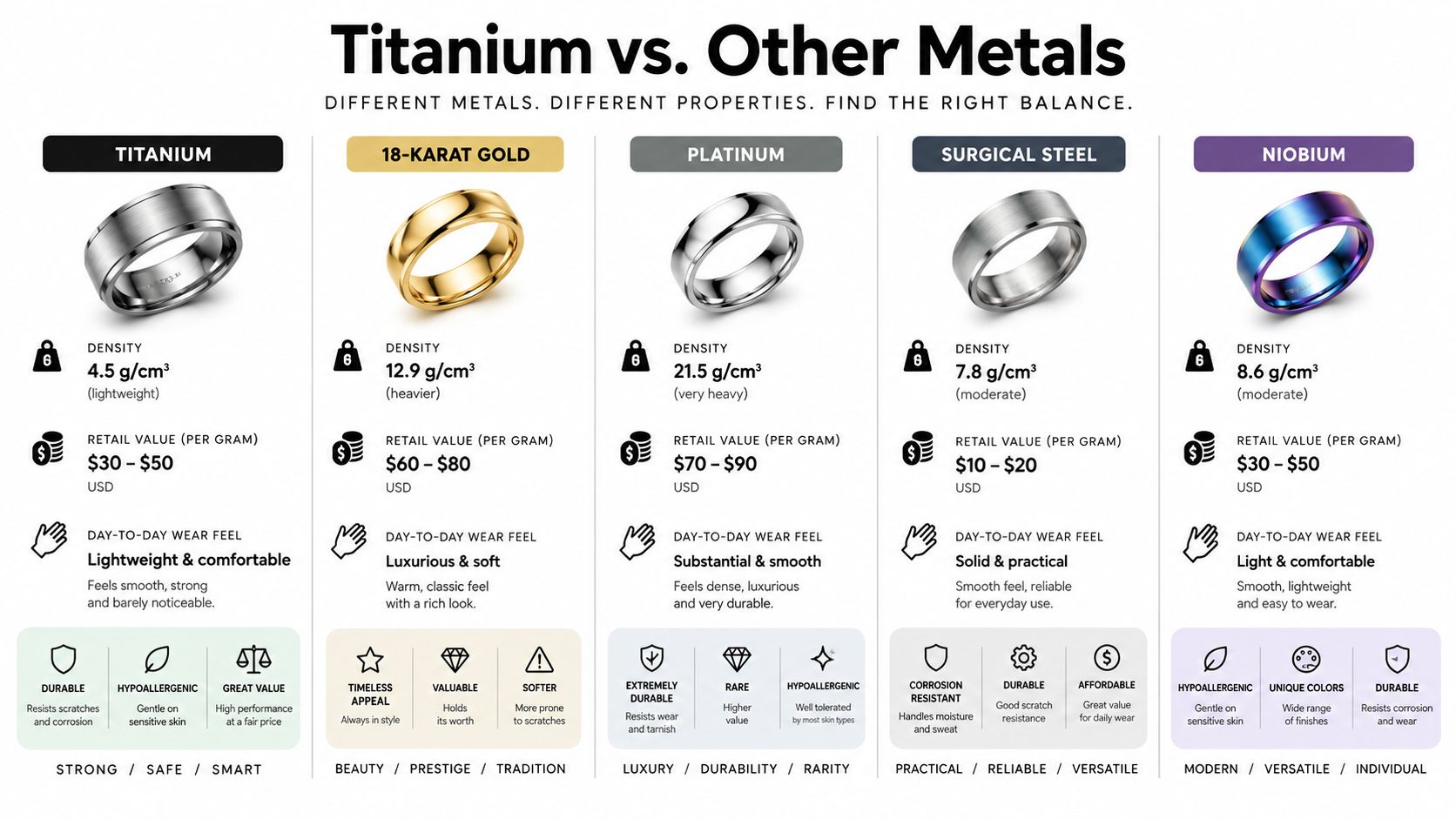
Titanium vs Gold vs Platinum vs Surgical Steel vs Niobium
| Metal | Density (g/cm3) | Retail Value per Gram | Best For |
|---|---|---|---|
| Titanium | 4.43 for Grade 5 | About $2.80 to $5.20 | Lightweight, durable, practical jewelry |
| 18-karat gold | About 15.5 | About $58 to $72 | Precious-metal value and classic luxury |
| Platinum | About 21.4 | About $32 to $41 | Dense, precious-metal jewelry |
| Surgical steel | About 7.8 to 8.0 | Not specified in the verified data | Budget-focused, sturdy fashion jewelry |
| Niobium | Not specified in the verified data | Not specified in the verified data | Alternative body-jewelry material when properly specified |
The titanium values in the table are indicative retail values, not raw-metal prices. Gold and platinum carry a much stronger precious-metal component, so buyers may pay for scarcity, metal value, and long-term resale potential as well as design and labor.
Steel can be cheaper for a comparable basic piece, but “surgical steel” isn't a complete material description on its own. Ask what alloy the seller uses and whether the jewelry is appropriate for your piercing. A lower price doesn't prove better value if the finish is rough or the components trigger irritation.
Niobium deserves attention from body-jewelry shoppers because it can offer color and a skin-friendly alternative, but you still need exact material information. Don't let a metal name replace the basics: grade, finish, component composition, and fit.
The day-to-day feel is where titanium makes its strongest case. At roughly 4.5 grams per cubic centimeter, titanium is substantially lighter than steel at about 7.8 to 8.0 grams per cubic centimeter, while retaining high strength. This titanium and stainless-steel comparison explains why titanium is often chosen for comfort and durability rather than bullion value.
The Hypoallergenic Myth Worth Calling Out
“Hypoallergenic titanium” sounds reassuring, but it is not a universal safety guarantee. Titanium often lowers the risk of nickel reactions, yet irritation can still come from titanium itself, an alloying element, plating, or another component in the piece.
A 2025 clinical study found relevant positive titanium patch tests in 5% of tested cases. Among those reactions, 38% were associated with jewelry, and 77% involved co-sensitization to metals such as nickel, cobalt, or vanadium. Those figures come from the clinical evidence summarized alongside Mayo Clinic guidance on nickel allergy.

Titanium remains a sensible choice for many wearers. The point is precision. Nickel is a common jewelry allergen, and titanium can be a lower-risk alternative, but lower risk is not the same as impossible to react.
What to verify before you pay extra
- Ask for the exact alloy: Look for Grade 5, Ti-6Al-4V ELI, or ASTM F136 when the jewelry is intended for a piercing.
- Inspect every component: Posts, backs, clasps, threading, stones, plating, and color treatments can add materials beyond the titanium body.
- Question vague claims: “Hypoallergenic,” “medical,” and “titanium finish” are incomplete descriptions. Read this quick take on hypoallergenic jewelry for sensitive skin to see what a skin-friendly claim should specify.
- Take persistent symptoms seriously: If redness, itching, swelling, or discomfort continues, stop wearing the piece and ask a dermatologist about patch testing.
Pay more for titanium only when the seller can support the material and the components.
A certified or well-documented piece can justify a premium for someone with nickel sensitivity. Expensive packaging cannot make an unidentified alloy safer. Ask one direct question before buying: “What exactly is touching my skin, and can you prove it?”
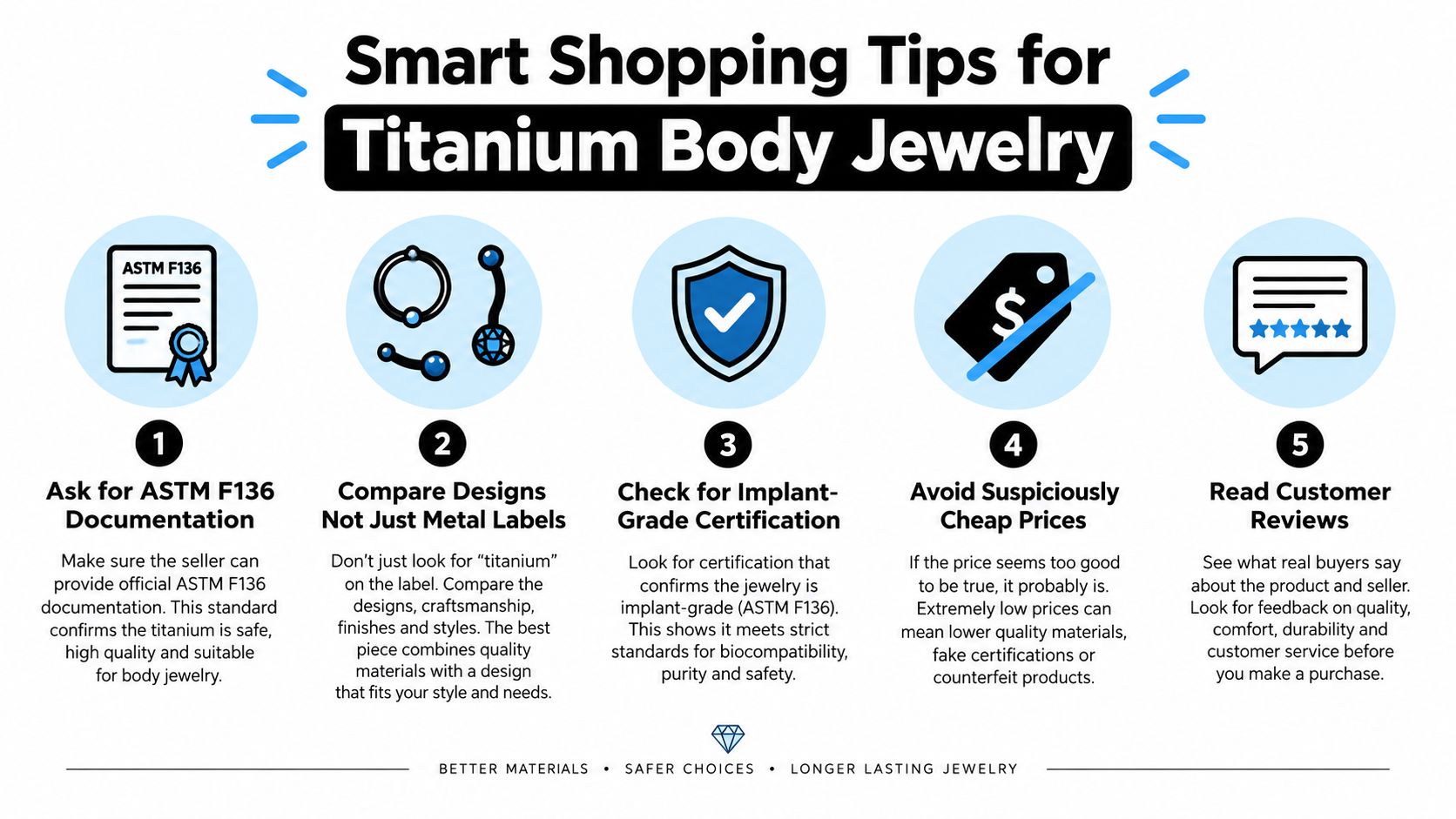
Smart Shopping Tips for Titanium Body Jewelry
A good titanium purchase starts with the listing, not the checkout button. Ignore the dramatic adjectives and look for specifications that explain the price.
Use this buyer checklist
- Compare designs, not just labels: A plain titanium band and a sculpted, two-tone band aren't equivalent purchases.
- Ask for ASTM F136 documentation: For body jewelry, documentation carries more weight than a generic “implant-grade” badge.
- Check the finish: Anodized color is different from plating, and polished edges should feel smooth rather than sharp or gritty.
- Examine the threading: Clean, consistent threading matters for comfort, cleaning, and repeated wear.
- Read reviews for construction details: Look for comments about color consistency, edge quality, threading, and fit, not just compliments about appearance.
- Be cautious with suspiciously cheap pieces: A bargain can reflect basic material, weak finishing, unclear sourcing, or missing quality control.
A higher price is easier to defend when the seller identifies the alloy, shows the construction clearly, and explains the finishing process. It's harder to defend when the page relies on “luxury titanium” language without technical details.
One concrete comparison makes the point. A simple titanium band around $110 sits in a very different category from a titanium-and-tantalum band around $570. The second price can reflect another metal, contrasting construction, design complexity, and additional manufacturing steps. This alternative-metal comparison gives shoppers a useful reference point.
Smart Shopping Checklist
| Check | Why It Matters |
|---|---|
| Exact alloy or standard | Shows what material you're actually buying |
| Implant-grade documentation | Supports use in body jewelry and sensitive applications |
| Surface and threading quality | Affects comfort, cleaning, and longevity |
| Anodizing or plating details | Clarifies how color was created and how the finish may wear |
| Component composition | Helps identify mixed metals in posts, clasps, backs, or settings |
| Reviews about fit and finish | Reveals practical issues product photos may hide |
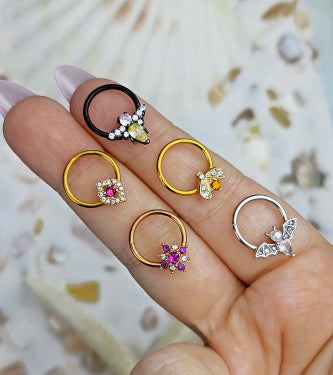
BodyCandy sells titanium body jewelry with listed prices, including colored nose-ring options, so it can be one place to compare simple designs and material descriptions. Still, use the same checklist there that you'd use anywhere else. The brand name shouldn't replace the specification.
Where to Go From Here
Titanium jewelry is usually not expensive because of the metal itself. The price climbs when you move from generic material to a documented grade, from a basic surface to demanding finishing, or from a simple shape to precision design.
For body jewelry, I'd spend first on verified material and clean construction. For a fashion ring, I'd spend on the design you love, then check whether the machining and finish justify the rest of the price. Don't pay a premium just because a listing uses the word “titanium.”
Start by comparing titanium pieces by grade, finish, threading, and overall design. Then browse BodyCandy for body-jewelry styles that fit your look and budget, and keep the specifications in view before you buy.