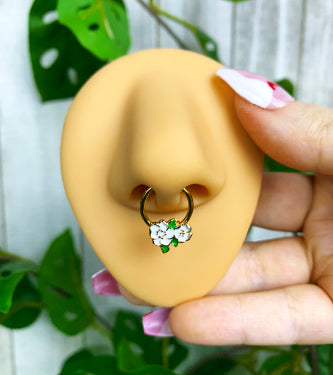




















The most popular advice about gold septum jewelry is also the most misleading: if it looks gold, it must be gentle. It doesn't. A gold-colored ring can hide a reactive base metal, while a solid gold piece can still contain an alloy that bothers your skin. Your nose cares about what the jewelry is made of, not what shade it appears to be in a product photo.
For a septum ring, check five things before you buy: whether it's solid, its karat, whether the alloy is nickel- and cadmium-free, whether the composition is documented, and whether the seller provides nickel-release or compliance evidence. That checklist matters far more than a shiny finish or the word “hypoallergenic.”
Why Gold Septum Jewelry Is Not Just a Color Choice
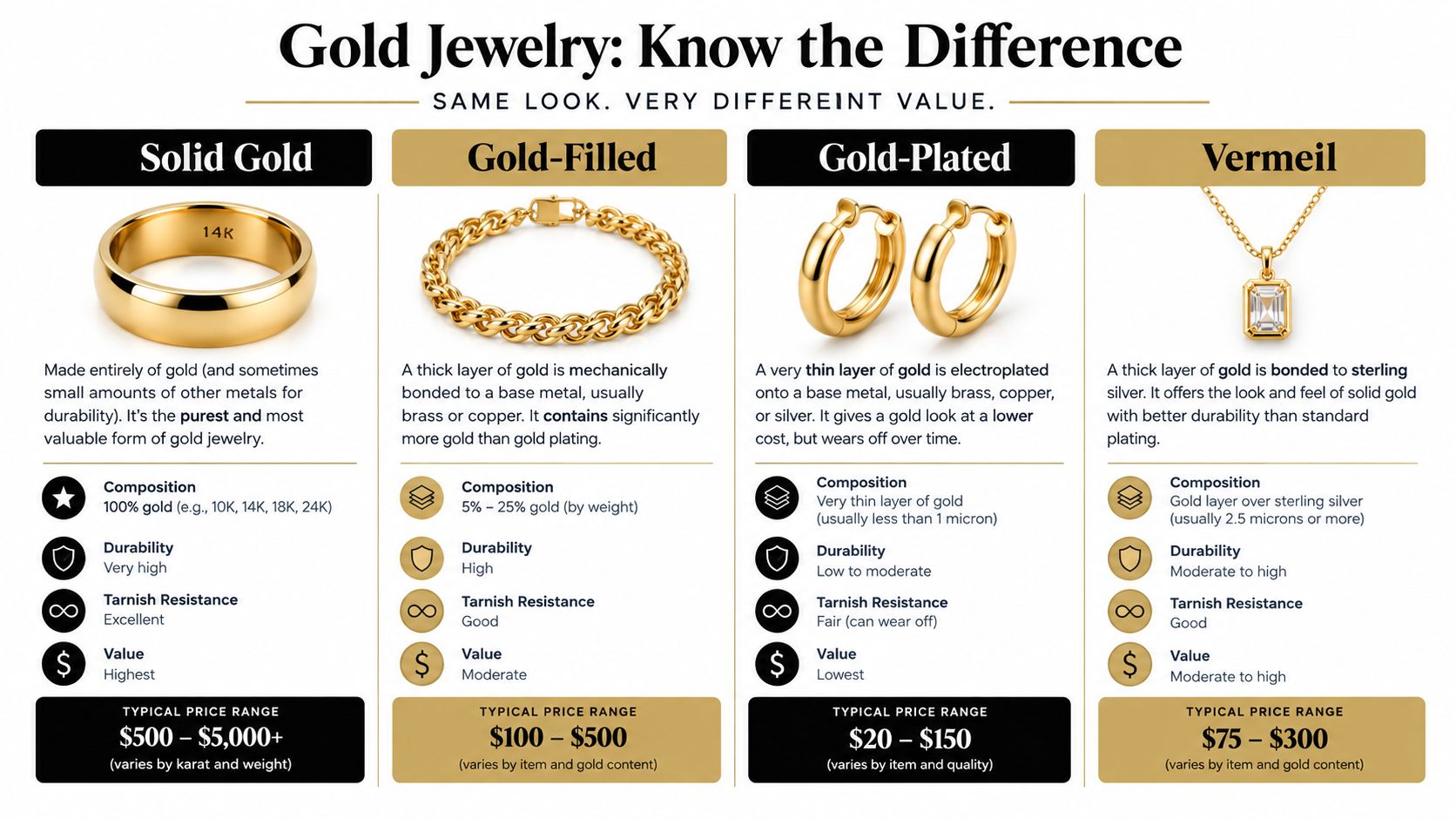
A gold-looking septum ring might be solid gold, gold-filled, gold-plated, vermeil, or just a base-metal piece with a gold-tone finish. Those constructions behave differently against skin and mucosal tissue. Color tells you almost nothing about material compatibility.
Karat helps, but it isn't the whole answer. 14K gold contains approximately 58.3% pure gold, while 18K contains 75%, and the remaining portion is alloy metal added for hardness and wear resistance. A white-gold ring may use nickel unless the maker explicitly says it doesn't. A plated ring may expose its underlying metal as the surface wears.
The allergy question deserves serious attention. A systematic review and meta-analysis covering 5,333 adults found that people with piercings had 5.9 times the odds of nickel allergy compared with people without piercings, with a 95% confidence interval of 3.6 to 9.4 (systematic review and meta-analysis on piercing and nickel allergy). That doesn't mean every gold septum ring will cause a reaction. It does mean guessing is a bad shopping strategy.
Practical rule: Treat “gold” as a starting point, not a safety specification.
Gold plating deserves extra suspicion for fresh piercings. A laboratory study detected nickel release from all 10 tested gold-plated earrings, and the release frequently exceeded European regulatory limits (medical review of body-piercing materials). For jewelry that sits through a piercing, choose documented construction and alloy details over appearance.
Solid Gold, Gold-Filled, Gold-Plated, and Vermeil Explained
The fastest way to shop intelligently is to stop treating every gold finish as the same product. Read the construction description, then match it to your piercing's healing status.
Solid gold
Solid gold means the gold alloy runs through the entire piece. It doesn't mean pure gold. Most wearable jewelry uses an alloy because pure gold is soft, and the karat tells you how much gold is present.
For a healed septum, solid 14K or 18K gold offers the durability and polished look most shoppers want. For a healing septum, the Association of Professional Piercers specifies solid 14-karat-or-higher yellow, white, or rose gold that is nickel-free and cadmium-free, with an alloy selected for biocompatibility (Association of Professional Piercers initial jewelry standards).
Gold-filled
Gold-filled jewelry has a thicker gold layer pressure-bonded to another metal. It's more substantial than plating, but the core still isn't solid gold. That distinction matters if the jewelry rubs, gets cleaned repeatedly, or sits in a fresh piercing.
The Association of Professional Piercers lists gold-filled jewelry among materials not appropriate for a new or unhealed piercing (Association of Professional Piercers guidance on appropriate initial jewelry).
Gold-plated
Gold-plated jewelry has a thin gold surface over a base metal. It can look excellent when new, but friction and cleaning gradually challenge that surface. Once the coating wears, the underlying alloy becomes the material touching your piercing.
Gold plating is a styling choice for a healed piercing, not a smart first-jewelry choice. Don't put it into a fresh septum just because the listing uses a flattering gold color name.
Vermeil
Vermeil is sterling silver covered with a gold layer. It can be lovely for occasional wear in a healed piercing, but it still combines a coating with a silver base. That makes it unsuitable for a new or unhealed septum under professional piercing guidance.
If you want a deeper dive into how gold jewelry is made, BodyCandy's real gold jewelry guide is a useful vocabulary check. The short version is simple: solid means solid, and a gold surface doesn't change the core material.
Comparing 14K, 18K, and 24K Gold for Sensitive Skin
Karat is a gold-content measurement, not a guarantee that your skin will approve. Higher karat generally leaves less room for other metals, but you still need the alloy details, especially if you already react to nickel.
14K gold is approximately 58.3% pure gold. It's harder and often more practical for everyday wear, but its larger alloy share makes the exact formulation important. 18K gold is 75% gold, while 24K gold is 99.9% gold, according to DermNet's jewelry allergy guidance.
Karat comparison at a glance
| Karat | Gold Content | Color Depth | Alloy Risk | Best For |
|---|---|---|---|---|
| 14K | Approximately 58.3% | Warm, wearable gold | More dependent on alloy disclosure | Durable healed-piercing jewelry when the alloy is documented |
| 18K | 75% | Richer, deeper gold | Lower alloy share, but still verify ingredients | Sensitive-skin shoppers seeking solid gold |
| 24K | 99.9% | Strong yellow gold | Minimal added metal, but softer construction | Buyers prioritizing high gold content and a distinctive color |
For many healed septums, 14K is the practical middle ground. It holds up well to regular handling and gives you more design options. I'd choose it only when the maker clearly identifies the alloy and confirms nickel and cadmium are excluded.
18K is my stronger pick for sensitive skin, provided the construction and alloy are documented. The higher gold content leaves less room for potentially irritating additions, but “18K” still doesn't tell you whether a specific white-gold formulation contains nickel.
24K sounds perfect on paper, but pure gold is soft. A delicate septum design can bend or distort more easily, so high purity doesn't automatically equal the best daily-wear experience. Yellow gold is usually the easiest color choice for avoiding the white-gold nickel wildcard, but the written alloy specification still wins.
The Five-Point Allergy Verification Checklist
Gold is a material specification, not a color. Use this checklist before buying. If the product page cannot answer these questions, choose another piece.
1. Is the piece solid?
Look for solid gold, not gold tone, gold plated, gold-filled, or vermeil. Plating can wear through where the ring contacts tissue, exposing the underlying metal. Gold-filled construction may last longer than plating, but it still does not provide the same material consistency as solid gold.
2. What is the karat?
Confirm the fineness, such as 14K or 18K. Karat identifies the gold content, not every metal added to the alloy. A karat number alone cannot confirm that the piece suits sensitive skin.
3. Is the alloy nickel-free and cadmium-free?
For a healing septum, choose jewelry whose maker explicitly excludes nickel and cadmium. White gold deserves extra scrutiny, because its alloy may contain nickel unless the product documentation says otherwise. European restrictions also address nickel release and substances used in jewelry, so do not accept a vague “safe for sensitive skin” claim as proof.
4. Is the composition documented?
A trustworthy listing names the material and, where relevant, identifies the alloy. Look for a written composition, manufacturer specification, or compliance documentation. “Hypoallergenic” describes a marketing position, not the actual metals in the ring. If the seller cannot explain what the piece contains, you cannot assess it properly.
5. Is nickel-release or compliance evidence available?
European REACH sets nickel release below 0.2 micrograms per square centimeter per week for assemblies inserted into pierced body parts. The limit is 0.5 micrograms per square centimeter per week for jewelry in prolonged skin contact (European REACH nickel restrictions).
Those limits give you a useful benchmark, but a gold-colored finish does not prove that the hinge, solder, bead, or base metal meets them. “Surgical steel” is also too broad by itself. For practical material-screening advice, read BodyCandy's guide to hypoallergenic jewelry.
Popular Gold Septum Styles and How to Wear Them
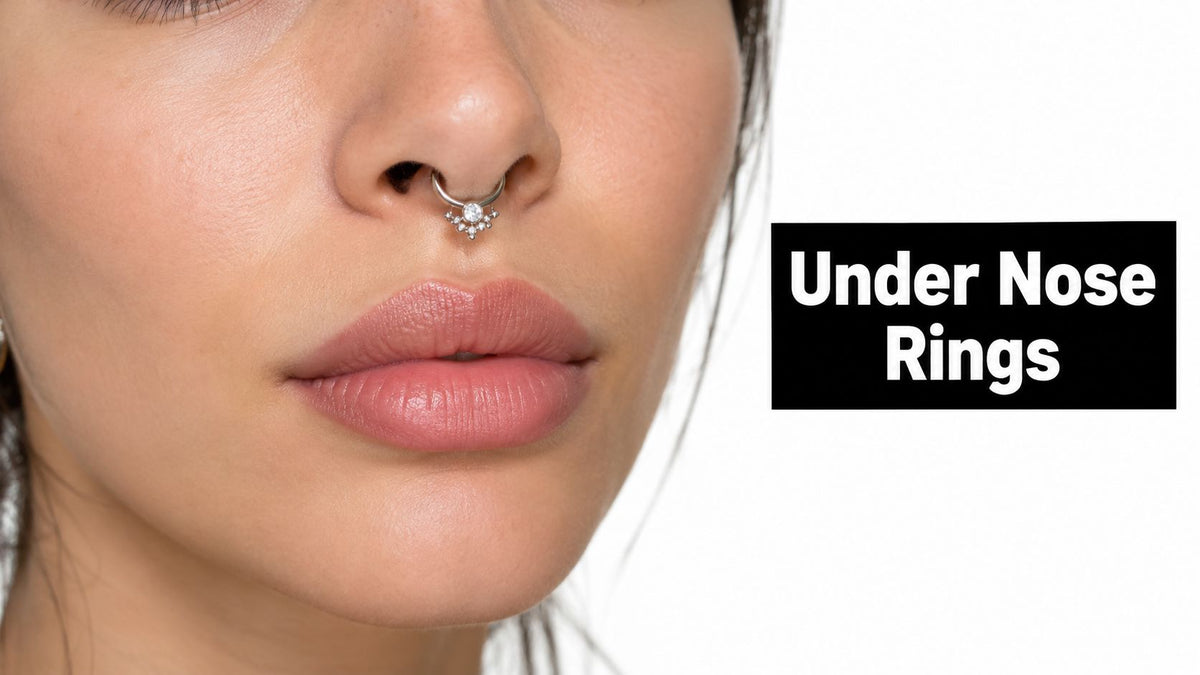
A slim gold seam ring is the quiet favorite for a reason. It gives you a clean flash of color without competing with your face, and yellow 14K or 18K gold works especially well with simple everyday jewelry. Choose a diameter that sits comfortably without pressing into the underside of your nose.

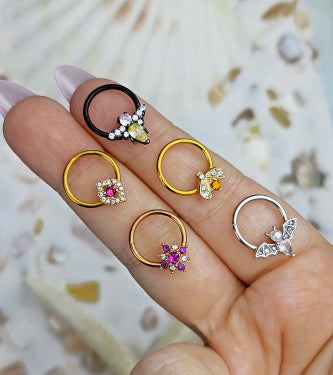
A hinged clicker gives you a more finished look, from a tiny smooth hoop to an ornate design with stones or engraved details. The hinge should close cleanly and sit away from the piercing channel when possible. Don't assume a clicker is automatically comfortable because it's easy to open. Learn more about clicker alternatives and septum accessories.
Captive bead rings add a small focal point. They're a good match for a deliberately styled look, especially when the bead echoes another piece of gold jewelry. Check that the bead is secure and that the ring doesn't create pressure at one point.
A horseshoe circular barbell brings attitude without requiring a huge decorative piece. Wear it with the balls visible for a classic look, or choose a more sculptural end design if you want the jewelry to read from farther away.
Here's a closer look at how different septum styles move and sit during wear:
Caring for Gold Septum Jewelry Day to Day
Gold is a material specification, so care starts with knowing what you own. Solid gold handles regular wear well, while plated jewelry needs closer inspection because its surface can wear through.
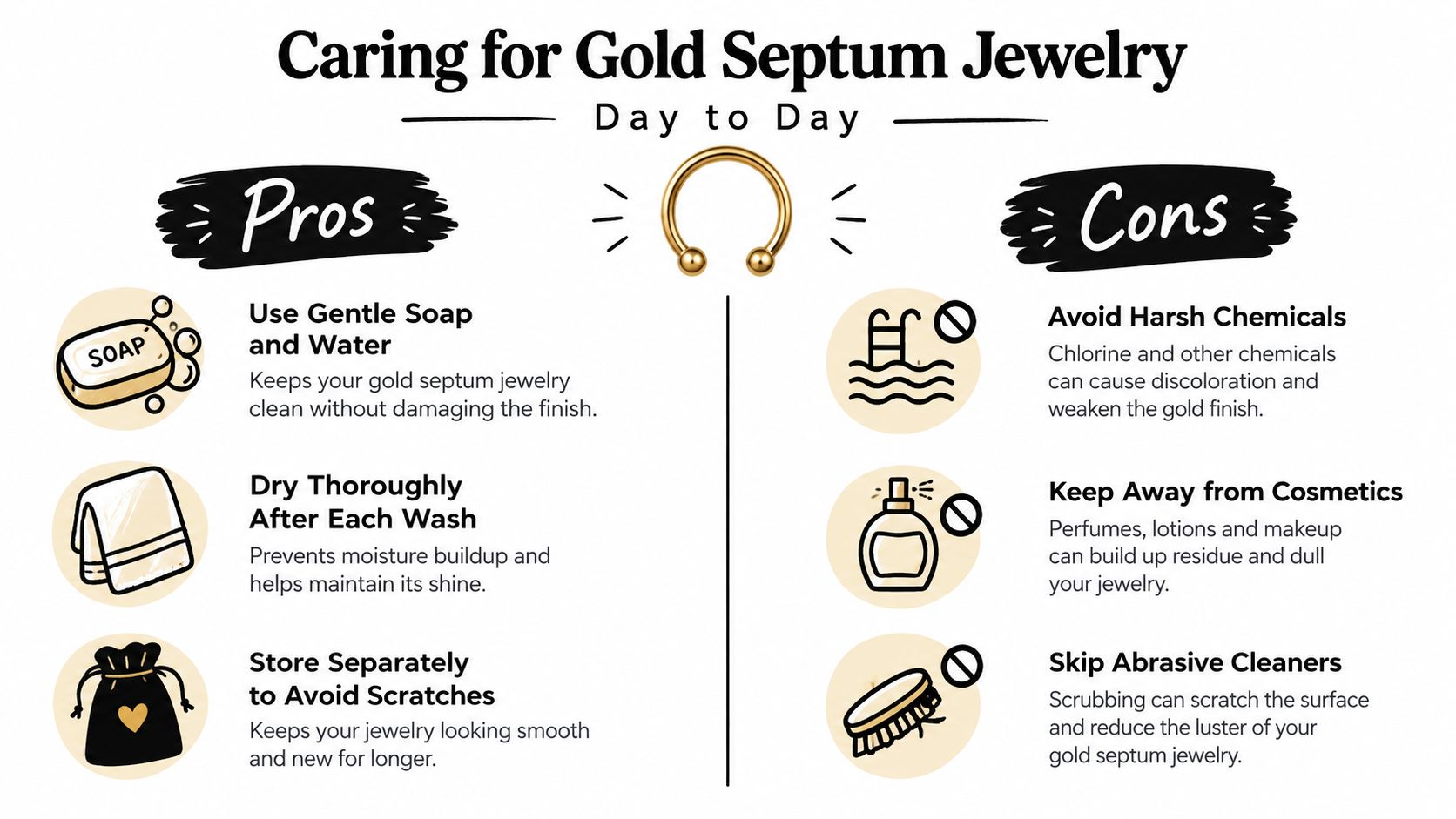
Wash your hands before touching the ring. Clean gently with mild soap and water when appropriate, rinse thoroughly, and pat the area dry without aggressive rubbing. Keep chlorine, alcohol-heavy products, abrasive cleaners, and harsh jewelry dips away from the piece. Perfume, makeup, and skincare can collect around the jewelry, so apply them carefully and let them settle before handling your septum.
Watch the finish, not just the shine
A solid gold ring may need gentle polishing after regular wear. A plated ring gives a clearer warning: its color changes, or another metal appears around edges, hinges, or high-friction areas. That exposed base metal can touch the piercing, so replace the piece rather than treating the problem as a cosmetic flaw.
Store every item in its own clean pouch or compartment. Loose rings can scratch, bend, or transfer residue when stored together.
Know the difference between allergy and infection
Nickel exposure can cause itching, redness, rash, or irritation where jewelry touches the skin. Infection presents differently. Persistent warmth, swelling, pus, bleeding, or increasing pain needs medical evaluation, particularly when symptoms do not settle.
A ring swap may help an allergic reaction, but changing jewelry will not treat an infection. Do not remove jewelry from a problematic piercing without professional medical or piercing advice. The channel can close and trap complications.
As noted earlier, the piercing and nickel-allergy review associated reactions with piercing history, but it does not prove that every gold ring causes an allergy. Use documented materials from the start and address unusual symptoms promptly.
How Gold Compares to Titanium and Surgical Steel
Gold is stylish, but it isn't automatically the best first choice. For a fresh septum, I'd prioritize a properly fitted, documented implant-grade titanium piece, then consider verified nickel-free gold once the piercing is healed and stable.
| Material | Healing-stage fit | Sensitive-skin position | Longevity and style |
|---|---|---|---|
| Verified solid 14K or 18K gold | Suitable when it meets professional initial-jewelry standards | Strong option when nickel- and cadmium-free | Excellent for long-term styling |
| Implant-grade titanium | Reliable default for many fresh piercings | Particularly useful when nickel sensitivity is a concern | Lightweight, durable, and available in varied finishes |
| Surgical steel | May be used for piercing jewelry | Requires clear nickel-release information | Affordable and widely available |
Mayo Clinic identifies nickel-containing jewelry as a cause of piercing-related allergic reactions and lists titanium, niobium, surgical stainless steel, and 14- or 18-karat gold among materials used for piercing jewelry (Mayo Clinic piercing guidance).
“Surgical steel” isn't a complete answer for someone with a known nickel allergy. Ask for the specific grade and evidence of nickel-release compliance rather than accepting the label as a guarantee.
Solid gold wins when you want a rich, permanent-looking material and the alloy is properly documented. Titanium wins when healing status and sensitivity make low-risk material selection the priority. Surgical steel can be a reasonable budget option when its composition and release performance are clear, but vague steel descriptions deserve a pass.
Shopping With Confidence and Our BodyCandy Recommendation
Use this short version before checkout:
- Choose solid construction: Skip plating, filled layers, vermeil, and gold tone for a new or unhealed septum.
- Confirm the karat: Look for 14K or higher, then read the alloy details.
- Demand nickel and cadmium information: “Hypoallergenic” alone isn't enough.
- Check the fit: A beautiful ring that pinches, shifts, or catches can irritate the piercing.
- Match jewelry to healing status: Don't rush a decorative gold upgrade into tissue that isn't ready.
- Treat symptoms seriously: Persistent warmth, swelling, discharge, bleeding, or pain calls for medical advice.
The mistake that causes the most unnecessary jewelry swaps is assuming karat equals safety. Karat describes gold content. It doesn't replace alloy disclosure, construction details, or nickel-release evidence.
BodyCandy offers septum rings, clickers, captive rings, horseshoe barbells, and other nose jewelry in different materials and styles. Use the product description as your starting point, then apply the five-point checklist before choosing a gold piece.
Ready to replace guesswork with jewelry you can verify? Browse BodyCandy for gold septum jewelry and compare the construction, karat, fit, and material details before you buy. Choose the piece that looks like you, then make sure its metal earns a place in your piercing.