


















So, you're thinking about getting your nipples pierced? Awesome! It's a seriously empowering way to claim your style, but let's talk about the single most important part of the whole process: the placement.
The sweet spot for a classic nipple piercing is right at the base of the nipple, just where it meets the areola. This isn't just a random suggestion; it's the key to making sure your piercing doesn't sit too shallow (which can lead to rejection) or go too deep (which can make healing a total nightmare).
Why Nipple Piercing Placement Is Everything
Deciding to get a nipple piercing is a big deal, and you've probably already spent hours scrolling through pics for inspo. But here's the real tea: beyond all the cool jewelry and edgy vibes, the success of your new piercing rests entirely on where that needle goes.
Think of it like the foundation of a house—if it’s not set perfectly, everything else will feel a little off.
This isn’t just about making sure your piercing looks straight when you check it out in the mirror. Getting the placement right is critical for a smooth healing journey, long-term comfort, and the freedom to rock all the jewelry you've been dreaming of, from a snug little hoop to a classic barbell.
The key is working with a skilled piercer who really gets anatomy. Everyone's body is different, so what worked for your friend might not be the best spot for you.
Nipple piercings have absolutely blown up in popularity. One major studio reported that they jumped from making up 11% of all their services to over 20% after 2020. What’s really interesting is that a whopping 1,422 out of 1,586 of those piercings were done in pairs. It just goes to show that most people are all about that symmetrical, balanced look. You can explore more piercing trends and statistics to see what's popular.
Here are a few reasons why obsessing over placement is a total game-changer:
- Healing Success: When a piercing is placed correctly, you minimize irritation and dramatically lower the risk of annoying complications like migration or rejection.
- Aesthetic Goals: The right spot ensures your piercing looks symmetrical and flows with your natural shape, whether you're standing, sitting, or dancing around your room.
- Jewelry Freedom: Perfect placement unlocks a whole world of jewelry possibilities. Once you're healed, you can switch between barbells, rings, and shields without any trouble. For a deeper dive, check out our guide on what you need to know about nipple rings.
This guide is here to walk you through all the details, so you can feel totally confident and prepared before you even set foot in the piercing studio.
Exploring Every Style From Horizontal To Diagonal
Ready to figure out what you want? Nipple piercings are way more personal and versatile than most people realize. It's time to get familiar with all the options to find a style that really feels like you.
The most popular kid on the block is, without a doubt, the horizontal placement. This is the classic look: a barbell running straight across the base of the nipple. It’s the go-to for a reason—it’s clean, looks fantastic with both barbells and rings, and has a timeless appeal.
But that's just the starting point. Let's get into some of the other ways you can go.
Unique Placement Styles
Looking for something with a different vibe? The vertical placement runs top-to-bottom through the nipple's base. This can create a subtle elongating effect and looks especially stunning with curved barbells that hug your natural anatomy.
If you really want a custom look, the diagonal placement is where it's at. It cuts across the nipple at an angle, giving you a unique and edgier look that immediately catches the eye. You and your piercer can play with the angle to find what best complements your body.
For those who want to make a bolder statement, combining styles is the ultimate power move.
- The Cross: A popular combo involves getting both a horizontal and a vertical piercing on the same nipple, creating a striking cross shape.
- Multiple Piercings: You can also stack multiple piercings on one nipple, like two or three horizontal bars for a curated, layered effect.
- Paired but Different: Feeling adventurous? Consider a horizontal piercing on one side and a vertical on the other for an asymmetrical style that’s all your own.
This diagram breaks down how your personal style, unique anatomy, and health all come together to land on the perfect placement for you.
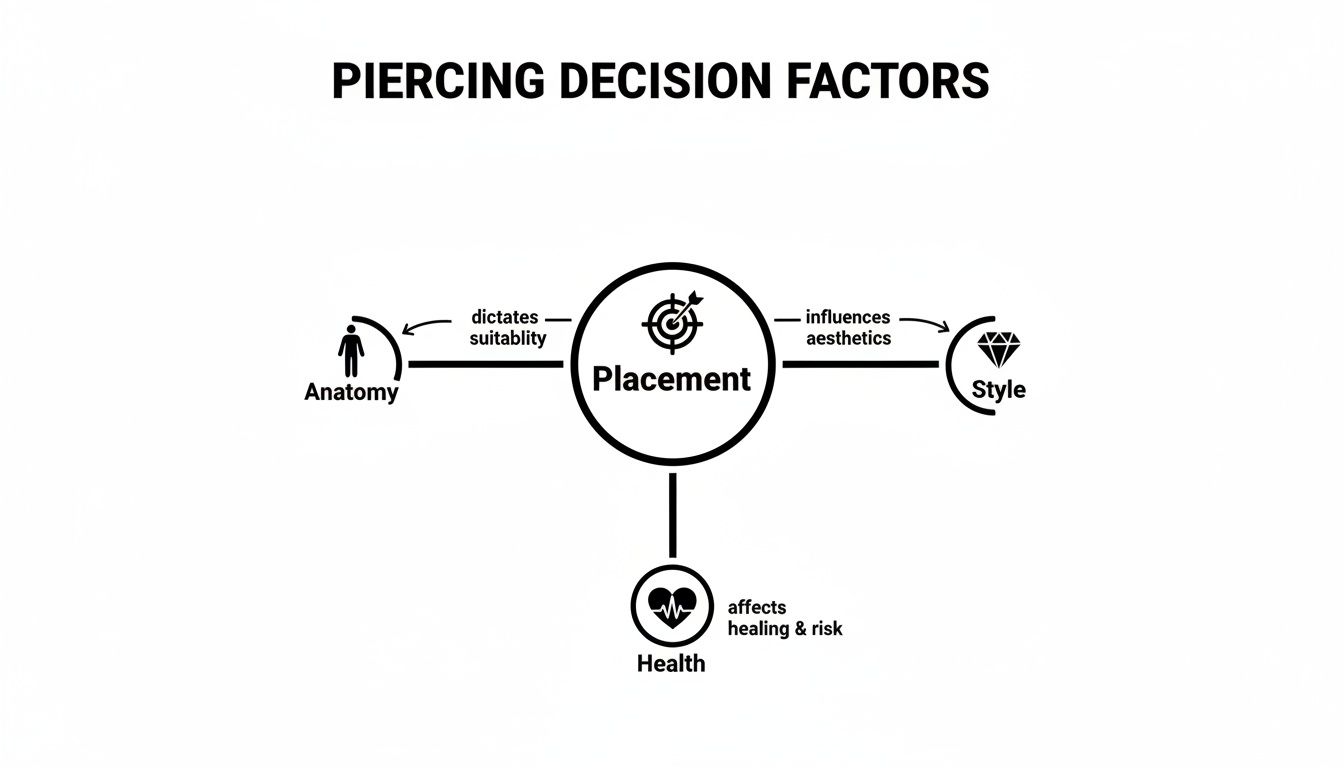
As you can see, the final decision is a careful balance between the look you're dreaming of and what will heal best on your body.
Symmetry Is Key
No matter which placement you choose, symmetry is a big deal for most people. Getting both sides pierced for a balanced aesthetic is incredibly common. In fact, paired nipple piercings are overwhelmingly more popular than singles, outnumbering them by a ratio of almost 9 to 1. It just goes to show how much that sense of balance matters.
Your piercing is a form of self-expression. The "best" placement is the one that is safe for your anatomy, makes you feel confident, and aligns perfectly with your personal style.
Ultimately, each placement creates a completely different look, so it all comes down to finding what fits your personality. Thinking about how these styles will work with different jewelry can also help you make up your mind. For more ideas, check out our guide on nipple ring styles and sizing.
How Your Anatomy Determines Your Best Placement
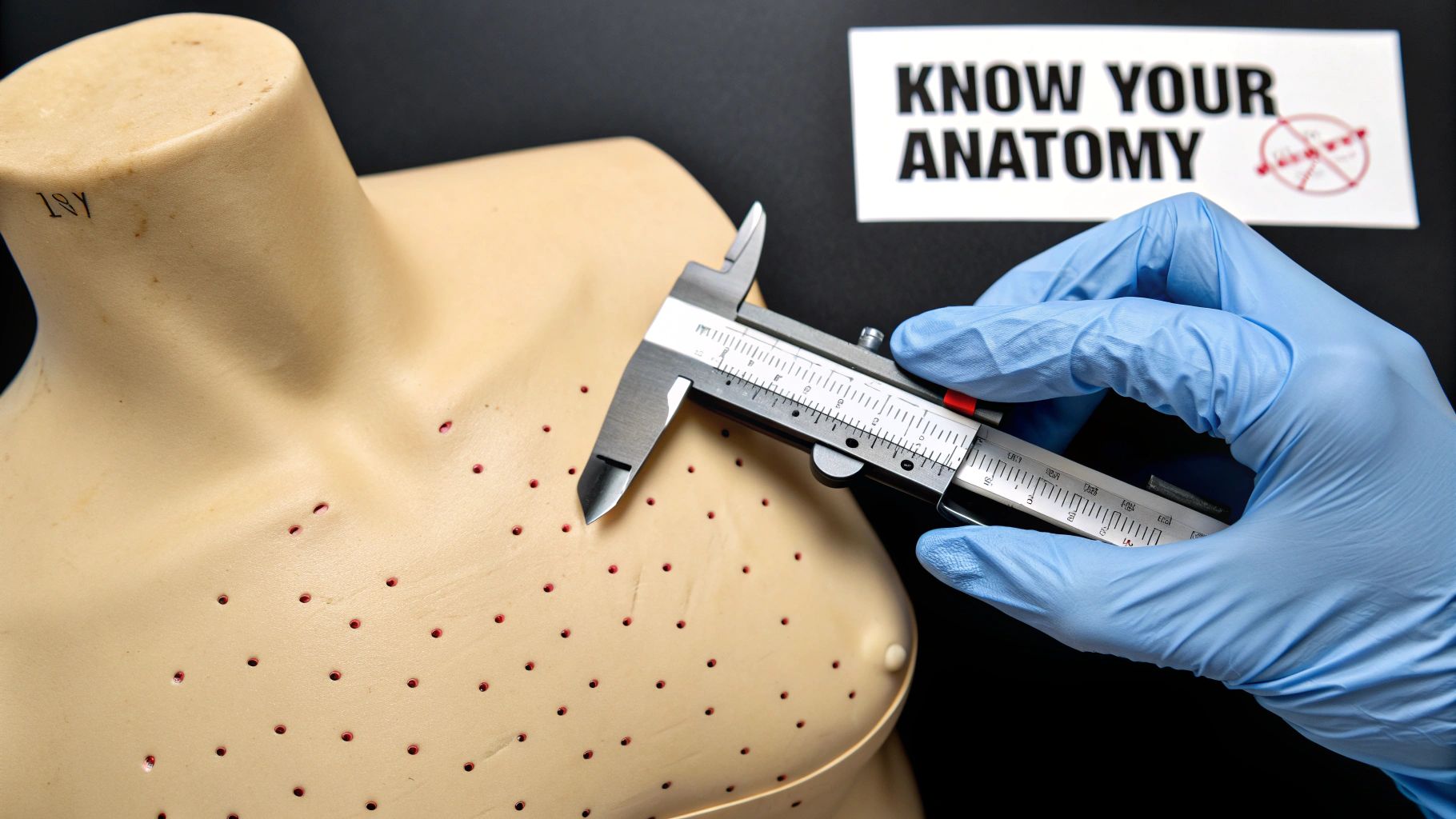
Here’s the biggest secret in the piercing world: your body is the boss. Always. When it comes to nipple piercings, your unique anatomy is the single most important factor that dictates the perfect placement for you. A pro piercer won’t just glance at your chest; they’ll carefully assess the size and shape of your nipples and areolas to find that ideal spot.
This isn't a one-size-fits-all situation. Far from it. What looks incredible and heals perfectly on one person might be a total disaster on another. A skilled piercer knows this and treats every client's body as the unique canvas it is.
The Piercer's Perspective
Think of your piercer as a skilled architect for your body. They combine their deep technical knowledge with your aesthetic vision to create something amazing. They know exactly how to work with different nipple types to ensure the piercing not only looks fantastic but has the best shot at a smooth, easy heal.
For example, people with flatter or inverted nipples need a specialized approach. An experienced piercer understands precisely how to adjust the piercing's angle and depth to accommodate this anatomy, allowing the piercing to sit properly and thrive. Their goal is always to find a placement that’s safe, stunning, and feels like it was made just for you.
The gold standard for any nipple piercing is placing it through the base of the nipple, right where it connects to the areola. This is the sweet spot, and for good reason:
- Optimal Healing: It puts the least amount of pressure on the surrounding tissue.
- Jewelry Fit: This placement allows barbells and rings to sit comfortably without pulling or pinching.
- Reduced Risk: It seriously lowers the chances of complications down the road.
Nailing this placement is truly an art. If a piercing is too deep and enters the areola, it can lead to constant irritation and a healing process that drags on forever. But if it’s too shallow, you’re looking at a much higher risk of the jewelry migrating or, even worse, rejecting completely.
Your anatomy isn't a limitation; it's a roadmap. A great piercer uses this map to find the placement that will not only look the best but will also be the healthiest for your body in the long run.
Why Your Input Matters
While your piercer brings the technical expertise, don't forget that this is your body. Your input is just as crucial. The marking process—where the piercer uses a sterile marker to dot the proposed entry and exit points—is your moment to weigh in.
Take your time here. Look at the marks from every angle. Stand up, sit down, look in the mirror. Does it look centered to you? Does it line up with the vision you walked in with? If anything feels even slightly off, now is the time to speak up. A true professional will be more than happy to adjust the marks until you are 100% confident and excited about the placement.
Ultimately, the perfect nipple piercing is a partnership. It’s a blend of your piercer’s anatomical know-how and your personal style. Trust their expertise, but never hesitate to advocate for your own vision. That’s the real key to getting a piercing you'll love for years.
Why Your Piercer Is Your Most Important Partner
Ever wonder how a piercer finds that exact perfect spot for a nipple piercing? It's not random chance; it's a precise blend of art and anatomy, and honestly, it's where the magic really happens. This process is a collaboration, and you're the co-pilot.
During your consultation, they’ll do more than just glance at your chest. A pro will carefully examine your tissue, chat about your lifestyle, and ask what kind of jewelry you've been dreaming of wearing. Why? Because a hoop might need a slightly different placement than a straight barbell to sit just right.
The Marking Process
Once they've assessed everything, your piercer will use a sterile marker to dot the proposed entry and exit points. This is your moment to shine! Don’t be shy—grab that mirror and take a good, long look.
This is a critical step. The marks they make are their professional recommendation based on experience, but your opinion is just as important.
Trusting their expertise is key, but remember this is your body. A true professional will happily adjust the marks until you are both 100% confident in the placement.
Stand up, sit down, and check out the marks from different angles. Does it feel perfectly centered to you? Does it look symmetrical with the other side? If anything feels even a tiny bit off, you need to speak up. Seriously. It’s way easier to move a dot of ink than it is to re-pierce something you're not happy with later.
It's All About Teamwork
Your piercer is trained to create a look that's not just technically straight but also complements your natural shape. Sometimes, due to your unique anatomy, a piercing that looks perfectly level while you're standing might shift a bit when you sit. A skilled piercer knows how to account for this.
They'll consider things you might not even think of, like how your muscles move and how the tissue will settle after the initial swelling goes down. They bring the technical skill, but you bring the vision. You can get a firsthand look at what the whole process feels like by checking out Ann's nipple piercing experience and reaction to see how it all comes together.
Finding a piercer you connect with and can talk to openly is just as important as choosing your first piece of jewelry. They are your guide, your artist, and your partner in making sure you get a piercing you’ll absolutely love for years to come.
How Placement Impacts Healing And Jewelry Options
Think of your nipple piercing placement as the foundation for both your healing journey and your future jewelry collection. The exact spot the needle goes through has a huge impact on everything that comes next, so getting it right from the start is an absolute must.
A perfectly placed piercing, nestled right at the base of the nipple where it meets the areola, is the goal. This sweet spot minimizes pressure on the surrounding tissue and is the secret to a much smoother, less complicated healing process. It's truly the difference between a happy piercing and one that gives you constant grief.
Why Precision Is Everything For Healing
When placement is off, your body will definitely let you know. A piercing that's too shallow is way more likely to snag on your clothes or get bumped, which leads to non-stop irritation. In worse-case scenarios, this can even trigger your body to push the jewelry out—a process called rejection.
On the flip side, a piercing that goes too deep into the areola can be pretty painful and may really struggle to heal. This kind of placement often causes prolonged swelling and discomfort that just won't seem to quit.
Bad placement is one of the top causes of piercing problems. In fact, some research has shown that nipple piercings can have a complication rate as high as 38%, and these issues are often tied directly to improper placement or aftercare. You can read more about piercing safety studies to see why going to a pro is so critical.
Unlocking Your Jewelry Wardrobe
Beyond just healing, your placement directly dictates the jewelry you'll be able to wear later. It’s like buying a phone—the model you get determines which cases will fit. The same logic applies here!
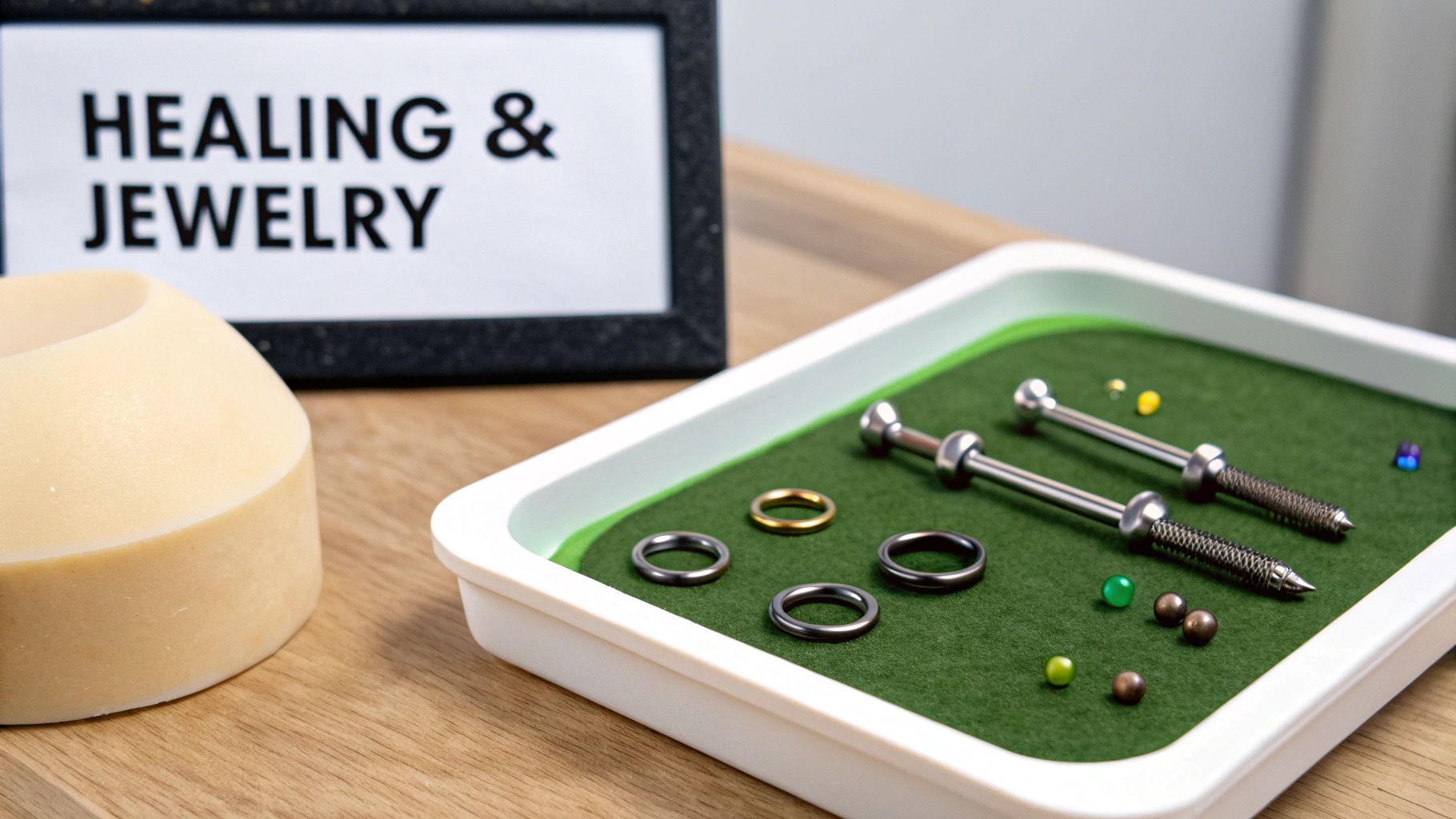
- Standard Placements: A classic horizontal or vertical piercing gives you the most freedom by far. Once you're fully healed, you’ll have an endless selection of straight barbells, captive bead rings, and clicker hoops to play with.
- Complex Placements: More intricate setups, like a cross or multiple piercings on one nipple, require a bit more planning. The jewelry for these styles has to be chosen carefully to make sure the pieces don't press against each other and cause irritation.
- Initial Jewelry: This is exactly why your piercer will start you off with a simple, high-quality titanium barbell. It’s picked specifically because it has enough extra length to accommodate that initial swelling, giving your piercing the best possible start.
Think of that first barbell as the key that unlocks all your future style options. A healthy, perfectly placed piercing is a blank canvas, ready for you to decorate with all the amazing nipple jewelry from Bodycandy once it’s happy and healed.
Your Pre-Piercing Consultation Checklist
Walking into your appointment already feeling prepared is the best way to guarantee you'll get the nipple piercing you've been dreaming of. A good consultation should feel like a conversation, not a pop quiz. This is your time to get a feel for your piercer and make sure you're both totally on the same page before any needles come out.
Think of it as drawing up the map for your piercing journey. You've got the destination in mind, and your piercer is the expert navigator who knows how to get you there safely. A piercer who actually encourages questions and takes the time to listen is one you can trust.
Key Questions To Ask Your Piercer
Before you give that final nod of approval, it’s smart to cover all your bases. This isn't about being a difficult client; it's about being an informed one who takes an active role in their own body modification. Any true professional will respect you for it!
Use this little checklist to help guide the chat:
- "Can I see your portfolio?" Don't just glance at the fresh, shiny piercings. Specifically, ask to see photos of healed nipple work. This is the real proof of their long-term placement skills.
- "Do you see any potential challenges with my anatomy?" Just ask straight up. A great piercer will give you an honest look-over and explain exactly how they'll work with your specific shape.
- "What placement would work for my jewelry goals?" Let them know what nipple piercing placement you're hoping for and the kind of jewelry you see yourself wearing down the road. A captive bead ring might need a slightly different spot than a straight barbell, so they need to know your endgame.
- "What material is the initial jewelry?" For a brand new piercing, the only answer you want to hear is implant-grade titanium. It’s hypoallergenic and gives your body the absolute best shot at healing without any drama.
- "What's the aftercare routine?" You should leave that studio with a super clear, easy-to-follow aftercare plan. Make sure you know what to do, what not to do, and who to call if you have questions later.
A piercer who seems rushed or waves off your questions is a massive red flag. The right person for the job will make you feel confident and excited, not confused or pressured. Your comfort and safety are always priority number one.
Common Questions About Nipple Piercing Placement
Still have a few questions swirling around? You're not alone! Let's tackle some of the most common curiosities about nipple piercing placement with some straightforward, no-fluff answers.
Is a certain nipple piercing placement more painful?
Honestly, pain is pretty subjective, but the sensation is generally the same whether you go horizontal, vertical, or diagonal. The ouch-factor comes from the needle passing through a dense bundle of nerve endings, so it's going to be a quick, sharp pinch no matter the angle.
The real key to making it as painless as possible is finding a piercer who is experienced, swift, and confident. Where you will feel a difference is during healing—an incorrectly placed piercing can cause ongoing pain and irritation. That's why getting it right for your unique anatomy from the start is so important.
Can I get a nipple piercing with inverted or flat nipples?
Yes, in many cases, you absolutely can! In fact, a thoughtfully placed piercing can sometimes encourage an inverted nipple to become more pronounced over time.
Heads Up: This is definitely a specialized service. It requires a highly experienced and knowledgeable piercer who can properly assess your anatomy. They'll know if a piercing is viable and what placement will be safest for healing. This is not a job for an apprentice or someone new to the industry.
What should I do if my piercing placement is wrong?
Uh oh. Incorrect placement can lead to a whole host of problems. If it's too shallow, it's at a high risk for migrating or rejecting completely. If it's too deep into the areola, it might struggle to ever heal properly.
If you suspect your placement is off, your first move should be to get a second opinion from a different, highly reputable piercer. They might recommend removing the jewelry, letting the piercing close up, and then re-piercing it correctly once the area has fully healed.
How long until I can change my nipple jewelry?
Patience is your best friend here, seriously. Nipple piercings can take a surprisingly long time to fully heal—anywhere from 6 to 12 months, and sometimes even longer. You shouldn't even think about changing your jewelry just for fun until it's 100% healed.
Swapping it out too soon can trigger major irritation, introduce bacteria, and tear up all that fragile new tissue you've been working so hard to grow. The only exception is downsizing the initial bar. Your piercer should do this for you once the initial swelling has subsided, usually after a few weeks.
Ready to start dreaming about all the amazing jewelry options for your future piercing? Bodycandy has an incredible collection of high-quality nipple rings to help you express your unique style. Shop the full collection today!