
















“Surgical steel” sounds like a safety guarantee. It isn't.
That shiny label can describe jewelry with no meaningful proof of implant suitability, while genuine implant grade surgical steel is tied to recognized standards, controlled chemistry, and careful manufacturing. The difference matters most when a piercing is fresh, irritated, or exposed to long-term wear.
Your piercing doesn't care whether a product description sounds medical. It cares whether the metal, finish, shape, and cleanliness work well with living tissue. Let's decode the label without the marketing fog.
The Truth About Surgical Steel Labels
"Surgical steel" is a marketing label, not a material passport. A seller can use those words without naming the alloy, proving its chemistry, or showing which implant standard the jewelry meets. Two pieces may look equally shiny while one has documented controls and the other is merely commercial stainless steel.
For a healing piercing, ask a sharper question: Which recognized implant standard does this steel meet?
Why the label causes trouble
The phrase covers too much territory. It may describe a finished piece with an attractive polish, but appearance cannot confirm the metal's composition, manufacturing controls, surface condition, or tissue compatibility. “Stainless” only describes resistance to staining and corrosion. It does not automatically make jewelry suitable for a fresh piercing.
Detailed alloy chemistry belongs with the standards themselves. Here, the practical distinction is simpler: a credible seller should identify the applicable ASTM or ISO specification and provide documentation that connects the jewelry material to it. A vague product title gives you nothing to verify.
The Association of Professional Piercers recommends ASTM- or ISO-compliant implant materials for initial piercing jewelry, putting documented compliance ahead of generic medical-sounding language. Its guidance appears in the Association of Professional Piercers standards document.
Practical rule: Treat “surgical steel” as a clue to investigate, never as proof.
What your body actually encounters
Your body interacts with the jewelry's entire surface, not just its alloy label. Metal sits inside a narrow tissue channel where moisture, debris, friction, pressure, and cleaning habits affect healing. A legitimate alloy with scratches, tool marks, or rough edges can still behave like sandpaper in that channel. Surface polish matters just as much as the material name.
Implant-grade steel is not perfectly inert. Biomedical research discusses pitting corrosion, crevice corrosion, and stress-corrosion cracking in body environments, along with possible release of iron, chromium, and nickel ions. That does not make the material automatically unsuitable. It explains why traceable material and careful finishing deserve attention. The corrosion behavior is examined in this peer-reviewed review of stainless steel for biomedical applications.
Use this shopping checklist:
- Recognized standard: Look for an ASTM or ISO designation, not only “medical steel.”
- Material documentation: Ask for a mill certificate or supplier declaration naming the alloy and standard.
- Clean finishing: Skip visible scratches, flaking plating, tool marks, and sharp edges.
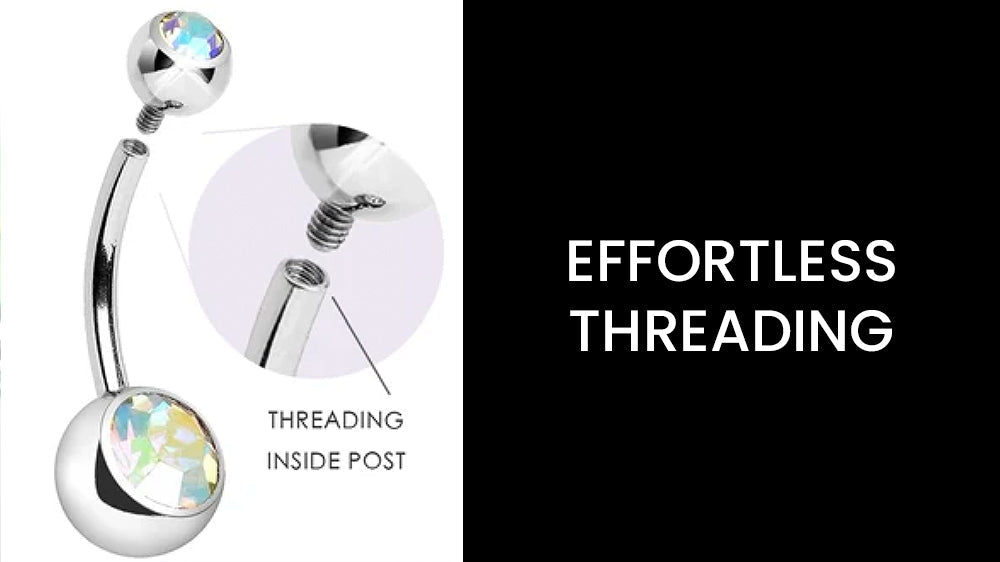
- Suitable design: Choose threading and shapes that reduce trauma during insertion and wear.
A discount-bin piece can look cute. Healing tissue needs evidence, clean finishing, and a seller willing to show their homework.
Decoding the ASTM and ISO Standards
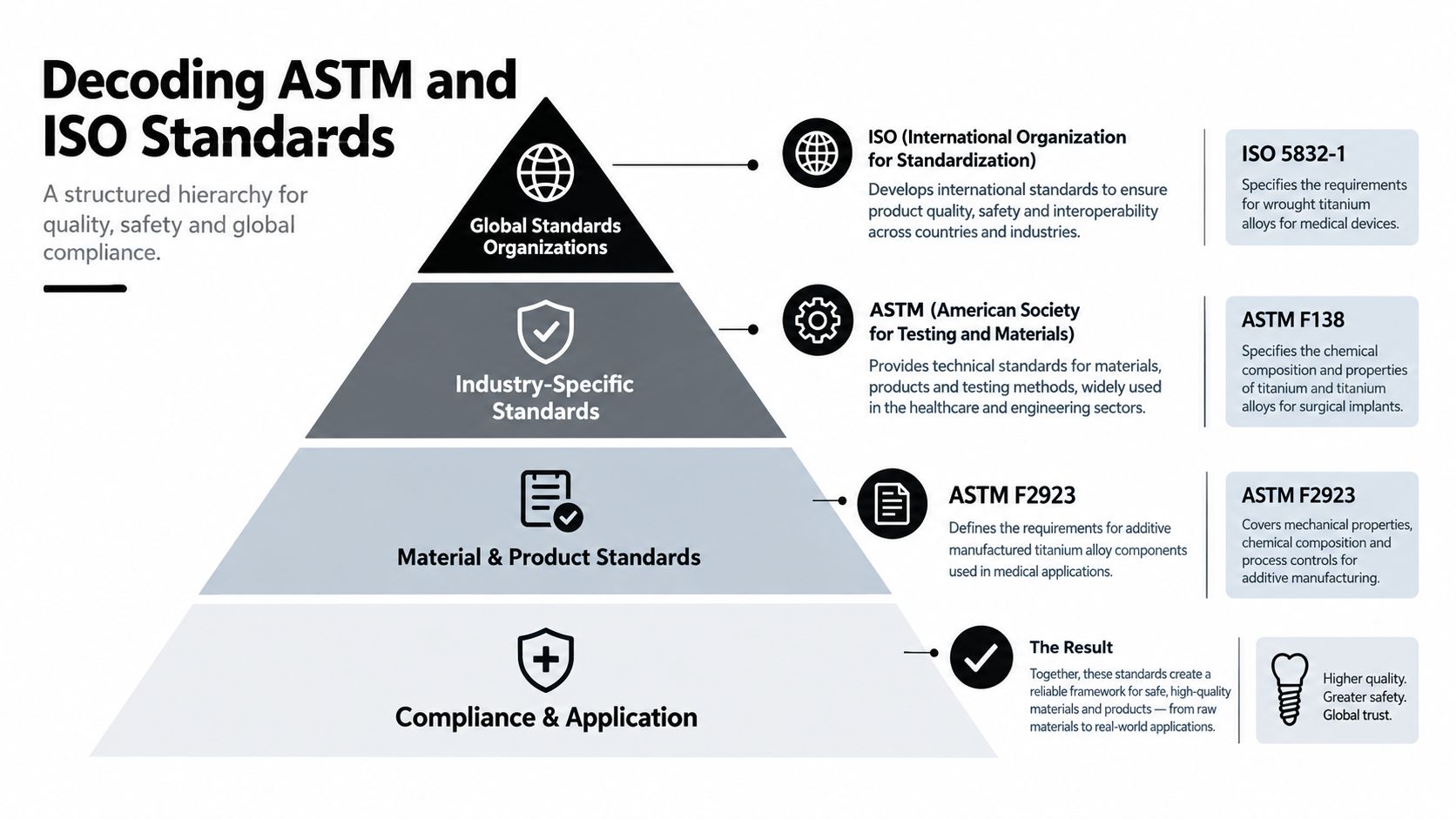
ASTM F138 and ISO 5832-1 turn a vague material claim into something you can verify. They don't magically certify every finished piece of jewelry, but they define the raw implant material far more precisely than the phrase “surgical steel.”
What the alloy contains
A typical implant composition contains approximately 17–19% chromium, 13–15% nickel, and about 2% molybdenum, with carbon limited to no more than 0.03%, according to the biomedical material review cited above. The exact specifications are also reflected in ISO 5832-1 material requirements.
Each ingredient has a job:
- Chromium helps create the passive oxide film that protects the surface from corrosion.
- Molybdenum improves resistance to chloride-driven pitting, a concern in physiological environments.
- Low carbon reduces chromium-carbide formation, helping preserve the chromium-rich protective film.
- Nickel supports the austenitic structure, but it also means the alloy isn't nickel-free.
ASTM F138-19 specifically covers wrought 18-chromium, 14-nickel, 2.5-molybdenum stainless-steel bar and wire for surgical implants. The FDA-recognized documentation describes the standard as covering chemical, mechanical, and metallurgical requirements. In plain English, the standard controls how the steel is made and what it must be, not merely how it looks.
Why paperwork beats product copy
A product page that says “316L” gives you a useful clue, but it doesn't prove compliance on its own. For body-jewelry procurement, the strongest practical evidence is a mill certificate or supplier declaration that identifies ASTM F138 or ISO 5832-1 and the specific alloy.
ISO 5832-1 also controls grain structure and nonmetallic inclusions. Those details matter because a material can have the right broad chemical description while still failing to meet the full requirements for implant stock.
The standard describes the steel, not automatically the finished jewelry.
That distinction is easy to miss. The standard doesn't automatically prove that a finished barbell has a flawless polish, clean manufacturing process, appropriate sterilization, or well-designed threads. You need to evaluate the piece itself, too.
ISO 5832-1 requires a chromium-molybdenum effectiveness index of at least 26, a technical measure connected to resistance against localized corrosion. You don't need to calculate it while shopping. You do need to understand why “it's stainless” is nowhere near enough information.
Implant Grade vs Regular Stainless Steel
Two pieces can both be silver-colored, magnetic or nonmagnetic depending on the alloy, and marketed with medical-sounding language. That visual similarity doesn't tell you how carefully the material was controlled or how well the finished jewelry will behave in a healing fistula.
The “L” in 316L means low carbon. Carbon limited to no more than 0.03% helps reduce chromium-carbide formation, which supports the protective chromium-rich passive film. Implant specifications also control elements such as chromium, nickel, molybdenum, nitrogen, grain structure, inclusions, and mechanical performance.
| Feature | Implant Grade (ASTM F138) | Commercial Stainless Steel |
|---|---|---|
| Material identification | Specific implant alloy and documented standard | May use a broad commercial designation |
| Chromium | Typically approximately 17–19% | Composition may vary by product |
| Nickel | Typically approximately 13–15% | Composition may vary by product |
| Molybdenum | Typically about 2%, with ISO specifications addressing chromium-molybdenum effectiveness | May vary or be absent |
| Carbon | No more than 0.03% in the specified implant alloy | May not match implant requirements |
| Manufacturing controls | Chemical, mechanical, metallurgical, grain, and inclusion requirements | Not automatically controlled for implant use |
| Best use question | Appropriate only when the material and finished piece are documented and suitable | Fashion use may not make it appropriate for a healing piercing |
The alloy is only half the story
A certified raw material can still become poor jewelry if the manufacturer leaves scratches, tool marks, burrs, contamination, or damaged plating on the surface. Corrosion performance depends strongly on surface condition and exposure. Scratches and tight crevices can disturb the passive film, trap moisture, and create localized corrosion sites.
That's why “implant-grade” should never become an excuse to ignore the actual piece. Examine the polish under good light. Run a clean fingertip over accessible surfaces. Look for a smooth, continuous finish rather than a surface that feels gritty or visibly marked.
You can explore examples of steel jewelry and material-focused designs through this BodyCandy surgical steel jewelry update, but use the same verification habits with any retailer.
A useful buying filter is simple:
- Confirm the standard. ASTM F138 or ISO 5832-1 is meaningful. “Surgical” alone isn't.
- Confirm the documentation. Ask whether the seller can provide a mill certificate or manufacturer declaration.
- Inspect the finish. Certification doesn't repair a rough surface.
- Check the construction. Threads, edges, and transitions should be smooth and tissue-friendly.
Biocompatibility and the Nickel Question
Nickel is the part of implant-grade steel that deserves an honest conversation. The standardized alloy typically contains approximately 13–15% nickel, so implant-grade doesn't mean nickel-free. If you have known nickel hypersensitivity, a steel label shouldn't end the discussion.
Chromium helps the alloy form a passive oxide film, a thin protective layer that separates much of the underlying metal from the surrounding environment. Molybdenum supports resistance to chloride-induced pitting. Those features help explain why the alloy can be used for implant applications, but they don't guarantee that every person will tolerate it or that every finished piece will perform perfectly.
Why surface quality changes the equation
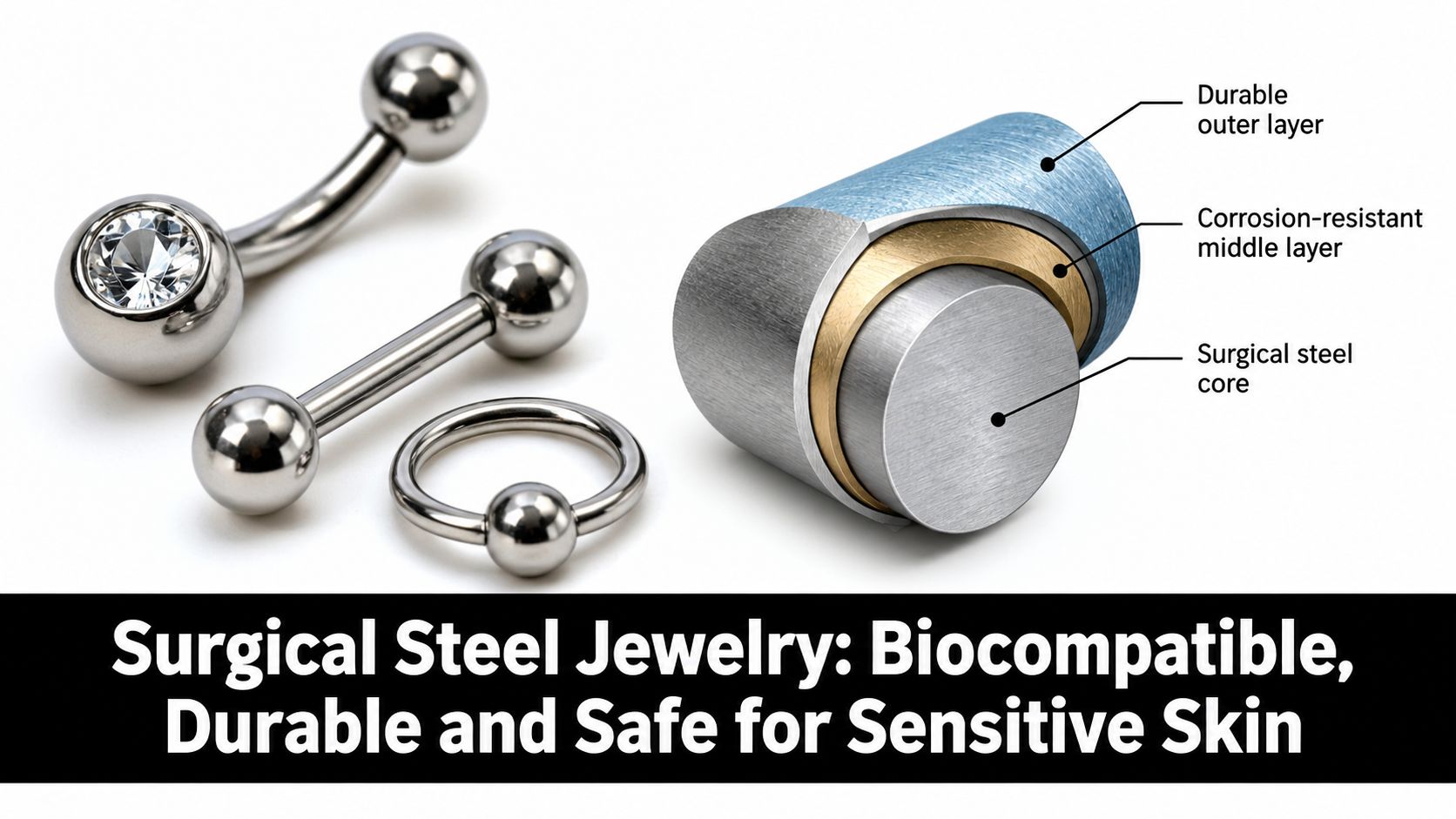
Corrosion rarely announces itself with a dramatic special effect. Localized pitting can begin in a damaged area, while a tight crevice can hold moisture and debris against the metal. A pit can also act as a stress concentrator, connecting corrosion with fatigue-crack initiation under repeated loading.
That makes polish more than a cosmetic detail. A smooth, defect-free finish gives biological debris and stagnant moisture fewer places to collect. Poor polishing, embedded iron, contamination, and tool marks can destabilize the passive film locally, even when the base steel meets a nominal grade.
The practical conclusion is layered:
- Verified alloy: Confirms the raw material meets the relevant implant specification.
- Smooth finish: Reduces roughness and hiding places for debris.
- Clean processing: Helps avoid contamination introduced during manufacturing or handling.
- Personal tolerance: Still matters, especially with known hypersensitivity.
When steel may not be your move
If steel repeatedly causes itching, persistent redness, worsening tenderness, or other symptoms, don't keep forcing it because the label says “implant.” Remove guesswork from the situation by consulting a qualified piercer and, when needed, a healthcare professional. Seek urgent medical advice for severe swelling, spreading redness, significant pain, or systemic symptoms.
People with known nickel sensitivity may prefer to discuss alternatives with a professional. BodyCandy's titanium body jewelry guide is a useful starting point for comparing material considerations, but a guide can't diagnose an allergy or replace individualized medical advice.
The right question isn't whether steel is universally good or bad. It's whether the documented material, finished surface, design, and your own skin history make sense together.
Daily Care and Maintenance Routines
Good jewelry still needs good habits. Your goal is to remove residue without scratching the surface, trapping moisture, or attacking the passive oxide film with aggressive products.
A low-drama cleaning routine
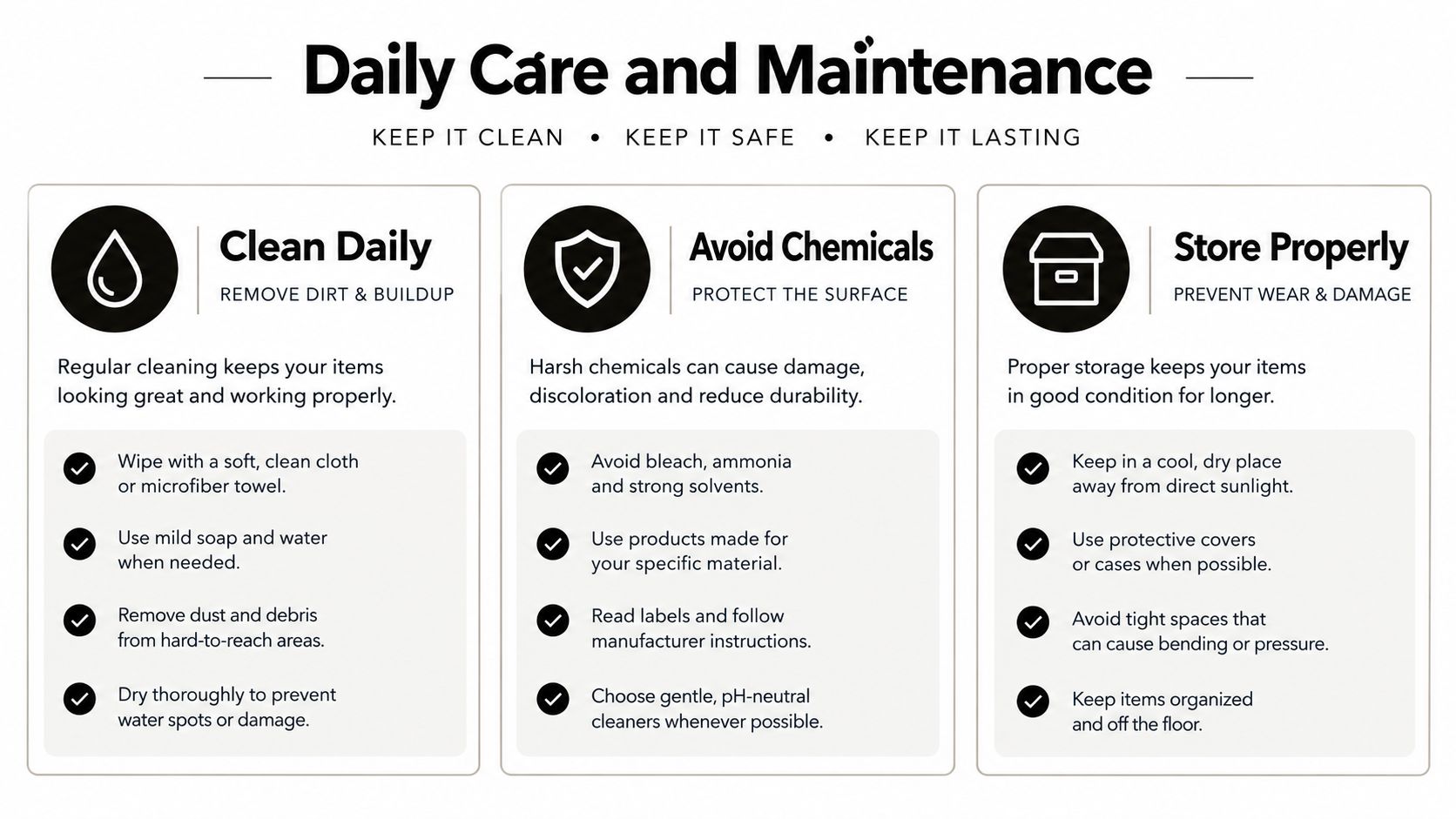
Start by washing your hands before touching jewelry or a piercing. Clean the piece gently with warm water and a mild, nonabrasive cleanser when appropriate, then rinse thoroughly so residue doesn't remain in threaded areas or behind decorative ends.
Use a soft, clean cloth to dry accessible surfaces. Don't twist jewelry through a healing piercing just to make cleaning feel complete. Movement can create friction and transfer debris into the tissue channel.
For detailed cleaning guidance, follow BodyCandy's body jewelry cleaning guide. If the piercing is fresh or irritated, follow the aftercare instructions provided by your professional piercer instead of improvising with harsh household products.
Keep the passive film out of trouble
Avoid abrasive polishing compounds, rough pads, wire brushes, and anything that can create microscopic scratches. A shiny finish can become a corrosion problem if cleaning removes or damages the smooth surface that helps protect the alloy.
Also avoid treating every chemical as harmless because stainless steel is durable. Strong products can leave residues, irritate tissue, or interact with surface contamination. Rinse thoroughly after cleaning, and don't leave jewelry sitting in stagnant moisture.
A simple maintenance checklist keeps the routine practical:
- Clean gently: Use a soft cloth and mild cleaning approach suited to the jewelry and piercing stage.
- Rinse completely: Residue can collect around threads, seams, and decorative settings.
- Dry the piece: Moisture trapped in crevices creates a less friendly environment.
- Inspect regularly: Look for scratches, tool marks, loosened ends, plating damage, or rough transitions.
- Retire damaged pieces: A visibly compromised surface belongs out of a healing piercing.
Storage matters between wears
Store jewelry separately in a clean, dry container so pieces don't rub against one another. Keep threaded ends with their matching bars when possible, and avoid tossing steel pieces into a bag with keys, loose coins, or rough accessories.
Clean jewelry before storage, especially if it has contacted sweat, cosmetics, hair products, or body fluids. Don't seal damp pieces in an airtight container and expect the metal to stay pristine. Dry first, then store away from abrasive clutter.
You're protecting more than appearance. Scratches and damaged finishes can create rough spots that catch debris and increase friction during wear. The best maintenance routine is gentle, consistent, and boring in exactly the right way.
Shopping Smart for Your Next Upgrade
“Surgical steel” is not a shopping decision. It is a label that may describe anything from documented implant material to vague fashion jewelry. Read the product page like a piercer, especially if the piece will enter a fresh or irritated piercing.
Start with the actual situation. If a listing says only “316L surgical steel” and gives no standard, manufacturer, or mill certificate, treat it as fashion steel until the seller provides documentation. The name alone does not prove the alloy, processing, or finished jewelry quality.
A useful product page should show:
- Material: Look for an identified alloy and a stated implant standard, not just “medical steel.”
- Surface: The polish should be smooth, bright, and free from visible tool marks, pits, flaking, or deep scratches. A sound alloy with a rough finish can still drag against healing tissue.
- Construction: Check for clean threading, aligned components, rounded edges, and transitions that do not scrape or pinch.
- Documentation: Ask whether the seller can provide a mill certificate, supplier declaration, or manufacturer details. Documentation turns a promise into something you can examine.
- Processing: Find out whether the piece is cleaned and sterilized appropriately before use.
The Association of Professional Piercers recommends documented compliance with implant standards for initial piercing jewelry, as explained in its material standards guidance for piercing jewelry. Use that guidance as a filter, then judge the actual piece in front of you.
Skip listings built around “hypoallergenic” language, mystery plating, peeling color, rough seams, or evasive answers. A seller who cannot identify the material or explain the finish has not given you enough information to trust the jewelry.
Fit is part of the purchase, too. Jewelry that is too tight creates pressure, while excess movement from poor sizing can keep a piercing irritated. Ask a reputable piercer to assess your anatomy, diameter, or bar length before upgrading.
BodyCandy offers styles with identified steel materials. Compare each product's specifications, inspect the finish, and choose documentation over shiny marketing. Your jewelry should express your style without making your healing process pay for it.