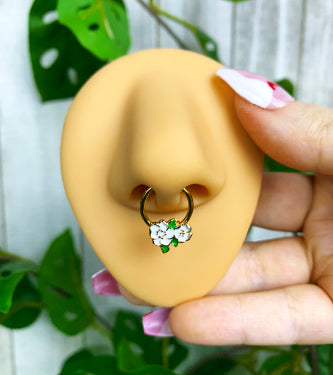


















You're standing in front of a mirror, scrolling jewelry pics, and suddenly every “gold” option looks either too flashy, too flimsy, or weirdly hard to trust. That's exactly why gold titanium nipple rings keep popping up in carts, they promise the warm look people want without forcing you to gamble on material safety. The catch is that the name can hide a lot, and if you're shopping for a fresh piercing, a healed one, or a gift, those hidden details matter more than the sparkle.
Why Gold Titanium Nipple Rings Are Trending
You try on a pair that looks gold in the mirror, feels light against the skin, and does not raise the usual “is this going to irritate me?” alarm. That combination is a big reason gold titanium nipple rings keep showing up in shopping carts. They give you the warm, polished look people want, while the titanium base keeps the piece grounded in something safer and more predictable than mystery alloys or cheap plating.
The popularity is not just about shine. Shoppers are paying closer attention to how piercing jewelry performs on the body, and BodyCandy's guide to different kinds of nipple rings points to the wider demand for materials that balance appearance with wearability (BodyCandy guide). That matters because nipple jewelry sits in a spot where friction, healing, and metal sensitivity can all become problems fast if the material choice is sloppy.

Why the hybrid idea works
The hybrid appeal usually comes from a titanium core with a gold-colored finish, or from a design that keeps titanium where the body needs it and gold where the eye sees it. That split is practical. Titanium brings the lightweight, skin-friendly side, while the gold look gives you the richer visual finish people are after.
The hidden trade-off is simple. A piece can look like gold without behaving like solid gold, and that gap matters most when you are choosing jewelry for a fresh piercing or for skin that reacts easily. If the listing only talks about the finish and stays vague about the base metal, treat that as a warning sign and read it again before buying.
BodyCandy's guide to titanium body jewelry is useful here because it helps separate the material from the styling language (BodyCandy guide). Titanium is often the safer starting point for healing, while gold is usually easier to enjoy once the piercing is fully settled. That is why these pieces sell so well, they let you get the luxe look without pretending that healing and decoration have the same job.
Understanding the Materials and Certifications
The safest way to shop is to treat the material label like the actual product, not the decoration. For nipple piercings, implant-grade titanium should be labeled ASTM F-136 compliant and ISO 5832-3 compliant, while commercially pure titanium is ASTM F-67 compliant. That certification language matters because it tells you the metal is being identified by standard, not just by marketing copy.
What titanium is doing for you
Titanium is the low-drama roommate in the jewelry drawer. It is measured at a density of 4.43 g/cm³, contains 0% nickel, and the provided comparison describes it as 100% MRI safe (Jewel Style Radar comparison). That lower density is why it usually feels lighter on the body than heavier metals, which can matter more than people expect during healing.
The same comparison also lists 316L surgical steel as potentially containing 8–10% nickel, which helps explain why sensitive-skin shoppers often skip it. WebMD also notes titanium is a good option if you have nickel sensitivity. If a piercing has ever felt angry, itchy, or hot after contact with jewelry, that nickel question is usually where the trouble starts.
Where gold fits in
For intimate piercings, the gold side of the equation should be 14k or 18k solid gold, and it must be nickel-free (Jewel Style Radar). That matters because gold is usually the “fully healed, stable tissue” choice, not the fresh-piercing starter.
The easiest way to separate the two roles is this. Titanium is the foundation, gold is the finish. One is about how the piercing lives on your body, the other is about how it looks once the jewelry is doing its job.
Good shopping habit: treat certification words as the proof, and the gold tone as the style layer.
A helpful primer on titanium body jewelry is available in BodyCandy's titanium guide, especially if you're trying to decode labels before you buy.
Solid Gold vs Plated and Titanium Grades Compared
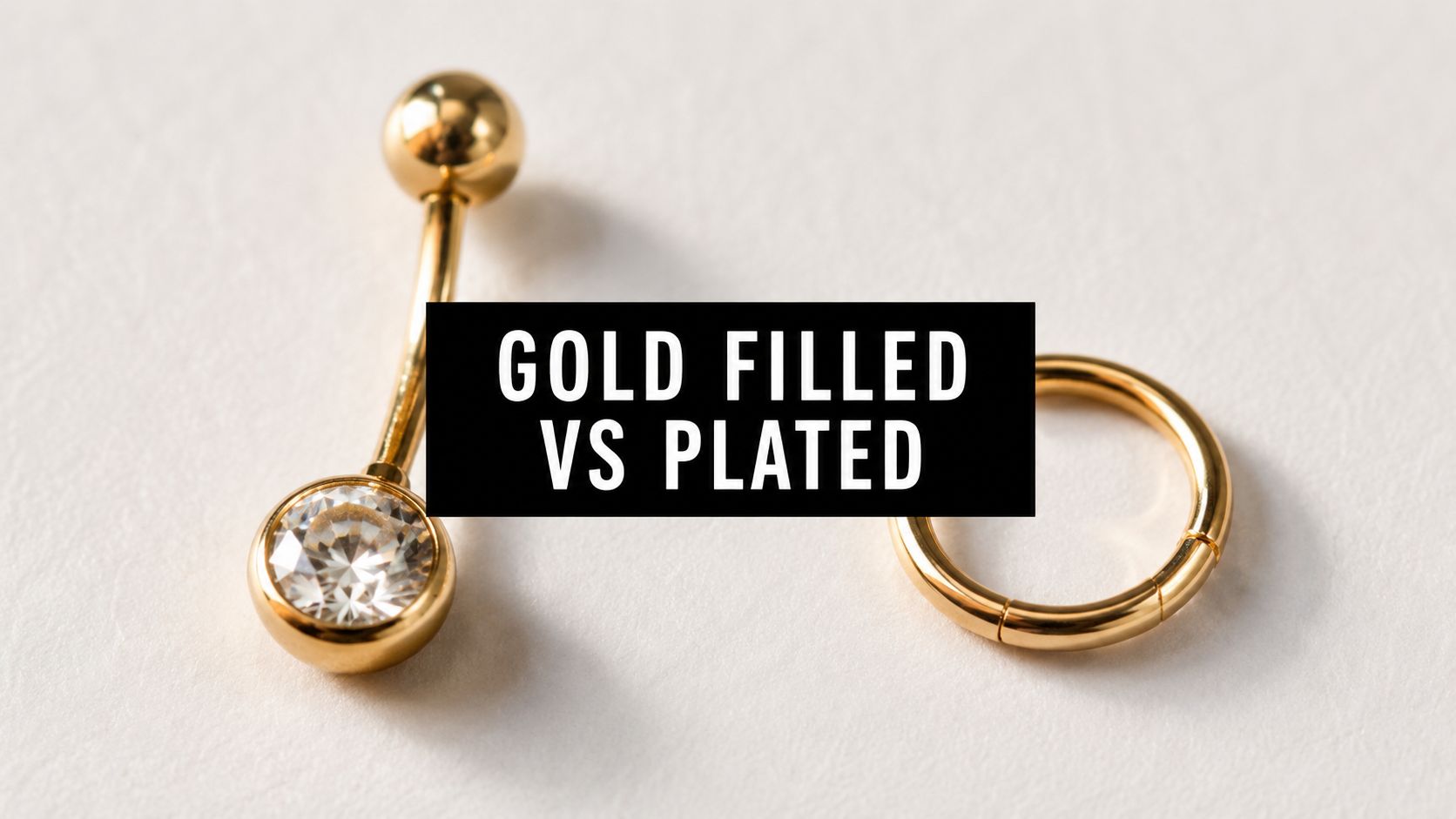
A lot of confusion starts when “gold” gets used like it means one thing. It doesn't. Solid gold, gold plating, and titanium with a gold look can sit in very different places for healing, comfort, and how long the jewelry stays wearable.
| Material | Weight | Price Range | Best For |
|---|---|---|---|
| ASTM F-136 titanium | Light | $30–$80 | Fresh piercings, sensitive skin, daily wear |
| 14k solid gold | Heavier, with density measured at 12.90 g/cm³ | $150–$600+ | Fully healed piercings, long-term luxury wear |
| Gold-plated or gold-toned titanium | Usually light, depending on build | Varies by finish | Style-first wear, when the listing clearly explains the base material |
How to read the trade-offs
Solid gold is the obvious luxury pick, and the extra weight is part of that feel. Titanium usually makes more sense when comfort and healing are the priorities, especially if your skin tends to react when jewelry gets fussy.
Gold-plated options can look beautiful, but the gold layer is only part of the story. If the product page does not clearly say what sits underneath the finish, you are guessing about the part that touches your body, and that is a bad guessing game. For a clearer breakdown of real gold terminology, BodyCandy's gold jewelry guide helps separate solid gold from decorative gold language without turning it into jargon soup.
What to do with that info
If you are buying for a fresh piercing, keep your eyes on the titanium base and the certification language. That gives you a better shot at comfort while the piercing is still settling.
If you are buying for a healed piercing and want the richer gold look, solid gold becomes more relevant, but only if it is the right karat and nickel-free. Gold-toned titanium can still be a smart style move, as long as you know the coating is cosmetic and the base material is doing the foundational work.
Finding the Perfect Size and Gauge for Your Anatomy
Sizing is where a lot of people make a costly mistake. A beautiful piece can still feel wrong if the length misses the mark, and nipple anatomy varies far more than product photos usually show.
Start with the body, not the cart
Measure the tissue first, then choose the jewelry. Nipple jewelry sizing guidance from an instructional infographic titled Perfect Sizing For Your Piercing shows the basic idea clearly, measure the tissue thickness, then leave a little extra room so the jewelry can sit without squeezing. That buffer matters because nipples are not fixed little targets, they change with temperature, movement, and swelling.

A simple sizing checklist
- Measure the tissue, not just the jewelry you like. Choose the piece after you know your actual nipple width and how much space you need for movement.
- Match the gauge to the piercing. Standard nipple jewelry often sits around 14G or 16G, so check the existing piercing size before ordering.
- Leave room for swelling. A small buffer helps the jewelry sit comfortably instead of pinching when the area changes through the day.
- Watch the decorative ends. Chunkier gems, charms, or ornate shapes can feel heavier in daily wear than a plain bar.
- Check the base material before the finish. A gold look can hide a titanium base, and that base is what usually matters most for comfort and healing.
Comfort tip: if a piece looks dramatic on a display card, it may feel even more dramatic on your body.
The hidden trade-off is simple. The gold finish gives you the look, but the base and the size determine how the piece behaves on your body. A bar that is too short can press into tissue, while one that is too long can shift, snag, and draw attention every time you move.
For fresh piercings, the safer instinct is to prioritize fit and a titanium base, then let the gold styling come second. For healed piercings, you have more room to choose by look, but the same sizing rules still apply, because comfort does not care how pretty the finish is. Once you know your anatomy, gauge, and the amount of space the jewelry needs, the right piece stops being a guess and starts being a much cleaner choice.
Styling Ideas to Express Your Unique Look
A lot of shoppers think nipple jewelry is private, so style doesn't matter much. It does. The right piece can feel like a tiny secret or a full-on statement, depending on how you like to dress and what kind of energy you want under your clothes.
Minimalist barbells are the easiest starting point. They keep the line clean, sit close to the body, and work well if you want something that doesn't snag on fabrics or fight with your wardrobe.
Three style moods that work
- Quiet luxe: slim gold-toned barbells with small gemstone ends, especially if you like a polished look without screaming for attention.
- Playful sparkle: gemmed rings or decorative ends that catch light and feel a little more flirty.
- Bold hardware: textured or architectural shapes that lean edgy and look intentionally styled.
You can also think in terms of outfit logic. If you're usually in fitted tees or soft lingerie, low-profile pieces make sense. If you like a statement moment for special occasions, decorative rings or gem accents can give you that little electric feeling before you even leave the mirror.
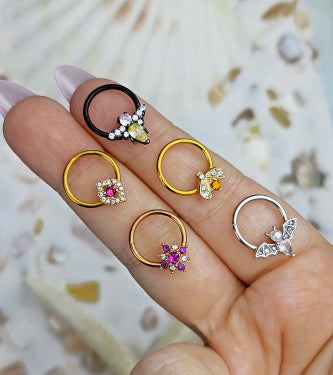
BodyCandy's nipple ring selection can be a useful place to compare shapes, finishes, and end styles in one place, especially if you're trying to decide between subtle and standout. The key is to choose a piece that matches your actual routine, not just your fantasy outfit.
Healing and Aftercare Tips for Long-Lasting Comfort
A fresh nipple piercing does better with patience than with constant attention. Medical guidance on body piercings notes that nipple and areola piercings can take a long time to heal and can face delayed infection, so the job is to keep the area calm and consistent, not to keep checking it every few minutes. For a simple overview of safe piercing care, the BodyCandy guide points to the same basic idea, gentle care beats fussy care.

The basic aftercare rhythm
Start with a simple routine and keep it boring. Aftercare works best when it feels like brushing your teeth, regular, light-touch, and easy to repeat.
- Clean with saline twice daily. Use a gentle, steady routine instead of scrubbing.
- Leave the jewelry alone. Clean hands only, because poking and turning usually adds irritation.
- Skip swimming and soaking. Pools, tubs, and long baths can introduce extra contamination while the piercing is still fragile.
- Watch the tissue. Redness and swelling that settle down are one thing, but symptoms that keep building deserve attention.
Clean care beats aggressive care every single time.
Titanium is a smart choice during the healing phase because it keeps the metal side simple while your body does the hard work. Once the piercing is fully healed and stable, a gold piece makes more sense if you want that warmer finish without asking a fresh piercing to do too much at once.
What not to do
Don't twist the jewelry out of curiosity. Don't attack crusties with harsh products. Don't decide irritation is just part of the deal if it keeps getting worse.
If something looks wrong, trust the pattern instead of hoping it will sort itself out. Catching a problem early usually makes it easier to handle before it turns into a bigger mess.
If you need a refresher on scan-related concerns, BodyCandy's guide on piercings, X-rays, and MRIs is a useful place to start.
MRI Safety and Allergy Considerations You Should Know
If you want no surprises at a medical appointment, this is the part to read closely. Titanium body jewelry is often discussed in MRI contexts because implant-grade titanium is commonly treated as a safer, nonmagnetic option, while the gold finish only changes the look, not the metal underneath. For a practical scan-related refresher, BodyCandy's guide on piercings, X-rays, and MRIs is a useful place to start.
Why the certification matters more than the finish
Gold color can hide a lot. The shine on the outside does not tell you whether the piece is built on a reliable titanium base, a lower-grade alloy, or a metal mix that may be less friendly to sensitive skin.
That matters most if you react to nickel. Titanium is often a smart choice for people with nickel sensitivity, and body jewelry material guides consistently point out that some steel alloys may still include nickel, which is exactly what sensitive wearers try to avoid. A gold finish does not change that hidden mix, so the label on the inside counts more than the color on the outside.
A simple decision rule
If a product page spends all its time selling sparkle and barely says what the piece is made of, treat that as a warning sign. Clear labeling such as ASTM F-136, ISO 5832-3, or nickel-free solid gold gives you much better footing, because it tells you what is touching your skin.
That same habit helps with scan prep, too. When you know the base metal, you can judge whether a piece is better left out during imaging or whether it belongs in the category of jewelry you can discuss with your clinician ahead of time. The point is simple. Precise material labeling makes it easier to separate pretty plating from body-safe construction.
Short version: read the metal first, admire the finish second.
Smart Buying Tips for BodyCandy Shoppers
Good shopping starts with reading the product page like a skeptic with excellent taste. You want the pretty part, sure, but you also want the part that won't annoy your body after the box is open.
What to check before you click buy
- Look for the exact base metal. If it says ASTM F-136 titanium, ISO 5832-3, or solid 14k or 18k gold, that's much clearer than a vague “gold” description.
- Check whether the piece is for healing or healed wear. Fresh-piercing jewelry and fully healed jewelry do not play the same role.
- Read the length and gauge closely. That's how you avoid ending up with a gorgeous piece that doesn't fit your anatomy.
- Scan for nickel language. If you're sensitive, that detail is not optional.
- Use the product photos as style clues, not proof of comfort. Pretty doesn't tell you how a piece will wear on your body.
What smart shoppers usually skip
They don't buy the first gold-tone piece that looks expensive. They don't assume plated equals solid. And they don't ignore sizing just because the design is cute.
If you want a cleaner way to shop, pick the listing that explains the material first and the sparkle second. That usually tells you the seller understands body jewelry as more than costume metal.
Choose the piece that matches your piercing stage, then choose the one that matches your style.
Ready to upgrade your look without guessing on the material? Explore BodyCandy's body jewelry options, compare the details that matter, and find a piece that fits your piercing and your vibe. Visit BodyCandy to shop with a little more confidence and a lot less confusion.