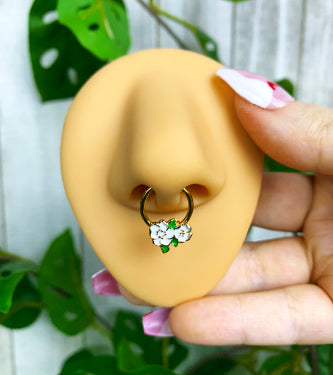


















You've got two nearly identical gold belly rings open in different tabs, and one of them costs enough more that you're side-eyeing the cart like it personally insulted you. They both look shiny, they both say gold, and you're trying to figure out whether the pricier one is worth it or just jewelry marketing with better lighting.
Here's the blunt version, because that's what you need. Gold filled is the pick when you want a piece that can survive real wear and stay friendlier to sensitive skin on healed piercings, while gold plated is the move when you want the look for less and you're fine treating it like a short-term accessory. For fresh piercings, I'd skip both and go straight to safer metals.
| Attribute | Gold Filled | Gold Plated |
|---|---|---|
| Gold content | At least 1/20, or 5%, by weight under U.S. rules | A thin electroplated coating, usually less than 1% and often around 0.05% or less |
| Gold layer | Mechanically bonded and much thicker | Surface coating only |
| Base metal | Covered by a substantial gold alloy layer | Base metal shows through once plating wears |
| Typical lifespan | Can last decades, often 20–30 years or more with normal wear | Often wears through in months to a few years |
| Skin reactivity | Better for frequent wear and more likely to be gentle on healed skin | More likely to irritate once the finish thins |
| Price tier | Higher upfront cost | Lower upfront cost |
The Two Gold Rings Sitting in Your Cart
You know the exact moment. One ring looks rich, warm, and clean. The other looks almost the same in the product photo, but the price drop makes you wonder if the expensive one is just borrowing confidence from the lighting.
That confusion is normal, because both names use the word gold and both pieces can look identical on a screen. What you're really choosing between is not color, it's how much real gold is there, how long the finish will hold up, and whether the piece can handle being rubbed against skin, clothing, and friction points in a piercing.
The choice gets clearer fast
For body jewelry, the first question isn't “which looks prettier.” It's where is this going, how often will I wear it, and is my skin still healing. A gold tone on a listing can hide a huge difference in construction, and that difference matters a lot more when the jewelry sits inside or near a piercing.
If you're shopping for a healed lobe hoop, a navel ring you wear on repeat, or a clicker that lives in your ear most days, durability matters. If you're shopping for a trendy piece you'll wear a few times, the lower-cost option can make more sense.
Practical rule: if the jewelry will touch healing skin, don't get hypnotized by the gold color. Look at the base metal, the thickness of the finish, and whether the piece is meant for repeated wear.
The easiest way to stop guessing is to read the listing like a label, not a vibe. The rest of this guide is about exactly that, so you can tell the difference in seconds instead of buying with hope and crossing your fingers.
What Gold Filled and Gold Plated Actually Mean

Here's the clean version. Gold filled jewelry has a mechanically bonded gold layer that makes up at least 1/20, or 5%, of the item's total weight under U.S. Federal Trade Commission labeling rules, and shoppers often see it stamped as “1/20 14K GF”. That stamp is your clue that you're looking at a defined manufacturing standard, not just a gold-colored finish. The FTC-based breakdown of gold-filled labeling
Read the label like you mean it
Gold plated jewelry is different. It has a very thin electroplated coating of gold over a base metal, which means the gold is sitting on top instead of becoming a substantial part of the piece. That's why plated jewelry can look great at first and still wear out fast once friction starts doing its thing.
If you see 1/20 14K GF or 1/20 12K GF, you're looking at gold filled. If you see gold plated over brass, you're looking at a surface finish over another metal. And if you're shopping for solid gold, that's a separate category entirely, one that doesn't depend on a thin layer or a bonded outer shell.
If you want a simple primer on gold jewelry basics before you compare listings, this BodyCandy guide to gold jewelry materials is worth a quick read.
What the manufacturing difference really means
Gold filled is made by bonding a real gold layer to the base metal with heat and pressure. Gold plated gets its finish through electroplating, which lays down a much thinner coating. That process difference is why one category handles wear so much better than the other, and why the price gap isn't random.
For body jewelry, that matters because the finish doesn't just sit there politely. It gets bent, rubbed, cleaned, slept in, snagged on clothing, and exposed to skin oils. The construction is the whole game.
Side by Side at a Glance
| Attribute | Gold Filled | Gold Plated |
|---|---|---|
| Gold content | 5% by weight minimum | Very thin gold coating |
| How it's made | Mechanically bonded | Electroplated |
| What's underneath | Base metal hidden by a thick layer | Base metal close to the surface |
| Wear profile | Built for frequent wear | Better for short-term use |
| Skin contact | Less likely to expose base metal quickly | Can expose base metal as the finish thins |
| Overall value | Higher upfront cost, better for repeat wear | Lower upfront cost, better for occasional looks |
The big gap is not just how much gold exists. It's how the piece behaves once you wear it. Gold filled is built with a measurable gold layer, while gold plated is mostly a surface effect, so the two pieces can look similar at checkout and act completely different after a few weeks of real life.
What the table means in practice
If you're the type who wears the same hoop every day, the thicker construction matters more than the sticker price. If you swap jewelry constantly and a piece might only show up for a party, a trip, or a single season, the lower-cost finish can be the more rational buy.
Bottom line: gold filled is the sturdier money move for repeat wear. Gold plated is the lighter commitment when you're chasing a look, not building a long-term staple.
Don't overcomplicate this part. If the listing gives you a clear GF stamp, you're in one lane. If it says plated, you're in another, and the second lane is about style-first buying, not lifetime ownership.
How Long Each One Actually Lasts
Durability isn't a luxury detail in body jewelry. It's the thing that decides whether your ring still looks polished next season or starts getting patchy around the spots that rub the most.
Gold filled pieces are described as having a gold layer about 100 times thicker than gold plating, and that's why they can last decades, often 20–30 years or more with normal wear. Gold plated jewelry, by contrast, often wears through in months to a few years. That durability gap is explained here
What wearing through looks like
Once plating starts to fail, you don't always get a dramatic split. First comes dullness at the edges, then a slight color shift where the piece bends or rubs, then the base metal starts peeking through. On body jewelry, those weak spots show up fast at the post of a belly ring, the hinge of a clicker, or any curve that gets caught on fabric.
Gold filled doesn't behave like that as quickly because the gold layer is much thicker. It can still show wear eventually, but it doesn't go from pretty to patchy at the same speed as plated jewelry.
Where to inspect first
- Posts and bars: These are friction magnets, especially on belly rings and studs.
- Hinges and seams: If color looks lighter there first, the finish is thinning.
- Curved contact points: Anywhere the piece bends against your body will wear sooner.
- Snag zones: Clothing, hair, and gloves all speed up finish loss.
If you want a deeper look at how coated pieces age in daily use, BodyCandy's aftercare guide for plated and coated jewelry is the kind of practical page people usually wish they'd read before buying.
The wear-time question is simple. If you want the jewelry to keep up with daily life, gold filled earns its price. If you're okay replacing a piece once the finish fades, gold plated can still be a fair buy.
Piercings, Sensitive Skin, and the Hypoallergenic Question

This is the part most gold filled vs gold plated guides skip, and it's the one that matters most if you've ever had a piercing get angry for no good reason. A fresh piercing doesn't care that the outside looks gold. It cares about what's touching the tissue and what happens when the finish starts breaking down.
Fresh piercings are a hard no for both
If the piercing is fresh or still healing, I wouldn't choose either gold filled or gold plated as the first option. The issue is the base metal underneath. Once plating wears thin, metals like nickel or brass can become part of the skin contact, and healing piercings do not play nice with that kind of exposure.
For that reason, implant-grade titanium or solid 14k+ gold is the cleaner call for fresh work. Gold color alone is not the same thing as piercing-safe construction.
Healed skin can tolerate more, healing skin usually can't.
When gold filled becomes a workable option
Once the piercing is fully healed, gold filled can make sense for people who want a warm gold look without jumping straight to solid gold. Its thicker gold layer usually keeps skin away from the base metal much longer, which is why it gets described as more suitable for frequent wear and more likely to be gentle on sensitive skin. That skin-safety distinction is laid out here
Gold plated can still work for healed piercings if you're wearing the piece occasionally and you're realistic about its lifespan. The problem is that the moment the finish starts wearing down, irritation risk goes up.
If sensitive skin is your main concern, this quick guide to hypoallergenic jewelry is a smart follow-up read before you add anything to cart.
My straight answer
For healed piercings, gold filled is the safer everyday pick. For fresh or finicky piercings, skip both and choose a better starter metal. For occasional, low-stakes wear, gold plated is fine if you know exactly what you're buying.
Cost Per Wear and When Plated Actually Wins
Sticker price is the trap. Cost per wear is the question that saves you money, especially with body jewelry that gets rotated, misplaced, or replaced when your style changes.
Here's the simple math I'd use: ask how many times you'll realistically wear the piece before you get bored of it or the finish gives up. Then divide the price by those wears. A cheaper plated piece can beat a pricier gold filled one if you only plan to wear it a handful of times.
Where plated is the smart choice
Gold plated often wins for trend jewelry, festival looks, gift pieces, and short-season styles. If you want a gold tone for a specific outfit or mood and don't expect the piece to become a permanent favorite, paying less upfront is the rational move.
That's especially true for body jewelry that you rotate often. A short-term septum style, a one-off navel look, or a piece you know you'll swap once the season changes doesn't need the same construction as your everyday hoop.
Where gold filled earns its keep
If a piece is going to live in your body jewelry rotation all the time, gold filled starts making more sense fast. That includes a daily-wear belly ring, a go-to healed cartilage hoop, or a navel ring you never want to baby.
Think of it this way, not as luxury, but as repeat-use math. If a piece stays on you long enough, the stronger material stops being the expensive option and starts being the cheaper one over time.
A simple buying rule
- Choose gold plated for trend pieces, occasional outfits, and budget-first buys.
- Choose gold filled for staples you expect to wear over and over.
- Choose neither if the piercing is new, irritated, or healing.
The contrarian take is still the practical one. Gold plated isn't “bad,” it's just a short-horizon purchase. Gold filled is only the better deal if you'll use the longevity.
How to Spot Quality Before You Buy
The fastest way to shop smarter is to stop trusting the product photo and start checking the details. A real gold-filled piece gives you clues. A vague gold-plated listing often gives you excuses.
Start with the stamp. Look for 1/20 14K GF, 1/20 12K GF, or similar GF markings on gold filled pieces. Gold plated jewelry usually doesn't have that minimum gold-content standard stamped on it. This manufacturing standard is spelled out in the U.S. gold-filled explanation
Quick checks that actually help
- Stamp check: Look for GF markings and the 1/20 fraction.
- Magnet check: A magnet won't prove gold quality, but it can help you rule out mystery metal claims fast.
- Rub check: Lightly rub the jewelry on packaging paper. Flaking finish is a bad sign.
- Listing check: Words like gold tone usually mean no real gold layer at all.
The body-jewelry red flags are easy to spot once you know where to look. Posts that bend too easily, hinge points with obvious color shifts, and listings that dodge base metal details are all reasons to keep scrolling.
What to ask the seller
Ask what the base metal is. Ask whether the finish is plated or bonded. Ask whether the piece is intended for healed piercings or just fashion wear. Those answers tell you far more than a pretty product shot ever will.
After you've checked the basics, the video below is worth a watch if you want a quick visual refresher on the stamp and construction difference.
If neither option fits the job, don't force it. Implant-grade titanium is the smarter call for fresh piercings, and solid gold is the cleaner splurge for heirloom-level wear.
Which One to Pick for Your Next Piercing
If the piercing is fresh, I'd pass on both and buy for healing, not for color. That means titanium or solid gold, every time, because the goal is to keep your skin calm while the piercing finishes doing its thing.
For healed lobes, healed cartilage, healed navel rings, and everyday clickers, gold filled is the one I'd pick first. It gives you the gold look without acting like a disposable finish, and it makes sense when the jewelry is part of your regular rotation.
My quick picks
- Fresh piercings: Neither. Go titanium or solid gold.
- Healed everyday pieces: Gold filled.
- Trend looks and short-term wear: Gold plated.
- Sensitive skin with frequent wear: Gold filled, not plated.
- Heirloom or forever pieces: Solid gold instead of either layered option.
Gold plated still has a place, and I'm not pretending otherwise. If you're buying a festival navel ring, a short-term septum style, or something fun you'll wear for a limited stretch, it's a perfectly reasonable budget choice.
Straight answer: pick the material that matches the wear pattern, not the one that sounds fancier on the listing.
If you want to browse with that lens in mind, BodyCandy has plenty of body jewelry styles to compare while you check the construction details and price tags. The reward program and frequent promos make it easier to step up to better materials when you're ready.
Ready to shop smarter instead of just prettier? Browse BodyCandy for body jewelry that matches your piercing, your budget, and how often you'll wear it. If you're torn between plated and gold filled, start with the pieces you'll wear most, then build from there.