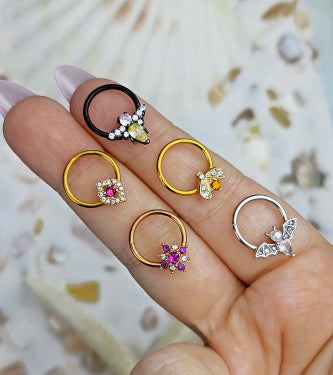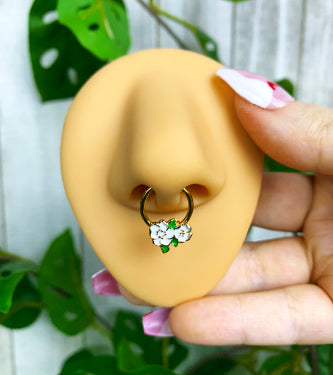
















A captive bead ring is a nearly 360° ring held together by spring tension and a small bead. In practice, captive bead ring jewelry commonly spans 20g (0.8 mm) through 00g (10 mm), with many everyday diameters landing around 6 mm to 12 mm depending on the piercing.
You've probably run into this question while staring at jewelry tabs, holding a fresh piercing aftercare sheet, or trying to figure out why one ring looks easy to wear and another looks like a tiny metal puzzle. That's normal. Captive bead rings look simple, but choosing the right one takes a little more thought than just picking a cute hoop.
The good news is that once you understand the shape, the closure, and how sizing changes the fit, these rings start making a lot more sense. And if you're trying to decide whether a CBR belongs in your nostril, helix, septum, or earlobe, that's exactly where practical advice matters most.
Why Captive Bead Rings Are a Piercing Staple
You've seen this ring before, even if you didn't know the name. It's the classic hoop with a tiny bead sitting in the gap, making the whole piece look finished and tidy.
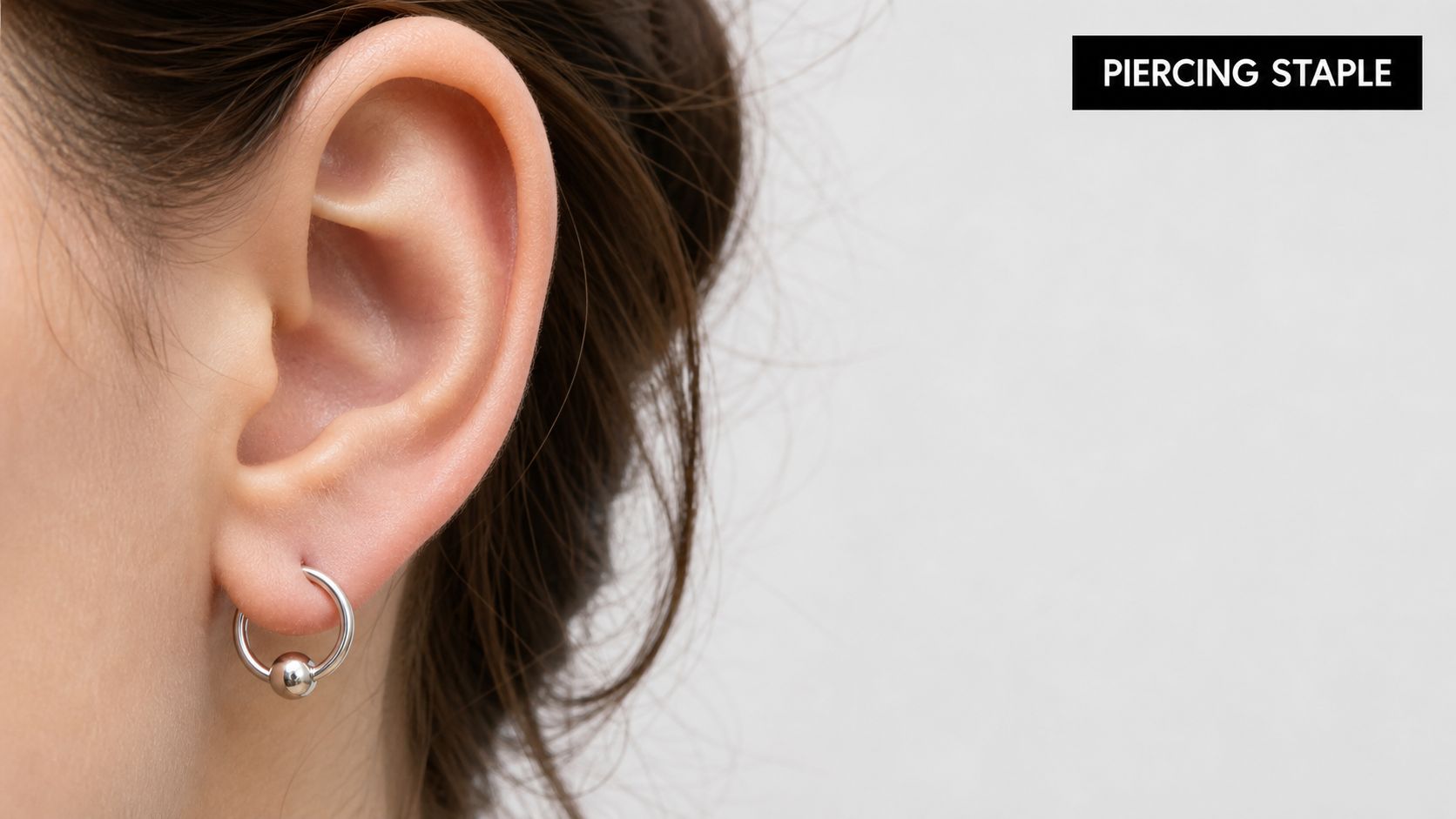
A lot of people meet captive bead ring jewelry in a very ordinary way. You get pierced, your piercer says “ring,” and suddenly you're home wondering why there's a little ball in the middle and whether it's supposed to come out. Fair question.
Why piercers keep coming back to them
Captive bead rings have stuck around because the design is practical, not just iconic. The Association of Professional Piercers describes this jewelry as a wire bent into a round shape, with a bead secured by the ring's spring pressure, and notes that quality beads are dimpled so the ring ends fit securely in place in the APP procedures manual.
That matters because a well-made closure feels stable without adding extra hinges or moving parts. For many placements, that clean design is a big reason CBRs became standard.
Where they show up most often
You'll spot CBRs across a long list of common piercings. A broad body-jewelry reference ties them to the modern mainstream piercing market and shows repeated sizing conventions for tragus, conch, daith, septum, ear cartilage, lip, nostril, and earlobe placements in the body piercing jewelry reference.
That repeated use across so many piercings tells you something important. This isn't a random trend piece. It's a format that became part of everyday piercing practice.
Practical rule: If a jewelry style keeps showing up in professional piercing settings decade after decade, it usually means the design solves a real fit or function problem.
A simple way to think about it is this: clickers feel convenient, smooth rings look sleek, and labrets are great in the right spot. But captive bead rings earned their place because they're dependable, versatile, and familiar to both piercers and wearers.
How Captive Bead Rings Actually Work
The tiny bead isn't decorative first. It's mechanical first.
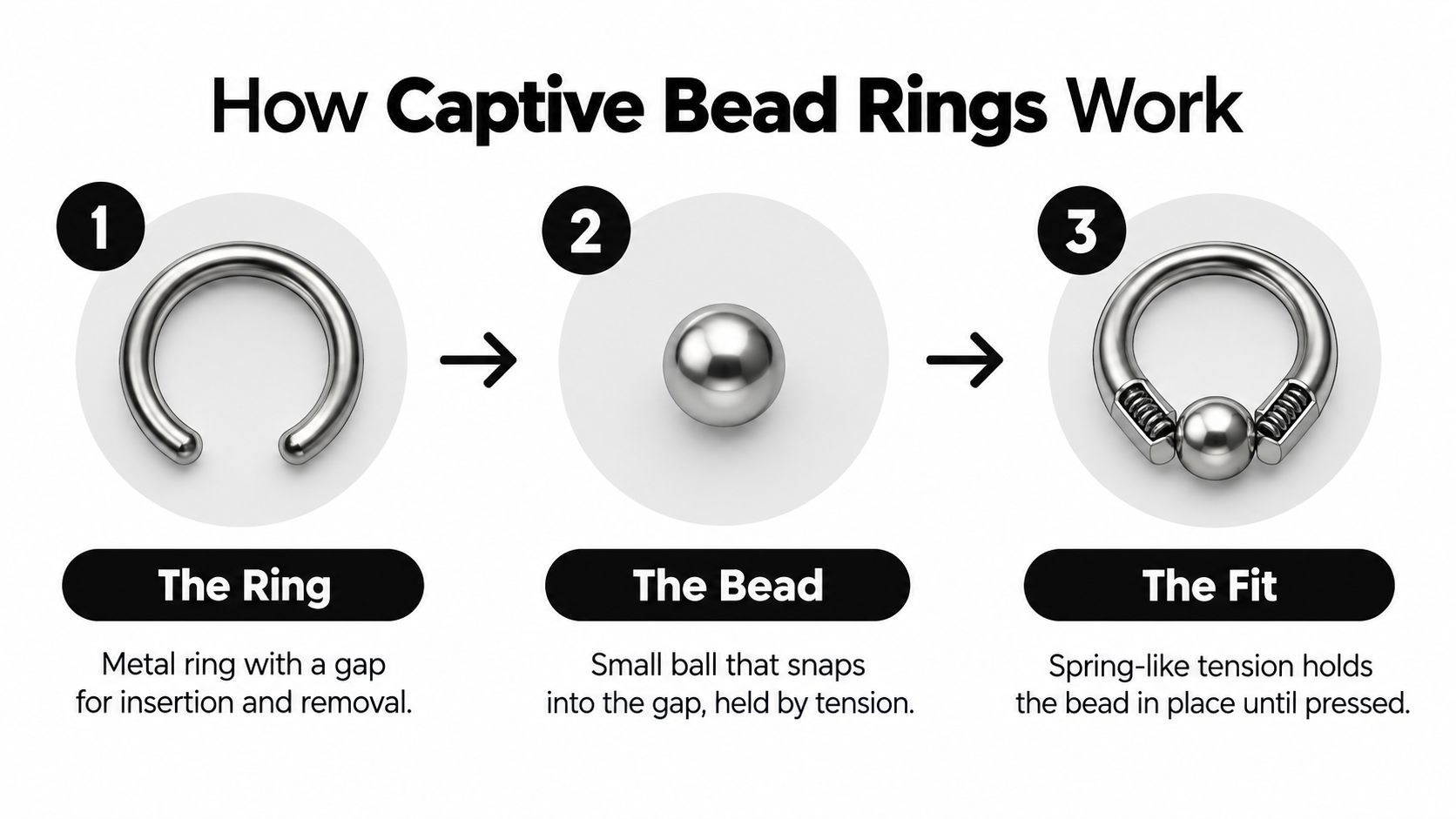
If you've ever worried that the bead could just fall out in the shower, here's what's really happening. A captive bead ring relies on the spring tension of the circular metal ring. The bead is slightly larger than the opening and has matching dimples, so the ring ends seat into those dimples and lock the closure mechanically, as described in the captive bead ring overview.
The easiest way to picture it
Think of the ring like a firm bracelet that wants to return to its original shape. The bead acts like a tiny plug with two guide dents. When the ring ends press into those dents, the bead stays captured by tension.
That's why a good CBR doesn't feel floppy. It should feel deliberate.
What you're actually dealing with when you open one
Here's the part that confuses many:
- The ring isn't threaded. Nothing screws in.
- The bead doesn't “snap” like cheap plastic. It seats into place because the metal pushes against it.
- The tension does the work. If the ring is warped, too loose, or poorly made, the closure gets unreliable.
A secure captive ring should feel snug at the bead, not wobbly and not forced.
If you're changing one at home, technique matters. You want controlled movement, not brute force. For a walkthrough focused on handling the closure safely, BodyCandy's guide on how to change a captive ring is a helpful reference.
Why fit changes the way the closure behaves
A ring that's too tight for the anatomy can press and shift in ways that make the bead harder to line up. A ring that's too roomy can move around more than you want, which can make the jewelry feel less stable in daily wear.
Metals matter here too. The verified reference notes that elastic materials such as surgical stainless steel, niobium, or titanium help the ring hold the bead properly when the piece is correctly sized. In plain English, the shape has to spring back the way it's supposed to.
Choosing the Right Material for Your Skin
A cute ring that irritates your skin stops being cute fast. When people blame the shape, the issue is often the metal.
The short version
If your piercing is fresh or your skin is reactive, material deserves more attention than color or bead style. Independent material guidance highlights implant-grade titanium ASTM F136 as nickel-free and widely treated as the gold standard for fresh cartilage and sensitive skin, while niobium is also nickel-free and often favored for severe metal allergies in this material guide for sensitive skin.
That's the key decision point. Don't ask only, “Do I like this ring?” Ask, “Will my skin like this ring?”
A practical comparison
| Material | Best fit for | What to keep in mind |
|---|---|---|
| Implant-grade titanium | Fresh piercings, sensitive skin, cartilage | Nickel-free and commonly chosen when irritation risk is a concern |
| Niobium | People with strong metal sensitivities | Nickel-free and often picked when you want a hypoallergenic option |
| Surgical stainless steel | Many healed piercings | Can work well, but sensitivity concerns make material details worth checking |
A lot of irritation stories start the same way. Someone chooses the prettiest option, then spends the next week wondering why the piercing feels cranky. In many cases, polish, material grade, and fit matter more than the ring style itself.
Match the metal to the real-life situation
- Brand-new cartilage piercing: Go with a metal chosen for biocompatibility and low reactivity. Titanium is the usual safer lane.
- Known nickel sensitivity: Niobium or implant-grade titanium makes more sense than gambling on mystery steel.
- Old, healed earlobe piercing: You've got more flexibility, as long as the ring fits properly and feels comfortable.
Skin-first thinking: A well-fitted titanium ring usually causes less drama than a trendy ring made from a metal your body hates.
If you want a simple primer on skin-friendly options before you shop, BodyCandy's post on hypoallergenic jewelry for sensitive skin is worth a look.
Sizing Guide for Different Piercings
Sizing is where people get tripped up most. Two rings can look nearly identical in a product photo and feel completely different once they're in your piercing.
Gauge versus diameter
Gauge is the thickness of the part that passes through the piercing. With CBRs, common sizing runs from 20 gauge (0.8 mm) up through 00 gauge (10 mm), and smaller gauge numbers mean thicker jewelry, as noted by Urban Body Jewelry's captive ring sizing range.
Diameter is the inner diameter of the ring. That's the open space inside the hoop, and it affects whether the ring hugs closely or hangs with more room.
Common fit ranges by piercing
A professional CBR sizing guide notes that common body-jewelry sizing spans roughly 20g through 00g, with typical fit ranges of about 6 to 10 mm for helix and cartilage, 6 to 8 mm for nose piercings, and 8 to 12 mm for earlobes in the Shining Light Piercing captive bead ring guide.
That means sizing isn't just cosmetic. It changes pressure, movement, and comfort.
| Piercing area | Common gauge range | Common diameter range |
|---|---|---|
| Nostril | Often around 20g | Often about 6 to 8 mm |
| Helix and cartilage | Often 18g to 16g | Often about 6 to 10 mm |
| Earlobe | Varies widely | Often about 8 to 12 mm |
How to avoid the usual fit mistakes
A ring that's too small can sit tight and annoying. A ring that's too large can swing, snag, and feel awkward. For many people, the right fit is the one that gives a little breathing room without turning the ring into a pendulum.
Use this quick check before you buy:
- Know your current gauge: If your existing jewelry fits well, start there.
- Check the inner diameter, not the outer look: The outside can look big while the inside still fits snugly.
- Think about swelling and healing: Fresh piercings usually need practical room, not the tightest look possible.
- Match the placement: Nose, helix, septum, and lobes all behave differently.
For a shopping-focused walkthrough, BodyCandy has a dedicated sizing guide for captive rings.
Picking the Perfect CBR for Your Piercing Type
Theory then turns into “what should I wear?”
Start with the piercing, not the jewelry style
Some placements naturally suit a captive bead ring. Others usually do better with a different shape. An independent piercing discussion captures this mismatch well by noting that daith piercings are often better suited to a captive bead ring or ornamental hoop, while flats should use flat-back labrets in this piercing placement discussion.
That lines up with what piercers see every day. A ring can be perfect in one spot and annoying in another.
A simple decision checklist by piercing type
Nostril Small CBRs can look great here, especially if you want a true ring look instead of a stud. Think light, compact, and anatomy-aware. If your nostril piercing is still healing, movement matters, so don't choose a ring just because it looks delicate in a product shot.
Helix or other cartilage Cartilage often likes a ring that doesn't squeeze and doesn't spin wildly. If you sleep on that side, too much diameter can get irritating fast. For many people, the sweet spot is a ring that sits with a little space rather than pressing flat against the ear.
Septum This is one of the most natural homes for captive bead ring jewelry. The ring shape suits the placement well, and the visible bead can become part of the look instead of just the closure. Septum wearers usually care about balance most. Too small can feel cramped, too large can overpower your features.
Earlobe Lobes are the most forgiving. Healed lobes can handle a broader range of gauge and diameter choices, so you get to play more with proportion and style.
If you're choosing between a CBR and another style, ask which one will sit calmly in the piercing, not which one looks coolest in your cart.
When not to choose a CBR
A captive bead ring isn't automatically the best answer just because it fits. Skip it, or at least pause, if:
- Your piercing is anatomy-sensitive: Some placements behave better with a flat-back labret.
- You hate fiddly jewelry: CBRs are secure, but they're not always the easiest to swap casually.
- Your piercing is irritated already: Fixing fit and material usually comes before changing the style.
The best CBR choice is the one that matches your placement, your healing stage, and your patience level. Those three things matter more than trends.
Care and Maintenance Tips for Long-Lasting Jewelry
A captive bead ring can last a long time if you treat it like jewelry and not like hardware you can wrestle into place. Most wear-and-tear problems start with rough handling, skipped cleaning, or forcing a bead that doesn't want to seat.
Daily habits that keep things calm
For routine care, keep it gentle. Mild soap and water works for jewelry cleaning, and for a healing piercing, simple saline care is the safer lane than experimenting with harsh products.
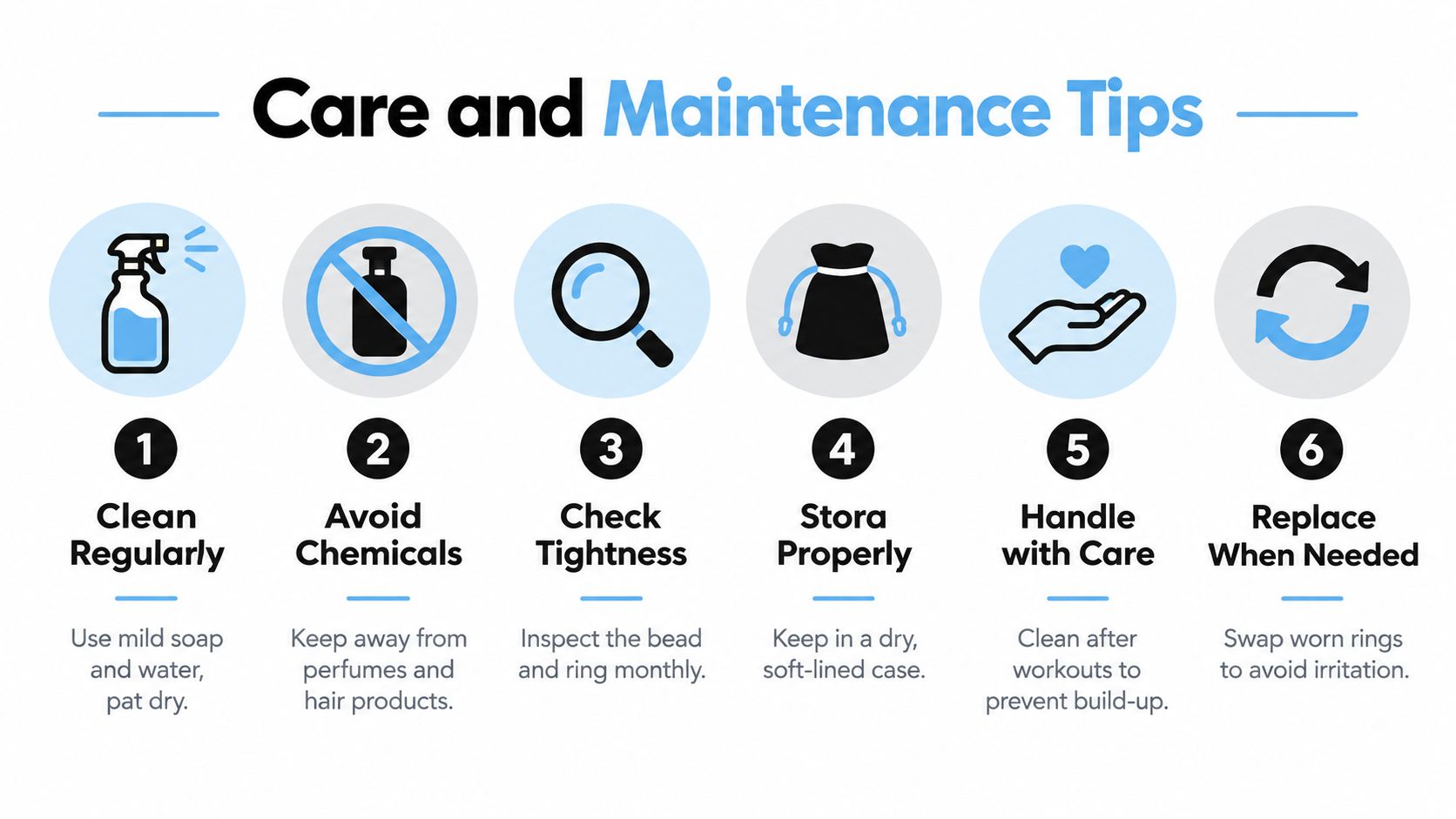
The basic rules are boring, which is why they work:
- Clean gently: Remove buildup without scrubbing the life out of the piercing.
- Skip harsh chemicals: Alcohol and peroxide can be rough on tissue and finish.
- Dry carefully: Pat dry instead of rubbing with a fluffy towel that can snag.
- Wash your hands first: Every time. No exceptions.
How to handle the bead without damaging the ring
The biggest mistake people make is trying to muscle the bead in or out. If it fights you, stop and reassess. A captive ring should require control, not panic.
Try this process:
- Check alignment first. The ring ends should meet the bead dimples cleanly.
- Use steady pressure. Don't bend the ring wider than necessary.
- Test security after closing. The bead should feel seated, not loose.
- Back off if the metal looks warped. A distorted ring won't hold the closure correctly.
A bead that won't click into place is often telling you something useful. The ring may be bent, the size may be off, or the piece may need professional handling.
Storage and replacement signs
When the ring is out, store it where it won't get scratched by other jewelry. Separate pouches, divided trays, or a soft-lined case all work better than dropping everything into one tangled pile.
Watch for these signs that it's time to retire a piece:
- Loose closure: The bead no longer sits securely.
- Visible warping: The ring shape looks uneven or twisted.
- Surface wear: The finish looks rough enough to irritate tissue.
- Repeated discomfort: You keep feeling rubbing or instability even with careful wear.
One mention that fits here if you're shopping around: BodyCandy carries captive bead ring jewelry in this category, which can be useful when you're comparing sizes, materials, and styles in one place instead of guessing from a single option.
If your piercing is still healing, be extra conservative. Comfortable jewelry usually wins over dramatic jewelry during that stage. And if changing the ring feels like a wrestling match, let a professional piercer handle it.
If you're ready to compare styles, materials, and fits for your own piercing, BodyCandy offers captive bead rings and other body jewelry options for placements like nostril, septum, cartilage, and lobes. Browse with your piercing type, healing stage, and skin sensitivity in mind, and you'll have a much easier time finding a piece you'll actually enjoy wearing.