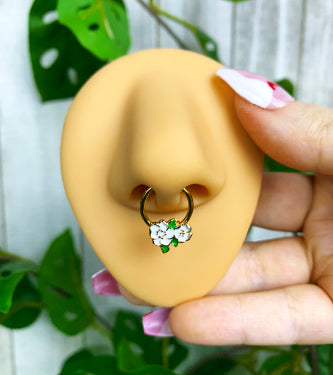


















You're scrolling through a piercing shop when three rose gold barbells catch your eye. They're all called rose gold, yet none has quite the same pink tone, and the prices are far apart. One listing mentions “rose gold plated,” another says “14K,” and a third gives you almost no material information at all.
That's where the pretty finish can become a confusing metal decision. A rose gold barbell should be judged by more than its color. You'll want to understand the alloy, distinguish solid metal from plating, match the gauge and wearable length to your piercing, and choose care habits that fit your lifestyle.
Why Rose Gold Barbells Are Having a Moment
Rose gold has an easy warmth that sits between the familiar glow of yellow gold and the cooler appearance of white metals. On the ear, that softness can make a cartilage stack feel polished without looking overly formal. On a facial or oral piercing, one rose gold barbell can add color without overpowering the rest of your jewelry.
The appeal is aesthetic, but it's also practical. Rose gold finishes give shoppers more ways to build a coordinated look across helix, conch, tragus, lobe, and curated ear placements. Solid alloys offer a premium option, while plated finishes make the color accessible to people who want to experiment before committing to a more expensive piece.
The global category is expanding too. One market estimate values body piercing jewelry at US$2.0 billion in 2026 and projects US$3.5 billion by 2033, with a projected 8.5% CAGR, while another report estimates USD 62.84 billion in 2025 and projects USD 88.59 billion by 2031, at a 5.89% CAGR. The methodologies differ, but both market estimates for body piercing jewelry point toward steady demand and broader style variety.
Start with the finish, then inspect the metal
A warm pink surface can come from a genuine rose gold alloy or a coating over another material. Those choices can look similar in a product photo but behave differently against moisture, friction, skincare products, and sensitive skin.
Before checkout, ask:
- What is the base metal? Look for a clear statement such as solid gold, titanium, or stainless steel.
- Is the rose color part of the alloy? Solid rose gold gets its color from copper mixed into gold.
- Is the finish plated or PVD-coated? A surface layer can eventually wear, especially in high-contact placements.
- Does the jewelry fit a healed or healing piercing? A stylish finish can't compensate for an unsuitable material or poor fit.
For more inspiration, browse this guide to trending rose gold body jewelry, then come back to the material details before choosing a piece. The best purchase is the one that matches your color preference, anatomy, and tolerance for maintenance.
The Story Behind That Warm Pink Tone
If a rose gold barbell catches your eye in a product photo, start with the color, then ask what creates it. The warm pink surface may come from a solid alloy or from a coating, and those options can look similar while wearing differently.
Rose gold's story began long before current piercing trends. A history of rose gold from Sotheby's traces its prominence to 19th-century Imperial Russia, where jeweler Carl Fabergé used the alloy in ornate work, including Fabergé Eggs. It was sometimes linked with Russian gold and the lavish jewelry associated with that period.
The color comes from the metal blend. Gold is combined with copper, and some recipes include silver. Copper gives the alloy its warmer, deeper cast, while the balance of gold and other metals affects whether the result looks peachy, pink, or distinctly copper-toned.
The practical takeaway: rose gold describes a family of colors created by an alloy recipe, not one universal shade.
The style later spread to the United States in the 1920s and became popular again during the Retro era, according to the same jewelry history. Today, that warm finish appears on pieces ranging from delicate earrings to bold piercing barbells, bringing a fine-jewelry reference into everyday styling.
Why copper matters to your barbell
A common 18K rose gold formulation contains about 75% gold and 25% copper. 14K rose gold contains about 58.3% gold, with the rest made up of alloying metals, often in a copper-heavy blend. The exact proportions can vary, so the color alone cannot identify the material.
Copper can influence:
- Color: A higher copper share can produce a stronger copper-rose appearance.
- Feel and durability: The alloy blend affects how the metal wears and responds to polishing.
- Skin response: Copper and other metals in the recipe may matter if your skin reacts easily.
So treat the pink finish as your starting clue, not your final decision. Check whether the barbell is solid rose gold or coated, then review the alloy information. The color creates the appeal, but the construction determines how the piece behaves over time.
What's Actually in a Rose Gold Barbell
A barbell can look rose gold in a product photo while having a very different construction underneath. Start with the color, then check the metal: most rose gold barbells are either solid rose gold alloy or another metal with a rose-colored surface. That choice affects how the finish wears, how the piece should be cared for, and whether it suits your piercing.
Solid rose gold has the alloy mixed throughout the barbell, usually with copper and sometimes silver. The color is part of the metal rather than a separate layer. Plated or coated jewelry has a core, such as titanium, stainless steel, or brass, with rose color applied on top. Once that surface wears, the underlying material may become visible.
14K and 18K are not interchangeable
14K rose gold contains about 58.3% gold, while a common 18K formulation contains about 75% gold. The remaining metals affect the alloy's appearance and physical characteristics. A copper-forward blend may look deeper and warmer, while a higher-gold blend can appear softer or more peach-like.
The karat label still does not guarantee one exact shade. Manufacturers can adjust the alloy blend, so read the product description instead of judging by color alone. The listing should make clear whether the barbell is solid gold, plated, or coated, and it should identify the base material where relevant.
Learn to read the listing
These descriptions point to different constructions:
- “Solid 14K rose gold” means the alloy runs throughout the barbell.
- “14K rose gold over titanium” means titanium forms the core and rose gold covers its surface.
- “Rose gold PVD” describes a surface-coating process. Confirm what material sits beneath it.
- “Rose gold tone” may describe the appearance without fully identifying the metal.
| Material | Composition | Color Tone | Price Tier | Best For |
|---|---|---|---|---|
| Solid 14K rose gold | About 58.3% gold with copper-heavy alloying metals | Deeper copper-rose potential | Premium | Healed piercings and long-term wear when the alloy suits you |
| Solid 18K rose gold | About 75% gold with the balance primarily from alloying metals | Softer, lighter peach-rose potential | Higher premium | Healed piercings and shoppers seeking a higher-gold alloy |
| Rose gold over titanium | Titanium core with a rose-colored surface finish | Consistent decorative pink tone | Mid-range | Healed piercings when the core and coating are clearly disclosed |
| Rose gold over stainless steel | Stainless steel core with a rose-colored surface finish | Warm rose tone that may fade with wear | Accessible | Fashion styling and healed piercings with suitable material disclosure |
| Standard plated or overlay jewelry | Base metal beneath a thinner surface layer | Attractive at first, less stable as the layer wears | Entry-level | Occasional fashion wear, not fresh piercings |
For a wider explanation of jewelry metals and listing language, consult the BodyCandy material guide. The useful question stays simple: what's underneath the rose color?
Finding the Right Gauge and Length
Gauge describes the thickness of the bar, while length describes the distance between the two ends. Those measurements stop feeling abstract once you connect them to a specific piercing and its anatomy.
Common barbell gauges include 14G, 16G, and 18G. Earlobe, helix, and tragus jewelry may use 14G to 16G, while standard lobe jewelry can also fit 18G or 16G. Industrial and conch barbells commonly use 14G, and tongue or nipple barbells often use 14G, sometimes 12G.
Length needs room to fit, not room to wander
A fresh piercing can need extra wearable space for swelling. A healed piercing usually needs a closer fit, but the correct length still depends on tissue thickness and placement.
| Piercing | Common Gauge | Typical Length |
|---|---|---|
| Industrial | 14G | 32mm to 38mm |
| Tragus | 16G | About 6mm to 8mm |
| Helix | 16G | Varies by anatomy |
| Conch | 14G to 16G | Varies by anatomy |
| Tongue | 14G | Fresh barbell usually starts at 16mm |
These are practical starting points, not universal guarantees. Industrial angles, ear cartilage thickness, and swelling can vary substantially from person to person. Use the internal wearable length, the portion of the bar that sits inside the piercing, rather than the total end-to-end measurement.
Fit check: too little length can contribute to pressure or embedding, while too much length creates unnecessary movement and snagging.
Before ordering, measure a piece that currently fits well and compare its wearable length with the new barbell. The barbell sizing and measuring overview can help you identify the measurement you're comparing.
If you're between sizes, your piercer can measure the placement with a caliper. Don't force a thicker gauge into a healed channel, and don't use a long healing bar as a permanent fit because it's easier to insert.
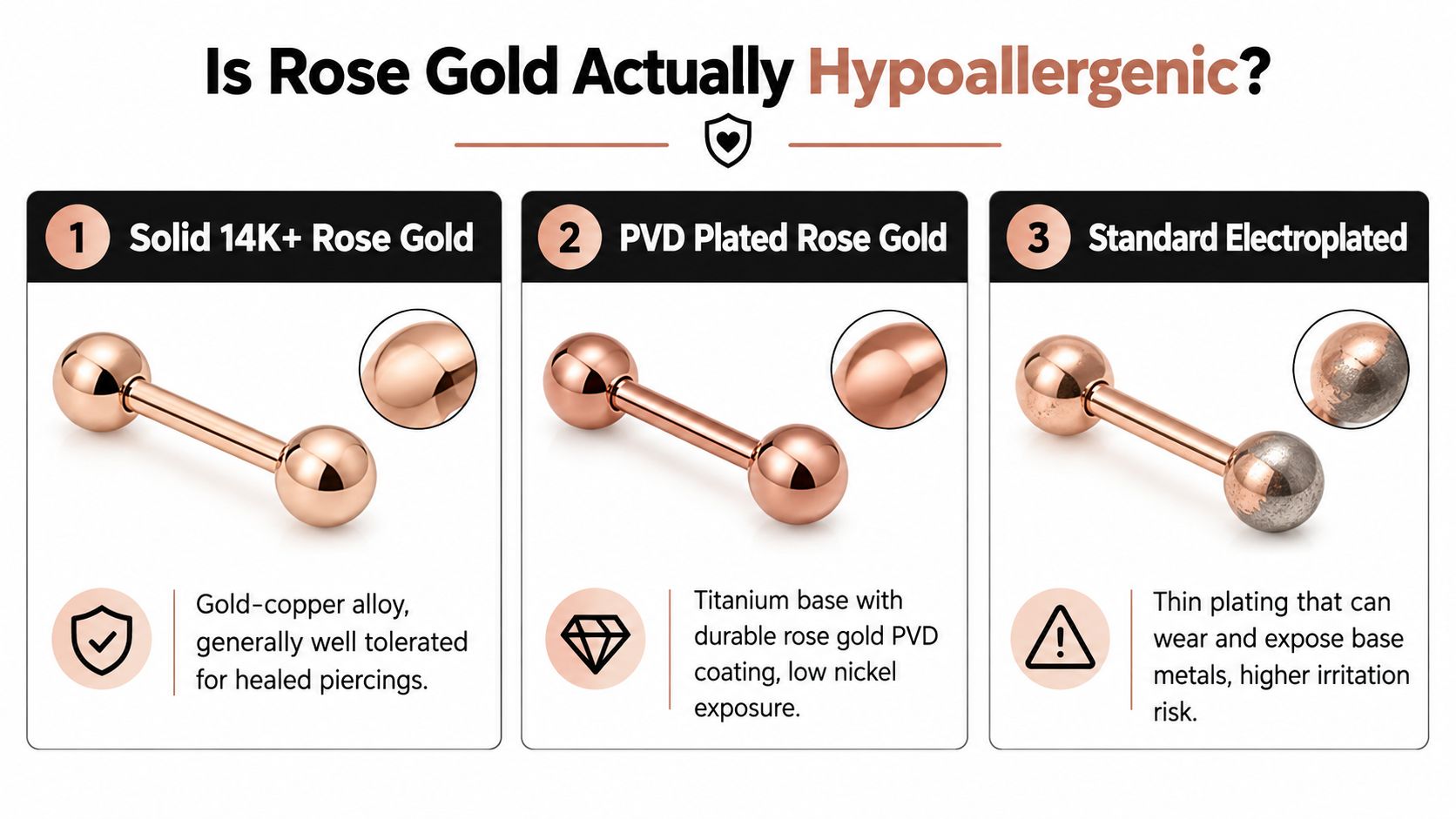
Is Rose Gold Actually Hypoallergenic
A rose gold barbell can look gentle and still contain a metal your skin dislikes. The pink finish is a color choice first, while comfort depends on the alloy beneath it and the material touching your piercing.
Rose gold gets its warm tone largely from copper. A solid 14K or higher alloy may suit many wearers, yet the full recipe matters. Some people react to copper or trace metals in the blend. Copper can also leave a gray-green mark on skin. That discoloration may look worrying, but it does not automatically indicate infection.
The finish creates a separate concern. If “rose gold” means only PVD or electroplating, friction, moisture, and repeated cleaning can wear the color away. Skin may then contact the base metal, which is why a beautiful surface does not tell you enough about biocompatibility.
Check the metal beneath the color
Montana's piercing rules require gold used for initial body piercings to be solid 14-karat or higher, whether it is yellow, white, or rose gold. The material must also be nickel-free and cadmium-free. Those rules exclude plated, gold-filled, gold-overlay, and vermeil jewelry in that setting, as explained in this piercing jewelry material guidance.
For a healed piercing, a rose-colored PVD finish over a clearly identified titanium or niobium core may be more comfortable than an unspecified plated base. Fresh piercings call for your piercer's material recommendation, not a color-led purchase.
Before ordering, ask the seller:
- Is the piece solid, plated, or PVD-coated?
- What is the base metal?
- Is it nickel-free and cadmium-free?
- Is the item intended for healed piercings or initial wear?
The useful question is “What exactly is in this barbell, and what touches my skin when the finish wears?”
Styling Rose Gold Across Your Piercings
You spot a rose gold barbell and start planning an entire stack around its warm pink finish. Before matching every piece, decide what role you want the color to play. Rose gold can connect different piercings, but contrast in shape, texture, or metal keeps the arrangement from looking too uniform.
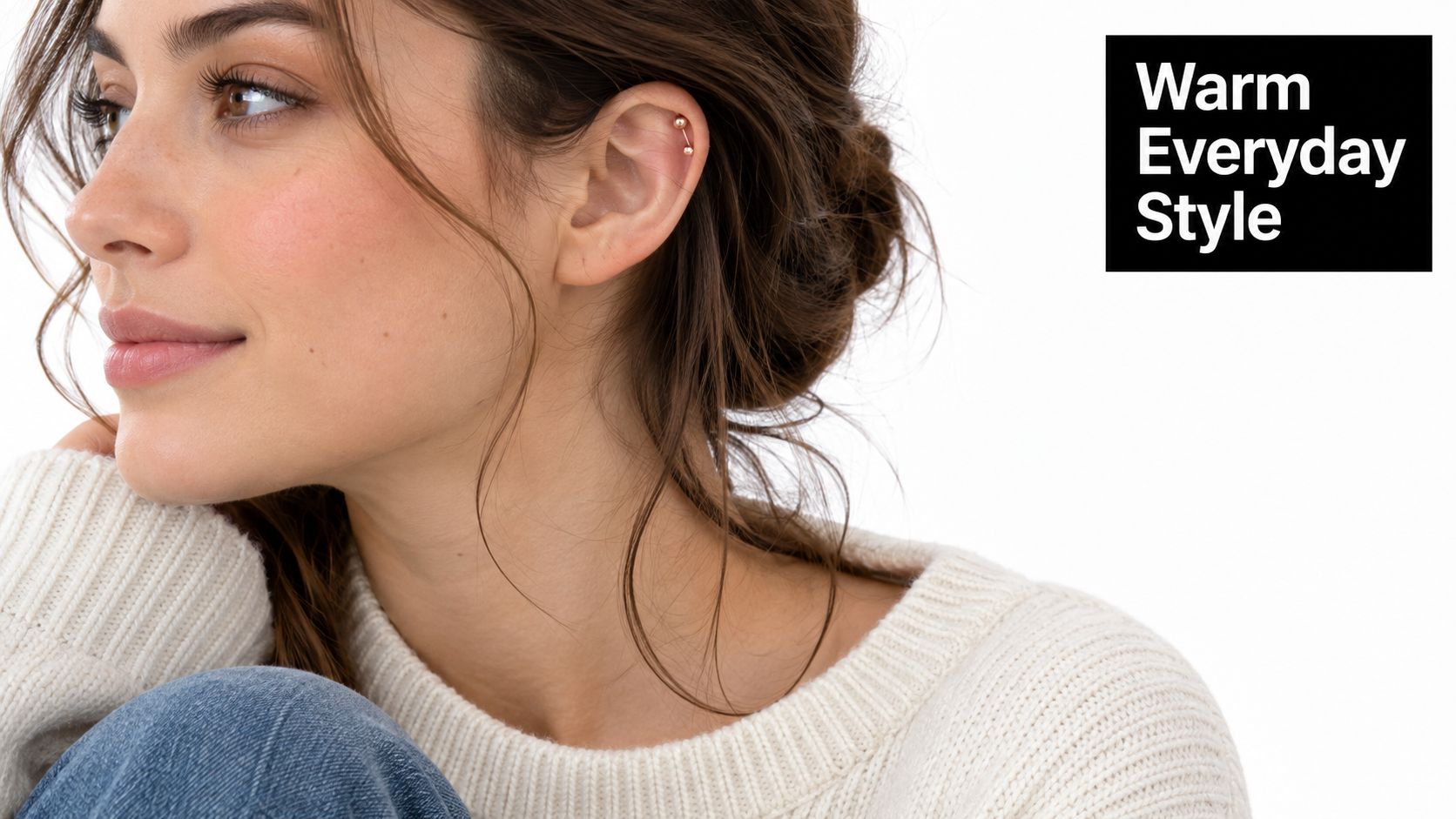
An upper-ear barbell is a simple starting point because its clean silhouette leaves the color visible. A bright, polished piece in a helix or conch catches light whenever you move. A brushed or matte finish has a quieter effect and suits an understated or professional style.
Let the color repeat, not take over
Repeat the rose tone in one or two places, then give the rest of the stack a different job. Hoops add movement, studs create small anchors, and a cool-toned stone supplies contrast.
A slim rose gold barbell with small rose-accented hoops and plain lobe studs creates a soft everyday arrangement. For sharper contrast, place it beside a cool-toned stone or white-metal accent around a conch or forward helix. Facial jewelry can stay restrained: one rose gold barbell in a septum or bridge placement draws attention without competing with your features. An oral barbell offers a brief warm flash when you smile, while fit and material suitability still come before color.
Your undertone can guide the finish, though it does not set a rule. Cooler rose gold may complement fair complexions, while a deeper copper-rose shade can contrast richly with medium and deep skin. The useful test is personal: if the color makes you feel good, it belongs in the stack.
Movement matters too. High polish reflects light as the jewelry shifts, while brushed surfaces make small marks less noticeable. View the pieces from several angles before committing to a fully coordinated set, since a stack should work while your head, hair, and jewelry are moving.
Caring for a Rose Gold Barbell So It Lasts
Care should match the construction. Solid rose gold and plated rose-colored jewelry don't need identical handling, especially when the piece sits in a high-contact area or comes into regular contact with water, sweat, skincare, or perfume.
For a healing piercing, sterile saline wound wash with 0.9% sodium chloride is the standard cleaning choice, and guidance commonly recommends using it twice daily, usually morning and evening, as described in this sterile saline aftercare guide. One published aftercare guide also notes that cleaning more frequently doesn't speed healing and may irritate tissue, so more effort isn't automatically better. See the body piercing aftercare instructions for that practical timing guidance.
A simple routine
- Clean your hands first. You don't want to transfer residue or bacteria to the area.
- Use sterile saline. Apply it as directed, or allow the area to sit in saline for a short period when appropriate.
- Pat dry carefully. Use a clean, lint-free cloth or another method recommended by your piercer. Don't scrub.
- Leave the jewelry still. Twisting and rotating can irritate the channel, particularly while it heals.
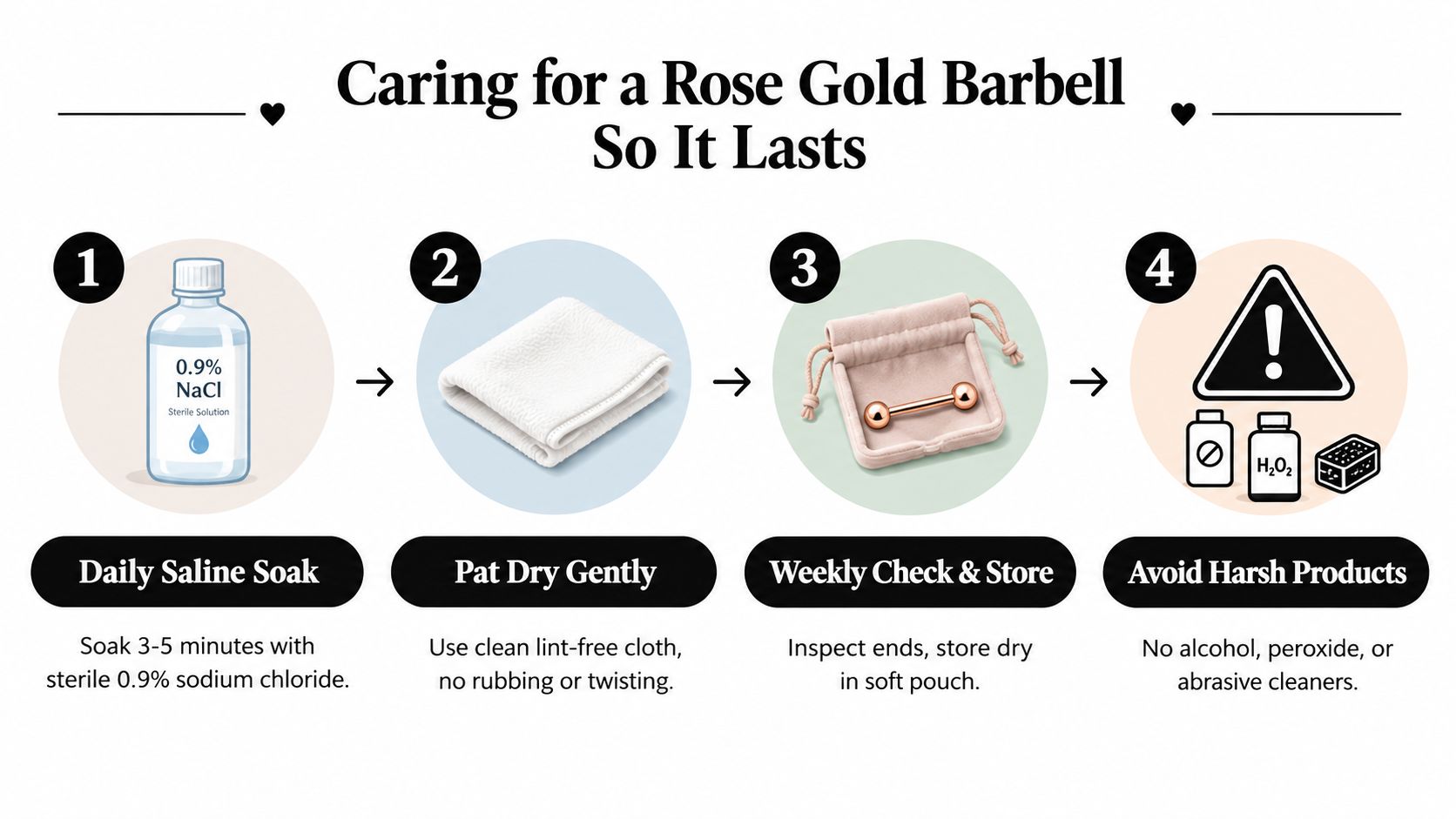
Keep alcohol, hydrogen peroxide, harsh soaps, abrasive cloths, and chlorinated pools away from a healing piercing unless a qualified professional gives you different advice. Rose gold contains copper, which can tarnish, dull, or darken more readily under chlorine and salt exposure. Humidity, showers, exercise, skincare, and perfume can also make maintenance more demanding, particularly for coated jewelry.
Know when the finish has had enough
A plated barbell deserves gentler handling. Avoid rubbing it during cleaning, keep it away from abrasive products, and put it on after skincare and perfume rather than before. Remove it before activities that expose it to repeated friction or chemicals when the piercing is healed and jewelry removal is safe.
Retire a piece if you notice persistent skin discoloration, flaking, a greenish tint near the threads, or a rough, pitted surface. Those signs suggest that the finish or surface may no longer be protecting the underlying material.
Shopping Smart and Treating Yourself Right
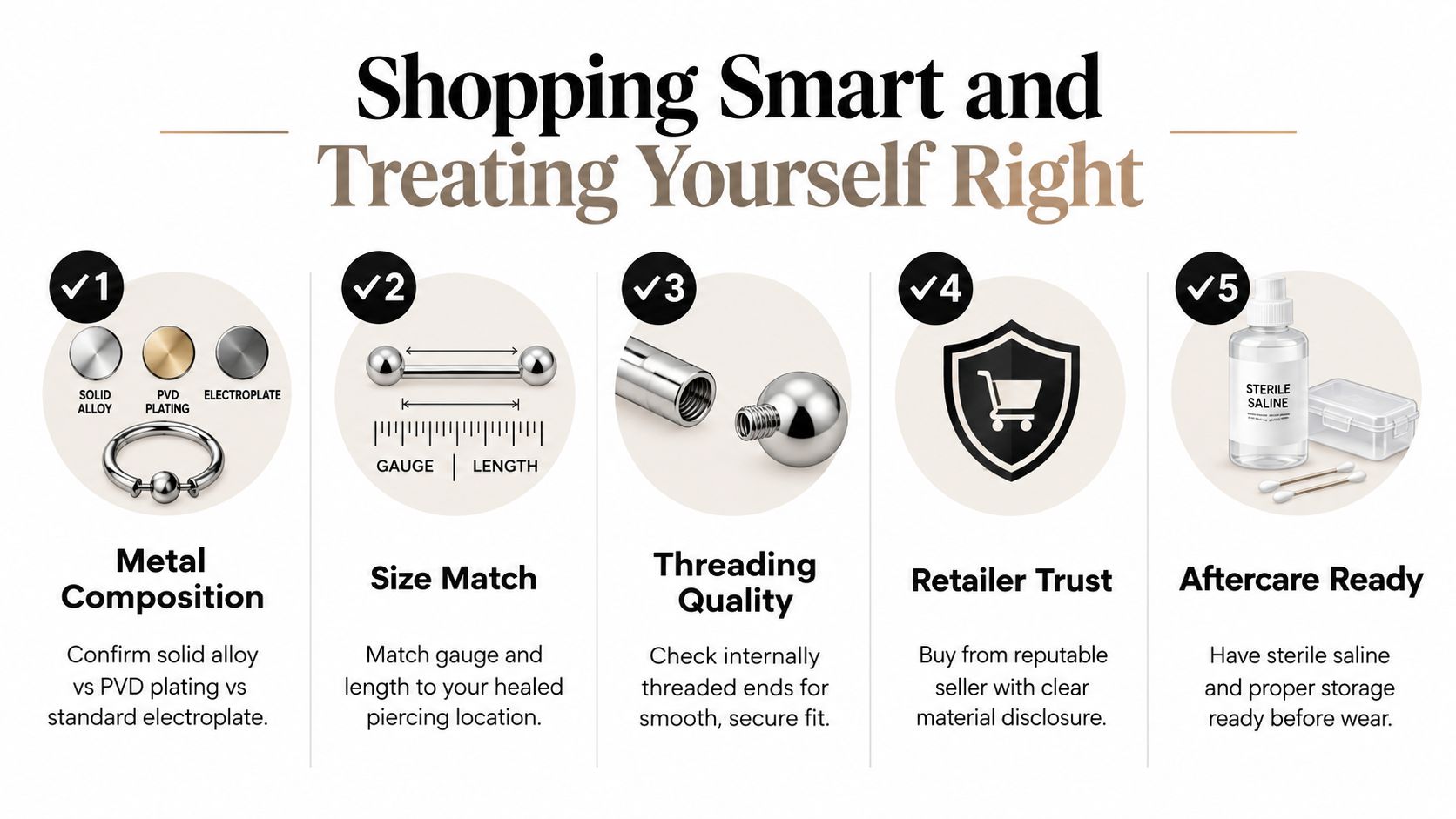
A confident rose gold purchase follows a short decision sequence. Start with the metal, then confirm fit, construction, retailer information, and care requirements.
The price can reflect several variables, including karat, copper content, manufacturing, threading, and whether you're buying solid metal or a surface finish. Don't treat a higher price as proof of suitability, but don't compare a plated barbell with a solid gold piece as though they're the same product.
Use this checklist before you add anything to your cart:
- Confirm composition: Choose between solid alloy, PVD plating, and standard electroplating with a clear understanding of what sits against your skin.
- Match the size: Verify the gauge and internal wearable length for the specific piercing, especially if the placement is healing or has unusual anatomy.
- Check the threading: Internally threaded ends can offer a smoother surface through the piercing channel than externally threaded designs.
- Review retailer policies: Look for complete material disclosure and clear return or exchange terms.
- Prepare for aftercare: Have sterile saline and a clean, dry storage place ready before you wear the piece.
Choose a plated rose gold barbell when you want a fashion-forward finish for a suitable healed piercing and you're comfortable with more careful maintenance. Choose solid rose gold when the alloy is clearly disclosed, the fit is correct, and you want the color to come from the material rather than a surface layer. For sensitive skin or healing jewelry, let the base metal and professional piercing guidance lead the decision.
BodyCandy offers rose gold body jewelry in styles that let you compare decorative finishes, barbell shapes, and other piercing looks in one place. Browse the BodyCandy collection with your material, gauge, length, and care checklist ready, then choose the rose gold barbell that fits both your style and your piercing.