















You've found the belly ring that looks perfect on your screen, but one product photo can't tell you how its curve will sit, how big the stone will look, or whether a dangling charm will move with you. That's where seeing a belly button piercing up close helps: different photo styles answer different questions about detail, fit, movement, healing, and everyday styling.
Think of these five views as a visual field guide. A macro reveals a gemstone's setting, a side profile shows how jewelry meets your body, and a motion shot gives a charm room to play. Clear healing photos and lifestyle images add context, so you can compare styles with confidence while keeping comfort and care in the picture.
1. Gem-Set Navel Ring Macro Shot
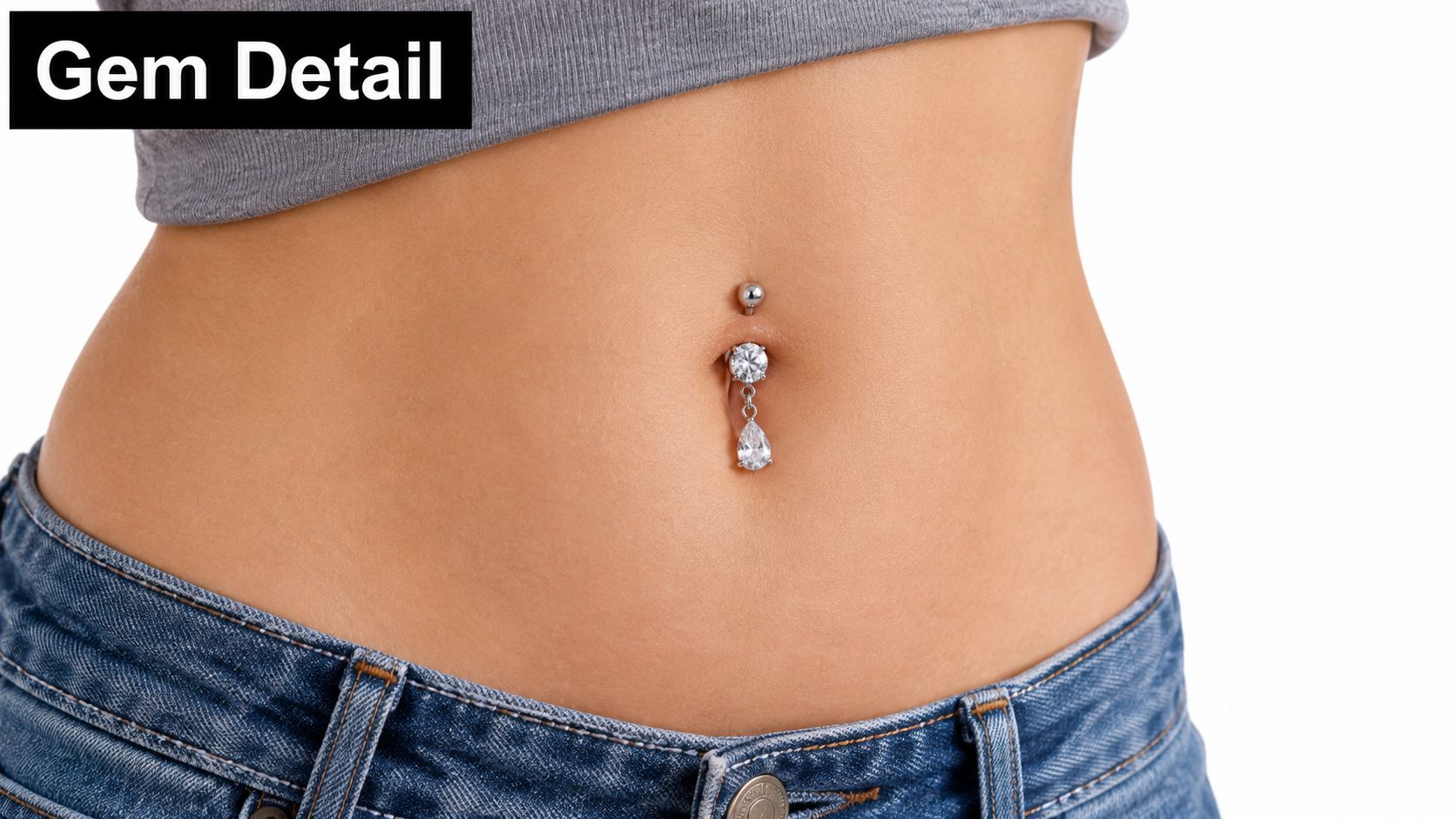
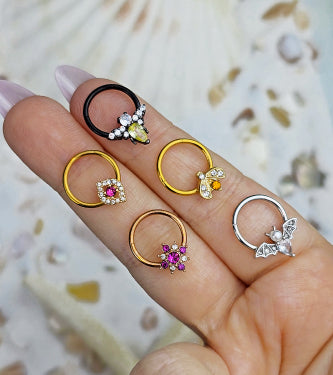
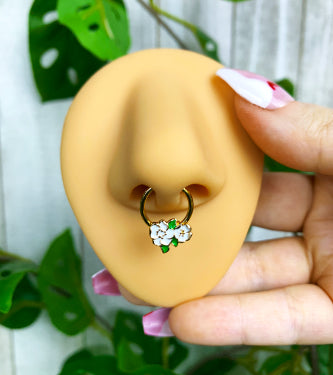
A macro shot puts the sparkle under a microscope, figuratively speaking. With a round cubic zirconia top or a pear-shaped drop in sharp focus, you can see the stone's facets, the shape of its setting, and how much metal frames the gem.
Try a close-up of a 14k gold belly ring with a round CZ top against skin in soft morning light. Or style a bezel-set opal navel ring on neutral linen for a product-forward image that lets the stone's color stand out. The first setup shows how a gem looks against skin; the second highlights its shape and finish without competing details.
Let the setting do the talking
Window light from the side brings out a stone's color and facets without the hard glare that can wash out shiny surfaces. Keep the background uncluttered, then take a second image with a coin or ruler nearby if you want to show scale. That reference shot helps viewers judge whether a delicate gem looks subtle or more statement-making.
Look closely at the setting, too. Prongs leave more of a stone visible, while a bezel wraps around its edge. A tight crop can show these design differences, but it can also make jewelry look larger than it is, so pair the hero shot with a scale reference rather than relying on the macro alone.
Photo cue: If the stone is crisp but the metal setting disappears in glare, soften the light and shift it to the side.
For extra context on the stone style, browse BodyCandy's cubic zirconia body jewelry trend guide. A close-up of a gem-set ring is great for checking sparkle and craftsmanship, but it can't tell you whether the jewelry suits your anatomy or feels comfortable during movement. Use the macro to shortlist a look, then check the fit from another angle.
2. Side-Profile Curved Barbell Close-Up
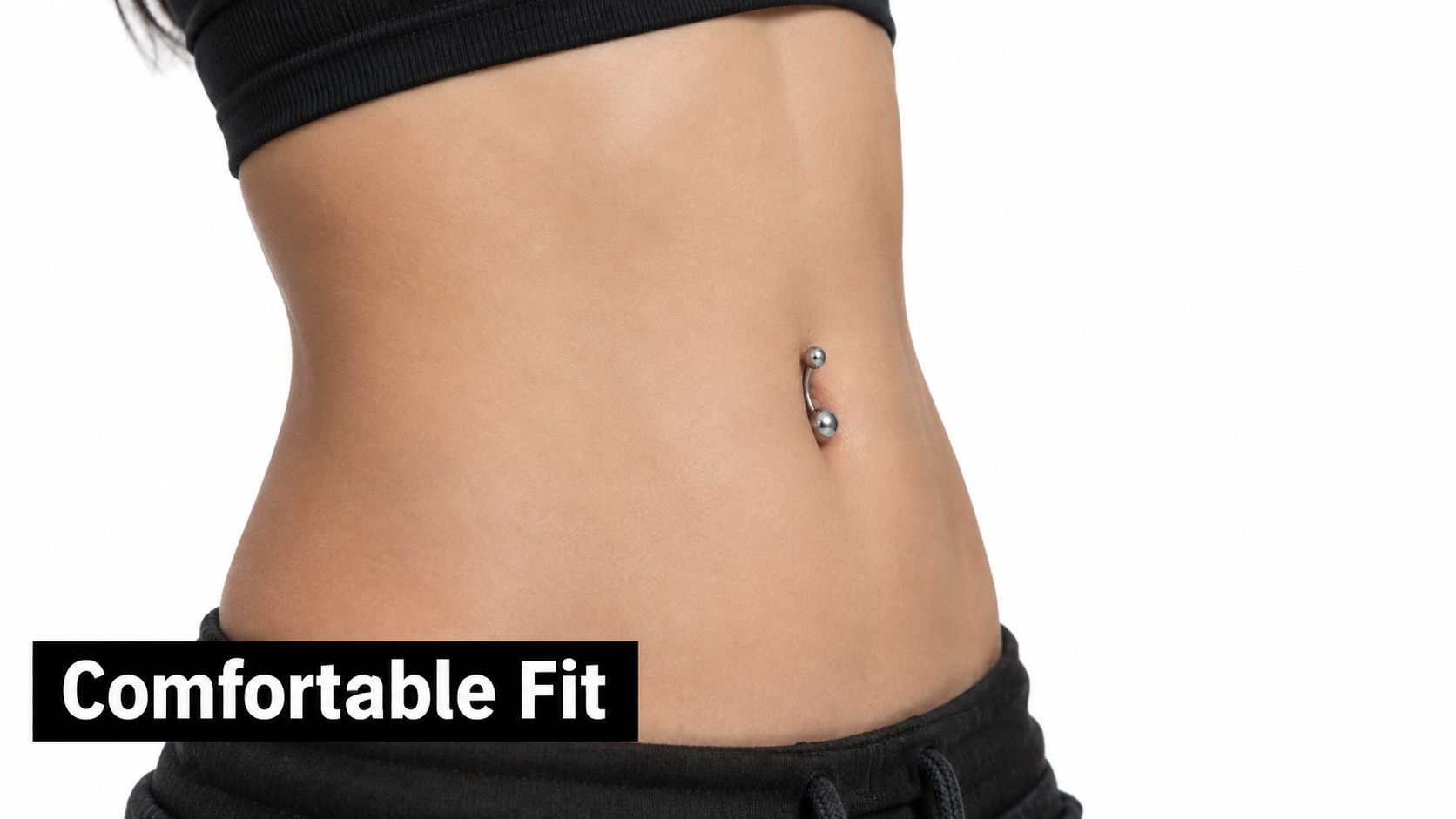
A front-facing photo tells you how a ring looks straight on. A side profile shows whether a curved barbell follows the body, sits with comfortable clearance, or projects outward in a way that might catch on clothing.
Frame the image from ribs to hip so the navel stays the focus. Then compare a standing pose with a seated one. A standing shot can reveal how the jewelry rests when the body is upright; a seated image shows what changes when the abdomen folds or the wearer leans forward.
Check the space around the jewelry
For a visual example, picture a 14-gauge curved barbell in surgical steel, photographed from the side with a small, visible gap between the jewelry and skin. That clearance helps readers see that the bar isn't pressed tightly against the tissue. A second photo taken while seated can reveal whether the curve still sits comfortably or pushes into a fold.
The side angle is also useful for checking how jewelry interacts with a waistband. A low-rise waistband may pass below the navel, while a high-rise one can cover or press against it. Clothing pressure and friction matter especially during healing. Navel piercings can take approximately three to six months, or as long as nine to twelve months, to heal, depending on anatomy, jewelry, aftercare, and irritation (Allure's overview of belly button piercings).
A good-looking front view doesn't prove the barbell has enough room when you sit, bend, or get dressed.
Fit is individual. A professional piercer can assess placement and jewelry against your anatomy in different positions, rather than judging from a photo or guessing from a product listing. For a helpful overview of placement and jewelry choices, see BodyCandy's guide to belly piercing styles and standards.
3. Dangle Charm Belly Ring in Motion
A dangling belly ring has a little personality that a still, straight-on product shot can miss. Catch a small star charm as the wearer shifts their weight, and the image shows how the piece hangs, swings, and catches the light.
For a bright summer look, photograph a gemstone drop outdoors as the wearer turns slightly. A frame captured just as a charm begins to move can suggest motion without turning the whole image into a blur. Try burst mode, then choose a shot where the charm is sharp enough to inspect while its position hints at movement.
Make the swing feel wearable
A dangle is more than a decorative detail. Its length and movement may affect how it feels against skin or clothing during everyday activities. A star charm might look playful with a crop top for a relaxed outing, while a longer drop could be more noticeable around waistbands or during exercise.
Before styling a dangle, think about where and when you plan to wear it. If the piercing is still healing, keep the jewelry and clothing comfortable and avoid unnecessary friction or pressure. A professional piercer can advise whether changing jewelry is appropriate for your piercing's healing stage.
A short video can capture the motion that a single still frame only suggests:
The clip gives viewers a closer look at how a belly ring moves, while still photos can help them inspect the charm's shape and details. When you're comparing designs, check that the piece suits your style and your routine. Explore BodyCandy's dangle and charm belly ring options for ideas, and ask a piercer about jewelry changes if your piercing hasn't fully healed.
4. Healed Piercing Close-Up for Educational Content
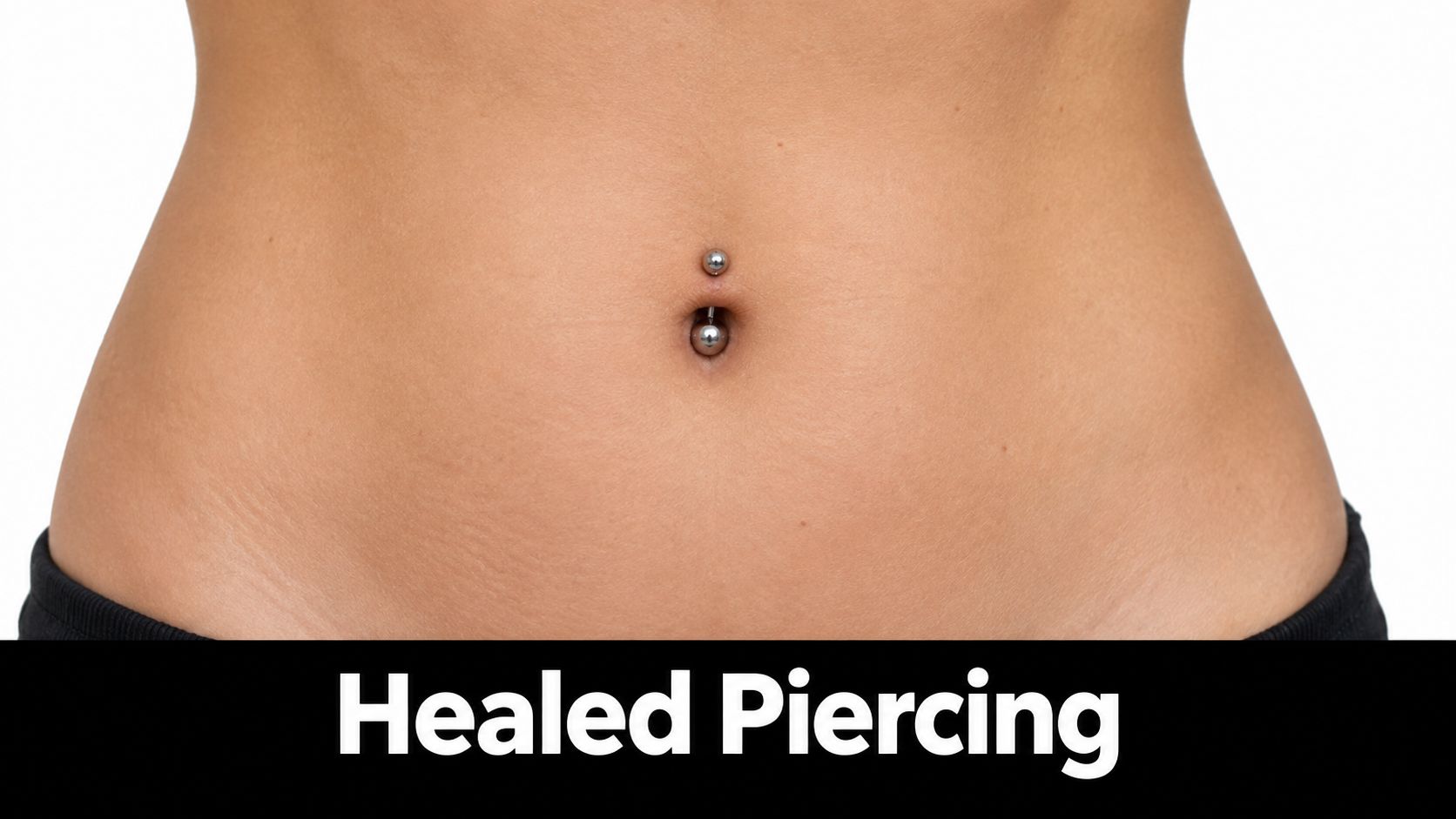
A clear photo of a healed navel piercing can give you a useful reference for how jewelry sits against calm-looking skin. Use even, diffused light and a simple curved barbell so the entry and exit points are easy to see. Keep the presentation honest: a photo can illustrate an appearance, but it can't diagnose someone else's piercing.
Healing isn't a quick countdown
Navel tissue moves with your body and can rub against clothing, which makes healing more demanding than a simple jewelry swap. Tight waistbands, friction, and skin maceration can delay healing and raise infection risk, according to the American Academy of Family Physicians' guidance on body piercing. That's why a smooth-looking close-up shouldn't be treated as proof that every piercing has healed on the same schedule.
A fresh piercing can look different from a settled one. If you create a side-by-side image, label each photo clearly and avoid presenting irritation, persistent discharge, or raised tissue as just another normal style variation. Redness or tenderness can have different causes, including irritation, an allergic reaction, or infection. A piercing professional or healthcare professional can help assess symptoms that worry you.
Use healed-piercing photos as a visual reference, not a promise that every piercing will look identical.
Jewelry material matters, particularly if you've reacted to metal before. Titanium, niobium, and suitable gold are commonly identified as lower-risk options for people with metal sensitivity; the American Academy of Allergy, Asthma & Immunology explains nickel allergy and jewelry choices. Ask for clear material information, and have a professional piercer advise you on jewelry that's appropriate for your piercing and healing stage. For background on how healing times vary, visit BodyCandy's guide to healing times for popular piercings.
5. Golden-Hour Lifestyle Close-Up on Stacked Jewelry
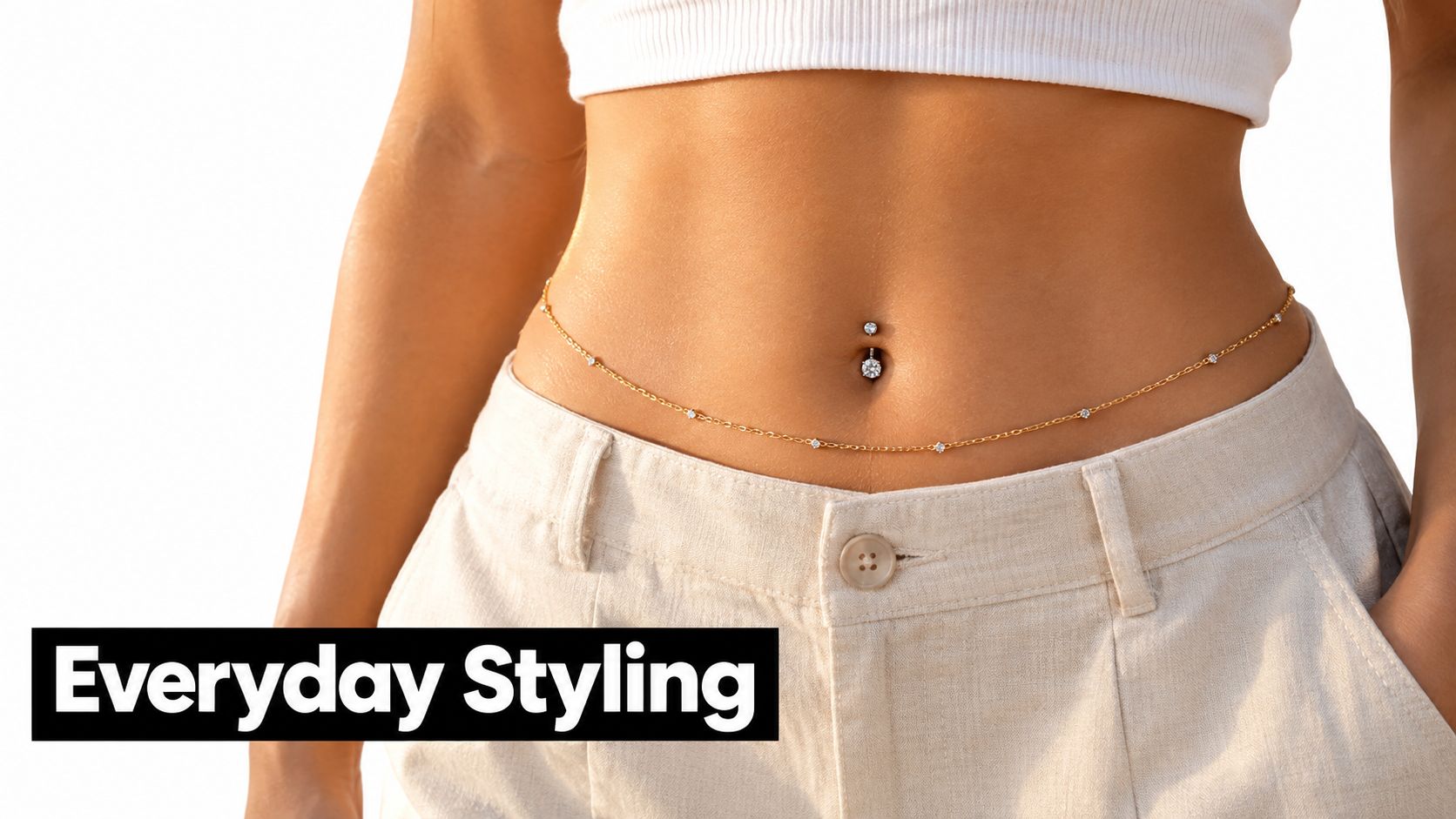
A lifestyle close-up answers a different question: how might this belly ring fit into an outfit you wear? A gold gem ring with a delicate waist chain feels different from the same jewelry photographed alone. Pairing a dangle with a bikini or a gem-set ring with a high-waisted skirt adds context and helps viewers picture the styling.
Shoot outdoors near the beginning or end of daylight for warm, soft light. Choose a simple outfit so the jewelry and any waist chain stay easy to see. For a quick styling story, photograph one ring with a neutral top, a beach-ready look, and a skirt-and-chain combination. Each frame can show how the same piece changes mood without suggesting that every style suits every occasion.
Keep the real-life details in frame
A beautiful outfit photo still needs to show where the jewelry sits. Include enough of the waist and navel to reveal whether a chain rests over the piercing, falls beside it, or might rub against it. If a waistband covers the jewelry, viewers can't judge how the pieces interact.
Comfort should guide the styling, too. Tight waistbands and repeated friction can irritate a healing navel piercing, so keep pressure away from the area and follow your piercer's advice. A golden-hour photo can make a ring glow, but it can't show how it feels through a full day of movement.
Style note: Let the jewelry shine, but don't crop out the clothing that may touch it.
Use the image to explore an aesthetic, not to decide whether a piercing is ready for a new piece. Your anatomy, placement, and daily routine all shape what feels practical. A waist chain may be a fun accent for a settled piercing, while a healing piercing may call for simpler styling that avoids snagging and pressure.
Belly Button Piercing Close-Up Comparison: 5 Styles
| Example | 🔄 Implementation complexity & resources | 📊 Expected outcome | 💡 Ideal use case | ⭐ Key advantage |
|---|---|---|---|---|
| Gem-Set Navel Ring Macro Shot | Low–moderate; macro lens or phone macro mode and soft light | Sharp gem detail can attract clicks and saves | Product features and jewelry styling posts | ⚡ Highlights gemstone sparkle and setting craftsmanship |
| Side-Profile Curved Barbell Close-Up | Moderate; controlled lighting and standing or seated poses | Makes fit, visibility, and jewelry placement easier to assess | Sizing, comfort, and fit guides | Shows how the barbell follows the body's contour |
| Dangle Charm Belly Ring in Motion | Moderate; burst mode or shutter-speed adjustments | Adds energy and personality to trend or gift content | Seasonal styling, festivals, and gift-focused posts | Captures the charm's movement and playful character |
| Healed Piercing Close-Up for Educational Content | Low–moderate; clear, even lighting and a verified healed piercing | Sets realistic healing expectations and supports reader trust | Aftercare and healing education | Provides a practical visual reference for a healed piercing |
| Golden-Hour Lifestyle Close-Up on Stacked Jewelry | High; model, styling, shoot budget, and golden-hour timing | Creates aspirational, shareable lifestyle content | Social media, blog headers, and styling guides | Shows jewelry in context with complementary accessories |
Choose the View That Answers Your Question
Each close-up style gives you a different clue. Use a macro shot to inspect a gemstone's facets and setting, a side profile to judge a barbell's clearance and projection, and a motion frame to see how a dangle behaves. A clean image of a healed piercing can help you understand one possible appearance after recovery, while a lifestyle photo lets you imagine how jewelry might work with outfits you enjoy.
No photo can tell you everything about fit. Your anatomy and placement affect how a curved barbell sits, while the jewelry's gauge and wearable length affect its fit. Material matters if you have metal sensitivity, and lifestyle matters if your clothes or activities create pressure and friction. A professional piercer can assess your anatomy, help evaluate fit, and advise you on jewelry changes.
For sizing context, 14 gauge, or about 1.6 millimeters, is described as a common navel-piercing gauge in U.S. studios, while 7/16 inch, about 11 millimeters, is a common initial length to allow room for swelling. After a piercing settles, 3/8 inch, about 10 millimeters, is described as a common healed length for standard anatomy; 5/16 inch, about 8 millimeters, may suit shorter anatomy (navel jewelry sizing guidance). Those measurements aren't universal. Have a professional piercer assess your fit and handle any downsize instead of choosing by appearance alone.
Follow your piercer's aftercare instructions, keep your hands clean, and avoid unnecessary touching or removing jewelry. Contact a healthcare professional about persistent redness, swelling, discharge, severe pain, or other concerning symptoms. When you're ready to explore styles, use the close-ups to shortlist a look, then check fit and material with a professional before choosing.
Explore BodyCandy's belly button rings to compare gem-set designs, curved barbells, and dangle styles. Pick a few close-up looks that match your vibe, then ask a professional piercer to help you make a safe sizing and material choice. Visit BodyCandy to start browsing.