

















When you start exploring VCH piercings, you'll run into a bunch of new terms. Out of all of them, VCH piercing gauge is probably the most important one to get right for a comfortable, happy piercing.
So, what is it? Gauge is just the professional term for the thickness of the body jewelry. It’s a little backward from what you might expect: a smaller number like 14g is actually thicker, while a larger number like 16g is thinner.
Why Your VCH Piercing Gauge Matters
Okay, so why all the fuss about a millimeter here or there? Picking the right VCH piercing gauge is way more than just a style choice—it's absolutely critical for the long-term health and success of your piercing. A properly sized gauge makes sure the jewelry fits snugly without putting any extra stress on that super-delicate tissue.
Getting this right affects everything, from how smoothly your piercing heals to how it feels just walking around day-to-day. If you go with a gauge that's too thin, you're setting yourself up for some serious problems. You could experience migration (where the piercing slowly moves from its original spot) or the dreaded "cheese-cutter effect," which is exactly what it sounds like—thin jewelry can literally slice through the tissue if it gets snagged.
Think of the gauge as the foundation of your piercing. Getting it right from the very beginning is the single best thing you can do for a smooth healing journey and a piercing you'll love for years.
This image shows the most common gauge sizes for VCH piercings and how thick they are in millimeters.
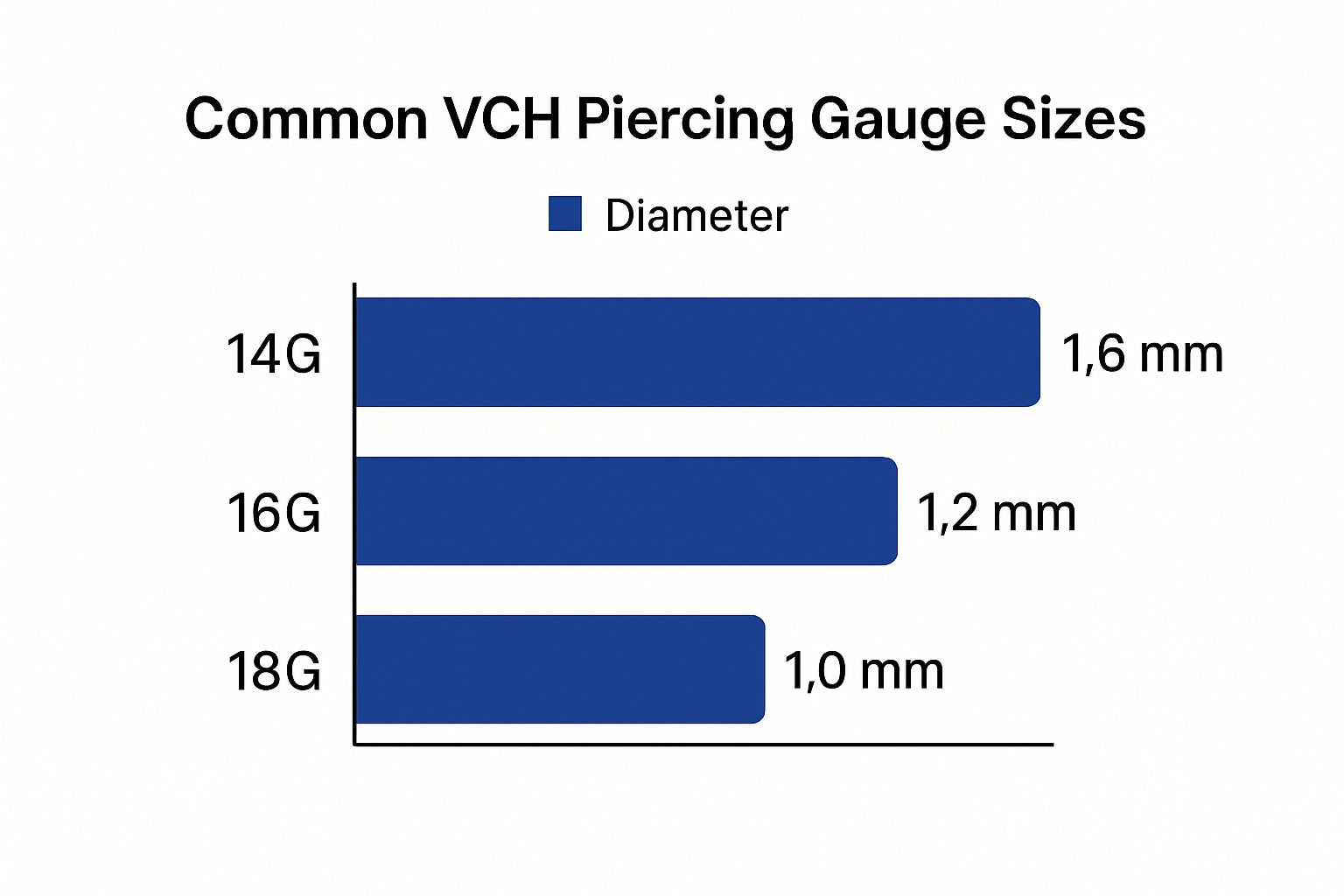
As you can see, the difference between a 16g, 14g, and 12g is tiny but makes a world of difference for your body. Your professional piercer will help you choose the best option based on your anatomy.
VCH Gauge Sizes at a Glance
To make it even clearer, here's a quick cheat sheet that breaks down the common VCH gauge sizes. It's a handy reference for understanding how the numbers translate to actual thickness.
| Gauge Size | Thickness in Millimeters | Best For |
|---|---|---|
| 16g | 1.2mm | The thinnest common size, often used for delicate or smaller anatomy. |
| 14g | 1.6mm | The most common and widely recommended "standard" size for VCHs. |
| 12g | 2.0mm | A thicker option, sometimes chosen for a more substantial look or feel. |
Ultimately, 14g is the gold standard for most VCH piercings. It provides the perfect balance of stability to prevent migration while still being comfortable for initial healing and long-term wear. Always follow the advice of your piercer, as they can assess your specific anatomy to ensure a perfect, safe fit.
Understanding the Standard VCH Piercing Gauge
So, you’re ready to take the plunge and visit a professional piercer—amazing! But what gauge will they actually use for a VCH piercing? Let’s get into the industry standards so you know exactly what to expect when you walk in.
For an initial VCH piercing, the vast majority of professional piercers will reach for either a 14 gauge (14g) or sometimes a 12 gauge (12g). These aren't just random numbers; they are the gold standard for this specific piercing, and for some very good reasons. They really hit the perfect sweet spot for this delicate area.
Why Thicker Is Better
Think of it this way: these gauges are thick enough to provide real stability while your piercing is healing, which is absolutely crucial.
When jewelry is too thin, especially in an area with a lot of movement, you run the risk of the dreaded "cheese-cutter effect." This is exactly what it sounds like—the jewelry can slowly migrate or even slice through the tissue. Ouch! A 14g or 12g piece of jewelry is substantial enough to resist this pressure, keeping your piercing safe, secure, and happy.
This piercing’s popularity is no accident; studio stats consistently show it’s the most common genital piercing for those with vulvas. Even with piercing studio shutdowns in 2020, one shop reported performing a whopping 143 VCH piercings that year, far outpacing other types.
Starting with one of these standard gauges also means you'll have a much wider, more exciting selection of gorgeous jewelry to choose from once you're all healed up. If you want to dive deeper, you can learn more in our guide to the standards of gauge sizing for body jewelry.
Your piercer will almost always recommend a 14g or 12g for a VCH piercing. Trust their expertise—they are setting you up for the safest, smoothest healing journey possible. Going thinner is a major risk not worth taking.
Ultimately, this standard exists to protect you and your piercing. It ensures your new addition is stable, heals well, and gives you access to all the best jewelry styles down the line. It's all about making sure your experience is as fabulous and complication-free as possible, right from day one.
Finding the Perfect Gauge for Your Anatomy
While industry standards like 14g are a great starting point, your body is totally unique. The perfect VCH piercing is all about a personalized fit, not a one-size-fits-all approach. A reputable, professional piercer will never just grab a needle and go; they’ll always take the time to carefully assess your individual anatomy first. It's a crucial step that makes all the difference.
This consultation is where the magic happens. Your piercer will look at the specific shape and thickness of your clitoral hood to decide if a 14g or a slightly thicker 12g is the better option. Some anatomies have a bit more tissue to support a 12g, while others are perfectly suited for the classic 14g. Think of it as a collaborative decision between you, your piercer, and your body.
It's All About Sensation
But the choice isn't just about the physical fit—it's also about how you want your new piercing to feel. Sensation is a huge part of the VCH experience, and the gauge you choose plays a big role here, too.
Some people absolutely love the slightly heavier, more present feeling of 12g jewelry. They find that the extra weight provides a more noticeable stimulation during movement. On the other hand, many prefer the lighter, more subtle touch of a 14g. Neither is better than the other; it’s purely a matter of what you're looking for.
Your body, your choice! The goal is to find a VCH piercing gauge that not only looks amazing but feels incredible too. An open conversation with your piercer is the best way to get there.
Having this knowledge empowers you to have a confident chat with your piercer about what you want, both in terms of anatomy and your desired level of sensation. Getting a handle on how jewelry is measured is also a huge help. For a complete rundown, check out our guide on body jewelry sizing basics to become a total pro. This way, you'll walk away with a VCH piercing that feels like it was made just for you.
How to Safely Change Your VCH Piercing Gauge
So, your VCH piercing is fully healed and you're ready to explore a whole new world of jewelry styles. Awesome! If you've got your eye on a piece that's a different gauge than what you currently have, you're looking at a process called "stretching."
It just means gently upsizing to a slightly thicker gauge, like moving from a standard 14g to a 12g. It’s super common and totally safe, as long as you do it right.
The two golden rules here are patience and listening to your body. You absolutely, positively must wait until your piercing is 100% healed before even thinking about changing the gauge. Trying to size up too soon is just asking for irritation, micro-tears, and a major setback in your healing journey.

Your Roadmap to Sizing Up
When you're finally ready, having the right equipment is non-negotiable. This is not a moment for forcing jewelry through; you'll need a couple of key items to make the switch smooth and comfortable.
- A High-Quality Insertion Taper: This is a special tool designed to gradually widen your piercing. Make sure you get one that matches the gauge you're moving up to (for example, a 12g taper).
- Water-Based Lubricant: A good, body-safe lube is your absolute best friend for this. It helps the taper and the new jewelry slide in without any uncomfortable friction.
- Your New Jewelry: Have your fabulous new piece cleaned, sterilized, and ready to go.
The key to this entire process is to go slow. Gently guide the lubricated taper through your piercing. If you feel any sharp pain or serious resistance, stop immediately. That's your body telling you it's not quite ready yet.
Once the taper is all the way through, you’ll line up your new jewelry with the blunt end and push it through, following the taper right out. It should be a smooth, seamless transition.
Want to learn more about the tools of the trade? Check out our guide on body piercing tools and techniques. With just a little bit of patience, you'll be rocking your new gauge and expanding your jewelry collection in no time
How Gauge Size Impacts Your Jewelry Style
Alright, let's get to the fun part—the jewelry! Think of your VCH piercing gauge as the key that unlocks a whole world of gorgeous styles. Getting the right gauge isn't just a healing and safety thing; it's your ticket to an amazing collection of VCH jewelry. This is where your personal style really gets to shine.
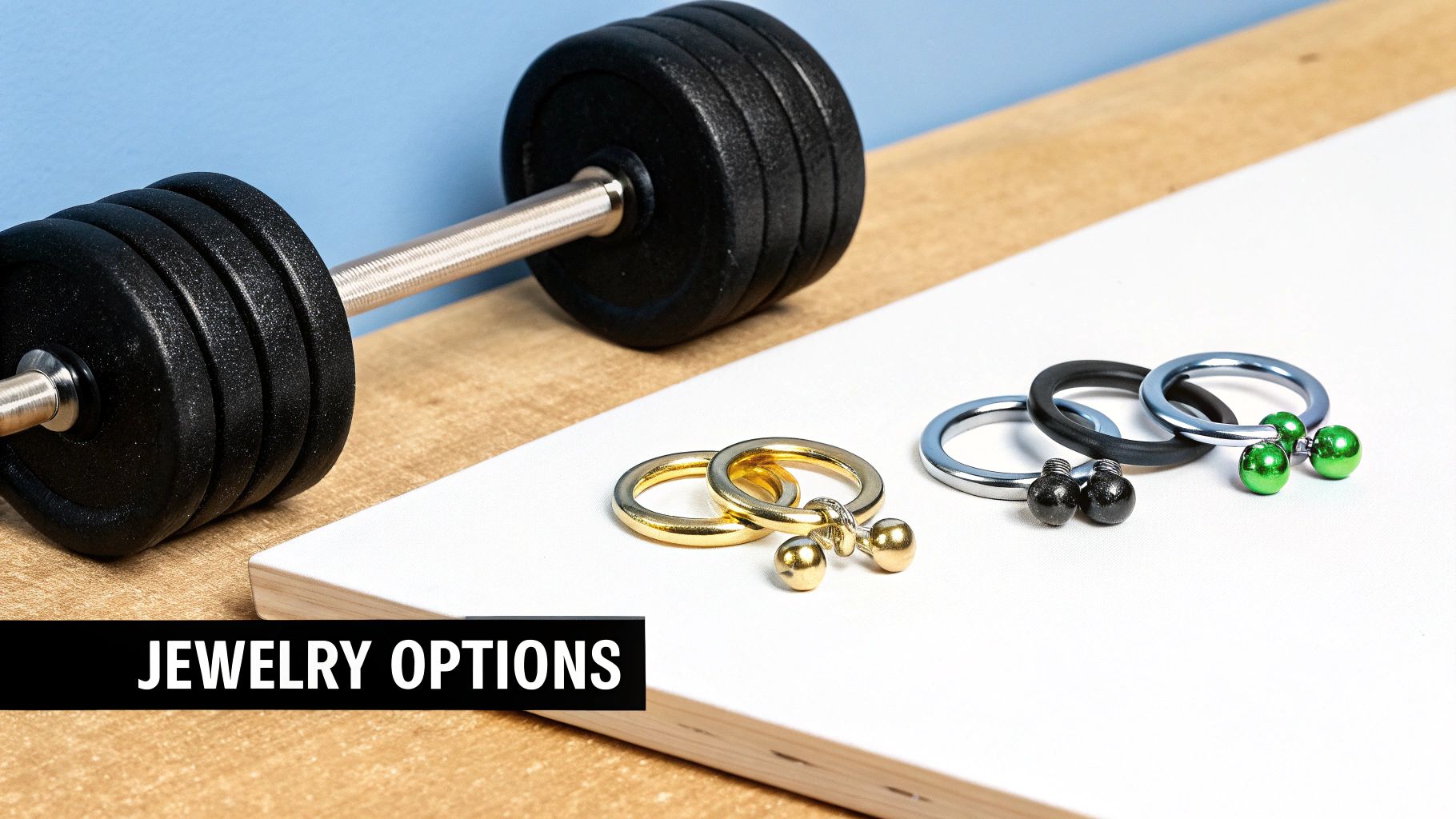
When you start shopping around, you'll see pretty quickly that 14g and 12g are the absolute sweet spots. These aren't just the standard sizes recommended by piercers for a healthy piercing; they also open up the widest, most fabulous selection of jewelry you can imagine. The huge majority of those beautiful curved barbells, unique J-curves, and classic captive bead rings are made specifically for these two gauges.
Unlocking the Best Styles
Most of the decorative ends, sparkly gems, and cool, intricate designs you fall in love with are threaded to fit 14g or 12g posts. This means you have almost endless options to customize your look without any fuss.
If you opt for a non-standard gauge, like a thinner 16g, you might find your style choices seriously limited. While there are some options out there, the selection is way smaller, and you could miss out on some of the trendiest designs everyone is talking about. It's definitely something to keep in mind when deciding on your initial gauge.
Here's a quick look at your go-to options:
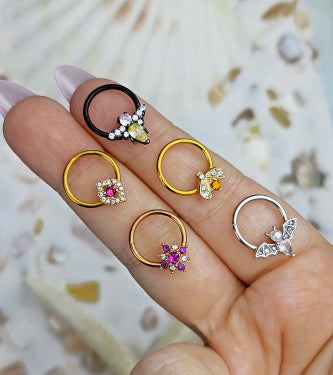
- Curved Barbells: The classic choice for a VCH. They're perfect for showing off sparkly gems on either end.
- J-Curve Barbells: These offer a slightly different angle, which some people find even more comfortable and stimulating.
- Captive Bead Rings (CBRs): A timeless, super secure option that gives you a sleek, seamless look.
Your gauge size directly determines your jewelry wardrobe. Sticking to the standard 14g or 12g ensures you have access to the biggest and best collection, letting you express yourself with gorgeous, high-quality pieces that are a perfect, safe fit.
Ultimately, choosing a standard VCH piercing gauge gives you the freedom to explore an incredible variety of jewelry from brands like Bodycandy. It’s all about finding those perfect pieces that make you feel confident, beautiful, and totally you.
Your VCH Piercing Gauge Questions Answered
Feeling good about VCH piercing gauges? Awesome! It’s still totally normal to have a few questions floating around. To help you feel 100% confident, we've put together a quick FAQ to clear up the most common things we hear. Let's tackle those last few details.
What Happens If My VCH Piercing Gauge Is Too Thin?
Going too thin with your gauge, like a 16g or 18g, is a risk you don't want to take with a VCH piercing. It can lead to something piercers call the "cheese-cutter effect"—where the fine jewelry can literally slice through that delicate tissue, especially if it gets snagged. This can cause the piercing to migrate, tear, or even be rejected by your body entirely.
For a healthy, stable piercing that's going to last, sticking with the professional standard of 14g or 12g is always the smartest and safest bet.
Does Getting Pierced with a Thicker Gauge Hurt More?
Honestly, the difference in sensation between a 14g and a 12g needle is so tiny that most people don't notice it at all. The VCH piercing is known for being incredibly quick. That sharp, fast pinch you feel is more about the piercing process itself, not the minuscule difference in the needle's thickness.
A skilled piercer, a sharp sterile needle, and your own confidence are what truly matter for a comfortable experience. The difference between a 1.6mm and 2.0mm needle is barely a blip on the radar.
How Can I Figure Out My Current VCH Gauge Size?
If you've forgotten what gauge you were pierced with, don't sweat it! The absolute easiest and most reliable way to find out is to pop into a professional piercing studio. An expert can measure your jewelry in seconds, taking all the guesswork out of the equation.
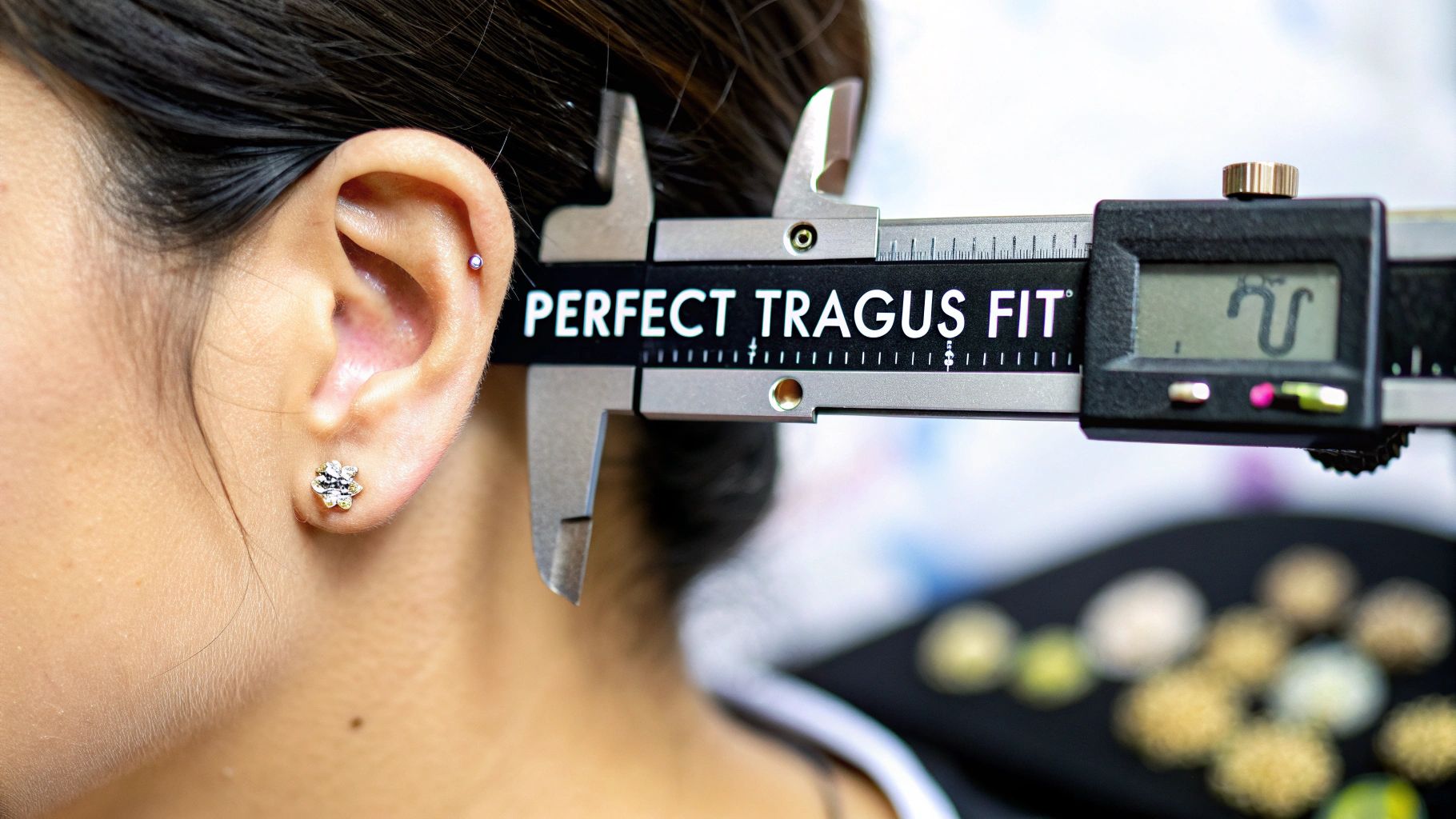
If you bought your jewelry online, you can also check your order history for the size details. While you could use digital calipers to measure the thickness yourself (14g = 1.6mm, 12g = 2.0mm), it’s always best to have a pro confirm it before you buy new jewelry to make sure you get a perfect fit.
Ready to find the perfect piece for your VCH piercing? Explore our stunning collection and discover high-quality, beautiful jewelry in the perfect gauge for you. Shop now at https://bodycandy.com and express your unique style