

















You're staring at a booking page, loving the vibe, and then the practical questions kick in. Will it sit flat? Will it heal forever? Will it even suit your anatomy, or just look perfect on someone else's feed?
That's exactly where surface piercing types get interesting, because they're not just “another piercing.” They're a different setup entirely, with different wear expectations, different jewelry, and a very different relationship to your body's movement. If you're thinking about one, the smartest move is to understand the category before you commit, because surface piercings are often better treated as a short-to-medium-term adornment than a lifetime piece, with one piercing educator estimating an average lifespan of 5 to 7 years for the style surface piercings guide.

What Makes a Piercing a Surface Piercing
The first thing to understand is the path the jewelry takes. A surface piercing does not travel through a tidy, rounded pocket of tissue like a lobe or nostril piercing. It runs just under the skin's surface, with the entry and exit points placed close together on the same plane of skin, so the setup behaves differently from common piercings.
That shape affects everything that comes after. Because the jewelry sits beneath flat skin instead of through a thicker, more anchored tissue path, the piercing has a greater chance to migrate or be pushed out over time. Piercers usually choose flatter, lower-movement areas, such as the chest, hip, nape, or collarbone region, because those spots can support the jewelry with less constant strain.
A lot of first-timers assume the piercing itself is the main decision. The placement matters just as much, sometimes more. Surface styles ask for realistic expectations from the start, because they are often better treated as a short-to-medium-term adornment than a forever piece, and the jewelry choice needs to support that reality from day one.
Practical rule: if a spot bends, stretches, or gets bumped all day, it is usually a tougher home for a surface piercing.
For a clearer overview of how the category works, BodyCandy's explanation of surface piercings is a useful place to start: surface piercing basics. Lynn LoHeide's surface piercing lifespan guide also helps frame why these placements are often approached with a shorter wear timeline in mind.
The Most Popular Surface Piercing Types and Where They Sit
Surface placements are popular because they can look sharp and edgy without screaming for attention. They also vary a lot in how much the body moves around them, which is a huge part of the decision.
Nape and chest placements
The nape sits at the back of the neck, usually as a horizontal or vertical pairing that follows the line of the skin. It can look sleek and minimal, but it's also in a zone that sees constant motion from turning your head, tying your hair up, and sleeping position. That movement is why the placement feels elegant and a little high-maintenance at the same time.
The chest and collarbone area are loved for the clean, centered look they give, especially with a surface bar that lies flat. These spots can work well visually because the jewelry reads clearly from the front, but they still need anatomy that can support the bar without creating extra pressure. If you like the look of a shallow, symmetrical setup, chest-based surface work is often the style people have in mind.
Hip and wrist placements
The hip is another classic surface look, especially for people who want something that feels sexy, hidden, or easy to show off selectively. It's a spot with a lot of bending, waistband contact, and side-to-side movement, so the visual payoff is strong but the wear-and-tear can be real.
The wrist has a similar issue, but even more so. You use your hands constantly, so every twist, bend, and sleeve cuff becomes part of the piercing's environment. It can look incredible, but it's usually one of those placements that asks for very careful anatomy screening and realistic expectations.
A piercing can look perfect in a photo and still be wrong for your body if the area flexes all day.
What to remember before you book
Anatomy beats trend every time. A placement that looks amazing on your friend might not be a good fit for your skin tension, movement patterns, or tissue depth. If you want a deeper example of how one surface style is planned and fitted, BodyCandy has a related guide on the surface tragus, which shows how specific surface-style placements can be: surface tragus overview.
The big takeaway is simple. Surface piercing types are chosen less by fashion alone and more by how your body moves in real life. That's what separates a cute idea from a piercing that stands a chance.

Choosing the Right Jewelry for a Surface Piercing
A surface piercing can look clean and almost effortless from the outside, but the jewelry underneath is doing a lot of quiet work. If the shape, material, or finish is wrong, your body usually notices right away. That is why the base jewelry is not just a style decision, it is part of how you protect the piercing while it has to live on your body for years, not forever.
Surface bars, anchors, and decorative tops
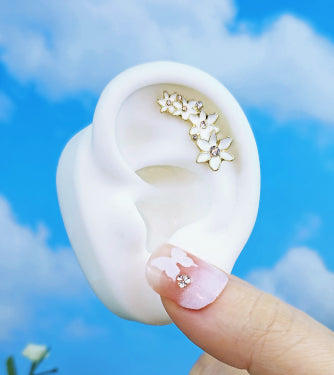
A surface bar is the usual starting point for many surface piercings. It sits flat under the skin, which helps it match longer, linear placements that need a steady shape and less visible movement. A surface anchor works more like a single-point option, so it is generally better for smaller, more discreet spots than for broad surface paths. Decorative tops are the part people see and style, but their success depends on the base underneath, not just the shine above it.
For someone choosing with a realistic time frame in mind, the placement matters as much as the design. Surface piercings are often chosen as a short-to-medium-term adornment, something you may enjoy for a few years if the anatomy and aftercare line up well. That makes a flatter, more stable base the smarter fit in places where the jewelry needs to sit low and calm. Experienced piercers pay close attention to the bar's angle and curve because the wrong shape can create pressure where the skin wants to move.
Materials and finish matter more than you think
Fresh piercings need jewelry that is meant to stay friendly to the body, not just look polished in a tray. A buying guide for implant-grade titanium and niobium specifications recommends ASTM F136 titanium, ASTM F138 stainless steel, or 99.9% niobium as implant-grade options, along with a 14g or 12g initial gauge and fully recessed threaded ends to help limit micro-motion and irritation. The same guide also points to a mirror-polish finish with surface roughness at or below Ra 0.2 µm, since a smoother surface can reduce friction and make it harder for debris to cling while the piercing is healing.
If your skin reacts easily, hypoallergenic materials matter even more. Some piercers also discuss quality gold for certain wearers, but the order of importance stays the same, material first, then fit, then style. A piercing like this should not be chosen the way you choose earrings for an outfit. The jewelry has to support the piercing while your body is deciding whether it can keep it.
Buyer mindset: with surface piercings, the jewelry is part of the anatomy plan, not just the outfit plan.
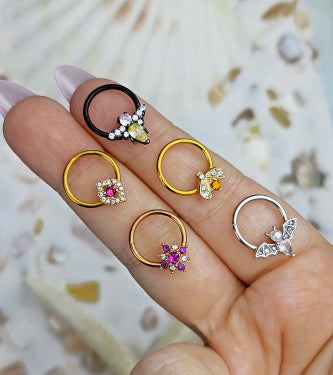
If you are comparing starter material options, this guide on titanium body jewelry gives a useful starting point, and BodyCandy carries surface jewelry options alongside other body jewelry styles. Once the jewelry is chosen well, the piercing has a better chance of staying comfortable, even though it still asks for patience.
Healing Timelines and What Each Phase Feels Like
A fresh surface piercing rarely settles in a straight line. It usually moves through stages, and each one has its own feel, a little like a bruise that slowly changes from sharp and obvious to easy to ignore. If you expect it to behave like a standard ear piercing, the slower pace can catch you off guard.
Early tenderness
The first phase often feels sore, warm, and touchy. That reaction makes sense, because the body is dealing with a new channel under the skin and is trying to protect it.
Small crusting, mild swelling, and a bit of lingering sensitivity can all show up here. Those signs do not automatically point to trouble. The question is whether the irritation eases little by little or starts getting more intense.
Settling and maturation
Healing guidance for surface piercings varies, but sources put many cases at 6 to 16 weeks for the early-to-mid healing window, and some advise waiting at least 3 months before changing decorative ends. Another piercing resource says to plan on a good solid year for healing, while a second notes that full healing can take a year or longer. That range is one reason this style is better treated as a short-to-medium-term adornment, not a forever piece you can forget about after a few months surface piercing risks and rewards surface piercing healing guidance.
The middle phase is usually quieter, but quiet does not mean finished. The surface may look calmer, yet the tissue below is still deciding whether it wants to keep the jewelry in place for the long run, which is why patience matters even after the initial sting fades.
Simple habits help here. Sleep on the opposite side when you can. Avoid catching the jewelry on collars and backpack straps. Keep using the same gentle routine until your piercer says the area has stabilized.
If the piercing still feels easily irritated after the early phase, don't rush decorative swaps just because the outside looks calm.
Healing is less about counting days and more about giving the piercing enough time to prove itself. For a style that may only stay happy for a handful of years, the early healing period is where you set the tone for how long it lasts.
Risks, Rejection, and How to Spot Trouble Early
Surface piercings sit in a more delicate category than many other piercings, so it helps to be honest about the tradeoff from the start. They can look striking, but the body also has more ways to push back when the jewelry does not suit the placement or the anatomy. Because of that, this style is usually better treated as a short-to-medium-term adornment, not a forever piece you can tuck away and forget.
What rejection looks like
Rejection often begins subtly. The skin may start to thin, the bar can become more visible than it was initially, or the area may remain red long after the initial healing phase has passed. You might also observe the jewelry appearing to sit closer to the surface rather than resting comfortably underneath.
Those changes matter because surface piercings do not form the same deep tissue channel that some other piercings do. If the body decides the jewelry is something it wants to shed, it can slowly push it outward, especially in places that get a lot of movement, pressure, or rubbing. A surface piercing is a bit like a tent peg in soft ground, if the angle and placement are wrong, it starts to work loose.
What pushes the odds up or down
The biggest factor you can control is placement in a low-movement, flat area, paired with the right jewelry. Tight clothing, repeated friction, and an angle that fights your anatomy all make rejection more likely. A thoughtful setup gives the piercing a better chance to stay settled for as long as the body will allow.
If rejection is confirmed, removal is usually the smarter call. That helps limit scarring and can make future re-piercing easier. It is not the news anyone hopes for, but it is often the calmest way to protect the skin and keep the situation from getting worse.
Watch for this: clear lymph can be normal during healing, but redness, swelling, or skin thinning that will not calm down deserves your piercer's attention.
The safest mindset is to treat early warning signs seriously without panicking. Catching trouble early leaves you with more options, and that matters a lot in a piercing style where the body's response is part of the equation.
Aftercare That Actually Helps a Surface Piercing Last
Good aftercare helps a surface piercing do its job, but it doesn't turn the piercing into something it isn't. That's the mistake a lot of first-timers make. They think perfect cleaning equals permanent success, and surface piercings just don't work that way.
A simple routine is your friend here. Gentle saline care, clean hands, loose clothing, and a serious respect for anything that could snag the bar all matter more than fancy products or overcleaning. If the area gets irritated, more product usually isn't the answer, calmer habits are.
The little habits that protect healing
- Sleep smart: Lie on the opposite side when possible so you're not pressing the jewelry into the pillow.
- Dress loose: Choose shirts, bras, and waistbands that won't rub the piercing all day.
- Protect the area: Watch backpack straps, sports gear, and any activity that could catch the jewelry.
- Keep it gentle: Use saline and avoid fussing with the jewelry just to check on it.
Normal soreness and mild tenderness are part of healing. What's not normal is a pattern of worsening redness, obvious pressure, or jewelry that starts looking like it's moving under the skin.
The hard truth is that surface piercings are usually better thought of as a multi-year adornment than a forever piece. If it begins to change, that's not a personal failure, it's a sign to re-evaluate before the piercing turns into a bigger problem.
How to Find a Piercer You Can Trust
A good surface piercing starts with a good piercer, and the first conversation matters just as much as the appointment. If you are hoping for a placement that can heal well and still look good for a few years, you want someone who studies your anatomy first instead of treating every body like the same template.
Start with the studio itself. It should look clean, organized, and professional, with single-use needles and an autoclave on site. The piercer should also ask about your lifestyle and healing history before agreeing to a placement, because surface piercings depend heavily on where your body has room to support the jewelry and where movement will keep stressing it.
Ask direct questions, and pay attention to how they answer:
- What gauge and material do you recommend for this placement?
- How does my anatomy affect the placement you'd choose?
- What happens if the piercing starts to reject?
- Will you change the decorative tops for me once it's ready?
Those questions are normal. A piercer who answers them clearly is showing that they understand the placement, the jewelry, and the way surface piercings behave over time.
You can also ask how they think about longevity. A careful piercer should explain that a surface piercing may be a strong short-to-medium-term adornment, often something you enjoy for years rather than expect to keep forever. That kind of honesty is a good sign, because it means they are planning for realistic wear, not just selling a pretty idea. A piercer who talks through that tradeoff is usually thinking about your body, not only the finished photo.
A typical service fee for this kind of work is about $50 to $100 per piercing, before jewelry upgrades surface piercing risks and rewards. Experienced piercers often charge toward the higher end because placement skill matters a lot here, and a careful setup is worth more than a rushed one.
Surface Piercing Questions Beginners Always Ask
How is a surface piercing different from a microdermal?
A surface piercing has an entry and exit point connected by jewelry under the skin. A microdermal is a single-point anchor with one visible top, so the structure is different from the start.
What's the easiest surface piercing for a first-timer?
The answer depends on your anatomy and movement patterns, but flatter, lower-friction areas tend to be easier to manage than spots that bend or snag constantly.
Do surface piercings hurt more than standard piercings?
Many people find the placement itself manageable, but the bigger challenge is usually the aftercare and the longer healing behavior, not just the initial needle.
What should I do if it starts rejecting?
Don't yank it out yourself. See your piercer quickly, because early removal usually lowers scarring and keeps your options open later.
If you're comparing jewelry or trying to picture your first setup, explore BodyCandy's body jewelry selection and use the product pages to compare styles that fit your vibe and your anatomy. The right choice makes a surface piercing feel a lot less mysterious, and a lot more doable.
Ready to shop with real expectations and better options in mind? Visit BodyCandy to browse body jewelry that fits your style, then use what you've learned here to choose surface piercing jewelry with a smarter eye. If you're still weighing placements or materials, keep this guide handy and compare your options before you book.