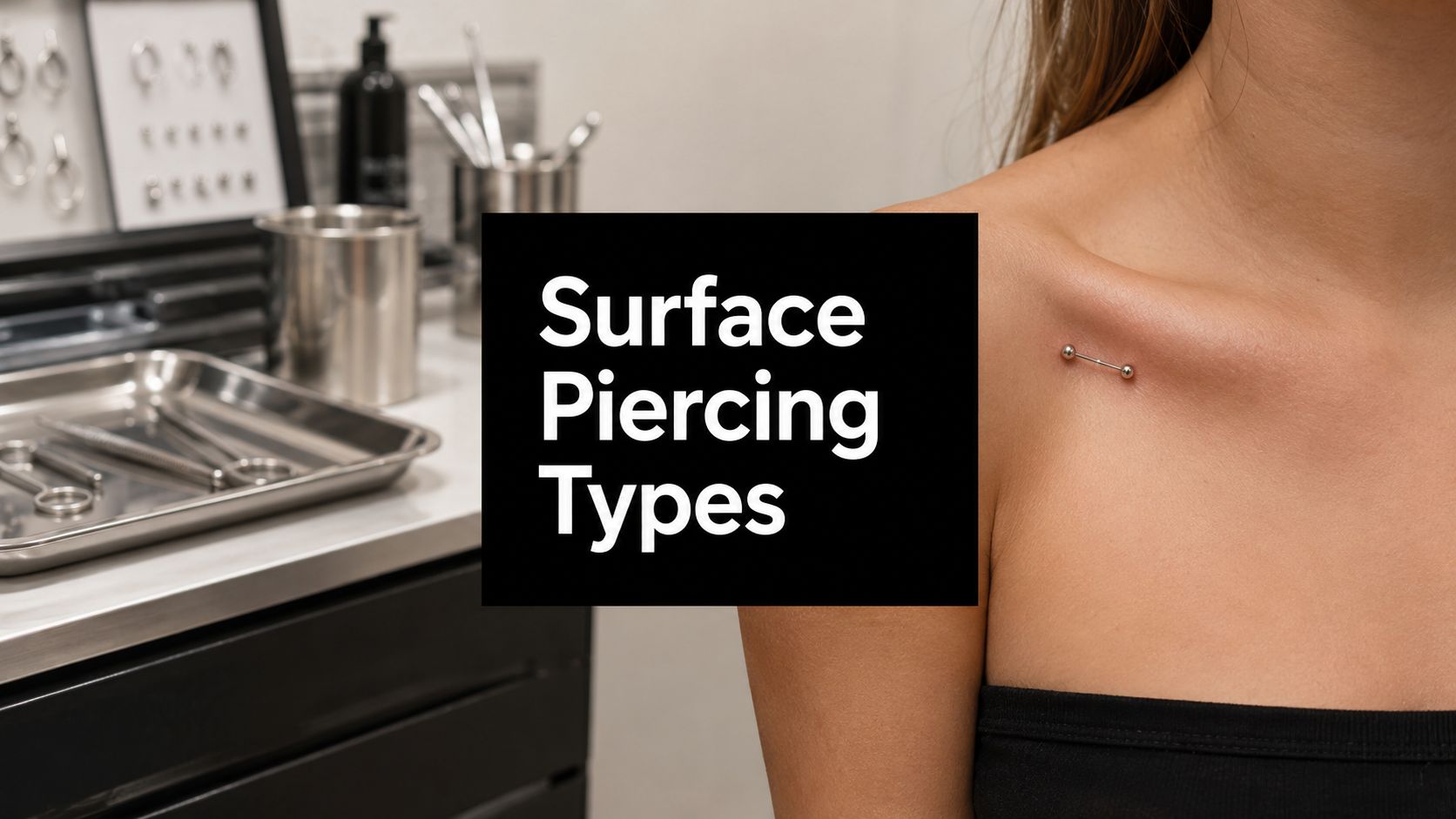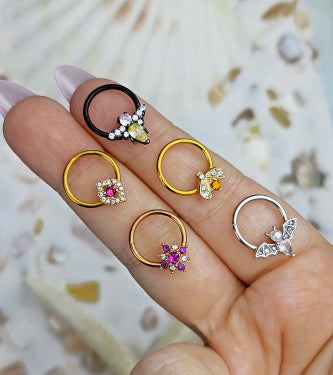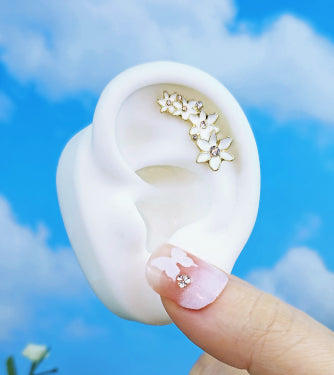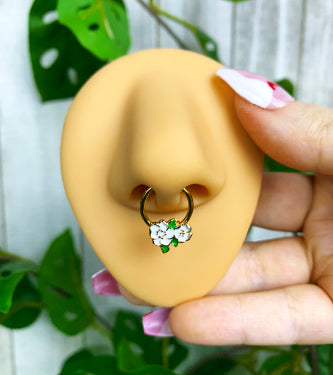
















You're scrolling late at night, half looking for cute belly jewelry, half trying to decide if your body can pull off something as extra as a triple belly button piercing. That's the vibe, right. The look is bold, stacked, and a little bit daring, but the question is whether you want three separate navel punctures or just the illusion of a triple moment without turning your stomach into a full-time healing project.
A triple belly button piercing is an advanced navel setup, not a casual upgrade. In practice, it means three distinct punctures placed around the navel rim, and that's a very different animal from one piercing with layered or dangling jewelry. The appeal is obvious, the aesthetic is loud, and the commitment is real, especially because navel piercings are already known for slow healing and irritation from everyday movement.
Why the Triple Belly Button Piercing Is Trending
You've probably seen it on social feeds, tucked between shiny stacks of ear curation and perfect midriff selfies. A triple setup hits that maximalist sweet spot, it looks edgy without needing a huge body mod canvas, and it plays well with crop tops, swimwear, and low-rise styling. That's part of why people keep circling back to it, the look feels like a statement even when the jewelry itself stays small.
What makes it different from a standard navel piercing
A standard navel piercing gives you one point of sparkle. A triple belly button piercing asks for three. That sounds simple until you think about the body mechanics, because you're not decorating a flat panel, you're asking a curved, movable, high-friction area to stabilize multiple wounds at the same time.
The broader body-piercing context helps explain why the idea keeps showing up. In the English population survey, about 10% of adults reported a body piercing somewhere other than the earlobe, and nearly 46.2% of women aged 16–24 said they'd had one of those piercings, with a mean of 1.71 piercings per pierced individual in the same data set (PMC survey). That doesn't prove triple navels are common, but it does show that multi-piercing behavior is normal enough to be measurable, which is exactly why a stacked navel look can feel like a natural next step for body-jewelry fans.
Practical rule: a trend is fun, but your navel doesn't care what's popular. It cares about tissue, friction, and healing time.
The main appeal here is the visual payoff. Three points of shine can look curated, dramatic, and intentionally styled, especially if you like jewelry that reads more fashion-editorial than traditional. The catch is that the more you ask the area to do, the more it asks back during healing.
Understanding Navel Anatomy and Placement

A technically correct navel piercing goes through the rim of skin around the navel, not the actual belly button cavity, because the jewelry needs a stable skin fold to sit safely and resist migration or rejection (WebMD). That one detail matters a lot when you start talking about three placements, because you're not just choosing a style, you're asking whether there's enough usable tissue to support three separate channels.
Why the rim matters more than the hole itself
Think of the navel like a soft pocket with an edge. The piercer wants the edge, not the deepest part of the pocket. If the tissue fold is too shallow, too tight, or too mobile, jewelry can get cranky fast, and the result can be irritation, pressure, or a piercing that tries to migrate out of place.
That's also why anatomy checks matter so much with a triple arrangement. A piercer has to map out each point so the piercings don't crowd one another, because three channels too close together can act like roommates who never stop bumping elbows. The body already moves when you sit, twist, bend, or sleep, so spacing isn't just about looks, it's about whether the skin can actually support the setup.
The internal anatomy guide from BodyCandy goes deeper on how the navel rim supports jewelry and why placement choices change the overall result, especially if your anatomy leans shallow or narrow, so that's worth a read if you're trying to visualize how the fold works: in-depth belly ring anatomy guide.
What a piercer is really checking
A good consultation isn't just “can we do it.” It's also “should we do it here.” The piercer is looking at how your navel sits at rest, how it changes when you move, and whether there's enough skin stability for multiple points of contact. If your navel closes when you sit or the tissue is too tight, the triple idea can become more trouble than it's worth.
Straight answer: anatomy beats aesthetics every time. If the tissue can't hold the jewelry well, the look won't matter for long.
That's the part people often miss. A triple setup can look effortless in photos, but the actual placement is a mechanical puzzle, and your navel gets the final vote.
The Procedure and Realistic Healing Timelines

A standard navel piercing is typically done with a sterilized 14-gauge hollow needle, and the starter jewelry is usually a curved barbell with a longer post so swelling has room to happen (BodyArtForms). For a triple belly button piercing, that baseline matters because each puncture needs the same careful setup, and the whole area has to stabilize together instead of one channel healing in isolation.
What the studio part actually looks like
The studio process starts with cleaning, marking, and alignment. For a triple arrangement, precision matters more than drama, because the piercer has to keep the placement centered and balanced while giving each point enough breathing room. The initial jewelry length is there for a reason, since a too-short post can pinch tissue and a too-long one can add weight and strain to an already busy area (WebMD).
That longer starter piece can look awkward for a while, but it's doing a job. Swelling isn't a maybe, it's part of the package, and if you're starting with three punctures instead of one, you're dealing with more swelling surface and more tissue that has to settle. That's why downsizing too early is a bad idea, even if the jewelry feels a little wild at first.
The healing window is the bigger reality check. Navel piercings are widely recognized as slow healers, with typical healing times ranging from 6 months to 2 years (PMC survey). Another commonly cited timeline puts belly-button healing at about 6 to 9 months in straightforward cases (YouTube aftercare guide). Triple placements don't get to skip that timeline, they usually make it harder, because three wounds have to settle in a high-motion zone at the same time.
Why the healing burden stacks up
The navel area gets tugged by clothing, bending, and sleeping position all day long. With three punctures, every bit of irritation has more opportunities to become a problem. Even the broader survey data shows why caution is warranted, among pierced people aged 16–24, health problems occurred with about one third of piercings, further medical help was sought in about one in seven, and hospital admission happened in about one in 100 cases (PMC survey).
Real-world takeaway: triple doesn't just mean three holes. It means three healing timelines sharing the same friction, movement, and clothing pressure.
If patience isn't your strong suit, that's not a moral failure. It just means you should think hard before multiplying the work.
Essential Aftercare and Lifestyle Adjustments

Aftercare is where a triple setup is won or lost. Independent piercing guidance repeatedly recommends cleaning twice daily with sterile saline solution, and it also warns you to avoid alcohol and peroxide because they're too harsh for healing tissue (YouTube aftercare guide). If you want the short version, your piercings need clean, gentle, boring care, not harsh product roulette.
The routine that keeps things calmer
Start with saline, not skin-care chaos. Clean the area gently, let it dry, and leave it alone afterward. The goal is to reduce crusting and bacteria without overworking the skin, because over-cleaning can be just as annoying as under-cleaning when the tissue is already trying to settle.
Lifestyle changes matter just as much as the spray bottle. A professional guide on belly-button care advises avoiding stomach sleeping for about a year and steering clear of tight waistbands, because pressure and friction can drag on the healing channel (Painful Pleasures). That's especially relevant for triple placements, since more jewelry means more chances for snagging, bumping, or sleeping wrong.
Here's the no-drama version of the day-to-day rules:
- Clean twice daily: Use sterile saline, and keep the routine consistent.
- Wear loose clothing: Soft waistbands and breathable fabric are your friends.
- Sleep with care: Back-sleeping keeps pressure off the navel area.
- Avoid water exposure early on: Pools, hot tubs, and natural bodies of water are rough on healing piercings.
- Hands off: Twisting, touching, and fiddling only add trauma.
Why the layered-look debate matters here
A lot of people want the visual impact of three points, not the healing burden of three fresh wounds. That's where the layered jewelry conversation gets interesting, because a single piercing with the right styling can sometimes deliver a similar vibe with less tissue stress. The comparison isn't about who is tougher, it's about whether your aesthetic goal really needs three separate holes.
I'd also keep an eye on the cleaner, more conservative aftercare advice showing up in practitioner-led media lately, because it reflects how seriously piercers treat friction and contamination around the navel. If you're the type who works out, wears snug clothes, or forgets you're wearing new jewelry until it snags on everything, that matters a lot more than whether the design looks cool in a mirror.
Three Piercings Versus Layered Jewelry Aesthetics
This is the part most guides gloss over. If you want a triple look, you might not need three independent piercings, and that's a pretty important distinction once healing enters the chat. A contrarian, data-backed takeaway is that shoppers asking for “triple” designs may be looking for a layered aesthetic rather than three separate healed piercings, and existing content doesn't clearly compare the safety, healing burden, or rejection risk of those choices against one standard piercing with multiple decorative jewelry options (Painful Pleasures).
The tradeoff in plain English
Three actual piercings give you more freedom with styling. You can mix metals, play with symmetry, and build a bolder look once everything is settled. But you also get more healing burden, more entry points for bacteria, and more chances for irritation in a zone that already hates pressure.
Layered jewelry gives you a different kind of win. One well-placed piercing, or a smaller number of piercings, can still create a stacked effect with multi-gem, dangling, or curated pieces. That usually means fewer wounds, less aftercare stress, and a more forgiving healing experience, which is why it's such a smart option for people who love the look but don't want the full maintenance load.
Think of it like this: three real piercings are high commitment styling. Layered jewelry is smart styling.
If you're browsing options, BodyCandy also publishes a navel ring style and sizing guide that can help you think through how different jewelry shapes create different visual effects: crash course on navel ring styles and sizing. That matters because a lot of “triple” energy comes from how the jewelry stacks visually, not just from how many holes exist.
How to choose your lane
Ask yourself three blunt questions. Do you want the body-mod bragging rights of three healed piercings, or do you want the look. Can your schedule handle a long healing period with careful clothing choices and low-friction habits. Are you okay with the possibility that a single layered setup might give you a cleaner result with less drama.
If the answer to the first question is no, that doesn't make the style less cool. It just means your smartest move may be the version that looks like a triple without forcing your navel to do triple duty.
Choosing Your Piercer and Jewelry Materials
A triple setup is not the place to shop on vibes alone. You want a piercer who has real experience with navel anatomy, clean technique, and careful placement, because the margin for error shrinks fast when you're dealing with multiple punctures in one area. The standard baseline for a navel piercing is a sterilized 14-gauge hollow needle with a curved barbell starter piece that leaves room for swelling (BodyArtForms).
What to look for in the studio
A solid piercer will talk about anatomy before they ever talk about jewelry. They'll check your navel at rest, ask about clothing and activity, and tell you if the tissue doesn't look supportive enough for a triple arrangement. If they rush past that part, walk.
You also want clear sterilization practices. Clean tools, proper needles, and good aftercare instructions are essential, because navel piercings already sit in a friction-heavy zone. This isn't the place for mystery metal or vague reassurance.
For jewelry materials, keep it simple and skin-friendly. Hypoallergenic options like titanium and high-quality surgical steel are the usual starting point for many people with sensitive skin, especially when you need the initial jewelry to sit comfortably during swelling. The wrong length or a poor fit can compress tissue, while overly heavy jewelry can add pressure and aggravate the channel, which is exactly why starter sizing matters so much.
Here's a quick decision filter:
- Ask about anatomy experience: Not every piercer is comfortable with more complex navel setups.
- Confirm starter jewelry length: The post needs room for swelling, not a snug little squeeze.
- Verify material quality: Your skin deserves better than random mystery alloy.
- Discuss downsize timing: Changing too soon can wreck progress.
BodyCandy is one place you can browse belly-button jewelry styles once you're healed or once you're deciding between a full triple commitment and a layered look, but the priority is choosing a professional who can match the jewelry to the body, not the other way around.
Styling Your Navel and Final Thoughts
Once your piercing is fully healed, the fun part starts. That's when gems, dangles, and mixed finishes finally get to do their job without messing with healing tissue. Whether you went for a true triple setup or a layered illusion, the styling goal is the same, make it look intentional, balanced, and very much like you.
Healed navel jewelry can lean delicate or loud. A single sparkle can be elegant, but stacked stones and dangling pieces turn the area into a focal point fast. If you like a cleaner vibe, keep the jewelry coordinated. If you want more edge, mix textures and let the pieces create movement.
The biggest lesson here is simple. Triple belly button piercing is an aesthetic, but it's also a tissue commitment, and not every body wants three separate channels healing at once. If your body shape, clothing habits, or patience level make that sound annoying instead of exciting, a layered jewelry route can still give you the vibe without the extra strain.
Ready to keep your midriff look sharp without guessing on style or sizing. Explore BodyCandy's belly jewelry options, compare shapes, and build a setup that fits both your look and your lifestyle. If you want to shop smarter for your next belly ring, visit BodyCandy and start with pieces that match the aesthetic you want.