



















That expensive-looking septum ring might be the worst thing you can put in your piercing. Shine is a finish, not a safety standard, and a gold-colored coating can hide an unverified alloy underneath. If you want septum jewelry high quality enough for comfortable, long-term wear, look past the sparkle and check the material grade, nickel-release risk, dimensions, finish, and construction.
A reputable piece should tell you what it's made from, not just call itself “hypoallergenic” or “surgical.” Your septum deserves jewelry designed for contact with healing tissue, especially because a well-placed septum piercing commonly takes about 2–3 months to heal (Body-Jewelry.com's septum healing guide).
Why Shiny Does Not Always Mean High Quality
Polished jewelry looks reassuring. That's exactly why shoppers trust it too quickly.
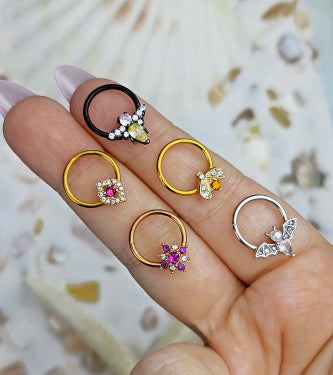
A bright gold, black, or rainbow finish can make a piece appear premium while saying nothing about the base metal. Plating may eventually wear, chip, or expose an underlying alloy. If the seller hasn't identified the material grade and provided a meaningful standard, you're buying the appearance, not verified quality.
Price doesn't solve the problem either. An expensive boutique piece can still be a poor choice if its alloy is unclear, while a simpler titanium ring can offer better skin compatibility without a flashy finish. The key indicators are traceable material, corrosion resistance, a smooth surface, and dimensions that match your piercing.

What the surface can hide
Low-grade jewelry often fails where you can't see it immediately:
- Unverified base metal: A decorative coating may conceal an alloy that irritates sensitive tissue.
- Weak plating: Scratches and wear can expose the metal beneath the finish.
- Poor polishing: Tiny nicks and rough areas can collect buildup and scrape the fistula.
- Unclear claims: “Fashion metal,” “body-safe,” and “surgical” don't identify a certified alloy by themselves.
That doesn't mean every shiny piece is dangerous. It means aesthetic appeal can't prove biocompatibility. Check the product specifications before you check the stone size.
If you're considering coated or plated jewelry, review BodyCandy's guide to aftercare for coated and plated body jewelry, then decide whether the finish makes sense for your piercing's current condition.
Material Standards That Actually Matter
The material label is only useful when it names a recognized grade. For septum jewelry, the clearest benchmark is ASTM F-136 implant-grade titanium, also identified as Ti-6Al-4V ELI. This alloy contains roughly 6% aluminum and 4% vanadium, is lightweight and biocompatible, and is nickel-free by composition (Urban Body Jewelry's septum history).
That specification matters more than a vague “titanium” label. A seller should be able to identify the standard and, ideally, support the claim with mill certification or other material documentation. “Implant grade” is useful only when it connects to a named, verifiable standard.
Nickel release is the overlooked test
Nickel is the dominant trigger for metal-contact dermatitis. EU rules set a particularly strict limit for jewelry inserted into pierced body parts: it must release less than 0.2 µg/cm²/week of nickel. Jewelry designed for prolonged skin contact must stay below 0.5 µg/cm²/week (Tremun Piercing's septum retainer guidance).
You don't need to live in the EU for that distinction to matter. It gives you a practical way to judge whether a product has been made with piercing-specific safety in mind. ASTM F-136 titanium reduces the concern because nickel isn't part of its specified composition.
| Material | Standard / Grade | Nickel Content | Best For |
|---|---|---|---|
| Implant-grade titanium | ASTM F-136, Ti-6Al-4V ELI | Nickel-free by composition | Fresh, healing, and sensitive piercings |
| Implant-grade stainless steel | Look for a named implant standard and documentation | May contain nickel, so verify release and grade | Established piercings for people who tolerate it |
| Niobium | Verified body-jewelry quality and purity | Commonly chosen for sensitive wear | Healing or established piercings when properly finished |
| Solid gold | Solid 14k or 18k, from a transparent maker | Depends on alloy composition | Established piercings and upgrade pieces |
| Plated metal | Coating over an unspecified base | Unknown if the base is undisclosed | Decorative wear only when the seller verifies suitability |
Don't confuse “surgical steel” with automatic safety. Many products use the phrase without giving you a precise alloy or nickel-release information. For a deeper material breakdown, BodyCandy's guide to the metals used in body jewelry is a useful starting point.
Finishes and Construction Details to Check
A certified alloy can still feel awful if the manufacturer cuts corners. Run your fingertip over the jewelry, inspect the ring under bright light, and look closely at every place where metal meets metal.
Smoothness comes first. A mirror-like polish has fewer rough areas for debris to collect and is less likely to drag through healing tissue. Matte and anodized finishes can look great, but they still need an even, intact surface without scratches, pits, or flaking.
Inspect the parts that sellers leave out of photos
Product images often hide the construction details that determine comfort:
- Ring seams: The circumference should feel smooth. A ridge can rub against the piercing.
- Threading: Internal threading keeps the post smooth as it passes through the fistula. External threads can scrape tissue during insertion and removal.
- Clicker hinges: The hinge should move cleanly and close fully without forcing the ring into alignment.
- Decorative settings: Stones should be mechanically secured rather than held in place with exposed glue.
- Gauge consistency: The wire or post should maintain the same thickness throughout its path.
Threaded ends also need to meet cleanly. If the connection catches, wobbles, or cross-threads easily, it's not ready for daily wear.
Practical rule: If you can feel a seam, burr, sharp edge, or snag before the jewelry reaches your piercing, your skin will notice it even more.
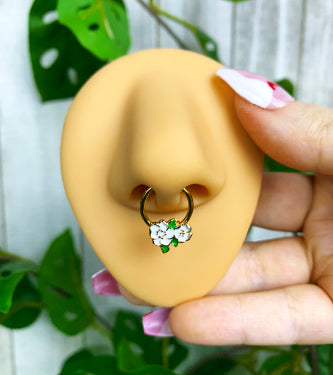
Clickers are convenient, horseshoes are easy to style, and captive bead rings offer a classic profile. None of those shapes automatically signals quality. The mechanism must stay secure, the closure must sit flush, and the surface touching your piercing must remain smooth.
Hypoallergenic Options for Sensitive Skin
Sensitive skin doesn't need more marketing language. It needs a material with a documented composition and a finish that won't fight your anatomy.
Implant-grade titanium
ASTM F-136 titanium is the strongest default recommendation for a new or healing septum piercing. It's lightweight, biocompatible, corrosion resistant, and nickel-free by specification. Its low weight also makes it comfortable for a piece that stays in place for weeks or months.
Choose it when you've reacted to unknown metals before, when your piercing is still healing, or when you want a low-maintenance option for daily wear. An even, polished finish matters as much as the alloy.
Niobium
Niobium is another material increasingly associated with sensitive-skin jewelry. It's often selected for new or established piercings because it's inert and can be finished in distinctive colors without relying on a thin surface coating.
Ask the seller how the niobium is specified and finished. A material name without sourcing or quality documentation still leaves too much unanswered.
Surgical steel
Surgical steel isn't automatically a bad choice, but it demands more scrutiny. Some grades contain nickel, and “surgical” can function as a broad marketing label rather than a complete material disclosure. If you have a known nickel reaction, implant-grade titanium is the cleaner recommendation.
| Material Type | Certification / Standard | Best For | Key Benefit |
|---|---|---|---|
| Implant-grade titanium | ASTM F-136 | New, healing, and sensitive piercings | Nickel-free by composition and lightweight |
| Niobium | Verified purity and body-jewelry quality | Sensitive or established piercings | Inert material with distinctive finish options |
| Implant-grade stainless steel | Named grade and documented suitability | Established piercings for tolerant wearers | Durable, familiar, and widely available |
| Solid gold | Solid 14k or 18k from a transparent maker | Established piercings | Luxury appearance without relying on plating |
Solid 14k or 18k gold makes more sense as a healed-piercing upgrade than a starter choice. Plated jewelry and mystery alloys belong at the bottom of your list, especially if your skin has already shown you it's reactive.
For more context on choosing jewelry for reactive skin, read BodyCandy's quick guide to hypoallergenic jewelry.
Getting the Right Gauge and Diameter
The wrong size can turn good metal into uncomfortable jewelry. Gauge describes thickness, while inner diameter describes the open space inside a ring. You need both measurements to match your existing piercing and anatomy.
16G is a common septum size and equals 1.2 mm. A typical horseshoe inner diameter is around 8 mm, although ring-style septum jewelry commonly falls around 8–12 mm depending on anatomy and the look you want (Rosery Poetry's 16G horseshoe specifications; Pierced Addiction's septum sizing guide).
Gauge choices
- 14G, 1.6 mm: Thicker jewelry with a more substantial feel.
- 16G, 1.2 mm: A common starting size and a versatile option for many styles.
- 18G, 1.0 mm: Thinner jewelry that suits lighter designs when your piercing is already suited to it.
Don't downsize or stretch casually. A thinner piece may not feel stable in every piercing, while a thicker piece may not pass comfortably through your existing channel. Your piercer can confirm the gauge instead of making you guess from a product photo.
Diameter and daily comfort
Measure the inner diameter, not the outside edge of the ring. A ring that pinches the bottom of your septum can create pressure and irritation, while one that hangs too low may catch more easily.
During healing, leave room for normal swelling and avoid repeatedly changing jewelry to test sizes. Once healed, choose the smallest diameter that sits comfortably without pressure, or go larger if you want visible drop and movement.

Use this visual walkthrough alongside a professional measurement if you're unsure:
Choosing Reputable Makers and Retailers
The seller's transparency is part of the jewelry's quality. A trustworthy listing tells you the alloy, standard, gauge, diameter, closure type, and finish. A vague listing makes you chase basic information before you've even paid.
Look for a maker or retailer that can explain where its titanium, niobium, steel, or gold comes from. A real material claim should be supportable, whether through mill certification, a named standard, or clear product documentation.
Green flags worth your attention
- Material disclosure: The listing names a specific alloy or standard instead of saying only “metal.”
- Sizing information: Gauge and inner diameter appear together, not as an afterthought.
- Construction photos: You can see the hinge, seam, threading, and stone setting.
- Customer support: Someone can answer technical questions without dodging them.
- Clear returns: The retailer explains what happens if the size or item doesn't work for you.
- Educational content: The store helps you choose safely instead of pushing the most decorative option.
A cheap piece isn't a bargain if it leaves you replacing jewelry, managing irritation, or visiting a piercer to correct a bad fit.
BodyCandy offers septum rings, septum clickers, and retainer options with product listings that identify materials and sizing details. Compare those specifications with any other retailer before choosing the piece that fits your piercing.

Care Tips to Keep Your Jewelry in Top Shape
Even excellent jewelry needs basic care. Cleaning protects the finish, while routine inspection helps you catch a loose closure before the piece disappears or starts rubbing your piercing.
Wash jewelry gently with warm water and a mild, fragrance-free soap. Rinse thoroughly and dry it with a clean, soft material. Skip bleach, alcohol, acetone, peroxide, abrasive pastes, and harsh household cleaners, because they can damage finishes and irritate tissue.
A simple maintenance routine
- Clean gently: Use your fingers or a soft-bristled brush for intricate designs and settings. Don't scrub hard enough to create scratches.
- Check the hardware: Inspect seams, hinges, closures, and threaded ends for looseness or roughness.
- Store pieces separately: Use a soft pouch or lined compartment so rings don't scrape against each other.
- Limit harsh exposure: Remove jewelry before swimming in chlorinated pools or saltwater when appropriate for your piercing and jewelry.
- Switch carefully: Wash your hands and clean the new piece before changing jewelry. Don't force a ring through resistance.
- Polish selectively: For stubborn tarnish on suitable steel or gold, use a jewelry-specific polishing cloth rather than an abrasive compound.
Never treat irritation as a cleaning problem alone. Persistent swelling, pain, discharge, or pressure can point to poor fit, unsuitable material, or another piercing issue. Stop forcing the jewelry and ask a qualified piercer for an assessment.
Ready to stop gambling on mystery metals? Browse BodyCandy for septum rings, clickers, and retainer styles, then compare each piece's material, gauge, diameter, and construction before you buy. Choose the jewelry that keeps your skin calm and your style sharp.