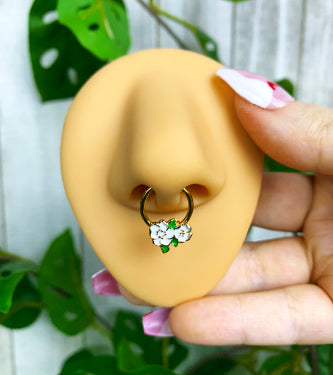


















You finally get that new piercing in, admire it for five straight minutes, and then a day later your skin starts acting dramatic. It's itchy. A little red. Maybe a bit angry-looking. Your first thought is usually aftercare. Your second is, “Wait, is this jewelry the problem?”
That's a fair question, especially with stainless steel. It's one of the most common materials in body jewelry, but the answer to is stainless steel jewelry hypoallergenic isn't a clean yes or no. Some stainless steel works well for a lot of people. Some of it absolutely does not. And with a fresh piercing, the difference matters more than most product pages make it sound.
If you've ever seen “stainless steel,” “surgical steel,” “hypoallergenic,” and “nickel-free” thrown around like they all mean the same thing, you're not alone. They don't. A healed lobe, a healing nostril, and a fresh navel piercing also don't all play by the same rules. Your skin, the grade of steel, and how the jewelry is made all change the answer.
That Itchy Feeling Is Your Jewelry to Blame
Fresh piercings are moody. Some tenderness is normal. Some crusting is normal. A little swelling at first can be normal too. But itching, redness, and irritation that keep showing up after the jewelry goes in can point to a material issue, especially if your cleaning routine is solid.
A lot of people hear “stainless steel” and assume that covers everything. It doesn't. That label can describe a bunch of different metal blends, and some are much friendlier to skin than others. That's why one steel barbell can sit happily in your ear, while another makes the area feel hot and irritated.
Practical rule: If a product listing only says “stainless steel” and skips the grade, treat that as missing information, not reassurance.
The body piercing context changes everything. A healed piercing channel is tougher and less reactive than a brand-new one. Healing tissue is more vulnerable, more absorbent, and less forgiving when jewelry quality is mediocre. So when someone asks whether stainless steel jewelry is hypoallergenic, my answer is usually, “Which steel, and for what piercing?”
That's also where the word hypoallergenic gets slippery. It doesn't mean allergy-free. It means less likely to cause a reaction. That's a useful distinction, because a material can be a good option for many people and still be the wrong option for someone with strong nickel sensitivity.
If you want the quick version, here it is:
- Grade matters more than the word stainless
- Fresh piercings need stricter material standards than healed ones
- Nickel release matters more than nickel panic
- Vague labels are where bad decisions start
So What Is Stainless Steel Anyway
Stainless steel isn't one single metal. It's a family of alloys, which just means metal recipes made by mixing elements together. Consider cookie dough. You can call them all cookies, but changing the ingredients changes how they turn out.
In steel, the key ingredients usually include iron, chromium, and sometimes nickel. The exact blend creates the steel's grade, and that grade tells you a lot about how it behaves on skin. A kitchen sink, a fork, and a body jewelry barbell can all be “stainless steel” without being the same thing at all.

Why grade matters more than the label
What you want in body jewelry is a steel that resists corrosion well and stays stable when it's sitting in contact with sweat, shower water, skin oils, and healing tissue. That's where better grades separate themselves from random cheap stuff.
Nickel is the part that gets people's attention, and for good reason. Globally, approximately 15% of people are estimated to have a nickel allergy, with prevalence rates reaching up to 20% in certain regions, making nickel the most common metal allergen in jewelry according to this explanation of hypoallergenic jewelry and nickel sensitivity. So if you've reacted to earrings before, you're not some weird outlier.
That still doesn't mean all stainless steel is automatically bad. It means you need to know the actual grade and not stop at the headline label.
For a broader breakdown of common jewelry metals, BodyCandy has a useful read on what metal body jewelry is made of.
A simple way to think about it
Here's the shortcut I give customers at the studio:
- Stainless steel is the umbrella term
- 316L surgical steel is a specific grade under that umbrella
- Random unlabeled stainless steel could mean a safer option, or it could mean a cheaper grade that's not ideal for piercings
- Your skin reacts to the actual material, not the marketing copy
Stainless steel can be body-safe, but only when the grade is actually appropriate for body jewelry.
That's why reading the fine print matters way more than the shiny front photo.
Surgical Steel vs Regular Stainless The Big Showdown
Things get practical. When people compare stainless steel options for piercings, the most common matchup is 316L surgical steel versus 304 stainless steel. One is commonly used for body jewelry. The other shows up in lower-grade products and causes more trouble for sensitive skin.

316L Surgical Steel vs. 304 Stainless Steel
| Feature | 316L Surgical Steel | 304 Stainless Steel |
|---|---|---|
| Typical use in body jewelry | Common choice for higher-quality body jewelry | More common in cheaper general stainless items |
| Nickel in the alloy | About 10% nickel in some descriptions, but designed for lower release | Can contain up to 12% nickel |
| Corrosion resistance | Higher corrosion resistance | Lower corrosion resistance than 316L |
| Skin contact behavior | Better at limiting nickel release during wear | Releases more nickel under similar conditions |
| Sensitive skin use | Often tolerated better | More likely to irritate nickel-sensitive skin |
| Piercing suitability | Better option for body jewelry | Not recommended for internal body jewelry |
The big difference isn't just what's inside the alloy. It's how tightly that alloy holds together when worn on the body. Better corrosion resistance means the surface stays more stable. A more stable surface means fewer nickel ions escape and contact your skin.
What the test data says
A materials overview from Grise NYC's hypoallergenic jewelry ranking states that 316L surgical stainless steel exhibits less than 0.5 µg/cm² nickel ion release in ASTM F2129 corrosion testing and shows 95%+ biocompatibility with sensitive skin populations, while 304-grade stainless steel releases 3 to 5 times more nickel ions under identical conditions. That's why the two grades don't belong in the same mental category, even though both can be sold under the word “stainless.”
If you're browsing styles and want to see examples built around this material category, BodyCandy has a post featuring annealed 316L surgical steel body jewelry.
Why this matters in real life
You won't feel “corrosion resistance” directly. What you feel is the result.
You feel a piercing that stays calm. Or one that gets itchy after a shower. You feel jewelry that wears comfortably for months. Or a piece that suddenly starts causing redness after the finish gets scratched up.
Here's the plain-language version:
- 316L surgical steel is the grade people usually mean when they say stainless steel is a good option for piercings
- 304 stainless steel is the grade you don't want hanging out in a healing piercing
- The safer choice is the one that releases less nickel over time, not the one with the nicest product photo
The Nickel Dilemma Why Its the Real Culprit
Nickel is usually the troublemaker in jewelry reactions, but a common point of confusion arises. They hear that steel contains nickel and assume every nickel-containing alloy is automatically a disaster. That's not how it works.
The more useful question is not “Does it contain nickel?” It's “How much nickel gets released onto my skin?”
Content and release are not the same thing
Consider chocolate chips in cookies. In a well-baked cookie, the chips are locked in place. In a sloppy half-baked one, everything smears everywhere. With stainless steel, a stable alloy keeps nickel more tightly bound. A lower-grade or damaged alloy is more likely to let nickel ions leach out.

That's why surgical-grade 316L stainless steel's improved corrosion resistance minimizes the leaching of nickel ions, a critical factor since nickel allergy symptoms like itching, redness, and rashes occur when nickel ions penetrate the skin, as explained in this overview of whether stainless steel jewelry is hypoallergenic.
If your skin reacts, it's reacting to what reaches the skin surface, not to a chemistry list you never touch.
Why lower-quality jewelry causes confusion
This is why someone can say, “I can't wear stainless steel,” and someone else can say, “Stainless steel never bothers me,” and both can be telling the truth. They may have worn completely different grades.
A cheap plated piece or an unlabeled steel ring might release enough nickel to kick off dermatitis fast. A properly made 316L piece may remain problem-free for the same person in a healed piercing. The label alone doesn't tell the full story.
A few red flags make nickel problems more likely:
- Unknown grade on the listing
- Scratched, worn, or damaged surfaces
- Very cheap mystery metal jewelry
- Fresh piercing use when the tissue is still healing
That last one matters a lot, because skin on the outside and healing tissue inside a piercing channel don't react the same way.
Your Skin and Piercings Do They Make a Difference
Yes. A huge difference.
The same piece of jewelry that feels fine in a healed earlobe can be a terrible idea in a fresh nostril or navel piercing. A healing piercing isn't just “new skin.” It's healing tissue dealing with pressure, movement, moisture, and constant contact with metal.
Fresh piercing versus healed piercing
A healed piercing has already built a stable channel. It tends to be tougher, less reactive, and better at tolerating minor material issues. That doesn't mean you should wear junk in it. It means the tissue has more resilience.
A fresh piercing has none of that backup. It's more vulnerable to irritation from friction, poor polish, and metal that releases irritating ions. If you're choosing jewelry for an initial piercing, your material standards should be stricter than they are for fashion jewelry you swap into a healed hole later.
Healing tissue needs boringly reliable jewelry. This is not the moment for mystery metal.
Why implant-grade steel sits above standard 316L
For body piercing applications, ASTM F-138 implant-grade stainless steel is the only stainless steel grade meeting international implant standards, while some commercial 316L jewelry can still cause issues for people with severe nickel allergy, according to this discussion of implant-grade versus commercial steel in piercing use.
That doesn't mean regular 316L is always bad. It means fresh piercings deserve the most tightly controlled material you can get, especially if you already know your skin is reactive.
Here's the practical hierarchy for piercing situations:
-
Fresh piercing with sensitive skin
Implant-grade options are the safest lane within stainless steel categories. -
Fresh piercing with no known metal issues
You still want high-grade, explicitly identified jewelry. This isn't the place to gamble. -
Healed piercing
You may tolerate more materials, but the grade still matters if you wear jewelry for long stretches.
A simple patch-test habit
Patch testing won't predict every piercing reaction, but it can still help before you commit to a new piece in a sensitive area.
Try this:
- Clean the jewelry first so surface residue doesn't muddy the result
- Wear it briefly in a healed piercing if you have one
- Watch for itching, heat, or redness over the next day or two
- Skip the test entirely for a fresh piercing if you already know you react to nickel. Choose a stricter material instead
If your body has a history of reacting, believe it. Your skin usually gives you the answer faster than the product description does.
How to Shop Smart and Keep Your Piercings Happy
Shopping for body jewelry gets a lot easier when you stop reading the first buzzword and start reading the details.

What to look for on the product page
A helpful rule is simple. If a listing is proud of the material, it'll usually say exactly what it is.
According to this guide to hypoallergenic stainless steel shopping and the EU Nickel Directive, consumers should verify that jewelry is explicitly labeled “316L surgical steel” or meets “EU Nickel Directive” standards, because cheap imported “stainless steel” often uses lower-grade 304 alloys that can irritate sensitive skin.
Use this checklist before you click buy:
-
Look for the full grade name
“316L surgical steel” tells you more than “stainless steel.” -
Watch for standards language
Mentions of the EU Nickel Directive are useful because they point to nickel release limits, not just vague comfort claims. -
Avoid fuzzy wording
“Hypoallergenic metal,” “metal alloy,” or “high-polish steel” without a grade is not enough info. -
Check the jewelry style against the piercing stage
A fashion clicker for a healed lobe is not the same decision as starter jewelry for a healing rook.
Keep the surface in good shape
Even good steel can become less skin-friendly if the surface gets rough, dirty, or damaged. That's one reason old mystery jewelry from the bottom of a makeup bag loves to start drama.
A few maintenance habits help:
- Clean before wear if the piece has been sitting around
- Inspect for scratches or peeling finishes
- Don't keep wearing jewelry that suddenly starts irritating you
- Rotate smartly by saving your most trusted pieces for your most sensitive piercings
If you want a quick visual refresher while you shop, this video is a handy one to watch.
A final shopping mindset
Don't let the word hypoallergenic do all the work. It's not a magic shield. It's a clue that still needs backup from a real material grade, solid finish, and the right use case for your piercing.
The smartest shoppers don't just ask, “Is it cute?” They ask, “What is it made of, and is that right for where I'm putting it?”
Hypoallergenic FAQ Your Burning Questions Answered
Can you still react to 316L surgical steel
Yes, you can. It's less likely for many people, but it's not impossible. Hypoallergenic means less likely to trigger a reaction, not allergy-proof. If you have severe nickel sensitivity, your body may still object.
Is nickel-free stainless steel a real thing
Sometimes that phrase gets used loosely, so read carefully. Some lower-nickel grades exist, but the safer move is to look for a clearly stated grade and standards information instead of trusting a front-label promise.
Can you wear stainless steel in the shower
Quality stainless steel is generally chosen because it handles water well, but your piercing still matters. A healed piercing usually has more flexibility. A fresh piercing needs clean conditions, gentle care, and jewelry you already trust.
What if a product just says hypoallergenic
That's not enough by itself. The term isn't a guarantee of zero reaction. You still want the actual material listed, especially if your skin is fussy.
What should sensitive-skin shoppers read next
If your ears, nose, or navel tend to complain fast, it helps to compare materials beyond steel too. BodyCandy has a quick primer on hypoallergenic jewelry for sensitive skin that's worth a look.
So is stainless steel jewelry hypoallergenic or not
Sometimes yes, sometimes not. The answer depends on the grade, the finish, your nickel sensitivity, and whether the piercing is fresh or healed. For body piercings, that's the difference between a piece you forget you're wearing and one that keeps picking a fight with your skin.
Ready to shop smarter for your next piercing? Browse BodyCandy for body jewelry options, check the material details closely, and choose pieces that match both your style and your skin. If you've still got questions about what to wear in a fresh or healed piercing, drop them in the comments and keep the conversation going.