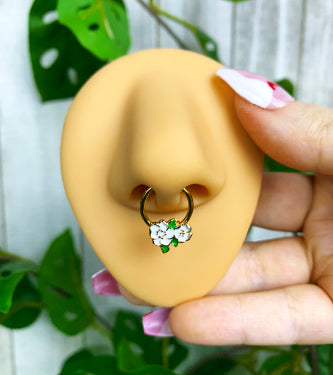


















You've probably seen “hypoallergenic” stamped on jewelry and assumed that meant your skin was covered. That's the trap. In body jewelry, the label can be pure marketing while the question is whether the piece has a proper barrier coating, passes nickel-release testing, and still holds up after sweat, friction, and cleaning.
Why Hypoallergenic Labels Can Still Leave You With a Rash
The word hypoallergenic sounds reassuring, but in the U.S. it doesn't have a legal universal definition for jewelry. That means a seller can use the term without proving the piece will keep nickel or other reactive metals off your skin. When the claim isn't tied to a test result, you're buying hope, not protection.
That gap shows up in real-world shopping. Independent reporting cited in 2023 found that 73% of jewelry-related allergic reactions happened with items labeled “hypoallergenic,” and a marketplace review found 41% of online “hypoallergenic” earrings still had detectable nickel. A separate analysis of 127 gold-plated earrings found 89% had detectable nickel, and 63% exceeded the EU nickel-release limit of 0.5 µg/cm²/week. Those numbers are a loud reminder that a pretty finish can hide a reactive substrate under the surface, even when the packaging says sensitive-skin friendly. See the sensitivity-skin buying guide for the marketplace breakdown in this jewelry allergy overview.
What the label leaves out
“Hypoallergenic” doesn't tell you the alloy, the coating method, or whether the coating is thick enough to survive wear. It also doesn't tell you if the piece was tested after abrasion, which matters a lot for piercings and everyday earrings. If a coating is thin or patchy, skin contact can resume the moment that finish starts to wear.
Practical rule: If a seller won't tell you the substrate, the coating type, and the nickel-release result, treat the label as decoration, not proof.
What matters is whether the jewelry creates a real barrier between your skin and the base metal. That's why serious buyers look for testing data, coating specs, and wear durability, not just the word “hypoallergenic” printed on the listing.
The Coating Types That Actually Shield Your Skin
A good hypoallergenic jewelry coating works like a barrier system. It keeps reactive metal from touching your skin, and it has to stay intact long enough to matter in daily wear. The finish can look sleek and still fail if it's too thin, too porous, or too easy to scratch.

PVD and why it gets so much attention
PVD, or Physical Vapor Deposition, is the coating people bring up most for body jewelry, and for good reason. It creates a dense, titanium-based surface layer that bonds tightly to the jewelry instead of sitting on top like a fragile film. One technical source notes that the coating needs to be uniform and thicker than 0.3 µm to be effective against allergy risk, which tells you everything about why “looks coated” and “is protected” are not the same thing.
Rhodium, gold, and ceramic barriers
Rhodium plating and gold plating can help by adding a protective surface layer, but their real value depends on continuity. If the coating is interrupted by pores or wear, the substrate below can start affecting your skin again. Ceramic-like nitride coatings go further in the durability department because they're built for hardness and corrosion resistance, which matters in sweat and moisture.
One materials study on Zr–O–N hypoallergenic coatings reported microhardness of 2.5–3.0 GPa and found the coating practically did not corrode in Hank's solution, a sweat-like electrolyte environment. That kind of performance matters because piercing jewelry doesn't live in a dry display case, it lives against skin, moisture, and movement. Read more about the coating science behind PVD in this durable jewelry guide.
Clear barriers and home-applied shields
Clear barrier coatings are the most hands-on option. They don't change the jewelry's base metal, they just add a skin-facing layer that can reduce direct contact. They're useful as a short-term fix, but they're not magic. If the coating is too thin or you skip reapplication, friction can win.
Bottom line: The strongest coatings aren't the shiniest ones, they're the ones that stay continuous under wear.
Coating types at a glance
| Coating Type | What It Does | Wear Behavior | Skin-Safety Value |
|---|---|---|---|
| PVD | Forms a dense bonded surface layer | Handles friction better than flash finishes | Strong when thickness and coverage are right |
| Rhodium | Adds a bright protective surface | Can wear if layer is thin | Helpful as a barrier when intact |
| Gold plating | Covers the base metal with a decorative layer | Can wear through with repeated contact | Depends on substrate and thickness |
| Ceramic-like nitride coating | Creates a hard, corrosion-resistant layer | Better for sweat and movement | Strong option when testing supports it |
| Clear barrier coating | Adds a skin-facing film | Needs maintenance | Good for temporary isolation |
How Nickel Release Testing Separates Real Protection From Marketing
A coating can look perfect and still fail the second it meets your skin chemistry. That's why nickel release testing matters more than polish or color. The benchmark used in EU-style REACH and EN 1811 frameworks is 0.5 µg/cm²/week, which means a piece is judged by how much nickel it releases under simulated wear, not by how shiny it looks on arrival. Intertek's hypoallergenic jewelry guidance uses that benchmark as the core European standard for claims about skin-safe jewelry, and it's the kind of document you should ask for before buying coated body jewelry. See the testing framework described in Intertek's hypoallergenic jewelry guidance.

Why continuity matters more than appearance
Nickel protection depends on a coating staying continuous. Microscopic pores, chips, and abrasion points can expose a nickel-bearing substrate even if the piece still looks fine from arm's length. Sweat-like electrolytes make that worse because they push corrosion behavior into the conversation, which is exactly where weak coatings start to break down.
The practical issue for you is simple. If the top layer is too thin, scratches from piercing movement can create pathways for allergen release. That's why manufacturers and sellers should be able to show both the coating type and the nickel-release report, not just a styled product photo.
What to ask for before you buy
A good seller should be able to answer a few basic questions without dodging.
- What is the substrate? If the base metal isn't disclosed, you don't know what may be exposed later.
- What is the coating method? PVD, rhodium, gold, or another barrier should be named clearly.
- Is there a nickel-release report? Testing under EN 1811-style conditions matters more than a marketing claim.
- How thick is the coating? Thickness helps explain whether the layer can survive wear.
If you're comparing options for body jewelry, the article on allergic reactions and piercing care is a useful place to cross-check material choices with piercing safety basics.
Choosing the Right Coating for Your Piercing Type
Different piercings put different stress on a coating. A belly ring swings, twists, and gets rubbed by clothing. A stud sits still most of the day. That difference matters because a finish that holds up on a low-friction piece can fail faster on jewelry that moves every time you breathe, sleep, or bend.
Match the coating to the wear pattern
PVD makes the most sense for jewelry that sees repeated contact and needs a harder barrier. Rhodium suits pieces that stay smooth and bright without taking much friction. Ceramic coatings fit sweat-heavy settings because they bring hardness and corrosion resistance. Clear barrier coatings work as a simple skin-facing shield, especially for short-term wear or for a piece you already own and want to make easier on sensitive skin.
The base metal under the coating still matters. If the surface layer chips or wears thin, a reactive substrate can become part of the problem again. Coated jewelry is safer when the metal underneath is already low-release or biocompatible.
If you are sorting out finish options for titanium, the overview on anodizing and body jewelry helps explain how surface treatment changes what your skin contacts.
Coating Comparison for Body Jewelry
| Coating Type | Durability | Best For | Reapplication Needed |
|---|---|---|---|
| PVD | High | Daily-wear pieces, higher-friction piercings | Usually no, if the coating stays intact |
| Rhodium | Medium to high | Low-friction earrings and polished fashion pieces | Sometimes, if wear shows |
| Ceramic | High | Sweat, moisture, and frequent contact | No routine reapplication, but inspect wear |
| Clear barrier coating | Lower | Posts, hooks, and short-term sensitive-skin use | Yes, as the barrier wears down |
Choose the coating that matches your daily wear habits. The right one is the one that fits your actual wear pattern.
Care and Maintenance Tips That Keep Coatings Intact
Even a strong coating wears down if you treat it like indestructible armor. Lotions, perfume, chlorine, sweat, and rough storage all shorten its life. If you want the barrier to keep doing its job, your habits need to be as careful as your jewelry choice.

Simple habits that protect the finish
Start with gentle cleaning. Use mild soap and warm water, then dry the piece completely with a soft, lint-free cloth. Skip harsh scrubbing pads and abrasive cleaners, because they can create tiny scratches that invite failure later.
Then get serious about chemical exposure. Keep coated jewelry away from perfumes, lotions, and chlorine when you can. Those products don't just dull the look, they can also stress the barrier surface over time.
When to use home barrier coatings
If you're using a clear protective coating at home, apply it only to the parts that touch skin. Jewelry Shield instructions say to apply one coat to all metal parts that contact skin, wait at least 20 minutes between coats, and let the piece dry overnight before wear. For earring posts and hooks, another coating method advises cleaning first, applying a thin, even coat, letting it dry at least 20–30 minutes, and reapplying every few wears because friction and moisture gradually degrade the barrier. You can find the brand's own care guidance in BodyCandy's coated jewelry aftercare article as well.
Warning sign: If you see dull spots, flaking, or a return of redness at the contact point, the barrier is probably failing.
Common Myths About Hypoallergenic Jewelry Debunked
A lot of jewelry advice sounds comforting and still leads people straight into a rash. The biggest myth is that hypoallergenic means nickel-free. It doesn't. It means the seller is making a skin-safety claim, and unless that claim is tied to testing, you're still relying on marketing.

The usual myths that trip people up
Myth one, gold plating is always safe. Not true. Gold plating can cover a reactive base metal, and once the layer wears or chips, your skin meets whatever was underneath.
Myth two, surgical steel never causes reactions. Also not true. The alloy matters, the nickel release matters, and the coating or finish can't rescue a piece with the wrong substrate.
Myth three, a reaction has to happen immediately. Nope. Irritation can show up later, after repeated exposure, once friction and moisture have worked on the finish long enough.
Why the base metal still matters
A good coating is a barrier, not a reset button. If the base metal is reactive, the coating has to stay intact every time you wear, clean, sleep in, or remove the piece. That's why people can react to a label that says “safe” and still be completely right about their own skin.
The easiest way to stop guessing is to ask for the substrate, coating method, and test result before you buy. If a seller can't tell you those three things, you're back in label-only territory.
Your Questions About Coated Body Jewelry Answered
Can you re-coat jewelry at home? Sometimes, yes, but only as a temporary barrier. Clear protective coatings can help with posts, hooks, and other contact points, yet they need regular inspection and reapplication once wear shows.
How do you know a coating is wearing off? Look for dull patches, tiny chips, or the first return of redness where the jewelry touches your skin. If the jewelry suddenly starts feeling different against the skin, trust that signal.
Is coated jewelry safe for fresh piercings? Use caution. Fresh piercings need the most reliable, low-irritation materials possible, and a wear-prone barrier isn't the same thing as a verified biocompatible metal.
What if you react to something labeled hypoallergenic? Stop wearing it right away, clean the area gently, and switch to better-documented materials. If the reaction keeps happening, the coating isn't the problem alone, the substrate and testing gaps are part of it too.
BodyCandy carries a wide range of body jewelry styles, including pieces made for sensitive-skin shoppers who want to avoid guesswork. If you're ready to compare finishes, materials, and everyday wear options with a clearer eye, visit BodyCandy and look for jewelry that matches the way you wear it.