
















You've got the mirror selfie saved, the saved-to-favorites hoop inspo is piling up, and now you're wondering if that sleek little ring can work on your ear. A helix orbital piercing looks simple from the outside, but the magic is in the geometry, two cartilage piercings, one hoop, and a fit that has to be spot-on if you want it to heal and sit comfortably.
This style lives at the intersection of fashion and precision. The appeal is obvious, a floating circle of shine along the upper ear, but the initial decision starts before the needle ever comes out. Your anatomy, jewelry size, and healing patience all matter here, and a smart booking starts with understanding the layout first.
Understanding Helix Orbital Piercings
You know that clean, connected look where one hoop seems to glide through the upper rim of the ear? That's the appeal of a helix orbital piercing, two separate cartilage piercings linked by one ring. It's not the same thing as a standard helix stud, and it's not the same as a conch ring, because the orbital depends on two aligned channels rather than one opening with circular jewelry.

What makes it different
A standard helix piercing uses one hole and usually wears a stud or hoop on its own. An orbital uses two points on the cartilage that are later connected by a single ring, so the placement has to work like a tiny piece of ear architecture. If the spacing is off, the hoop won't sit relaxed, and the look can go from sleek to fussy fast.
That's why ear shape matters so much. A national French survey reported that the external part of the ear accounted for 42% of all body-piercing locations, which shows how established cartilage placements are in everyday piercing culture, especially among younger adults (Infinite Body statistics summary). Within that broad category, the orbital is more technical because the jewelry bridges two healed paths instead of decorating just one.
Screening your ear before you book
A quick self-check can save you a lot of disappointment. Look for these basics in a mirror or with a photo taken from the side:
- Two clear flat or curved spots: The upper ear needs enough space for two separate points.
- Room for a ring to rest naturally: The hoop shouldn't have to squeeze the rim to stay in place.
- No obvious crowding from other jewelry: If your ear is already busy, the orbital may fight for space.
- Enough cartilage for alignment: The holes need to line up so the ring doesn't twist awkwardly.
If you want a deeper compare-and-contrast on the look, BodyCandy has a helpful breakdown of conch vs orbital styling and placement here: conch vs orbital differences. The big takeaway is that an orbital is a geometry problem, not just a style choice. A great-looking ear shape for one person can be a no-go for another, and that's completely normal.
Practical rule: if the ring has to be forced into position during a consultation mock-up, your ear probably isn't happy with that placement.
What to Expect During the Procedure
The appointment usually starts with a conversation, not a needle. A good piercer will look at your ear, talk through the shape of the cartilage, and mark two points on the upper ear before anything happens. From there, the goal is simple, both channels need to line up so the ring can sit without pulling.

The usual sequence
Some studios use a single sitting for both piercings, then place the ring if the tissue and jewelry choice make sense. Others prefer a more cautious setup, especially when the ear needs time to settle before the orbital jewelry goes in. The exact tools can vary, but sterilized hollow needles are the common professional approach for cartilage work, and the jewelry is usually a hoop because that's what makes the orbital design function.
The simplest way to think about it is this. First comes the consultation, then the marking, then the piercing, then the jewelry. A helix orbital is commonly created by marking two points on the upper cartilage, piercing each, and linking them with a hoop once the channel can support the jewelry (Orbital piercing guide).
What to ask before they start
A few clear questions can tell you a lot about whether the studio knows its stuff.
- How do you check placement? You want a real alignment plan, not eyeballing.
- Do you use a hoop immediately or stage it later? Both approaches exist, but the reasoning should be clear.
- What jewelry material are you using first? Healing cartilage likes biocompatible options.
- How do you handle aftercare questions once I leave? Support matters after the appointment is over.
If the piercer seems rushed or vague, pause. The ring has to fit both holes comfortably, and that fit starts with the markings. A careful setup at the studio makes the whole experience feel calmer, cleaner, and a lot less chaotic.
Pain Levels and Healing Timeline
A helix orbital piercing often starts with a quick, sharp sting, then moves into a stretch of tenderness that can come and go as the cartilage calms down. An earlobe closes and settles more quickly because it is soft tissue. Cartilage is denser and gets less blood flow, so the recovery pace is slower and the sore phase can linger.

What the first months usually feel like
A Medical review of auricle piercing complications notes that helix cartilage placements heal more slowly than softer ear tissue, and common guidance places initial healing around 3 to 6 months, with some cases extending to 6 to 9 months. An orbital can feel even fussier than a single helix because one hoop is supporting two pierced channels at once.
The earliest days are usually the most annoying. Swelling, throbbing, and tenderness are common when you roll onto the piercing in sleep, brush hair past it, or catch the ring on clothing. After that first wave, the ache usually fades, but the area can still flare up if it gets bumped, pressed, or handled too often.
Why the timeline feels longer than you expect
Healing is not just about the visible hole looking calm. Both punctures need to mature enough to share the same piece of jewelry without constant strain, and that takes time. A helix orbital can look settled from a distance while still being sensitive inside.
That is why stability is the key indicator, not appearance. If the ring still feels sore after ordinary movement, catches on everything, or gets irritated after a small bump, the tissue is still working through the healing process. Cartilage likes consistency, and orbitals usually do best when they are left alone to quiet down on their own.
A practical way to judge progress is to notice whether the piercing stays calm through a normal day. If it only hurts after direct pressure, that is different from a piercing that stays irritated all the time. For cleaning routines that support that slower cartilage healing process, BodyCandy's aftercare guide lays out a simple approach without adding extra fuss.
Simple rule of thumb: if everyday movement still brings back soreness, the piercing is still healing, even when it looks quiet in photos.
Aftercare Best Practices
Clean jewelry doesn't heal a piercing by itself, but consistent aftercare gives your body a much better shot. For cartilage orbitals, the routine needs to be boring in the best possible way, gentle, repetitive, and free of drama. The goal is to keep the area clean without irritating two healing channels at once.

The habits that help
Aftercare guides for cartilage orbitals recommend cleaning twice daily with sterile saline for a long healing window, since full maturation can take 6 to 12 months or longer (Orbital aftercare guide). That's longer than is commonly expected, and it means the routine has to fit your real life, not just your first week.
A solid cleaning flow looks like this:
- Use sterile saline only: Keep harsh chemicals out of the picture.
- Let the spray or soak sit briefly: Give crusties time to soften.
- Pat dry with clean paper towel: Damp cartilage can stay irritated longer.
- Leave the jewelry alone: Twisting or spinning just drags debris through healing tissue.
- Sleep carefully: Pressure on the ring can shift the angle and wake the piercing up again.
If you want a premade saline option, BodyCandy's aftercare coverage on H2Ocean aftercare is a useful place to start comparing product types and care habits.
Common mistakes that slow things down
The biggest troublemakers are easy to spot. Touching the ring, overcleaning it, sleeping on it, and trying to “check” whether it's healed all create friction. Orbitals are especially sensitive to movement because the jewelry connects both holes, so one bad habit can irritate the whole setup.
Keep your ear out of pressure zones too. Hats, headphones, rough towel drying, and random snagging can all turn a calm healing process into a messy one. The less drama the piercing sees, the better the final result tends to look and feel.
Risks and Contraindications
A helix orbital can look clean and elegant, but it asks more of your ear than a single cartilage stud. The ring connects two healing channels, so every tug, bump, or twist spreads stress across both points instead of staying contained in one hole. That is why this style needs a careful look at anatomy and healing history before you commit.
Complications in cartilage piercings tend to cluster around irritation and infection, so prevention matters from the start. A medical review found that local infections made up the largest share of reported complications in pierced sites, which is a reminder that early care and quick response matter a lot with this kind of piercing (Medical review).
When to slow down or skip it
Some ears and some bodies need more caution. If you have a history of slow healing, frequent skin irritation, or trouble sticking to aftercare, a cartilage orbital may turn into a long, fussy process instead of a fun style choice. People who are immunocompromised or managing health conditions that affect healing should talk with a piercer and a medical professional before booking.
Ear shape matters here too. A helix orbital needs enough clean space for the ring to sit without pinching the rim, crowding neighboring folds, or pressing awkwardly into the cartilage. If the area is tight, the jewelry may behave like a stiff paperclip forced through a folder, it holds, but it bends the paper the wrong way. A good piercer will check that spacing before placing the first hole, because the shape of the ear decides a lot of the final result.
Watch for warning signs during healing:
- Spreading redness: More than a little pinkness around fresh tissue.
- Heat or increasing pain: Getting worse instead of settling down.
- Odd discharge with odor: Not the usual crusty healing debris.
- Visible pressure from the ring: Jewelry that looks too tight or feels embedded.
- Bumps that keep growing or recurring: Often a sign the jewelry is moving too much.
Why caution beats wishful thinking
The orbital can be striking, but appearance does not override anatomy. If the ear is crowded, the spacing is wrong, or the ring presses into the cartilage, you are setting yourself up for a rough healing stretch. Styling also depends on that same fit, because a ring that suits one ear can look graceful on one person and cramped on another, even before healing starts.
If you are comparing jewelry for later styling, it helps to understand material choices before you fall in love with a look. A practical place to start is BodyCandy's titanium body jewelry guide, which can help you think through how different finishes and materials fit into a healed setup.
If anything feels off, do not try to tough it out at home. A quick check-in with your piercer can catch a sizing or placement problem before it turns into a longer healing headache.
Choosing Jewelry and Styling Ideas
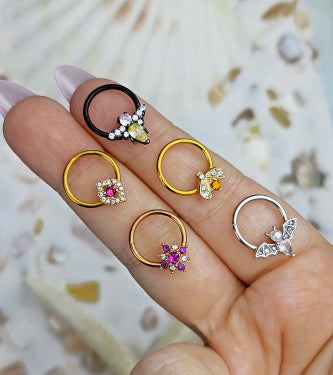
Jewelry choice changes everything here. The same ear can look delicate, bold, or almost architectural depending on the ring size and finish, and a bad fit will show up faster than a cute one. For most healed cartilage orbitals, the technical sweet spot is a 16G (1.2 mm) hoop with an 8 to 10 mm inner diameter, because that size helps the ring clear the rim without squeezing the tissue (Orbital jewelry sizing).
Fit first, style second
A hoop that's too tight can press the holes together and make the ear angry. A hoop that's too loose can swing around and snag everything in sight. That's why the post-healing fit matters as much as the finish, and why sizing should be measured, not guessed.
For material, implant-grade titanium is a strong first-piercing option because it's widely used for its biocompatibility and low fuss. Once your piercing is fully settled, you can branch into other finishes depending on your style and what your skin tolerates.
If you want a place to compare titanium options, BodyCandy's guide to titanium body jewelry is a handy reference point for material shopping.
Styling ideas that actually work
- Minimalist silver hoop: Clean, low-drama, easy to pair with other ear jewelry.
- Anodized titanium ring: A sharper, more colorful twist without going over the top.
- Stacked ear look: Let the orbital be the anchor, then build around it with tiny studs.
- Mixed-metal ear game: Use the orbital as the visual bridge between warm and cool tones.
The nice part about an orbital is that it already feels like a statement piece. You don't need to overload the rest of your ear to make it interesting. A smart setup lets the hoop do the talking.
How to Choose the Right Piercer
A good piercer makes the difference between “cute ear candy” and “why does this hurt every time I blink?” Start with the basics, cleanliness, proper tools, and real experience with cartilage orbitals. Then ask how they measure placement, because the ring has to fit both holes without forcing the tissue.
Look for these signs before you commit:
- Single-use needles: You want fresh, sterile equipment for each client.
- Clear jewelry guidance: They should explain why they chose that material and size.
- Portfolio with healed work: Fresh photos are nice, healed examples are better.
- Straight answers about aftercare: No dodging, no mystery routines.
- Comfortable anatomy check: They should be willing to say “not this ear” if needed.
A piercer who works carefully with orbitals will talk about spacing, angle, and fit, not just aesthetics. That matters because the ring must rest naturally through both channels, and a tiny placement error can create long-term pressure. If the studio can explain their process clearly, you're probably in better hands than if they just hype the look and rush you to the chair.
FAQ
Can I swim with a healing helix orbital?
It's smarter to avoid swimming while it's healing. Pools, lakes, and hot tubs can introduce irritation and bacteria, and cartilage doesn't appreciate extra drama while it's trying to settle.
How soon can I swap my hoop?
Not until the piercing is fully stable. The healing window for cartilage can run long, and changing jewelry too early can restart irritation or shift the angle of the holes.
What should I do if I snag it by accident?
Leave it alone and check whether the ring still sits naturally. If the area is suddenly swollen, hot, or much more painful, contact your piercer for a look instead of trying to fix it yourself.
Does sleeping cause misalignment?
Yes, it can. Pressure from sleeping on the ear can tilt the jewelry and encourage the holes to heal at a crooked angle, which is especially annoying for an orbital because both channels need to stay nicely aligned.
Ready to build your ear stack with something that fits your style and your piercing plan? Browse BodyCandy for body jewelry that makes it easier to shop hoops, small rings, and cartilage-friendly looks for your next upgrade. If you're eyeing a helix orbital piercing, choose jewelry with comfort, fit, and healing in mind, then come back for the fun part, styling it like you mean it.