















You've got the tee, the mesh top, or the open shirt picked out. Now you want nipple jewelry that finishes the look without pinching, poking, or getting tangled in the fabric. The best cool nipple bars aren't just good-looking in a product photo. They suit your anatomy, your healing stage, and whatever you're doing after you get dressed.
Think of fit as part of your style, not the boring bit you have to get through first. A polished bar that sits comfortably can look more intentional than an elaborate design you're constantly adjusting.
What a Cool Nipple Bar Actually Is
A nipple bar is a straight barbell worn through a nipple piercing, commonly placed horizontally, with a ball, gem, or shaped end on either side. Matching left and right creates a coordinated look, although there's nothing wrong with styling a single piercing.
Say you're choosing between tiny polished balls and dramatic jeweled ends for a fitted tank. Before deciding which looks better, check gauge, the thickness of the post, and wearable length, the section between the ends. The measurement doesn't include the balls or decorative attachments.
A Little History Without the Myths
Nipple jewelry has a documented past, but not every dramatic origin story deserves repeating. Medical historian Henry Ferguson's review of body piercing discusses Victorian journal references, cautions that many piercing-origin stories are modern myths, and describes the modern Western revival by American piercer Jim Ward in the late 1970s.
That makes nipple bars an interesting meeting point between body-modification history and contemporary fashion. You don't need an ancient-warrior backstory to enjoy a beautifully chosen barbell.
Style rule: The jewelry belongs in your outfit, but it also lives against tissue. Both deserve a good fit.
What Makes a Bar Worth Wearing
A cool design should earn its place through more than sparkle:
- A suitable post: Your gauge and wearable length match your piercing.
- A named material: You can identify the metal rather than relying on a reassuring label.
- A wearable shape: The ends work with your clothes and movement.
- Professional approval: A piercer checks a new piercing and any proposed size change.
The outside can look calm while the channel remains delicate. That's why your best-looking choice might be a simple bar today and something more expressive once your piercer confirms you're ready.
Gauge and Length for a Comfortable Bar
Start with the row that matches your piercing's situation, not the shortest-looking bar. This is a shopping reference, not a prescription: your piercer's measurements take priority over any general sizing chart.
Nipple Bar Gauge and Length by Situation
| Situation | Gauge | Wearable length | What it does |
|---|---|---|---|
| Fresh piercing with swelling | 14G (1.6mm), sometimes 12G | 5/8 in (16mm) or longer | Leaves room so ends don't press in |
| Everyday healed wear | 14G (1.6mm) | 1/2 to 9/16 in (12–14mm) | Sits close once swelling is gone |
| Finer look | 16G (1.2mm) | Piercer-matched, often shorter | Only if the piercing was made at 16G |
| Thicker statement | 12G (about 2.0mm) | 9/16 to 5/8 in (14–16mm) | Thicker post, more noticeable |
| Bar too short | Any current gauge | Shorter than tissue plus end clearance | Pressure, embedding, irritation |
| Bar too long after healing | Any current gauge | Extra post showing between the ends | Snags, movement, and leverage |
Read Gauge Before Length
Gauge describes thickness, not how far the bar extends across your nipple. A smaller gauge number means a thicker post. Choosing a thinner-looking piece isn't the same as choosing a shorter piece, and switching thickness isn't a casual styling adjustment.
Keep the gauge your piercing was made for unless your piercer has planned a change. A thicker statement should come from a deliberate fit decision, not from pushing a larger post through a resistant channel.
Length is a separate measurement. A listing can have the correct gauge and still be too tight or too long for you, which is why copying someone else's jewelry dimensions rarely settles the question.
For measurement diagrams and terminology, use the barbell sizing, measuring, and standards overview. Compare like with like: post between the ends, not the entire assembled piece.
Spot the Fit Problem
A too-short bar may leave the ends pressing into your nipple, create persistent indentations, or look as though it's disappearing into the tissue. Don't respond by tightening the ends harder or trying to force the jewelry outward. Have the fit assessed.
A too-long bar can leave unnecessary exposed post after swelling settles. That extra space lets fabric hook underneath an end and gives the jewelry more room to move.
- If you already have a comfortable healed fit: Measure that bar when it's safely out, rather than removing healing jewelry for a shopping comparison.
- If you're unsure: Bring your current jewelry details to a piercer and ask for an in-person measurement.
- If the fit recently changed: Treat new pressure, swelling, or asymmetry as a reason for assessment, not a reason to guess another size.
Straight barbells are the conventional starting format, while rings belong to a later discussion once healing is complete, according to Impulse Piercing's nipple-piercing guidance. A smooth barbell limits unnecessary movement without giving up style. Comfortable ends and sensible clearance matter more than squeezing into the smallest possible silhouette.
Hypoallergenic Metals Worth Trusting
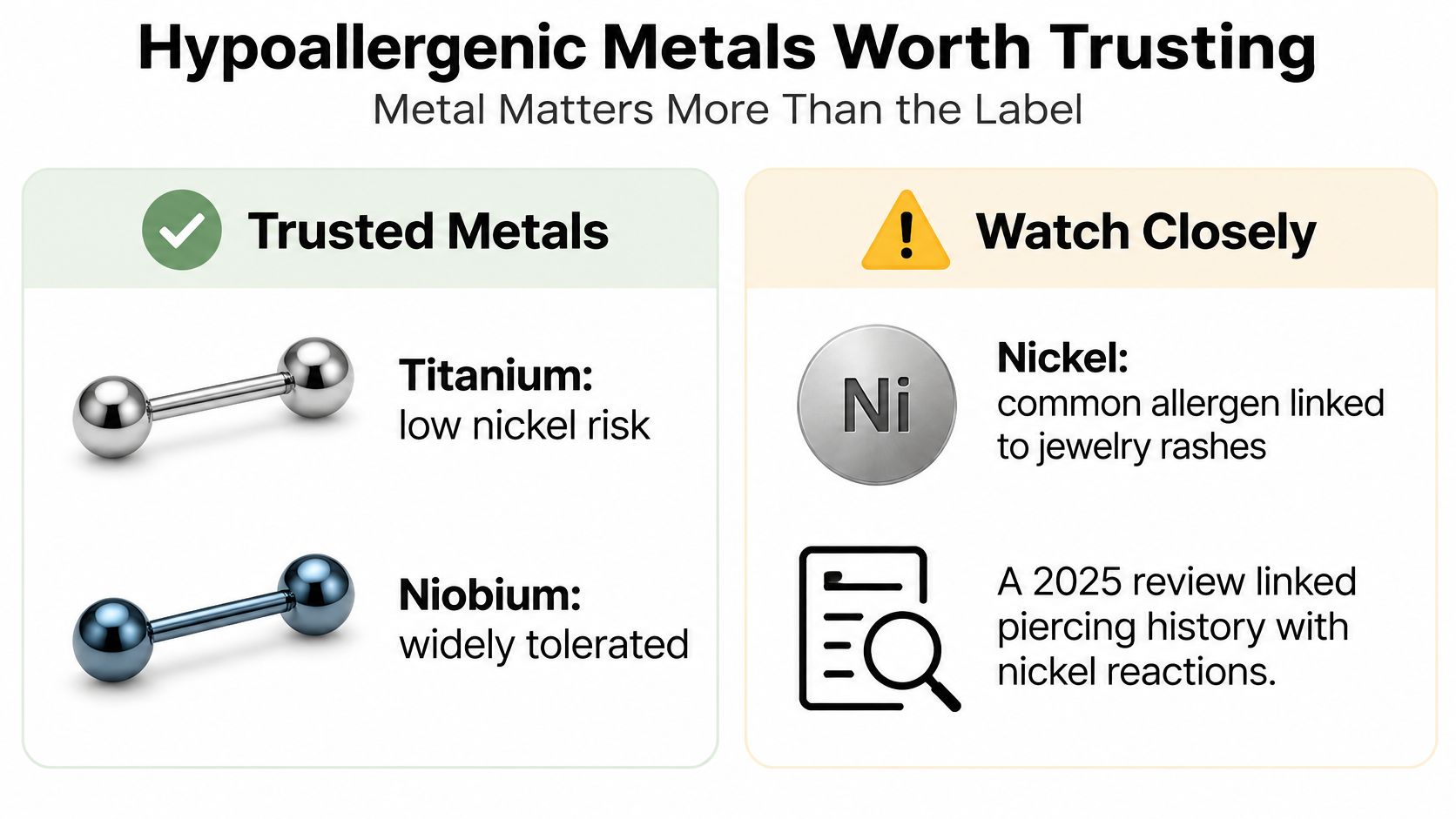
Hypoallergenic isn't a legal guarantee that your skin won't react. It's not a substitute for knowing the actual alloy, whether there's a coating, and what sits underneath that coating.
Nickel is the most common allergen associated with body-jewelry contact dermatitis, as explained in DermNet's body-piercing guidance. A 2025 systematic review and meta-analysis found an association between piercing history and nickel allergy in the general population, with an odds ratio of 5.9. That describes an association, not a prediction that you personally will develop an allergy.
Nipple Bar Metals Compared
| Material | Nickel concern | Fresh piercing | Healed styling |
|---|---|---|---|
| Implant-grade titanium (ASTM F136) | Very low | Suitable with appropriate finish and fit | Excellent everyday option |
| Niobium | Very low | Suitable with piercer approval | Strong sensitive-skin option |
| Solid 14k or higher nickel-free gold | Low when truly nickel-free | Piercer should approve | Polished luxury wear |
| 316L surgical steel | Possible, especially with vague specifications | Only verified suitable implant-quality material, not for known nickel allergy | Common once healed |
| Gold anodized or plated over steel | Underlying metal may be exposed through wear | Avoid | Healed only, watch for wear |
| Sterling silver or unknown alloy | Higher or unknown | Avoid | Not for long wear inside the channel |
For sensitive skin, implant-grade titanium or niobium makes a more useful starting point than an unspecified metal advertised as gentle. Solid gold also needs verification: color and price don't establish whether an alloy contains nickel. A medical overview of nipple jewelry materials includes titanium, niobium, and suitable solid gold among body-jewelry options.
Read Past the Finish
Anodizing titanium isn't the same process as plating steel. An anodized titanium surface gets its color through an oxide layer, while a coated steel product still needs to be evaluated by its underlying steel and coating construction. A gold-colored finish doesn't mean solid gold.
Gold-plated, gold-filled, and coated pieces are poor choices for a fresh channel. Even once healed, worn finishes, rough gem settings, and poorly finished threads deserve attention rather than another week of wear.
Material check: If you can't identify the base metal, you don't yet have enough information to choose the bar.
Ordinary healing can involve tenderness, but recurrent itching, redness, or scaling associated with the same metal raises a different concern. Those symptoms don't confirm an allergy by themselves. Ask a dermatologist about patch testing, and have a piercer help replace a suspect material without leaving a healing channel empty.
The sensitive-skin jewelry guide can help you decode material language. For a healing piercing, keep the decision simple: a named implant-grade metal, a polished surface, and plain ends.
When a Shorter or Fancier Bar Is Ready
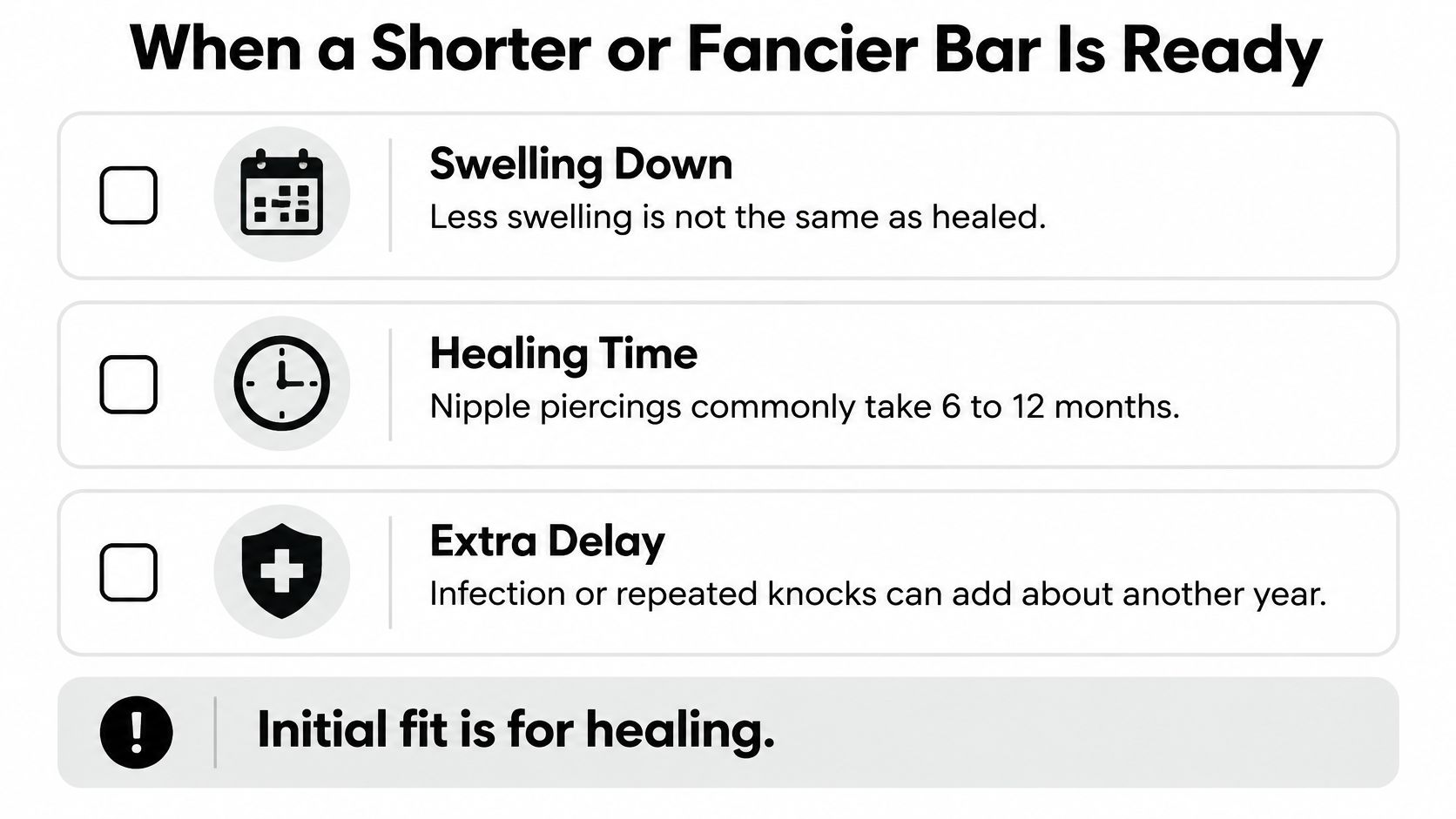
Less swelling doesn't mean fully healed. It may mean your initial jewelry needs a fit review, but it doesn't automatically mean your nipple is ready for a shield, chain, or decorative swap.
Nipple piercings commonly take 6–12 months to heal, and infection or repeated trauma can extend healing by another year, according to the clinical nipple-piercing reference in StatPearls. The same reference advises removing nipple jewelry before breastfeeding because it can pose an aspiration or mouth-injury risk to an infant.
A Downsize Isn't a Decorative Upgrade
A piercer may need to shorten an overly long initial bar during healing. That's a functional adjustment to reduce avoidable movement, not permission to start rotating through your jewelry collection.
Keep initial jewelry in throughout healing unless its size, style, or material causes a problem. Have necessary changes performed professionally. A bathroom mirror can't show you everything happening along the channel.
These are reasons to book a fit check:
- A settled gap: Extra post remains visible after swelling has stayed down.
- Repeated catching: The ends keep hooking clothing despite careful dressing.
- Changing pressure: An end starts leaving a deeper indentation or appears to sink.
- Movement or discharge: The piercing changes position, tissue looks thinner, or discharge remains persistent.
The first signs may lead to a downsize; the others may need a different response. None is a reliable do-it-yourself green light.
Match the Design to Tomorrow
Your calendar matters as much as your outfit. Side sleeping, sports, seatbelts, lace, and fluffy towels can all put pressure on protruding ends or catch dangling attachments.
Say you're choosing jewelry for a night out followed by an early workout. The chain might suit the outfit, but a smooth, low-profile bar is the more practical choice for the whole schedule. You don't need to plan repeated changes just to make a design work.
Sexual contact can also tug jewelry or expose a healing channel to irritation. A low-profile bar doesn't make contact with a healing piercing safe, so avoid pulling, oral contact, and friction while it heals.
The Decision Before the Purchase
Use a quick check before treating a shorter or fancier bar as your next look:
- Healing confirmed: Your piercer agrees the channel is healed, rather than judging by appearance alone.
- Length checked in person: The proposed post suits your tissue without squeezing it.
- Shape suits your day: The ends won't fight your clothes, sleep position, or activities.
A shield or dangle is a styling upgrade only when your body is ready to wear it. Waiting isn't losing your edge. It's making sure you get to enjoy the piece instead of spending the evening protecting it.
Care Habits That Keep Bars Comfortable
Your nipple jewelry doesn't need constant attention. It needs gentle cleaning, clean hands, and fewer opportunities to get bumped.
The Association of Professional Piercers' body-aftercare guidance explains that tissue heals from the outside inward and warns that friction, excessive movement, and vigorous cleaning can contribute to irritation, scar tissue, migration, and prolonged healing. A neat-looking surface isn't a reason to start testing how freely the bar moves.
Keep the Routine Gentle
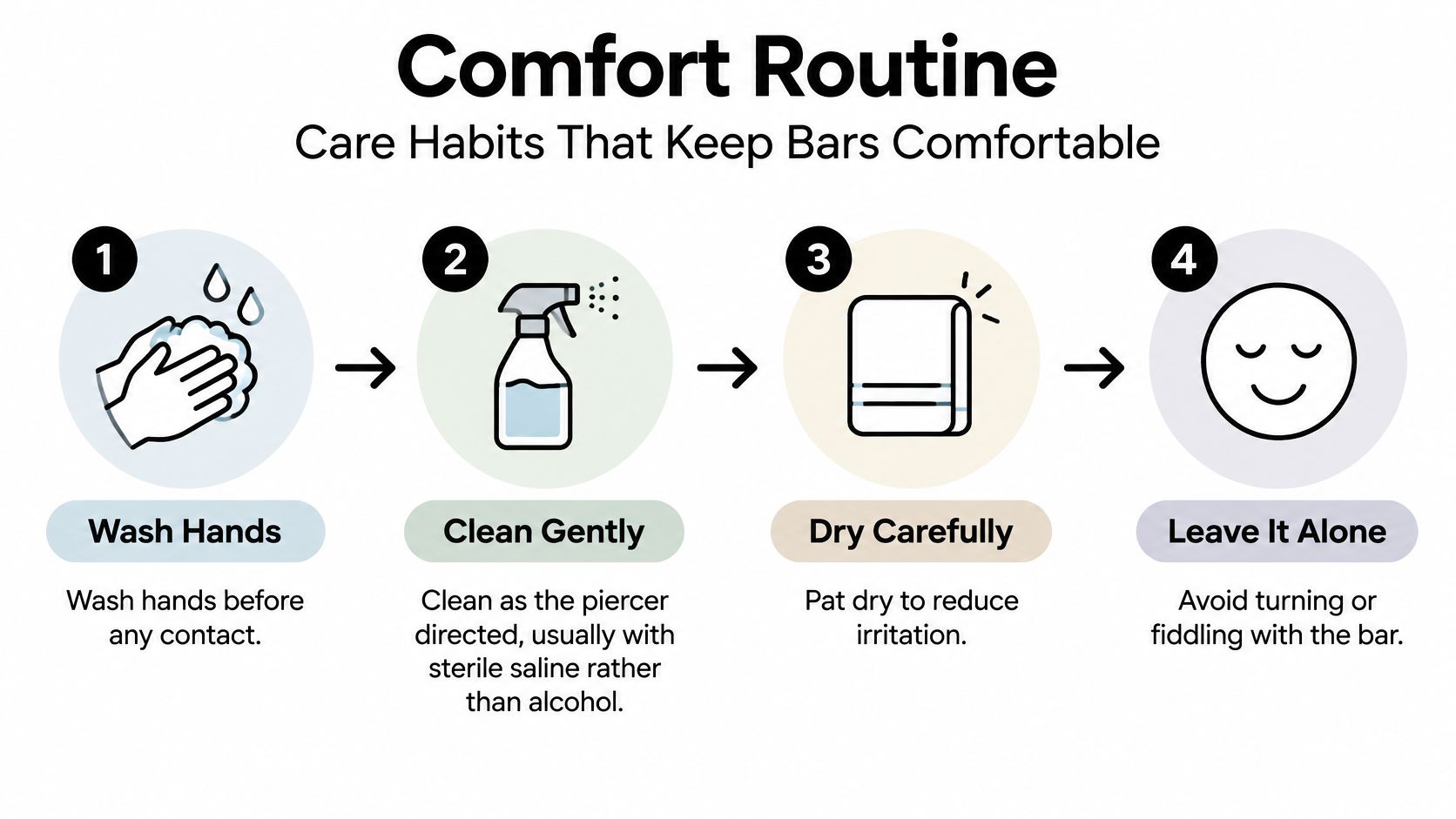
- Wash your hands before contact. That includes checking an end, adjusting clothing around the piercing, or cleaning the area. Better still, avoid unnecessary touching.
- Clean according to your piercer's instructions. Sterile wound-wash saline is generally preferable to alcohol, peroxide, or ointment. Don't turn the area into a product-testing zone or mix a stronger solution because it feels more thorough.
- Dry without dragging. Gently pat with clean disposable paper. Don't rub away attached crust or hook a towel loop around an end.
- Leave the bar still. Don't twist, spin, or slide it to check whether it's healing. Moving jewelry through a fragile channel adds friction rather than helping it stay open.
- Choose forgiving fabric. Soft, clean clothing is easier to manage than tight lace or loose loops. Keep loofahs away and modify activities that repeatedly knock or snag the jewelry.
- Inspect healed jewelry periodically. A monthly glance at thread condition, end security, and coating wear is a useful habit. Have damaged surfaces or unreliable fittings dealt with before wearing the piece again.
You can keep the healing-piercing care guide handy if you need a routine reminder. More cleaning isn't automatically better, particularly if you're rubbing an already irritated area.
A comfortable bar should spend most of its day being forgotten, not checked, turned, and adjusted.
Know When Cleaning Isn't the Answer
Increasing pain, spreading warmth or redness, pus or thick drainage, fever, or worsening symptoms need medical assessment, not a new decorative bar. A medical guide to piercing reactions and complications distinguishes problems that require attention from simple jewelry preferences.
Don't assume every red piercing is a metal allergy, and don't assume every itchy piercing is infected. Symptoms overlap, so repeated home experiments can delay the right care.
If infection is possible, get medical advice before removing jewelry yourself. A clinician can assess treatment, while your piercer can help address fit or construction problems.
A smooth, correctly fitted bar is part of your care setup. Save decorative changes for when ordinary daily care is uneventful and your piercer has cleared the channel.
Design Ideas for a Healed Piercing
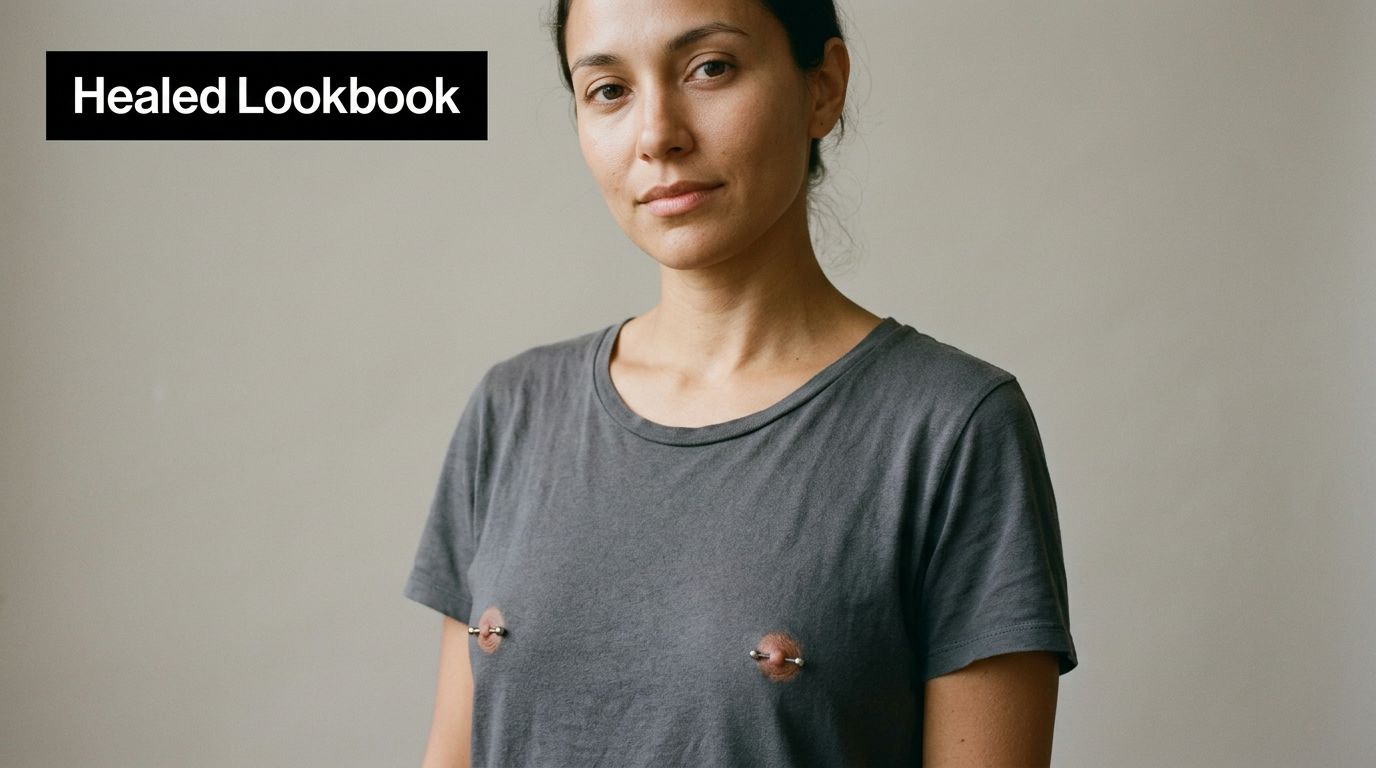
A stable, healed piercing gives you room to play with silhouette, texture, and sparkle. Treat these as wardrobe options rather than a ranking where the most elaborate piece wins.
A simple bar can be your favorite, not just your starter jewelry. The goal is to choose something that feels like you.
Quiet Shine and Playful Detail
Plain polished barbells give a clean, intentional finish with a tank, blazer, or open shirt. Matching the metal on both sides keeps the look cohesive without asking the jewelry to become the whole outfit.
Gem ends add a brighter focal point. Clear cubic zirconia has a crisp, light-catching look, while colored stones can echo a favorite manicure or accessory. Rounded gem ends feel different visually from pointed or sculptural settings, even when both use a straight post.
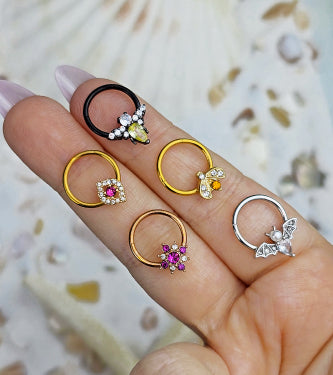
For something cheekier, try the idea of matte black, anodized color, or small vine, fruit, and character motifs. Color treatment still needs the same material scrutiny as any other finish. Black or gold-colored jewelry doesn't identify the metal underneath.
Frames, Movement, and Curves
A shield frames the nipple, with the bar passing through the central arrangement. A light frame with smooth edges gives you ornament without needing a long dangling element.
Short dangles and fine chains add movement and can look striking with a low neckline. They're more of a going-out mood than a gym mood, especially around towels, loofahs, and lace.
Captive rings, horseshoes, and hinged clickers create a rounder silhouette. They're a different shape, not a graduation prize you have to claim once you've worn barbells.
- Threadless ends: Useful for changing compatible decorative tops without buying a whole new post. Compatibility still needs checking.
- Clip-on or fake styles: An option for a costume, photo, or trial of the look without a piercing. Take them off if they pinch or irritate.
Make the Pair Feel Intentional
Try these styling moves rather than adding more decoration everywhere:
- Echo another metal: Coordinate with your necklace, belt buckle, or earrings.
- Give the eye a focal point: If one end is already gemmed, keep the other visually simpler.
- Dress for the silhouette: Choose low-profile ends under close-fitting clothes and reserve movement pieces for outfits with space around them.
Cool nipple bars don't have to announce themselves from across the room. Sometimes the best detail is the one you chose just for yourself.
Choose Your Next Nipple Bar Pair
Choose jewelry for the piercing you have now. If it's new, tender, or unsettled, leave the current bar in place and ask a piercer to assess its fit and healing before changing it.
Once your piercer confirms the channel is healed, keep a note of the bar's gauge, wearable length, and metal. Those details are a more useful shopping filter than a finish that merely matches another piece of jewelry.
Turn Your Fit Into a Shopping Filter
BodyCandy offers F136 titanium and handcrafted nipple-ring options. The 14G 9/16 CZ Gold Anodized All About Me Nipple Barbell Set is a matched pair of straight barbells made of gold anodized titanium over 316L surgical grade stainless steel. It has clear cubic zirconia gems, 6mm ball ends, and a current sale price of $16.99.
The set's 14 gauge (1.6mm) and 9/16-inch (14mm) length give you specific dimensions to compare with your confirmed fit. Its gold color is a finish, not a sign that the barbells are made of solid gold or titanium throughout.
A familiar size is a starting point, not a guarantee that every design will feel the same. Larger ends, shields, and chains can change how jewelry sits and moves.
Buy the Pair You'll Actually Wear
Before adding a set to your cart, check the details:
- Gauge and length: Match them to the measurements your piercer confirmed.
- Metal: Read the named material, including the base metal beneath any finish.
- Design: Consider whether the ends or moving elements suit your usual clothes.
- Set contents: Most nipple rings come as a matched pair, but check what the listing includes.
BodyCandy offers nipple jewelry in barbell, shield, dangle, chain, captive, threadless, and fake or clip-on styles. Visit BodyCandy to browse the nipple ring collection with your confirmed gauge, length, and metal details in mind. Save decorative ends, chains, and rings for a piercing your piercer has confirmed is healed.