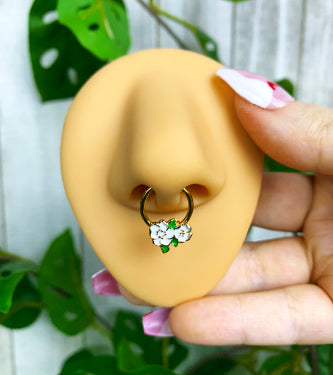


















You saw one in a selfie, a piercing portfolio, or a mirror shot with layered necklaces, and now your brain won't let it go. A little sparkle right down the center of the chest just hits different. It looks bold, clean, a little dangerous, and way more unusual than the piercings everyone already has.
That instinct makes sense. Body piercing is especially common among younger women, and data from England found that 46.2% of women aged 16 to 24 have had a piercing, while females were also significantly more likely to get chest piercings than males in clinical data, according to this study on body piercing prevalence in England.
A chest surface piercing can be gorgeous. It can also be fussy, high maintenance, and brutally unforgiving if you treat it like a basic ear piercing. If you're thinking about getting one, you deserve an honest account. Not the cute version. Not the “just spray saline and vibe” version.
So You're Thinking About a Chest Piercing
Maybe you've already picked the outfit in your head. Low neckline, tiny gem at the sternum, instant main-character energy. Then the practical thoughts start showing up. Will it reject? Will a bra ruin it? What about seatbelts, sleeping, workouts, necklaces, towels, and that one friend who hugs like they're tackling you?
Those are the right questions.
A chest surface piercing is one of those piercings that looks effortless when it's healed well, but it asks a lot from you behind the scenes. You're not being dramatic if you're nervous. You're being smart.
Practical rule: If you want this piercing, you also need to want the aftercare lifestyle that comes with it.
That means being honest about your day-to-day habits. If your wardrobe is mostly tight tops, lace bras, shapewear, or anything that rubs the center of your chest, that matters. If you're rough on your body when you sleep, that matters too.
The payoff is style that stands out instantly. The catch is that this isn't a “set it and forget it” piercing. It's more like a beautiful little project sitting in one of the most movement-heavy, friction-prone spots on your body.
What Exactly Is a Chest Surface Piercing
A chest piercing usually means a surface piercing placed on the sternum, which is the flat bone in the center of your chest. It's sometimes called a sternum piercing. This is not the same thing as a single-point dermal.

How it sits in the body
A chest surface piercing is a long-term temporary modification where a piercer creates two points on the sternum and places a U-shaped surface bar, kind of like a staple, about 0.25 inches under the skin, as described in this video explanation of surface piercing placement.
That “staple” comparison helps because the jewelry doesn't pass through a defined tissue flap the way a lobe or nostril piercing does. Instead, it sits under a shallow stretch of skin with two visible ends on top.
Here's the easy way to picture it:
- Standard piercing: Jewelry passes through body tissue that naturally supports it.
- Surface piercing: Jewelry lies under the skin between two points on the same plane.
- Result: It looks sleek, but it's mechanically less stable.
If you want a good companion read on the broader category, this surface piercing overview breaks down how surface work differs from other modifications.
Why the jewelry matters so much
The base jewelry in a chest surface piercing is not meant to be removed, which is why high-grade titanium is such a big deal in the initial setup. This isn't a place for random mystery metal or bendy plastic shortcuts.
That point confuses a lot of people because the visible ends may look small and simple. The actual important part is the piece hidden under the skin. If that base isn't appropriate for long-term healing, the cute top won't save the piercing.
A chest surface piercing is pretty jewelry on the outside and a structural engineering problem underneath.
Why skill matters more here
This is an advanced placement. It takes careful anatomy assessment, clean angles, and jewelry that matches the way your chest moves. A talented piercer isn't just making it look centered. They're trying to give it the best shot at surviving daily life.
That's why you want someone who does surface work regularly, not someone who mainly does lobes and nostrils and “can also do sternums.”
The Good The Bad and The Sparkly
Let's be fair to this piercing. It has real upsides. It also has some of the most annoying downsides in the piercing world.

Why people love it
A chest surface piercing has a very specific vibe. It draws the eye, works beautifully with necklaces and necklines, and feels less expected than many common piercings.
A lot of people choose it because it reads as delicate and edgy at the same time. That's a hard combo to beat.
Two of its biggest strengths are easy to spot:
- Visual impact: A small gem in the center of the chest can completely change a look.
- Personal style: It feels intentional. You don't get this piercing by accident.
The honest downsides
I stop being your hype friend and become your protective friend.
According to Lynn Loheide's guide on surface piercing risks and longevity, chest surface piercings have moderate to high rejection rates, an average lifespan of 2 to 5 years, and pain is often rated around 6 out of 10. That same guide explains why these piercings are considered long-term temporary, largely because the chest moves so much.
That chest movement is the whole story. Breathing, twisting, reaching, sleeping, dressing, towel-drying, bra bands, seatbelts. All of it can irritate a piercing that already has less natural stability than a standard one.
Here's the fast reality check:
| What's fun | What's frustrating |
|---|---|
| Distinctive look | Can migrate or reject |
| Cute top options | Snags more easily than many piercings |
| Big style payoff | Healing can be moody |
| Great for statement styling | It may not last forever |
Choosing a piercer like your results depend on it
They do.
Look for these green flags when you're booking:
- Surface-specific portfolio: Ask to see healed chest surface piercings, not just fresh ones.
- Jewelry fluency: Your piercer should be able to explain why they're choosing a specific surface bar and material.
- Anatomy honesty: A good piercer will turn you down or suggest a different placement if your chest shape, lifestyle, or clothing habits make the placement risky.
- Aftercare seriousness: If they act casual about rejection, walk away.
If a piercer promises a chest surface piercing will definitely last, they're selling confidence, not accuracy.
Picking Your Perfect Bling for a Chest Piercing
This is the fun part, but it's also where people sabotage themselves. With a chest surface piercing, your jewelry choice isn't just style. It's survival.

The base should be boring in the best way
For healing, you want the actual hidden bar to be stable, body-friendly, and suited to surface placement. High-grade titanium is generally recommended as the safest material, especially in a piercing with such a dramatic tendency to get irritated.
What you do not want is to treat this like a fashion piercing first and a healing piercing second.
A few hard truths:
- Cheap mystery metal: More likely to cause irritation and make an already touchy piercing angrier.
- Plastic options: Not the move for this kind of placement.
- Wrong shape: A bar that doesn't suit the tissue can create constant pressure issues.
If you want a helpful visual primer on the hardware side, this dermal piercings and jewelry overview helps show how visible tops and base jewelry work together.
What you actually get to customize
The hidden bar needs to be practical. The visible tops are where your style gets to have fun.
That means you can play with looks like:
- Tiny polished balls for a cleaner, more understated finish
- Flat gems if you want sparkle without as much height
- Minimal metallic ends for a sharper, less flashy aesthetic
This is one of the most misunderstood parts of the piercing. People think they're choosing a whole new jewelry style from scratch. Usually, the base stays put and the visible tops are the main styling element.
Don't let “cute” outrank “low profile”
Low-profile tops can make daily life easier because there's less for fabric, towels, or straps to catch. A giant decorative top might look amazing in a flat-lay photo, but the chest is not a low-contact area.
Pick something that suits your real routine. If you're always in activewear, wear a crossbody bag, or love lace and textured fabrics, smaller and flatter usually wins.
The Healing Journey and Aftercare Rules
Healing a chest surface piercing is not complicated, but it is strict. The basics matter, and the boring habits matter most.
A chest surface piercing typically needs 3 to 6 months for full healing, with earlier healing around the first several weeks, according to this discussion of chest surface piercing healing experiences.
Here's a visual version of the routine to keep in your head:
Your daily non-negotiables
Standard aftercare for surface piercings calls for cleansing with sterile saline 3 to 6 times daily, avoiding all pools and hot tubs, and many people also use two 30-second deep soaks per day with a sea salt solution, as outlined in this surface piercing aftercare FAQ.
That sounds like a lot until you remember what this piercing is dealing with. Sweat, pressure, movement, friction, and a location right in the path of clothing.
Your routine should look something like this:
- Clean with sterile saline: Keep it gentle. This is cleansing, not scrubbing.
- Let it dry calmly: Pat around it with a clean disposable product if needed. Don't rub.
- Keep your hands off: No fiddling, twisting, or checking it every hour.
- Protect it from water exposure: Pools and hot tubs are a bad bet while healing.
- Choose clothing on purpose: Soft, loose, low-friction fabrics make life easier.
For a personal healing perspective, this chest dermal piercing project journal gives a more lived-in look at what this kind of placement can involve.
The rule most people break too early
Unlike many standard piercings, surface piercings need at least 3 months before attempting to change the tops, because the dermis needs time to secure around the bar, according to this Healthline sternum piercing guide.
That means no early jewelry swaps because you're bored. No “I'm just changing the gem real quick.” No experimenting because the outside looks fine.
Worth remembering: A chest surface piercing can look calmer on the surface before it's secure underneath.
Here's a good mental checklist for the healing months:
| Situation | Better choice |
|---|---|
| Tight top for a night out | Soft, lower-friction fabric |
| Long hot soak | Quick shower |
| Picking crusties | Saline and patience |
| Early top change | Wait until your piercer says it's safe |
A quick video can also help if you're a visual learner:
What healing should feel like emotionally
Some days it'll look great. Some days it'll look dramatic for no obvious reason. That doesn't automatically mean disaster. Surface piercings can be moody.
What matters is the overall trend. Is it settling, or is it slowly getting shallower, angrier, and easier to snag? If you're unsure, let your piercer evaluate it early rather than waiting for a full rejection situation.
Troubleshooting Common Issues and FAQs
Chest surface piercing advice often becomes excessively generic. Daily life is the main challenge, not merely the cleaning spray.
Bras, seatbelts, and other enemies
A major issue people run into is friction from bras and seatbelts. That problem often gets glossed over, but it matters a lot. One guide focused on sternum piercing FAQs notes that emerging best practices include Anatometal-style flat-base surface bars and considering a high placement closer to the collarbones to reduce contact and improve stability and longevity, as discussed in this sternum piercing FAQ on friction, jewelry shape, and placement.
That doesn't mean every person should get high placement. It means placement should be planned around your actual body and your actual wardrobe.
A few practical fixes help:
- Softer bra choices: Bralettes or styles that don't press directly on the piercing zone can be easier during healing.
- Seatbelt awareness: Adjust position carefully and add a soft barrier if needed, as long as it doesn't trap moisture or yank on the jewelry.
- Mindful necklines: Rough seams, lace edges, and tight compression fabrics can keep the area irritated.
Is it irritated or rejecting
Mild irritation can happen. Rejection has a different vibe. If the jewelry seems to be sitting closer to the surface over time, the tissue between the entry and exit points looks thinner, or the piercing just keeps getting more exposed, that's not something to “push through.”
Go back to your piercer early.
A few signs that call for a pro opinion:
- The bar looks more visible than before
- The skin seems to be thinning around it
- It keeps getting bumped and never settles
- The angle looks like it has changed
When a surface piercing is failing, time rarely fixes it. Early assessment can reduce scarring.
The question people really mean to ask
“Can I live normally with this?” Usually, yes. But “normally” may need some edits for a while.
Sleeping flatter on your back may help. Throwing on whatever bra is clean may not. Pulling a shirt over your head fast may not. The people who do best with chest surface piercings usually aren't lucky. They're attentive.
If that sounds annoying, it might not be your piercing. If that sounds manageable, you might love it.
Ready to style your next look with jewelry that matches your vibe? Explore BodyCandy for fresh body jewelry options, and if you're still deciding on a chest surface piercing, keep researching, ask your piercer smart questions, and choose the setup that gives your style the best chance to last.