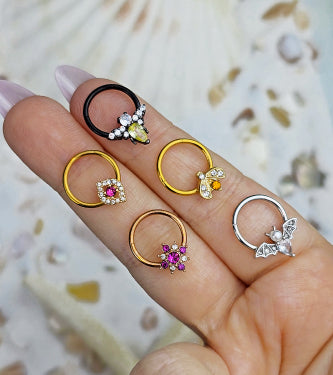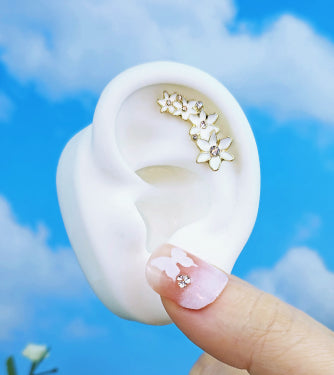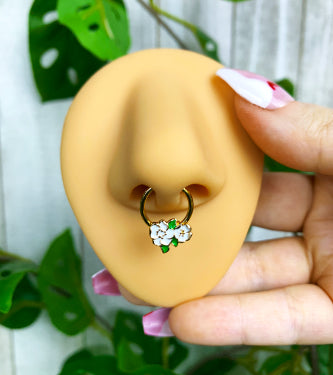



















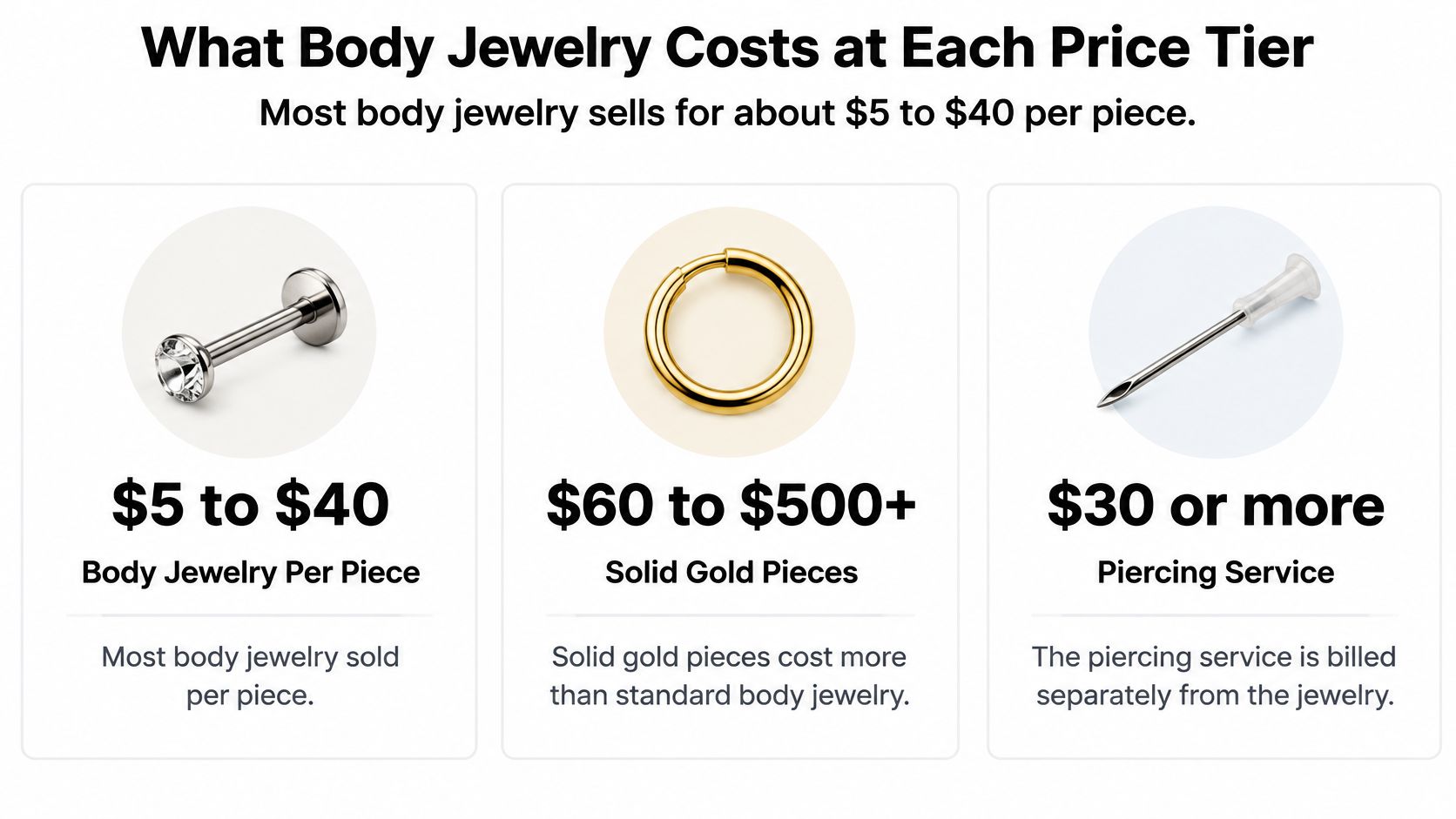
Most body jewelry sells for about $5 to $40 per piece, solid gold runs from about $60 to $500 or more, and the piercing service is billed separately. The surprising part is that a higher price doesn't automatically mean a better piece for your piercing.
Your smartest buy isn't necessarily the cheapest ring or the fanciest gem. It's jewelry with a documented material, the right fit, and a realistic cost per successful wear. Pay for what touches your body first. Save the sparkle debate for afterward.
What Body Jewelry Costs at Each Price Tier
Think of body jewelry prices as shopping categories, not quality certificates. A sale can make a well-documented piece affordable, while elaborate packaging can make an ordinary piece expensive.
The professional service is a separate budget item. Ask your studio for an itemized quote covering the procedure, starter jewelry, and any follow-up fitting. Don't assume the headline appointment price buys everything you need.
Body jewelry price tiers at a glance
| Tier | Typical price per piece | What you usually get | Best for |
|---|---|---|---|
| Budget | $5 to $40 shopping range | Plated alloys, basic surgical steel, acrylic or Bioflex | Healed piercings and trying a new look |
| Mid-range | Pay for a documented grade and suitable construction, not a fixed dollar cutoff | Implant-grade titanium, PVD-coated steel, CZ-set designs | Daily wear; documented, appropriately finished pieces for new piercings or sensitive skin |
| Premium | About $60 to $500 or more for solid gold | Solid gold, genuine gemstones, handcrafted designs | Statement pieces, gifts, long-term keepers |
These are broad shopping bands, not live product quotes. The categories overlap, especially during promotions. A price tag can't tell you whether a particular item belongs in a fresh piercing.
The graphic gives you a quick visual breakdown.
What each step up should buy
At the budget end, you're usually shopping for variety. That can make sense for an established piercing when you already know which materials you tolerate. It doesn't make an undocumented alloy a sensible starter piece.
Moving up should buy something you can verify: clearer material identification, better construction, careful finishing, or more involved craftsmanship. If the seller can't explain the difference, you're being asked to pay extra on faith.
Practical rule: Budget for mid-range or better for a new piercing, but approve the jewelry by its documentation and construction, never by its price alone.
Premium jewelry adds precious metal, stonework, or skilled hand-finishing. Those can be worth paying for. They aren't substitutes for a suitable post, secure closure, and correct dimensions.
Confirm before checkout
- Starter jewelry: Ask whether the studio fee includes it or whether you'll choose and pay separately.
- Quantity: Check whether you're buying a complete piece, a decorative end, or a pair.
- Material: Find the actual metal in the description, not just the color name.
- Complete total: Include delivery, applicable tax, and any professional fitting you'll need.
A bargain stops being a bargain when the package contains half the setup you expected.
How Material Shapes What You Pay
A material label does not prove a material standard. “Surgical steel” is a broad sales category. It does not identify the alloy, show its traceability, or confirm it suits your piercing.
Two pieces can look alike and carry different prices because the seller may provide different levels of material identification. Judge the price by what the listing documents, then consider how long the jewelry is likely to serve you. A low sticker price buys little value if the material is unclear or the piece does not suit the piercing.
Oregon's body-piercing material rule specifies Ti-6Al-4V ELI titanium compliant with ASTM F136 or ISO 5832-3 for initial piercing jewelry and requires a mill test certificate identifying the grade. That is a specific documentation requirement, not just a claim that a piece is titanium.
Documentation and best use by material
| Material | Documentation to check | Best use |
|---|---|---|
| Generic surgical steel | The label alone establishes no specific standard; request the alloy | Healed piercings and budget fashion if tolerated |
| Implant-grade steel | Stated grade and ASTM F138 reference | Healed piercings where you want steel, with suitability confirmed |
| Implant-grade titanium | ASTM F136, Ti-6Al-4V ELI, or ISO 5832-3, plus a mill test certificate | Fresh piercings and nickel-sensitivity concerns |
| Niobium | Material identity, stated grade or purity, and a supported nickel-free claim | A nickel-free option for healed piercings |
| Acrylic or Bioflex | Exact material listed on the product page | Selected healed piercings and flexible wear |
| Plated alloy | Base metal and coating details; plating alone proves no implant standard | Short-term fashion only |
| Solid 14K gold | Karat identification and a nickel-free solid-gold claim | Long-term wear and gifts |
| Solid 18K gold | Karat identification and a nickel-free solid-gold claim | Premium keepers |
The categories are not interchangeable. Utah's body-piercing regulation distinguishes ASTM F138 steel, specified titanium grades, niobium, and qualifying solid gold. A metallic appearance alone tells you none of that.
Read the listing like a buyer, not a magpie
Generic steel and plated alloys often cost less, but their descriptions may leave the base material unclear. With documented steel, titanium, or niobium, you are paying for identification and supporting details, even when the finished jewelry looks simple.
Solid gold carries precious-metal value. The alloy still matters, so check what the seller actually identifies instead of relying on the color or karat label alone. Use this guide to what metal body jewelry is made of to make sense of unfamiliar product descriptions.
- Find the grade: “Titanium” alone does not identify an implant-compliant alloy.
- Look for supporting documents: Ask whether the seller can provide a relevant mill certificate.
- Check the whole item: A titanium post does not identify every decorative component.
Pay more only when the listing gives you a verifiable reason. That is how you compare material value, not just checkout prices.
Why Solid Gold Costs So Much More
A gold piece isn't priced by metal weight alone. You're buying fabrication, finishing, components, and retail service along with the gold.
Look closely at the closure and finish, not just the color.
Goldify's explanation of spot versus retail gold pricing describes jewelry premiums of roughly 10% to 50% above the underlying gold benchmark, covering fabrication, distribution, dealer margin, and, in some markets, taxes. That isn't a universal markup for every piercing piece, but it explains why weighing a ring won't reveal its checkout price.
Retail price is roughly metal weight × the gold benchmark × a purity adjustment, plus manufacturing labor, components and setting, testing and packaging, margin, and tax.
Karat doesn't tell the whole story
14K gold contains less pure gold than 18K gold, so its fine-metal contribution is lower at the same weight. That doesn't guarantee a lower finished price.
Say you're comparing a lightweight, hand-finished ring with a heavier, machine-made design. The lighter piece can cost more because a maker spent more time forming, setting, polishing, and assembling it. Tiny jewelry can require substantial work.
The same logic applies to stone settings. A carefully built setting adds labor that a simple metal weight comparison misses.
For more on construction and karat, use the real gold jewelry guide. This video offers another look at gold jewelry.
Check what you're actually buying
- Solid versus plated: Gold-colored, gold-plated, and solid gold aren't interchangeable.
- Karat and weight: Look for karat identification and approximate metal weight when available.
- Craftsmanship: Check whether the piece is hand-finished and how stones are secured.
- Piercing suitability: For an initial piercing, have your piercer assess the alloy, finish, and design. A nickel-free claim alone isn't the entire assessment.
My recommendation: choose gold for a design you'll keep wearing, a meaningful gift, or a settled piercing you want to dress up. Don't stretch your budget for gold solely because you think expensive automatically means safer.
Typical Prices by Jewelry Style
Take a curved belly barbell as your baseline. A straightforward titanium version belongs in a different shopping category from the same basic shape in solid gold, even if the product photos look almost identical.
Then compare construction. A fixed ring, hinged clicker, long industrial bar, and stone-set top require different components and finishing work. Decoration matters, but so do mechanisms, dimensions, and assembly.
Typical price by jewelry style
| Style | Common materials | Price note |
|---|---|---|
| Curved belly barbell | Titanium, surgical steel, gold | Widely stocked; simple versions make useful comparison points |
| Nose stud or hoop | Titanium, steel, gold | Solid-gold versions move into premium shopping |
| Septum clicker | Titanium, steel | A hinge and closure can add cost over a simple fixed ring |
| Industrial barbell | Titanium, steel | Longer bars and specialized dimensions can raise the price |
| Nipple barbell | Titanium, surgical steel, gold | Often sold as a pair, so check quantity |
| Cartilage hoop or tragus stud | Titanium, steel | Gold construction raises the material cost |
| Captive bead ring | Steel, titanium | Simple designs can be budget-friendly; fitting may need a piercer |
| Tunnels and plugs | Acrylic, wood, stone, steel | Larger sizes, stone, and detailed finishing can cost more |
| Solid gold hoop or ring | 14K or 18K gold | Usually a premium purchase, with weight and craftsmanship affecting price |
Compare complete setups
Nose studs and belly barbells are easy to miscompare because a small decorative change can distract you from a different post material. Match the material and dimensions before deciding which listing is better value.
For septum clickers, inspect the closure description. You're buying a working mechanism as well as a look. A tidy hinge and secure fit are more useful than a dramatic photo.
Industrial and nipple jewelry need special attention to length and quantity. A pair can look expensive beside a single barbell until you compare equivalent sets. Likewise, a decorative replacement end isn't the same purchase as a complete bar.
- Cartilage jewelry: Confirm whether the post and decorative top are both included.
- Captive bead rings: Budget for professional help if you can't operate the closure comfortably.
- Tunnels and plugs: Check whether the listing is for a single plug or a matched pair.
- Specialized sizes: Search your exact gauge and wearable dimensions before comparing discounts.
Fit beats a cheaper near-match
Don't buy a slightly wrong length because it's on sale. A bar that's unsuitable for your anatomy isn't a useful substitute, and forcing a gauge change isn't bargain shopping.
Compare the same style, material, dimensions, and quantity. Otherwise, you're comparing different purchases and calling the difference a deal.
What Pushes a Price Up or Down
Say you find matching-looking belly barbells: a hypothetical $14 plated-alloy piece and a $32 documented implant-grade titanium piece with internal threading and a mirror finish. Those are example prices, not current quotes, but they show why a photo can't explain value.
The gap isn't necessarily decoration. One seller may be charging for verified material and more careful manufacturing. Another may just be charging more.
The Association of Professional Piercers' jewelry standards call for a smooth, mirror-quality surface without nicks, scratches, burrs, sharp edges, or polishing residue. Those are functional requirements, not luxury extras.
Follow the money beyond the gem
- Material documentation: Testing and traceability add work beyond buying raw metal.
- Surface finish: Careful polishing takes time. Inspect the wearable surface, not just the decorative face.
- Connection method: Internal threading keeps the external screw threads off the section passing through tissue.
- Design complexity: Hinges, intricate settings, enamel details, and natural stones can add production steps.
- Brand and packaging: Marketing, presentation, and retailer margin can raise the price without changing the underlying alloy.
- Sets and pairs: More components can increase the total while lowering the effective cost per piece.
- Delivery and returns: Shipping charges and return restrictions can erase an attractive discount.
Precious-metal input costs can also affect pricing between shopping visits. The industry price-index explanation from IBISWorld distinguishes upstream precious-metal production costs from the eventual price of an individual jewelry item. A gold-market move isn't a universal explanation for every steel or acrylic price change.
Customization needs a separate check
Engraved text, special gem colors, and made-to-order dimensions can involve setup work and longer production times. Ask for the full quote and dispatch estimate before paying.
Custom products may also have stricter return terms. A personalized piece in the wrong size is an expensive lesson, so confirm measurements and spelling before approving the order.
Pay extra for a feature you can name. If you can't identify the upgrade, keep comparing.
Before checkout, answer these questions: What metal is stated? What finish and construction are described? What does the price include? A good listing makes those answers easy to find.
Budget or Premium and How to Get Value
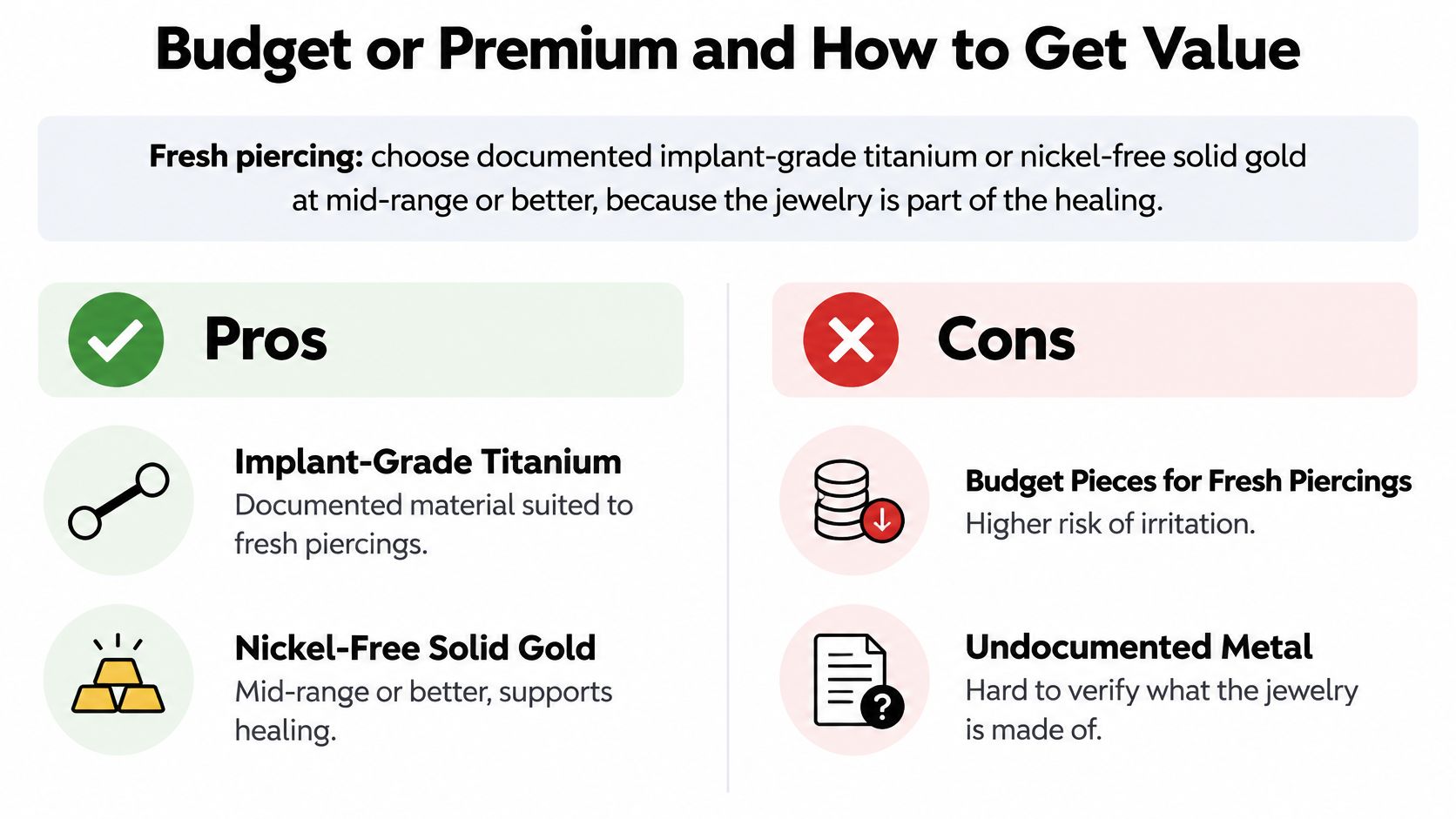
For a fresh piercing, choose documented implant-grade jewelry fitted by your piercer. Titanium is a sensible starting point; qualifying nickel-free solid gold is another option when the alloy and construction are appropriate.
For a fully healed piercing, inexpensive fashion jewelry can make sense if you tolerate the material and the piece fits properly. You have more styling freedom, but healed doesn't mean immune to irritation.
For sensitive skin or nickel allergy, judge value by successful wear rather than the first checkout total. The Association of Professional Piercers' initial-jewelry guide identifies specific implant-certified titanium standards and explains why titanium is useful for people concerned about nickel sensitivity.
Use the comparison graphic as a shopping reminder, not as a substitute for checking an individual product.
Calculate cost per successful wear
Use this practical model:
Cost per successful wear = purchase price, delivery, and replacement costs divided by the wears you actually get.
Say you buy a hypothetical $12 plated piece repeatedly and purchase three pieces over a year. That's $36 before shipping. A hypothetical $32 titanium piece that works for you over two years costs $16 per year.
That example assumes three total purchases, not an original purchase plus three replacements. It also assumes the titanium piece remains suitable and wearable. The arithmetic isn't a promise about lifespan or skin response.
The health concern deserves more attention than the arithmetic. A 2025 systematic review in Contact Dermatitis found an association between piercings and nickel allergy, with an odds ratio of 5.9 across 5,333 adults in the general population, and 3.6 across 20,330 adults with dermatitis.
Those are associations, not your personal probability of developing an allergy. They support taking material selection seriously, especially if you've reacted to jewelry before.
An expensive mystery alloy isn't a clever upgrade. A simpler, documented piece can be the more rational purchase. Premium becomes worthwhile when you're paying for craftsmanship, precious metal, or a design you'll keep wearing for years.
Spend less without buying twice
- Check gauge and wearable length before ordering. Use the specifications of a well-fitting piece or ask your piercer to measure you. Measure the wearable section rather than guessing from a photo, and confirm whether the top fits your existing post.
- Keep appropriate starter jewelry in place during healing. Mayo Clinic's piercing guidance says most piercings heal in about six weeks, while some take several months or longer, and recommends leaving jewelry in during healing to prevent closure. Don't use a general timeline as permission to change yours; have your piercer assess readiness and handle any necessary downsizing.
- Buy spares after you've confirmed the fit. Multipacks and seasonal promotions are useful for established favorites. They're less useful when you're buying a drawer full of the wrong size. Check that replacement ends use the correct connection system.
- Use newsletter and rewards alerts deliberately. Sign up for new-arrival and promotion notices, then buy from a shortlist of pieces you already want. A discount isn't savings if it persuades you to buy jewelry you can't comfortably wear.
For more shopping tactics, the guide to buying body jewelry on a budget can help you separate useful savings from impulse buys.
Know when to stop shopping and ask for help
Persistent irritation isn't a cue to keep testing random bargains. Ask your piercer about fit and material, and seek medical advice for persistent swelling, redness, bleeding, or other concerning symptoms.
Your goal is a piece you can wear comfortably and confidently, not the lowest receipt in your inbox. Buy the documented basics first. Build the fun collection around them.
BodyCandy offers belly rings, nose rings, nipple jewelry, and other piercing styles across different materials and budgets. Visit BodyCandy to compare titanium options and check each listing's grade, dimensions, and construction before buying. Leave a comment with your piercing and budget so the team can help you identify a sensible shopping tier.