















You're standing in front of the mirror, holding your phone at three different angles, trying to decide whether a nostril stud, stacked lobe, or navel ring would finally complete the look. Then the practical questions arrive: Will it hurt? How long will it heal? What if it gets infected? Which metal is safe? Is the studio trustworthy?
Those questions are sensible, not dramatic. Piercing complications aren't rare, and the risk changes with the body site, jewelry, technique, hygiene, and aftercare. A U.S. survey summarized by NIH's StatPearls found that 23% of respondents with non-earlobe piercings reported a medical complication. The same source notes that about 35% of respondents had some form of body piercing, while 14% had piercings beyond the soft earlobe.
So, what to know before getting a piercing comes down to making a few informed choices before the needle arrives. You'll want to match the placement to your lifestyle, choose a studio that can explain its sterile process, select jewelry suited to a fresh piercing, prepare your body and paperwork, and follow aftercare that supports healing instead of irritating it.
The Moment You Decide to Get Pierced
You find a jewelry style you love, save reference photos, and picture it with your everyday clothes. Then real-life questions appear: will your sleep position, sports, headphones, work rules, or habit of touching your face make healing harder?
Start with the routine around the placement. A piercing may look like a tiny detail, but healing is more like adding a small guest to your daily schedule. Ask yourself:
- Why this placement: Do you want a subtle accent, a visible statement, or jewelry you can hide?
- What your routine allows: Will helmets, earbuds, tight waistbands, swimming, or frequent travel bump the area?
- What healing demands: Can you leave the jewelry alone and keep the site clean for as long as it needs?
A lobe piercing may be easier to protect, while cartilage, navel, nipple, and oral placements can face more pressure, friction, movement, or contact. The site changes the practical risk, so choose the one your routine can support, not only the one that looks perfect in a saved photo.
The safety side deserves equal attention. Complications can include bleeding, tissue trauma, bacterial infection, swelling, and healing problems, as summarized in StatPearls. Research from England found complications in 27.5% of piercings, while 12.9% were serious enough for people to seek further help, according to published research in PMC.
Those figures are a reason to plan, not automatically cancel. Treat the appointment as both a health decision and a jewelry decision. A reputable studio, suitable initial jewelry, site-specific expectations, and an aftercare plan give the piercing a better start.
A useful reality check: The most wearable placement is the one you can protect consistently while it heals.
Piercing Types and Where They Sit on Your Body
Think of placements as different neighborhoods. Each has its own traffic, pressure points, jewelry styles, and healing personality.
Earlobes and cartilage
Earlobes are soft tissue and commonly take studs, hoops, flat-back earrings, and small dangles once healed. They're often a friendly first choice because the area is easy to see and usually easier to protect.
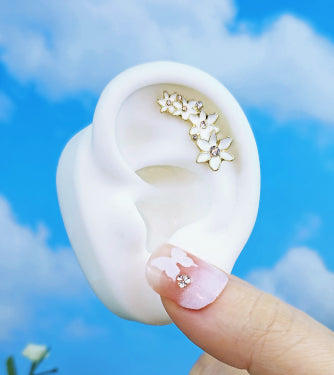
Cartilage piercings include helix, flat, conch, daith, rook, and tragus placements. They typically use labret studs, curved barbells, or specialized hoops depending on anatomy and placement. Cartilage can be more sensitive to pressure from pillows, headphones, helmets, and hair, so an ear stack may look effortless while requiring careful daily habits.
Facial placements
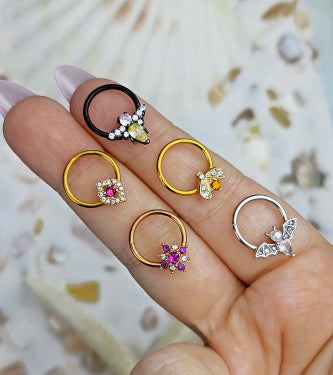
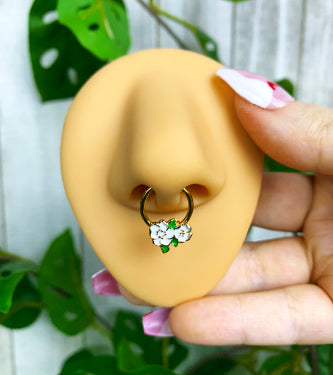
Facial piercings include nostril, septum, eyebrow, lip, and Monroe placements. A nostril commonly starts with a flat-back stud or nostril-specific jewelry. Septum jewelry may include circular barbells, clickers, or retainers, while lip and Monroe piercings require attention to oral contact and jewelry fit.
Your work or school environment matters here. A facial piercing may be easy to show, difficult to conceal, or subject to specific dress rules, so check those details before booking.
Body placements
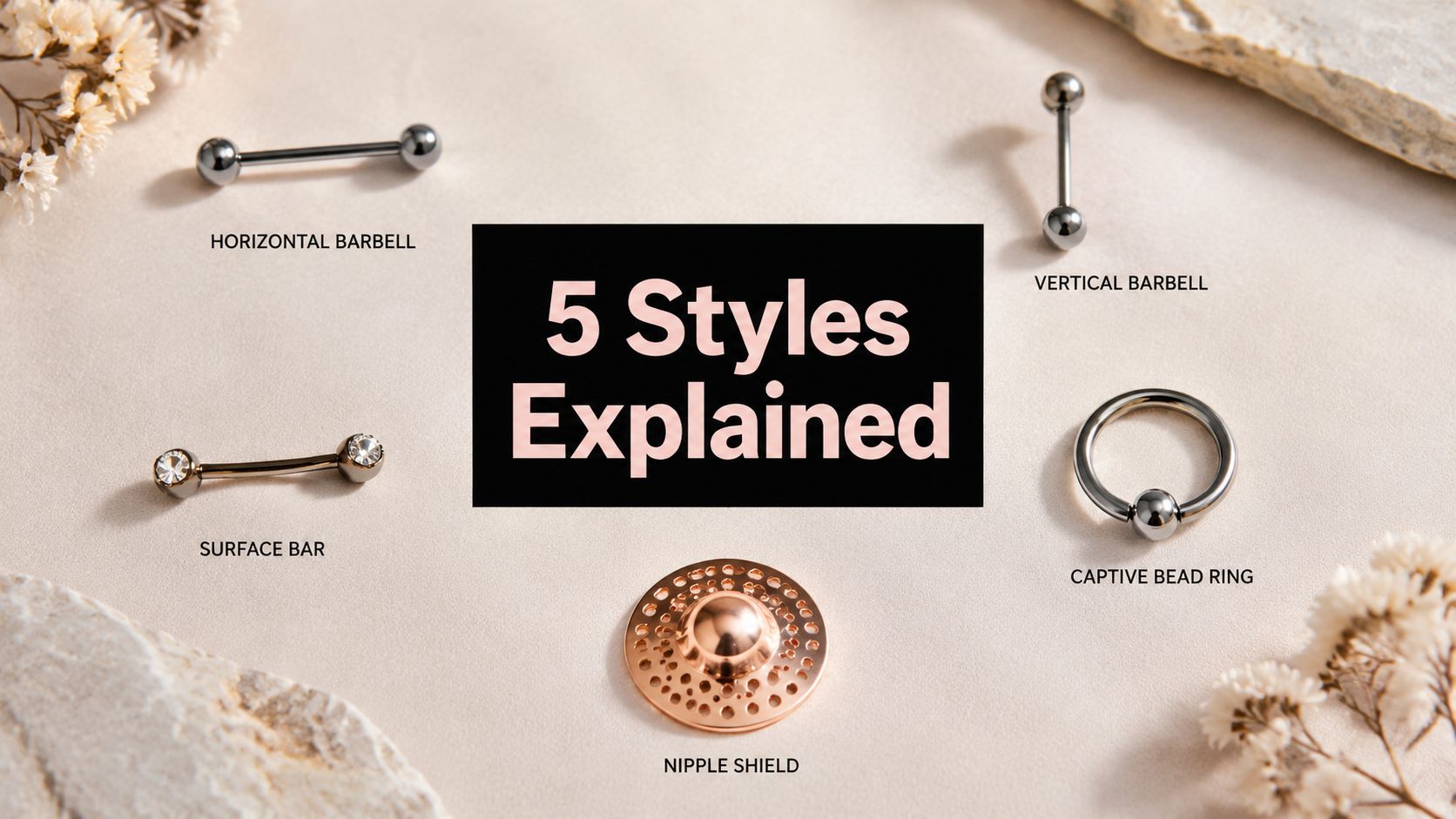
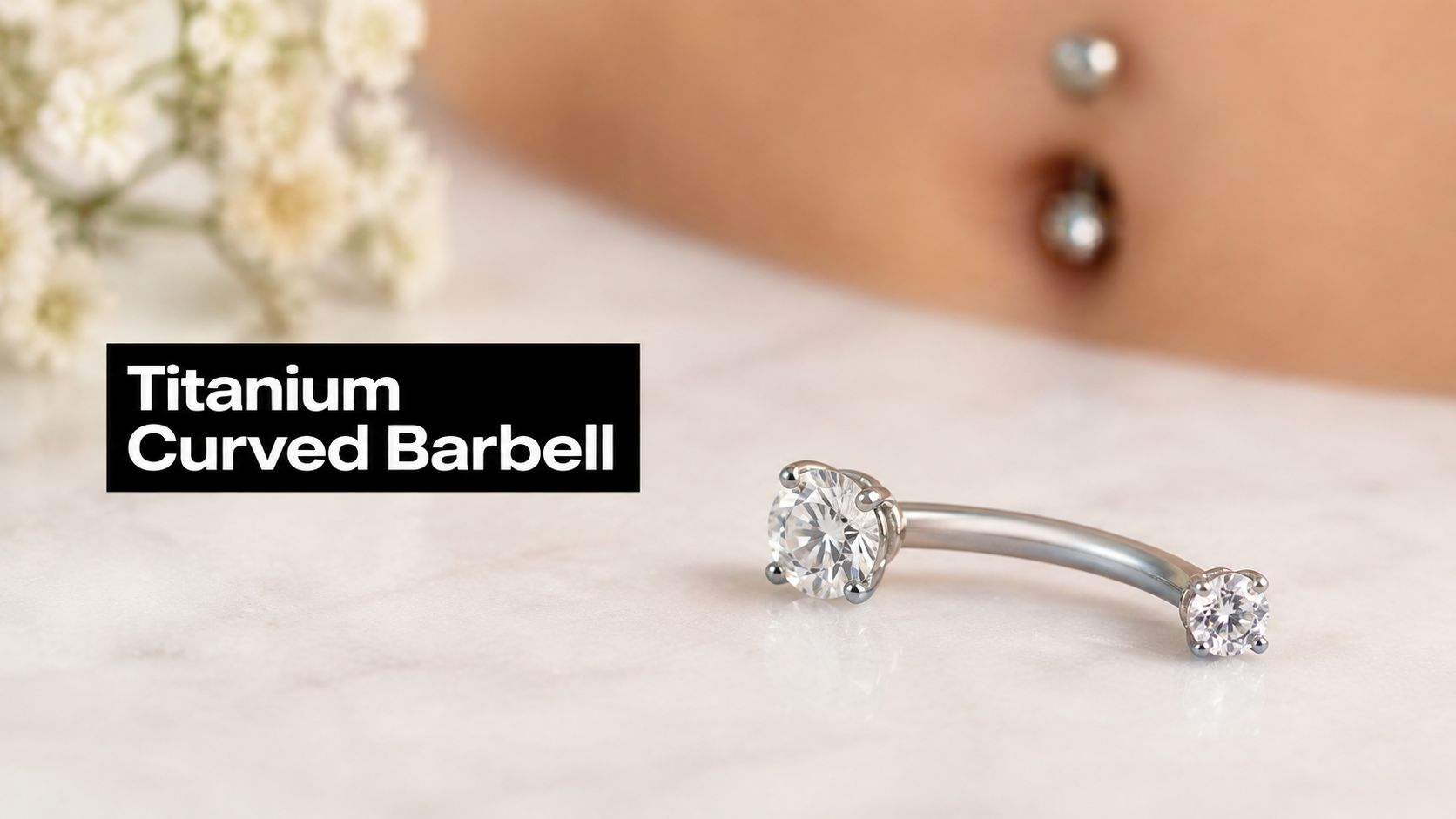
Navel, nipple, and surface piercings sit in areas that experience friction, movement, or pressure. Navel jewelry often uses a curved barbell, while nipple jewelry commonly uses straight barbells selected for the individual anatomy. Surface piercings can be especially dependent on placement, tissue, and jewelry design because the body may try to push the jewelry toward the surface.
Oral placements
Tongue and Monroe piercings involve the mouth, so eating, speaking, brushing, and accidental biting become part of the healing routine. Oral jewelry also needs professional sizing to reduce unnecessary contact with teeth and gums.
| Placement | Typical jewelry | Pain feel | Rough healing |
|---|---|---|---|
| Earlobe | Stud, flat-back, hoop | Brief pinch and soreness | Often around six weeks |
| Cartilage | Flat-back, labret, curved barbell, hoop | Sharper pressure and lingering tenderness | Several months or longer |
| Nostril | Flat-back stud, nostril screw, hoop after healing | Quick pinch with localized soreness | Several months |
| Navel | Curved barbell | Pinch with movement-related tenderness | Several months or longer |
| Oral | Barbell or labret-style jewelry | Brief, intense sensation with swelling considerations | Several months or longer |
These timelines are intentionally broad. Mayo Clinic explains that many piercings heal in about six weeks, while others take several months or longer. Published medical literature also describes healing periods ranging from six months to two years, depending on the site and other conditions, in this medical review.
How to Pick a Studio and Piercer You Trust
A reputable studio should make safety visible. You shouldn't have to feel awkward asking how equipment is sterilized, what jewelry material they use, or what happens if your anatomy needs a different placement.
Look for a professional process
Before you book, visit the studio's website and social pages, then look for signs of consistent practice:
- Sterile equipment: The piercer should use a new, single-use needle and open it in front of you.
- Autoclave information: Ask whether the studio uses an autoclave and whether it maintains spore-test records.
- Professional credentials: Association of Professional Piercers membership or equivalent credentialing can show a commitment to professional education and standards.
- Healed work: A portfolio full of fresh, swollen piercings tells you less than clear photos of healed placements.
- Clean organization: Surfaces, tools, jewelry, and client areas should look orderly rather than improvised.
The modern professional piercing era is commonly traced to 1978, when Jim Ward opened Gauntlet in West Hollywood, widely described as the first dedicated piercing studio. Industry organization followed in 1994, when piercing businesses helped found the Association of Professional Piercers and began publishing The Point, according to BodyCandy's history of piercing.

Ask questions before you sit down
A good piercer won't treat questions as an inconvenience. Ask:
- What gauge and length will you start with? Initial jewelry needs room for expected swelling without hanging excessively.
- What material is the initial jewelry? You should receive a clear answer, not “premium metal.”
- How do you respond to irritation, migration, or an adverse reaction? Their answer should include assessment and appropriate next steps.
- What aftercare do you recommend? Look for simple, evidence-based guidance rather than a shelf full of harsh products.
- Can I see healed examples of this placement? This helps you understand the long-term result.
Walk away from gun piercing for cartilage, studios without an on-site sterilization process, vague aftercare instructions, or pressure to buy expensive jewelry you don't understand. Reviews also need context. Read for repeated patterns involving cleanliness, communication, swelling, jewelry quality, and follow-up care instead of relying on a star rating alone.
For a practical studio-visit checklist, compare your questions with this professional piercing checklist.
Jewelry Materials That Belong in a Fresh Piercing
The jewelry sitting inside a new piercing becomes part of the healing environment. Its surface, composition, size, and cleanliness all matter, so “cute” is only one item on the selection list.
Implant-grade titanium
Implant-grade titanium is the gold-standard choice for many fresh piercings because it's lightweight, biocompatible, and nickel-free. A reputable piercer should be able to identify the material and provide appropriate documentation when needed.
Titanium is particularly useful if you have known metal sensitivities or want to limit avoidable variables while the fistula forms. Choose smooth, well-finished jewelry with a design that suits the placement and leaves room for swelling.
316L surgical steel
316L surgical steel can look polished and durable, but it can contain roughly 10% to 15% nickel, according to this jewelry material guide. That makes it a less suitable option for many fresh piercings, especially when nickel sensitivity is a concern.
Some people tolerate steel after a piercing has fully healed, but tolerance isn't the same as ideal first-wear material. Ask exactly what the studio uses rather than assuming “surgical” means nickel-free.
Solid gold and mystery metals
Certified 14k or higher solid gold can be appropriate in some healed piercings when the alloy is verified and nickel-free. Plated jewelry, gold-colored jewelry, acrylic, and mystery metals are different matters. Plating can wear away, acrylic may not be appropriate for initial wear, and an unknown alloy gives you no reliable way to evaluate possible irritation.
| Material | Fresh piercing suitability | What to check |
|---|---|---|
| Implant-grade titanium | Strong first-wear option | Confirm implant-grade quality and smooth finish |
| Certified solid gold | Placement-dependent, often better for healed piercings | Verify karat, alloy, and nickel-free composition |
| 316L surgical steel | Generally better reserved for healed piercings or short-term wear | Ask about nickel content |
| Plated or mystery metal | Avoid for initial wear | Unknown composition and surface durability |
Material rule: If the studio can't clearly identify the metal, don't put it in a fresh piercing.
You can review BodyCandy's information on body jewelry materials before shopping, then discuss the appropriate starting piece with your piercer. The studio should make the final call based on the placement, your anatomy, and its sterile jewelry procedures.

Pain, Healing Time, and the Risks You Should Plan Around
The needle's sting is usually brief. The days afterward can be more noticeable, especially when hair, clothing, headphones, or sleep repeatedly bump the new jewelry. Pain varies with placement, anatomy, and your tolerance, so a friend's experience is useful context, not a reliable forecast for yours.
Healing follows its own schedule. Earlobes may settle relatively quickly, while cartilage, navel, tongue, and other high-contact placements often need much longer. A piercing can look quiet on the surface while deeper tissue is still repairing. Treat the outside appearance like a closed door, not a completion certificate, and wait for your piercer's guidance before changing jewelry.
Site-specific risk matters
The complication data support a more useful conversation than treating every piercing as equally risky. A U.K. survey found complications in 27.5% of 1,940 piercings, with 12.9% serious enough to prompt further help. The study also identified cartilage and navel placements as more prone to complications, as reported in this published survey.
Emergency-department data add another layer. 13% of piercing-related visits were associated with infection, and navel, nipple, and oral piercings had higher odds of infection than ear piercings among those infections, according to the PubMed analysis. Placement affects the risk conversation, so ask what contact, movement, and healing demands apply to your chosen site.
Watch for these problems:
- Infection: Increasing warmth, spreading redness, worsening pain, pus-like drainage, or feeling unwell calls for medical attention.
- Bleeding and tissue trauma: Bumping, poor jewelry fit, or inadequate technique can injure the area.
- Irritation bumps: Pressure, friction, harsh products, and touching can trigger them. They are not automatically keloids.
- Migration and rejection: Jewelry can move toward the surface, or the body can gradually push it out.
- Embedding: Swelling or incorrect sizing can make jewelry press into the tissue.

Seek medical advice if symptoms worsen instead of improving, spread beyond the piercing, or occur with fever or significant illness. If infection is suspected, do not remove the jewelry without professional guidance. The channel can close and interfere with drainage.
Prep Day What to Do and Bring Before Your Appointment
Good preparation is wonderfully boring. It lowers the chance that you'll arrive rushed, hungry, dehydrated, or wearing something that catches on the new jewelry.
The night before
Get a full night of sleep and drink water. Skip alcohol, and don't take blood-thinning medication unless your clinician has told you to take it. Never stop prescribed medication on your own, so ask your healthcare professional if you're unsure about a specific drug.
Think through the placement and your next few days. If you're getting a navel piercing, plan clothing that won't press on it. For an ear piercing, consider whether headphones, helmets, or a sleeping position will create constant friction.
The morning of your appointment
Eat a real meal rather than arriving on an empty stomach. A balanced meal can help you feel steadier during the appointment, especially if nerves make you light-headed.
Shower and arrive with clean skin, but don't apply lotions, oils, or heavy products over the piercing area. Wear clothing that gives the piercer clear access and won't snag the jewelry afterward. A loose shirt can be especially practical for navel or nipple placements.
Pack a small appointment kit
Bring:
- Photo identification: Studios may require it, especially when age or consent rules apply.
- Accepted payment: Confirm the studio's payment options before you arrive.
- Reference images: A few examples help communicate the style, but your piercer should adapt the idea to your anatomy.
- Questions: Write down the jewelry material, starting size, healing expectations, and follow-up process.
- A ride or recovery plan: Useful if you feel faint, anxious, or don't want to drive home while distracted.
You'll likely sign a waiver and health-history form. Minors typically need a parent or legal guardian, but requirements vary by location and studio. Ask what happens if jewelry needs downsizing, the piercing begins rejecting, or you develop a concerning reaction during healing. Clear policies are a sign of a studio that expects to support clients beyond the payment screen.
Aftercare That Actually Works and What to Skip
A new piercing is an open wound, so the best routine is usually the least complicated one. The Association of Professional Piercers aftercare guidance recommends sterile saline wound wash labeled with 0.9% sodium chloride as the sole ingredient.
Keep the routine gentle
Wash your hands before touching the area. Apply the sterile saline as a gentle soak or compress, allow softened crust to release without picking, and dry the area with disposable gauze or a clean cotton swab. Follow the product and piercer's guidance for frequency, and don't scrub the channel.
Do not twist or rotate the jewelry. Movement can irritate fresh tissue, disturb crust, and delay the surface from settling around the jewelry.

Leave the bathroom cabinet alone
Avoid hydrogen peroxide, rubbing alcohol, antibiotic ointments, and harsh ear-solution mixtures unless a healthcare professional specifically prescribes something for a diagnosed problem. These products can irritate healing tissue, trap moisture, or interfere with the calm environment your piercing needs.
Also skip contact-lens saline, nasal sprays, and eye drops. They're made for different uses and may contain ingredients or concentrations that aren't appropriate for a fresh piercing. Use only a sterile wound wash whose label lists 0.9% sodium chloride as the sole ingredient.
Swimming pools, lakes, and hot tubs add exposure to water that may carry contaminants. Avoid submerging the piercing during healing, and protect it from cosmetics, hair products, dirty hands, tight clothing, and repeated pressure.
Here's a simple daily check:
- Observe: Mild tenderness or crusting can occur, but track whether symptoms are improving.
- Clean gently: Use sterile saline and clean hands.
- Dry carefully: Choose disposable gauze or a cotton swab instead of a reusable cloth towel.
- Protect: Keep bedding, clothing, helmets, and devices from rubbing the site.
- Ask for help: Contact your piercer or a healthcare professional when symptoms escalate.
For a longer care reference, use BodyCandy's healing-piercing care guide.
A visual walkthrough can also help you remember the basics:
Cost Age Rules and Your Quick Readiness Checklist
Piercing prices vary by studio, placement, jewelry, location, and the piercer's experience. Lobes are often less expensive than cartilage or navel work, while nipple, oral, and genital placements may cost more because they require specialized knowledge, anatomy assessment, and carefully selected jewelry.
A suspiciously cheap appointment can leave out the things that protect you, such as sterile processing, high-quality initial jewelry, consultation time, or follow-up support. Ask for the full price before booking, including the piercing fee and the initial jewelry, so you can compare like with like.
Age and consent rules also vary. Many U.S. locations allow minors to be pierced with parental consent, while some require consent for any piercing and others restrict particular placements. Bring identification and confirm the studio's policy before you arrive. If you have diabetes, a skin condition, an immune-system concern, or another health issue that may affect wound healing, talk with a healthcare professional first.
Run through this checklist:
- Studio: Can you verify sterile technique, autoclave use, and professional credentials?
- Piercer: Did they assess your anatomy and explain placement, sizing, and healing?
- Jewelry: Is the initial piece clearly identified and appropriate for fresh tissue?
- Aftercare: Do you have sterile saline and a plan that avoids harsh products?
- Timing: Can you protect the piercing from pressure, swimming, friction, and unnecessary handling?
- Expectations: Are you prepared for healing to take several months or longer if the placement requires it?
If you can answer yes without hand-waving, you're much closer to a smart appointment than a spontaneous regret story.
BodyCandy offers body jewelry in categories such as belly rings, nose rings, nipple rings, and other piercing styles, along with care products for people building a practical healing setup. Visit BodyCandy to browse starter jewelry and saline-care options, then confirm material and fit with your professional piercer before using any new piece in a healing piercing.